Physical Address
304 North Cardinal St.
Dorchester Center, MA 02124
Physical Address
304 North Cardinal St.
Dorchester Center, MA 02124


Starting a weight-management journey can feel confusing when you see different diets, workout plans, calorie targets, and weight-loss promises everywhere. For beginners, the biggest challenge is often knowing which information is practical and which advice is unrealistic.
Weight management for beginners is not simply about losing as many pounds as possible in the shortest amount of time. It is about understanding your current habits, creating realistic changes, reaching a healthier weight when appropriate, and learning how to maintain your progress over the long term.
You may have questions such as: How much weight can I realistically lose? What should I eat? How much exercise do I need? Why can’t I lose weight even when I exercise? And how long will it take to reach my goal?
There is no single answer that applies to everyone. Your starting weight, food intake, activity level, sleep, stress, age, genetics, medications, and health conditions can all influence weight management.
The goal is therefore not to find the fastest diet. It is to build a system you can realistically continue.
Weight loss and weight management are related, but they are not exactly the same thing.
Weight loss generally means reducing body weight, often by creating an energy deficit through changes in food intake and physical activity. Weight management is broader. It includes losing excess weight when appropriate, maintaining a healthier weight, and reducing the chance of regaining weight after a loss.
This distinction matters because many beginners focus entirely on the number on the scale. Someone may lose 15 or 20 pounds but struggle to maintain that change if the diet was extremely restrictive or impossible to continue.
A sustainable approach focuses on habits such as:
A healthy weight is also not necessarily one specific number. Health professionals may consider factors such as BMI, waist circumference, medical history, physical activity, and weight-related health conditions when assessing an individual’s health.
The National Heart, Lung, and Blood Institute notes that even a relatively modest weight loss of around 5% to 10% of initial body weight can provide meaningful health benefits for people who have overweight or obesity.
Body weight is influenced by much more than willpower.
Food and beverage intake clearly matter because the calories you consume contribute to your body’s energy balance. Physical activity and everyday movement also influence how much energy your body uses.
However, weight management is more complicated than simply eating less and exercising more.
Factors that may influence body weight include:
For example, someone who works at a desk for eight or ten hours may have a very different daily activity pattern from someone with a physically demanding job. Similarly, inadequate sleep can affect hunger, food choices, and energy levels. NIDDK notes that medicines, health problems, family history, genes, sleep, and lifestyle habits can all play a role in weight.
That is why a weight-management plan should be personalized rather than copied directly from someone else’s routine.
At its simplest level, weight management involves balancing energy intake and energy expenditure.
Energy intake primarily comes from food and beverages. Energy expenditure includes the energy your body uses to stay alive, digest food, move, exercise, and perform everyday activities.
If you consistently consume more energy than your body uses, the excess can contribute to weight gain over time. If you consistently consume less energy than your body uses, weight loss can occur.
But this does not mean that every calorie affects every person in exactly the same way. Appetite, food composition, activity, sleep, medications, health conditions, and metabolic adaptations can influence how difficult weight management feels.
This is why holistic weight management is generally more useful than focusing only on calories. Calories matter, but the quality of your diet, physical activity, sleep, stress, and ability to maintain your habits also matter.
One of the most common beginner questions is: how much weight can you realistically lose in a month?
The answer depends on your starting weight, calorie deficit, activity level, health status, and consistency. Weight loss also tends to change over time rather than following a perfectly straight line.
The CDC says people who lose weight gradually—about 1 to 2 pounds per week—are more likely to keep it off than people who lose weight more quickly.
That works out to roughly 4 to 8 pounds over four weeks, although actual results can be lower or higher depending on the individual.
For beginners, it is better to think in terms of trends rather than a guaranteed monthly number.
For example, your scale might show:
This does not necessarily mean that your plan has stopped working. Body weight naturally fluctuates because of water retention, food volume, sodium intake, carbohydrate storage, hormones, bowel movements, and other factors.
Instead of asking only, “How many pounds did I lose this week?” consider whether your overall trend is moving in the desired direction.
A 12-week period gives beginners enough time to establish consistent habits without making the entire journey about rapid results.
How much weight you can lose in 12 weeks depends on factors such as:
For some people, a 12-week goal may focus on losing a moderate percentage of starting weight. For others, the primary goal may initially be improving food choices, increasing walking, building strength, or establishing a sustainable routine.
A realistic plan should allow you to continue living your normal life while making healthier choices.
The phrase lose two pounds a week is common in weight-loss searches, but it should not be treated as a universal target.
A loss of around 1 to 2 pounds per week is commonly used as a gradual weight-loss range by the CDC. Some people may initially lose more because of changes in water and glycogen, particularly when they make major dietary changes.
That does not mean that losing 3 pounds every week is necessary or appropriate.
If someone loses several pounds rapidly at the beginning of a diet, part of that change may be water rather than body fat. Trying to force the scale down by dramatically restricting food can also make a diet harder to sustain.
If you are asking, “is losing 3 pounds a week safe?”, the answer depends on your individual circumstances. A healthcare professional can help determine whether a particular weight-loss rate is appropriate, especially if you have a medical condition, take medication, have a large amount of weight to lose, or are considering an aggressive calorie restriction.
The best starting point for most beginners is not an extreme diet. It is a manageable calorie deficit combined with better food choices and regular activity.
A calorie deficit means your body is using more energy than you consume over time.
You do not need to make an extreme calorie cut to begin.
Instead, look for practical changes such as:
The exact calorie requirement varies significantly between people, so copying another person’s calorie target can be inappropriate.
Your goal should be to create a sustainable deficit that supports gradual progress rather than trying to eat as little as possible.
A beginner-friendly weight-loss diet does not have to eliminate entire food groups.
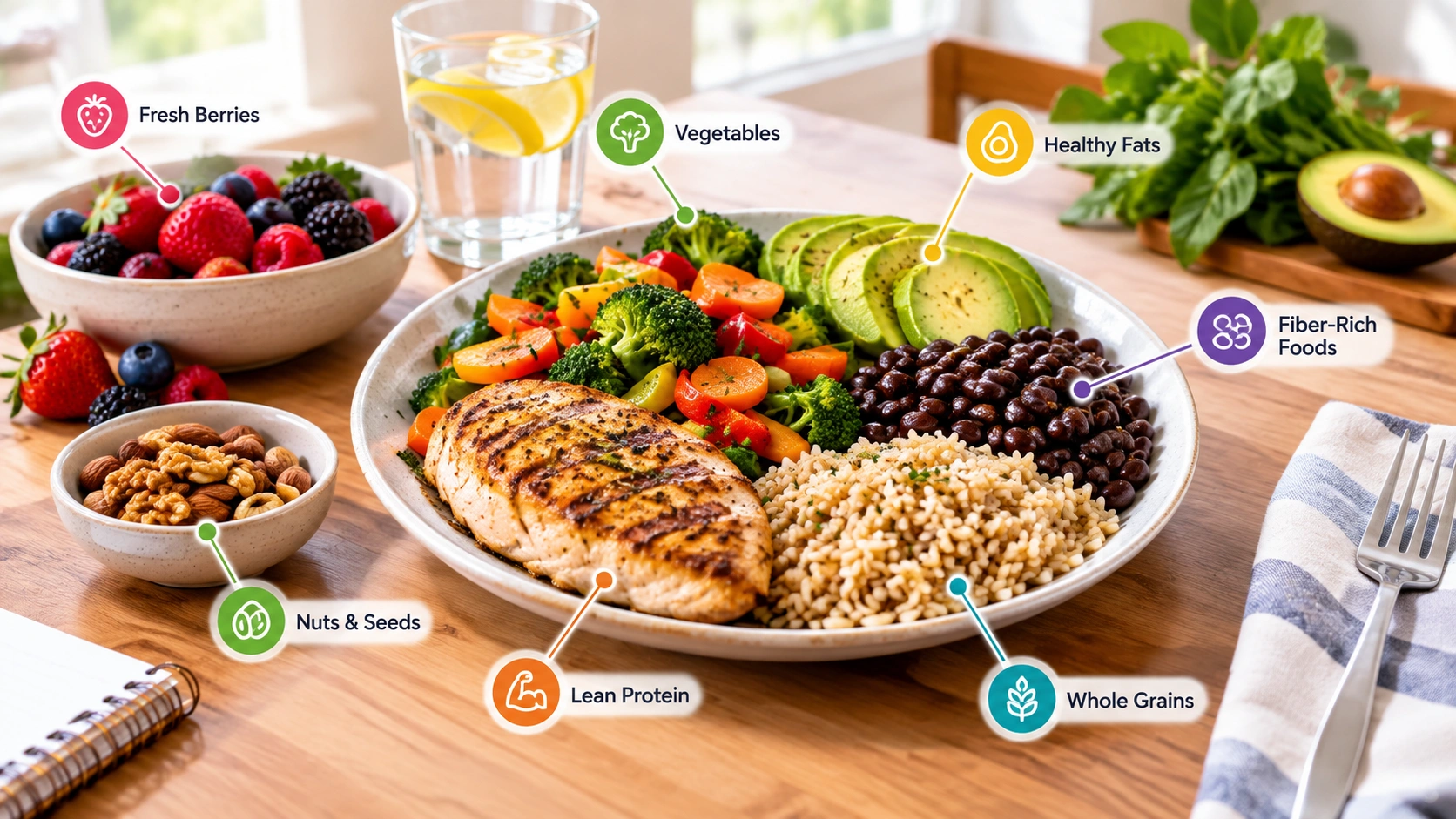
Build meals around nutrient-dense foods such as:
Protein and fiber can help meals feel more satisfying, while vegetables and fruits provide important vitamins, minerals, and other nutrients.
Portion control is equally important. Even nutritious foods can contribute substantial calories when portions become very large.
Rather than labeling foods as completely “good” or “bad,” beginners can focus on how often they eat certain foods, how much they eat, and how those foods fit into their overall diet.
Exercise does not have to mean spending an hour at the gym every day.
Walking is an excellent starting point for many beginners. You can also consider cycling, swimming, dancing, recreational sports, or beginner strength training.
Current CDC guidance recommends that adults aim for at least 150 minutes of moderate-intensity aerobic activity each week, along with muscle-strengthening activity on at least two days per week. Some activity is better than none, and the weekly total can be divided into smaller sessions.
If you are currently inactive, starting with shorter walks and gradually increasing your activity may be more realistic than immediately following an intense workout program.
The most effective activity is often the activity you can continue consistently.
If you’re searching for what helps you lose weight, think beyond one food, supplement, exercise, or shortcut.
Successful weight management usually involves several habits working together:
The CDC specifically emphasizes healthy eating patterns, regular physical activity, enough sleep, and stress management as components of healthy weight loss.
For beginners, that combination is more useful than searching for a single “jump start weight loss” trick.
The goal of weight management for beginners is not to create a perfect routine overnight. Start with changes you can repeat next week, next month, and eventually as part of your normal lifestyle.
A proper weight-loss diet does not need to be complicated, expensive, or based on eliminating entire food groups. For beginners, the most useful diet is one that provides enough nutrients, controls overall calorie intake, and can realistically fit into everyday life.
The best approach is usually a balanced eating pattern that includes protein, vegetables, fruits, whole grains, beans, healthy fats, and appropriate portions.
If you are wondering what is a proper diet to lose weight, start by building balanced meals instead of looking for a single “weight-loss food.”
A beginner-friendly plate can include:
Protein can be particularly useful because it helps support muscle while losing weight and can contribute to meal satisfaction. Strength training combined with adequate protein can also help preserve lean muscle during weight loss.
Portion size still matters. A meal can contain healthy ingredients but become calorie-dense if portions are consistently oversized.
For beginners in the United States, practical eating may mean choosing grilled chicken instead of fried chicken more often, adding vegetables to a restaurant meal, choosing water instead of a sugary drink, or preparing simple meals at home several times each week.
The goal is not perfection. The goal is a pattern you can repeat.
You may have heard the claim that diet is 80 percent of weight loss and exercise is only 20 percent.
There is no universal scientific formula saying that weight loss is exactly 80% diet and 20% exercise.
Food intake has a major effect on calorie balance, but physical activity contributes to energy expenditure, fitness, cardiovascular health, muscle strength, and long-term weight maintenance.
Sleep and stress management also matter. The CDC includes healthy eating, physical activity, sufficient sleep, and stress management as important components of healthy weight management.
So instead of thinking about an 80/20 rule, beginners can think about weight management as a combination of behaviors.
Yes, white rice can fit into a weight-loss diet.
You do not automatically gain weight because you eat rice. What matters is your overall dietary pattern, portion size, and total energy intake.
For example, instead of eating a very large bowl of white rice with little protein or vegetables, you could use a moderate portion of rice alongside:
If you enjoy white rice, completely eliminating it may make your diet unnecessarily difficult to maintain.
A sustainable diet should include foods you enjoy while keeping portions and overall calorie intake appropriate.
Optimum nutrition generally means getting the nutrients your body needs through an overall balanced eating pattern.
It involves both macronutrients and micronutrients.
Macronutrients include:
Micronutrients include vitamins and minerals.
A nutritious diet should also provide fiber and adequate fluids.
For beginners, optimum nutrition is not about eating the “cleanest” possible diet or avoiding every processed food. It is about consistently choosing a wide variety of nutrient-dense foods and creating a diet that supports your health and goals.
A good weight loss plan should be specific enough to guide you but flexible enough to survive real life.
Instead of setting only a final goal such as “lose 50 pounds,” divide the process into smaller behaviors and milestones.
Start by considering:
A healthcare professional can help determine whether weight loss is appropriate and what target may make sense for you.
You may also choose health-related goals that do not depend entirely on the scale.
For example:
These goals can make the weight-loss process more manageable.
Beginners often try to change everything at once.
A more practical strategy is to introduce a few habits at a time.
Your first week might focus on:
Food: Add vegetables to two meals per day.
Activity: Take a 20–30 minute walk on most days.
Hydration: Replace some sugary drinks with water.
Sleep: Establish a more consistent bedtime.
Tracking: Record meals and body weight without judging yourself.
Once these behaviors become easier, additional changes can be introduced.
This approach reduces the pressure to be perfect and makes it easier to continue when motivation naturally changes.
A weight loss journal can help you understand what is happening rather than relying only on memory.
You can track:
Progress photos and clothing fit can also provide information that the scale does not capture.
It is normal for weight to fluctuate from day to day. Looking at longer-term trends can provide a clearer picture.
You can also calculate percentage of weight loss when appropriate:
Percentage weight change = (starting weight − current weight) ÷ starting weight × 100
For example, someone who starts at 200 pounds and loses 20 pounds has lost 10% of their starting body weight.
This can be more informative than focusing only on the number of pounds.
Large weight-loss goals can feel overwhelming. Breaking them into smaller milestones can make them easier to manage.
Searches such as how to lose 20 pounds in 2 months are common, but a two-month deadline should not automatically become a requirement.
Whether losing 20 pounds in two months is appropriate depends on the person’s starting weight, health, calorie needs, activity level, and medical circumstances.
Trying to force a large amount of weight loss through severe restriction can create problems with hunger, fatigue, nutrient intake, exercise performance, and long-term adherence.
A more sustainable strategy is to establish a moderate calorie deficit, improve food quality, increase activity, and monitor progress.
For some people, losing 20 pounds may take longer than two months. That does not mean the plan failed.
The same principle applies when someone searches for how to lose 25 pounds in 2 months or how to lose 25 pounds in 3 months.
Rather than starting with an aggressive deadline, consider the behaviors required to create sustainable progress.
These may include:
A three-month period can be useful for building a routine, but the appropriate amount of weight loss varies from person to person.
The CDC recommends gradual weight loss of around 1–2 pounds per week for people pursuing weight loss, noting that gradual loss is more likely to be maintained.
There is no single answer to how long should it take to lose 30 pounds.
Someone with a higher starting body weight may initially lose weight at a different rate from someone who is already close to their healthy-weight range.
Other factors include:
A sustainable timeline is generally more useful than trying to reach 30 pounds as quickly as possible.
If you are considering a large or rapid weight-loss goal, discussing the plan with a healthcare professional is especially important.
When the goal becomes 40, 50, or 60 pounds, weight management should be treated as a long-term project rather than a short diet challenge.
If you’re asking how can I lose 40 pounds, start by dividing the goal into smaller milestones.
Instead of thinking about 40 pounds every morning, focus first on the next 5 or 10 pounds.
Your plan may include:
Trying to drop 40 pounds fast can encourage extreme behaviors. A slower approach may be easier to maintain and gives you more time to build the habits needed for weight maintenance.
A 60-pound goal usually requires patience.
If you are asking how to lose 60 pounds, think about the process in stages.
During the early stage, your priority may be establishing a consistent eating and activity routine.
Later, you may need to adjust portions, activity, or calorie intake as your body weight changes.
Strength training can also be useful during substantial weight loss because maintaining muscle is an important part of a healthy body-composition strategy.
If you have significant excess weight or weight-related medical conditions, professional guidance can help you determine whether lifestyle changes alone are appropriate or whether additional treatment options should be considered.
The timeline for losing 60 pounds can vary considerably.
For example, two people may follow similar diets but experience different results because their starting weights, energy requirements, activity levels, medications, health conditions, and adherence differ.
A person should not assume that another person’s timeline is a realistic target for them.
Instead, track the trend over several weeks and make adjustments based on actual progress.
Goals of 70 or 80 pounds represent substantial weight loss. They require a longer-term strategy and often benefit from professional support.
If you’re wondering how to lose 70 pounds, avoid treating the goal as one giant task.
Break it into smaller milestones.
For example:
Phase 1: Establish consistent meals and daily movement.
Phase 2: Build a sustainable exercise routine.
Phase 3: Monitor weight trends and adjust the plan.
Phase 4: Address plateaus and changing calorie needs.
Phase 5: Transition toward long-term weight maintenance.
This approach helps prevent the common mistake of believing that one diet must work forever without adjustment.
There is no fixed answer to how long does it take to lose 70 pounds.
A person with substantial excess weight may experience a different rate of loss than someone who has less weight to lose.
Medical conditions, medications, age, activity, food intake, sleep, and adherence can all influence progress.
For a large weight-loss goal, the timeline should be individualized rather than based on an online calculator alone.
A goal of 80 pounds generally requires a long-term approach.
A sustainable plan can include:
The objective is not simply to lose 80 pounds. It is also to develop the habits needed to avoid regaining the weight afterward.
The answer to how long to lose 80 lbs depends heavily on the individual.
Someone may need considerably longer than the timeline they originally imagined. That is not necessarily a problem.
Large weight-loss goals should be measured in months rather than days or weeks, with progress evaluated along the way.
Losing 100 pounds is a major health and lifestyle goal. It should not be approached like a short-term crash diet.
A large weight-loss journey can involve several stages:
A healthcare professional may also evaluate blood pressure, blood glucose, cholesterol, medications, sleep-related conditions, and other health factors depending on the individual.
Professional nutrition support can be particularly useful when someone has a large amount of weight to lose.
People searching for how can I lose 100 pounds in a year often want a specific deadline.
Whether that timeline is appropriate depends on the individual.
A 100-pound goal represents a substantial amount of weight, and the rate of loss may change throughout the process. Weight loss is often faster at certain points and slower at others.
The CDC’s gradual-loss guidance of approximately 1–2 pounds per week can provide general context, but it should not be interpreted as a guaranteed rate for every person.
For a goal this large, individualized medical and nutrition guidance may be appropriate.
Searching for how to lose 100 pounds in 3 months or how to lose 100 pounds in 4 months female reflects an understandable desire for rapid change, but such goals should not be approached with crash diets or extreme food restriction.
Losing a very large amount of weight within a short period can require medical supervision and is not an appropriate target for everyone.
Instead of asking only how quickly you can lose 100 pounds, consider:
The long-term goal of weight management is not just reaching a number on the scale. It is creating a healthier routine that remains workable after the initial weight-loss phase ends.
BMI is one of the most commonly used measurements in weight management, but it should be interpreted in context.
Body mass index (BMI) is a screening measurement calculated using height and weight.
For adults, BMI is calculated as:
BMI = weight in kilograms ÷ height in meters²
CDC adult BMI categories are generally:
BMI is a screening tool rather than a complete measurement of health.
If you are asking how do I reduce my BMI, gradual weight reduction can lower BMI because BMI is calculated using body weight and height.
Practical strategies include:
You do not need to chase the lowest possible BMI. The objective should be improving overall health rather than simply making a number smaller.
No.
BMI does not directly measure body fat or distinguish between muscle and fat.
For example, someone with substantial muscle mass may have a higher BMI without having the same body-fat pattern as someone with less muscle.
Healthcare professionals may therefore consider other information, including waist circumference, medical history, blood pressure, blood glucose, cholesterol, physical activity, and overall health.
Searches such as how to lower BMI male, how to lower BMI female, or examples such as 5’2 200 pounds and 5’6 230 lbs female can provide general BMI calculations, but they do not provide a complete individualized health assessment.
Height, weight, muscle mass, age, health conditions, medications, and lifestyle all matter.
For that reason, online BMI calculators should be treated as screening tools rather than personalized medical advice.
For beginners, the more useful question is often not simply “How do I get my BMI down?” but “What healthy changes can I consistently make to improve my weight and overall health?”
Weight loss rarely happens in a perfectly straight line. Understanding the phases of weight loss can help beginners avoid unnecessary frustration when the scale changes differently from week to week.
During the first few days or weeks of a new eating plan, the scale may change relatively quickly.
Some of this early change can come from shifts in:
This means an early drop on the scale does not necessarily represent the same amount of body-fat loss.
For example, reducing certain high-carbohydrate foods can change stored glycogen and associated water, producing a noticeable scale change before significant fat loss has occurred.
This is one reason beginners should avoid judging an entire weight-management plan based on the first week.
As you maintain a consistent calorie deficit, the body can gradually use stored energy, contributing to a reduction in body fat.
The objective during this phase is not simply to make the scale drop as quickly as possible.
A sustainable approach focuses on:
Maintaining muscle is especially important during substantial weight loss. Combining resistance exercise with appropriate nutrition can support lean-mass retention.
A plateau is a period when your weight appears to stop declining despite continued effort.
Plateaus can happen for several reasons.
As body weight decreases, the body generally requires fewer calories to maintain that lower weight. Your activity may also change without you realizing it.
Other explanations can include:
A plateau does not automatically mean that your metabolism has “broken.”
Review your habits over several weeks before making major changes.
The maintenance phase begins when your focus shifts from losing weight to keeping your progress.
This can involve gradually establishing an eating pattern that matches your new energy needs while continuing regular physical activity.
Maintenance may include:
Learning maintenance habits while you are losing weight can make the transition easier.
If you are asking why can’t I lose weight, the answer may involve several factors rather than one specific problem.
Portion sizes, sauces, cooking oils, snacks, beverages, restaurant meals, and weekend eating can add more calories than expected.
This does not mean you need to track every calorie forever. However, temporarily tracking food can help identify patterns you may not notice otherwise.
Exercise sessions are only one part of daily energy expenditure.
Someone may complete a 30-minute workout but spend most of the remaining day sitting.
Increasing everyday movement can therefore be useful.
Walking, taking stairs, doing household tasks, standing more frequently, and taking short movement breaks can all contribute to daily activity.
The number on the scale can rise even when body fat has not increased.
Water retention can be affected by:
This is why comparing individual days can be misleading.
Look at weekly or multi-week trends instead.
Poor sleep and chronic stress can make weight management more difficult by affecting appetite, food choices, energy, and daily routines.
Improving sleep does not automatically cause weight loss, but it can support healthier habits.
A consistent sleep schedule, regular physical activity, and stress-management practices can all be part of a sustainable weight-management plan.
Certain medical conditions and medications can influence body weight or make weight loss more difficult.
If you have made consistent lifestyle changes but are experiencing unexpected weight changes or difficulty losing weight, talk with a healthcare professional.
Do not stop or change prescription medication simply because you suspect it is affecting your weight.
It is possible to lose body fat without seeing dramatic changes on the scale every few days.
Water retention can temporarily mask changes in fat mass.
Other measurements can therefore be useful, including:
The goal is to evaluate the overall pattern rather than one measurement.

Exercise can support weight management, but beginners do not need an extreme workout schedule.
There is no single step count that guarantees weight loss.
If you currently walk very little, increasing your daily steps can be a useful starting point.
You might begin by adding:
The popular goal of 10,000 steps per day can be a useful benchmark for some people, but it is not a requirement for losing weight.
The better target is often to gradually increase your own activity level.
Walking is one of the simplest ways to increase daily movement.
It is accessible, relatively low impact, and easy to fit into many schedules.
Walking after meals can also help you add activity without requiring a long dedicated workout.
If you currently walk 3,000 steps per day, moving toward 4,000 or 5,000 may be a more practical first step than immediately demanding 10,000.
Over time, you can increase duration, pace, frequency, or distance.
Swimming, cycling, jogging, dancing, and other aerobic activities can increase energy expenditure and improve cardiovascular fitness.
The number of calories burned during 30 minutes of swimming varies based on body weight, swimming intensity, stroke, fitness level, and other factors.
Similarly, workouts such as Peloton cycling can contribute to energy expenditure, but the exercise itself does not guarantee weight loss.
A sustainable exercise program should include activities you actually enjoy.
Strength training is particularly useful during weight loss because it helps you develop and maintain muscular strength.
Beginners can start with:
You do not need advanced bodybuilding workouts.
Two or more strength-training sessions per week can be a practical starting point for many adults, consistent with CDC physical-activity guidance.
If you have an injury, chronic condition, or long period of inactivity, consult an appropriate healthcare professional before beginning vigorous exercise.
The best exercise routine is one you can continue.
Try activities such as:
Finding fun ways to lose weight can make physical activity feel less like a punishment and more like part of everyday life.
One of the most important questions for beginners is how do you stick to a diet?
The answer usually has less to do with willpower and more to do with designing a routine that works in real life.
Motivation changes.
Habits are more reliable.
Instead of telling yourself you will never eat dessert again, create a routine that allows occasional treats while maintaining your overall eating pattern.
Instead of promising to exercise every day, establish a realistic schedule.
Small actions repeated consistently can become easier over time.
A food and weight loss journal can reveal patterns.
You might notice that overeating happens when:
Once you identify the pattern, you can address the underlying behavior.
Healthy eating does not require avoiding restaurants forever.
Before going out, consider:
You can enjoy social occasions without treating one meal as a reason to abandon your entire plan.
Everyone has days when they eat more than planned.
The mistake is turning one difficult meal into a difficult week.
You do not need to “punish” yourself with fasting or excessive exercise.
Instead:
One meal does not determine your long-term progress.
If your diet becomes inconsistent, simply restart your next healthy behavior.
You do not need to wait until Monday.
You can begin with your next meal, next walk, or next grocery trip.
This mindset is particularly important for long-term weight management for beginners because sustainable progress includes imperfect days.
For some people, lifestyle changes are enough to produce meaningful progress. Others may benefit from structured professional support.
Consider speaking with a healthcare professional if you have:
A doctor, registered dietitian, or qualified weight-management professional can help create a plan based on your health and circumstances.
A structured program may include:
Prescription weight-management medications may be appropriate for some patients, but they should be discussed with a qualified healthcare professional rather than purchased or used without medical guidance.
Not every commercial program offers the same level of support.
When comparing programs, look at:
Be particularly cautious about programs guaranteeing dramatic weight loss in a very short time.
Searches for ear seeds weight loss, cupping therapy for weight loss, and IV drip for weight loss are common online.
These approaches should not automatically be considered replacements for evidence-based nutrition, physical activity, and medical care.
Before paying for an alternative treatment, ask:
Products or programs marketed with names such as “metabolic weight loss system” or specific “active plan kits” should also be evaluated based on their actual ingredients, evidence, cost, risks, and professional oversight rather than their marketing language.
Weight maintenance is an important part of the journey.
After weight loss, your body may require fewer calories than it did at your previous weight.
At the same time, appetite, habits, activity, and environmental factors can make maintaining a lower weight challenging.
That is why maintenance should be treated as an ongoing phase rather than the end of the process.
If you’re asking how can you maintain a healthy weight, continue the habits that helped you lose weight.
These may include:
You may be able to eat more calories during maintenance than during active weight loss, but your intake still needs to match your body’s energy needs over time.
Monitoring does not have to mean obsessing over every calorie.
You can periodically check:
If your weight begins trending upward consistently, making a small adjustment early may be easier than waiting for a much larger regain.
Small fluctuations are normal.
If you regain some weight, avoid panic.
Instead, ask:
Then return to the habits that previously worked.
Weight maintenance is not about never changing. It is about responding to changes before they become overwhelming.
People often ask, do you lose weight when you get older?
Age can influence body composition, activity levels, muscle mass, and energy needs. However, aging does not mean that healthy weight management is impossible.
Older adults should pay particular attention to maintaining muscle strength, consuming adequate nutrition, staying active, and discussing medical concerns with their healthcare professional.
Someone searching for losing weight after 70 should avoid aggressive dieting without appropriate professional guidance.
Men and women can both lose weight through sustainable lifestyle changes, but body composition, hormones, muscle mass, activity, and calorie needs can differ.
The claim that guys lose weight faster should therefore not be treated as a universal rule.
Individual results vary considerably.
The same principle applies when discussing BMI. How to lower BMI male and how to lower BMI female may involve similar foundational behaviors, but an individual’s health history and body composition still matter.
A person’s starting weight affects how much energy their body typically requires and can influence the rate of weight loss.
Examples such as 5’2 200 pounds, 5’6 230 lbs female, 30 kg, or 82 kilograms may be useful for demonstrating calculations, but an online example cannot determine the correct weight-loss plan for a real individual.
Personalized decisions should consider height, age, health status, medications, activity, body composition, and other relevant factors.
Searching for how to starve yourself or could you lose weight by starving yourself reflects an extreme approach that should not be used as a weight-management strategy.
Severe food restriction can make it difficult to meet nutritional needs and may contribute to fatigue, poor exercise performance, loss of lean tissue, and an unhealthy relationship with food.
The objective should be sustainable weight loss, not starvation.
A scale can move several pounds within a day because of changes in water, food volume, sodium, carbohydrate storage, and other factors.
That does not mean you lost three pounds of body fat.
If you see a large overnight change, do not attempt to reproduce it by severely restricting food or fluids.
Searches such as lose 20lbs in 2 weeks and how to lose twenty pounds in one week are examples of unrealistic expectations for most people.
Rapid scale changes can occur under certain circumstances, particularly because of water loss, but that is very different from losing the same amount of body fat.
For sustainable weight management, focus on gradual progress.
The same principle applies to searches such as how to lose 7 pounds in a week, how to lose 7lbs in a week, or how to lose six pounds in a week.
A short-term scale change should not be confused with sustainable fat loss.
Avoid extreme restriction simply to meet a one-week target.
There is no universal rule proving that diet must account for exactly 80% of weight loss.
Diet, physical activity, sleep, stress, genetics, medications, and other factors can all influence weight management.
A more useful approach is to create a healthy routine that you can maintain.
There are many reasons to lose weight that have little to do with appearance.
Depending on the individual, goals may include:
Appearance can be part of someone’s personal motivation, but it does not need to be the only reason for pursuing healthier habits.
Terms such as fat to fit, from fat to fit, slim body, and be thin are commonly used online.
However, weight management should not become a judgment about someone’s worth or appearance.
Fitness can mean becoming stronger, walking farther, improving cardiovascular endurance, or feeling more capable in everyday activities.
A healthier mindset focuses on what your body can do and how your habits support your health.
Progress photos can sometimes show changes that are difficult to notice from day-to-day.
A journal can also document:
Before-and-after images can be motivating, but individual transformations should not be used as proof that the same timeline will work for everyone.
Beginners have access to many resources, from online education to registered dietitians and medical weight-management programs.
Look for information from reputable organizations, healthcare systems, universities, and government health agencies.
The CDC, National Institutes of Health, and National Heart, Lung, and Blood Institute provide educational resources on healthy weight management, physical activity, nutrition, and obesity treatment.
A weight loss clinic may offer medical evaluation, nutrition counseling, behavioral support, exercise guidance, and prescription treatment when appropriate.
If you search for terms such as wellness and weight loss near me, weight loss Sarasota, or Little Rock weight loss clinic, compare providers based on credentials, services, costs, treatment options, and follow-up rather than choosing solely because of advertising.
When comparing a program, consider:
| Factor | What to Look For |
| Professional credentials | Qualified healthcare or nutrition professionals |
| Personalization | Plan based on individual circumstances |
| Evidence | Recommendations supported by credible research |
| Cost | Clear pricing and additional fees |
| Follow-up | Ongoing monitoring and support |
| Safety | Clear explanation of risks and contraindications |
| Maintenance | Support after initial weight loss |
| Claims | Realistic expectations rather than guarantees |
Terms such as weight loss guidelines, weight loss study, and national weight loss registry can also help you find educational and research-based information.
The CDC commonly recommends gradual weight loss of around 1–2 pounds per week for people pursuing weight loss. Actual monthly progress varies based on starting weight, calorie deficit, activity, health, and consistency.
There is no universal timeline. A 70-pound goal can take many months or longer depending on starting weight, nutrition, activity, health conditions, medications, and individual response.
An 80-pound weight-loss goal generally requires a long-term strategy. The appropriate timeline should be individualized rather than based on an aggressive online deadline.
Losing 100 pounds is a substantial goal. The timeline can vary considerably, and medical or nutrition support may be appropriate, particularly when there are weight-related health conditions.
It may be possible for some individuals under specific circumstances, but it should not be treated as a universal or necessary target. Gradual weight loss is generally more sustainable than extreme restriction.
The appropriateness of that rate depends on the individual. The CDC commonly describes gradual loss of about 1–2 pounds per week, while individual circumstances can differ. Discuss faster or aggressive weight-loss goals with a healthcare professional.
Exercise is only one part of weight management. Food intake, portion sizes, daily movement, sleep, stress, medications, medical conditions, and water fluctuations can all influence the scale.
BMI generally decreases when body weight decreases because BMI is calculated from weight and height. However, BMI is only a screening measure and does not fully describe body composition or overall health.
There is no single diet that is best for every beginner. A sustainable eating pattern should provide adequate nutrients, include protein, vegetables, fruits, whole grains, and healthy fats, and support an appropriate calorie intake.
Continue the habits that supported weight loss, including regular activity, balanced meals, appropriate portions, adequate sleep, and periodic monitoring. If weight begins trending upward, identify changes early and return to sustainable habits.
For beginners, successful weight management is less about finding a perfect diet and more about developing a routine that can survive real life.
You may have weeks when the scale drops quickly and other weeks when progress slows. You may eat more than planned at a social event or miss several workouts because of work or family responsibilities. These situations do not mean that you have failed.
The most useful strategy is to return to your basic habits:
Ultimately, weight management for beginners is a long-term process. The objective is not simply to lose weight, but to understand the habits, behaviors, and support systems that help you manage your weight and maintain better health over time.