Physical Address
304 North Cardinal St.
Dorchester Center, MA 02124
Physical Address
304 North Cardinal St.
Dorchester Center, MA 02124

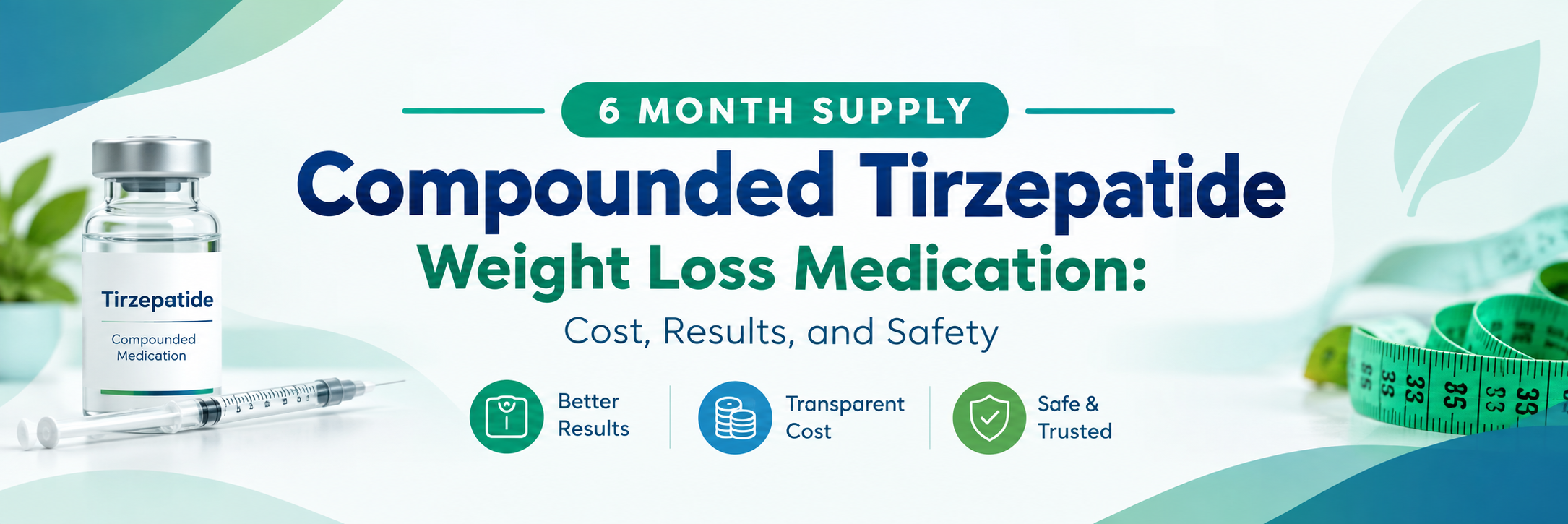
Tirzepatide is a prescription medication that acts on two metabolic hormone pathways: glucose-dependent insulinotropic polypeptide (GIP) and glucagon-like peptide-1 (GLP-1). It can reduce appetite and food intake and is used as part of medical treatment for certain people with obesity or overweight.
In the United States, Zepbound is the FDA-approved tirzepatide product indicated for chronic weight management in eligible adults, alongside a reduced-calorie diet and increased physical activity. Tirzepatide is also marketed as Mounjaro for certain adults with type 2 diabetes.
A six-month supply of compounded tirzepatide may sound convenient or economical, but compounded products require additional consideration. Compounded drugs are not FDA-approved and do not undergo the FDA’s premarket review for safety, effectiveness, and quality.
There is no reliable amount of weight loss that can be guaranteed from a six-month course of compounded tirzepatide.
Weight-loss outcomes can vary according to starting body weight, BMI, dosage, treatment adherence, dietary intake, physical activity, metabolic health, medical conditions, and individual response to treatment.
Clinical research on FDA-approved tirzepatide provides useful evidence about the active medication, but results from approved products should not automatically be assumed to apply identically to compounded preparations.
In the 72-week SURMOUNT-5 trial, adults with obesity without type 2 diabetes who received maximum tolerated doses of tirzepatide had an average body-weight reduction of 20.2% from baseline, compared with 13.7% with semaglutide. The trial studied FDA-regulated treatment rather than compounded tirzepatide and lasted 72 weeks, not six months.
Therefore, a six-month weight-loss estimate should be individualized by a healthcare professional rather than based on a fixed percentage.
Tirzepatide is used medically for weight management, but it is important to distinguish FDA-approved tirzepatide from compounded versions.
Zepbound is FDA-approved for chronic weight management in adults meeting specific BMI criteria, including adults with obesity or adults with overweight plus at least one weight-related condition.
Compounded tirzepatide is produced by a compounding pharmacy under applicable laws and regulations. Unlike an FDA-approved drug, a compounded medication is not evaluated by the FDA through the standard approval process for safety, effectiveness, and manufacturing quality before marketing.

A six-month supply generally means medication intended to cover approximately six months of treatment. However, this does not necessarily mean that a patient should receive six months of medication at once.
Tirzepatide treatment can involve dose escalation, and the appropriate dose depends on the individual treatment plan. A healthcare professional should determine the medication strength, administration schedule, titration, and duration of treatment.
Patients should never change the dose, injection frequency, or titration schedule independently.
The FDA has received reports involving dosing errors with compounded GLP-1 medications, including incorrect measurement and administration. Reports associated with compounded semaglutide or tirzepatide have included nausea, vomiting, diarrhea, abdominal pain, and constipation.
Compounded tirzepatide should only be obtained through a legitimate prescription and an appropriately licensed pharmacy operating under applicable compounding requirements.
Before obtaining a compounded medication, ask:
The FDA recommends that patients obtain a prescription from a physician and fill it through a state-licensed pharmacy.
A medication supplier and a legitimate compounding pharmacy are not necessarily the same thing.
Source verification is particularly important for injectable medications. The FDA has reported fraudulent compounded tirzepatide products with false labeling, including cases where pharmacies named on labels did not actually compound the products.
Consumers should be cautious about websites making claims that compounded tirzepatide is simply a “generic” version of Zepbound or Mounjaro. FDA has specifically addressed misleading marketing claims concerning unapproved compounded GLP-1 products.
Tirzepatide may be obtained through legitimate online prescription services, but an online purchase should still involve appropriate medical evaluation and a valid prescription.
Before using an online provider, verify the identity of the healthcare professional, prescription process, pharmacy, medication label, dosage instructions, and contact information.
Avoid websites that offer prescription tirzepatide without appropriate medical evaluation or make unrealistic claims about rapid weight loss.
The FDA recommends using legitimate prescription pathways and provides resources for consumers seeking to purchase prescription medicines safely online.
Tirzepatide is marketed under different brand names for different medical indications.
Zepbound contains tirzepatide and is FDA-approved for chronic weight management in eligible adults as an adjunct to a reduced-calorie diet and increased physical activity.
Mounjaro also contains tirzepatide but is approved for specific diabetes-related treatment rather than being the brand indicated specifically for chronic weight management.
The distinction between brand, indication, dosage, and patient eligibility is important when discussing prescription treatment.
FDA-approved tirzepatide products are distributed through regulated prescription channels. Patients generally obtain them through a healthcare professional and authorized dispensing channels rather than purchasing prescription medication as an unrestricted consumer product.
Manufacturer products and compounded medications are also different categories. A compounded medication should not be represented as FDA-approved or automatically equivalent to an FDA-approved commercial product. FDA has emphasized that compounded drugs are not FDA-approved.
The cost of tirzepatide can vary substantially depending on the product, dosage, insurance coverage, pharmacy, eligibility for savings programs, location, and whether the medication is an FDA-approved product or compounded preparation.
There is no single three-month price that applies to every patient.
The total cost depends on the prescribed dose, dispensing schedule, insurance benefits, pharmacy, and treatment pathway. Patients should obtain a current price directly from their legitimate pharmacy or healthcare provider.
Important factors include:
Compounded medication prices can vary between pharmacies and providers. A lower price should not be the only consideration.
Patients should also consider pharmacy credentials, medication labeling, prescription requirements, storage instructions, quality controls, and clinical monitoring.
Wholesale acquisition cost and patient out-of-pocket cost are different concepts.
A wholesale price may reflect a manufacturer’s or distributor’s pricing arrangement, whereas a patient’s final cost can include dispensing, pharmacy operations, insurance adjustments, professional services, and other expenses.
For compounded medication, pricing can also vary based on formulation, pharmacy operations, ingredients, dispensing quantity, and clinical services.
“Stronger” is not a precise medical term for comparing these medications.
Tirzepatide acts on both GIP and GLP-1 pathways, whereas semaglutide, the active ingredient in Ozempic, primarily acts through the GLP-1 receptor.
Clinical evidence can compare outcomes under specific study conditions. In SURMOUNT-5, tirzepatide produced greater average weight reduction than semaglutide over 72 weeks in adults with obesity without diabetes. However, this does not mean that one medication is automatically appropriate for every patient.
The choice of medication should consider medical history, treatment indication, adverse effects, contraindications, tolerability, cost, and healthcare-provider recommendations.
A legitimate provider should involve appropriate medical assessment and prescription treatment rather than simply selling medication.
Before beginning treatment, check whether:
Compounded tirzepatide should not be treated as a generic version of an FDA-approved drug. FDA has stated that compounded drugs are not FDA-approved and has taken action against misleading claims surrounding compounded GLP-1 products.
Compounded medications require additional attention because they do not undergo the FDA’s standard premarket review for safety, effectiveness, and quality.
Potential concerns include incorrect concentration, dosing errors, administration mistakes, inadequate labeling, storage problems, contamination, and product authenticity.
The FDA reported more than 730 adverse-event reports associated with compounded tirzepatide as of May 31, 2026, while noting that adverse events may be underreported and that reports do not always establish that the medication directly caused the event.
Common adverse effects associated with tirzepatide treatment can include gastrointestinal symptoms such as nausea, diarrhea, vomiting, constipation, and abdominal discomfort. These effects are particularly relevant during dose escalation.
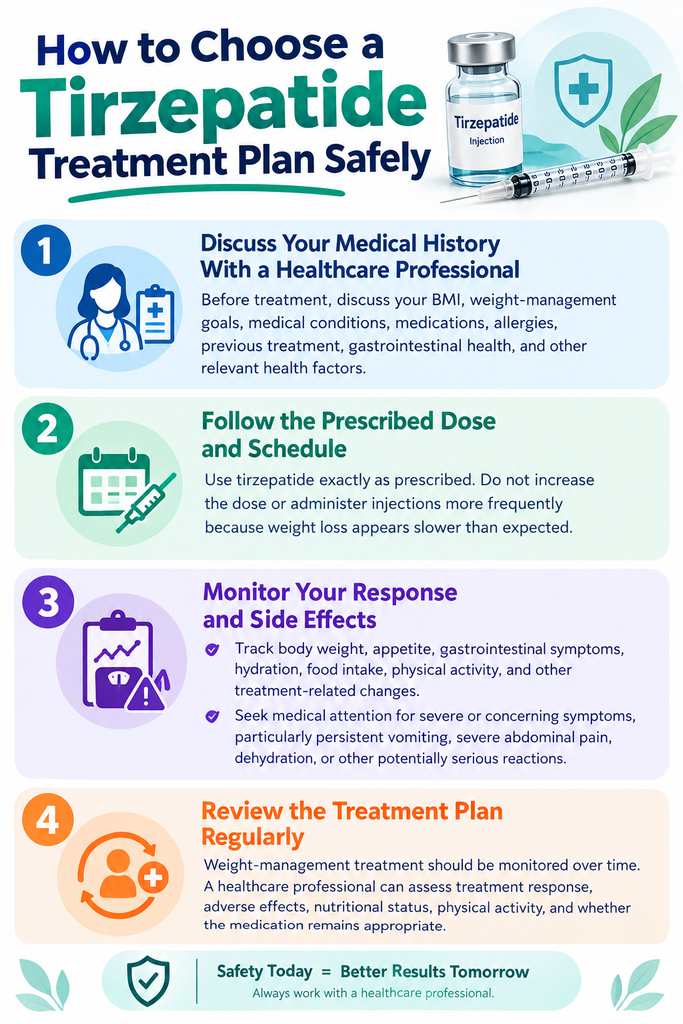
Before treatment, discuss your BMI, weight-management goals, medical conditions, medications, allergies, previous treatment, gastrointestinal health, and other relevant health factors.
Use tirzepatide exactly as prescribed. Do not increase the dose or administer injections more frequently because weight loss appears slower than expected.
Track body weight, appetite, gastrointestinal symptoms, hydration, food intake, physical activity, and other treatment-related changes.
Seek medical attention for severe or concerning symptoms, particularly persistent vomiting, severe abdominal pain, dehydration, or other potentially serious reactions.
Weight-management treatment should be monitored over time. A healthcare professional can assess treatment response, adverse effects, nutritional status, physical activity, and whether the medication remains appropriate.
A six-month supply of compounded tirzepatide involves more than calculating medication cost or estimating potential weight loss. Patients should consider the source of the medication, prescription requirements, dosing schedule, pharmacy credentials, treatment monitoring, adverse effects, and the distinction between compounded and FDA-approved products.
Tirzepatide has demonstrated substantial weight-loss effects in clinical trials of approved treatment, but individual outcomes vary and research results from FDA-approved products should not automatically be applied to compounded preparations.
For anyone considering tirzepatide for weight management, a qualified healthcare professional can help determine whether treatment is appropriate and develop a plan that incorporates medication, nutrition, physical activity, metabolic health, and long-term weight-management goals.