Physical Address
304 North Cardinal St.
Dorchester Center, MA 02124
Physical Address
304 North Cardinal St.
Dorchester Center, MA 02124


For beginners, understanding vitamins and supplements can feel overwhelming. There are multivitamins, minerals, herbal products, gummies, capsules, powders, and countless combinations available on the market. The right choice, however, depends on your diet, age, lifestyle, nutritional needs, and health goals.
Vitamins are essential micronutrients that help the body perform many important functions. Most people can get many nutrients from a varied diet, but supplements can sometimes help fill nutritional gaps when dietary intake is inadequate or when a specific nutrient is needed.
This guide explains the basics of vitamins, minerals, multivitamins, and other wellness dietary supplements, including how to understand labels, compare products, and use supplements responsibly.
Vitamins are organic compounds that the body needs in relatively small amounts to maintain normal physiological processes. They help support metabolism, immune defenses, bone development, blood formation, nervous-system function, and many other processes.
Unlike carbohydrates, protein, and fat, vitamins are not primarily used as sources of energy. Instead, they help the body use other nutrients and maintain normal cellular functions.
The main function of vitamins is to support the chemical and biological processes that keep your body functioning normally. The vitamins main job varies depending on the specific vitamin.
The major functions of vitamins include:
When people ask what are functions of vitamins, there is no single answer because each vitamin has different responsibilities.
For example, vitamin A contributes to normal vision and immune function, while vitamin D supports calcium absorption and bone health. Vitamin C is involved in collagen formation and antioxidant protection, while B vitamins participate in energy metabolism and other cellular processes.
This is why the role of vitamins in the body is broad rather than limited to one function. Understanding each nutrient’s specific purpose is more useful than assuming all vitamins work in the same way.
Vitamins are classified as micronutrients, meaning the body generally requires them in much smaller amounts than macronutrients such as carbohydrates, proteins, and fats.
Needing a small amount does not make a vitamin unimportant. Even relatively small quantities can be essential for normal physiological processes.
However, taking more does not automatically provide greater benefits. Some nutrients can become harmful when consumed in excessive amounts, particularly when high-dose supplements are combined or used for long periods.
For this reason, supplement users should focus on appropriate intake rather than simply choosing the highest-dose product.
Vitamins are commonly divided into two major groups: fat-soluble vitamins and water-soluble vitamins.
The four fat-soluble vitamins are:
These vitamins can be stored in body tissues, particularly the liver and body fat. Because the body can retain them, excessive supplementation can sometimes lead to excessive levels.
You may see products marketed as vitamin A and D tablets or combinations containing multiple fat-soluble nutrients. The appropriate amount depends on individual nutritional needs and the product’s formulation.
A balanced diet can provide fat-soluble vitamins through foods such as vegetables, fruits, dairy products, eggs, fish, nuts, seeds, and fortified foods.
Water-soluble vitamins include:
B vitamins include several individual vitamins, such as B1, B2, B3, B5, B6, B7, B9, and B12.
Unlike fat-soluble vitamins, water-soluble vitamins are generally not stored extensively in the body. This is one reason regular dietary intake is important.
People searching for vitamin D and B vitamins, vitamin A B C and D, or even vitamin ABC should remember that these terms can describe combinations or informal ways of referring to groups of vitamins rather than official product categories.
The familiar vitamin letters make it easier to identify individual nutrients, but each vitamin has its own biological role.
Understanding the types of vitamins and their functions can help beginners evaluate whether a product actually fits their nutritional needs.
A common beginner question is: are vitamins organic or inorganic?
Vitamins are generally classified as organic compounds because they contain carbon and are produced by living organisms or through chemical processes that create the same or related molecular structures.
This is different from minerals. Minerals are inorganic elements, such as calcium, magnesium, iron, and zinc.
Therefore, when someone asks whether vitamins are organic or inorganic, the simple nutritional distinction is:
The phrase vitamins organic or inorganic compounds can therefore be understood by looking at their chemical classification.
However, “organic” in chemistry should not automatically be confused with the term “organic” used on food labels. A vitamin being an organic compound does not necessarily mean that a supplement is certified organic.
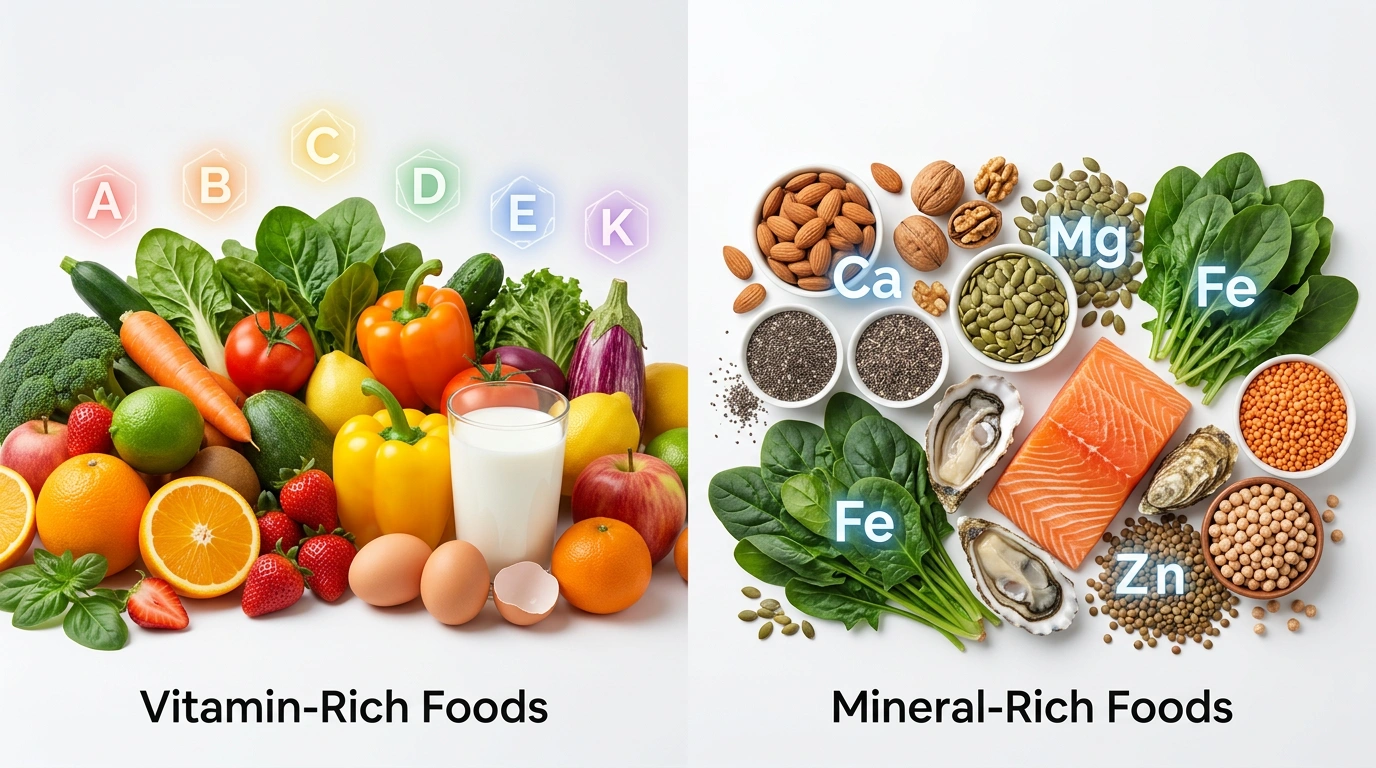
Understanding the difference between minerals and vitamins is one of the first steps for anyone learning about dietary supplements.
Vitamins are organic micronutrients required for various physiological processes.
The major vitamin groups include:
They are found naturally in many foods and can also be included in fortified foods and dietary supplements.
A vitamin and mineral supplement combines vitamins with one or more minerals, while a multivitamin may contain several vitamins and sometimes minerals as well.
Minerals are naturally occurring inorganic elements that the body needs for functions such as bone structure, fluid balance, nerve signaling, muscle function, oxygen transport, and enzyme activity.
Common dietary minerals include:
People may choose a mineral supplement when their dietary intake does not provide enough of a particular mineral or when a healthcare professional recommends supplementation.
A natural mineral supplement may contain minerals in different chemical forms. Some products also use terms such as chelated minerals to describe how a mineral is bound to another compound.
The terms metal supplements, vitaminerals, and multivitamin mineral may appear in online searches, but consumers should focus on the actual ingredients and Supplement Facts panel rather than relying on marketing terminology.
Although vitamins and minerals are different, they often work together.
For example, vitamin D helps the body absorb calcium, while several B vitamins participate in metabolic pathways involving other nutrients.
This is why a product labeled multivitamin and minerals may contain both categories. However, combining nutrients does not automatically make a product better. The best formulation depends on the individual’s nutritional needs.
The distinction between water-soluble and fat-soluble vitamins is particularly important for supplement users.
| Water-Soluble Vitamins | Fat-Soluble Vitamins |
| Vitamin C and B vitamins | Vitamins A, D, E, and K |
| Generally not stored extensively | Can be stored in body tissues |
| Regular dietary intake is important | The body can retain them |
| Found in many fruits, vegetables, grains, and other foods | Often associated with dietary fats and certain animal or plant foods |
| Excess amounts may be eliminated through urine, depending on the nutrient | Excessive intake can accumulate |
This does not mean water-soluble vitamins are always harmless in large doses. Some can cause adverse effects when consumed excessively. Likewise, not every fat-soluble vitamin behaves identically in the body.
The important lesson for beginners is to follow recommended intake levels and avoid assuming that more is better.
A common search is is zinc water or fat soluble?
The answer is that zinc is neither water-soluble nor fat-soluble because zinc is a mineral, not a vitamin.
Water-soluble and fat-soluble are classifications primarily used for vitamins. Zinc is an essential mineral that participates in numerous biological processes, including immune function, protein synthesis, and normal cellular activity.
Therefore, when comparing vitamins and minerals, remember that minerals such as zinc, calcium, magnesium, and iron are not categorized into water-soluble and fat-soluble vitamin groups.
Vitamins can come from foods, fortified products, and dietary supplements. Depending on the nutrient, vitamins may be naturally present in foods, produced by plants or microorganisms, or manufactured for use in supplements.
A varied diet can provide vitamins from many food groups, including:
For example, fruits and vegetables can provide vitamin C and various carotenoids, while eggs and dairy products can contribute several vitamins and minerals.
The phrase vitamins from plants is commonly used for nutrients obtained directly from plant foods or plant-derived ingredients.
You may also encounter searches for vitamin G foods, vitamin G, vitamin N, or vitamin O. These are not standard names for officially recognized essential vitamins in modern nutritional science.
Similarly, terms such as vitamin P and vitaminas P may appear in older literature, alternative health discussions, or search results, but they should not automatically be treated as official vitamin classifications.
When researching supplements, it is better to identify the actual nutrient or botanical ingredient rather than relying on unofficial “vitamin letter” terminology.
People often ask how are vitamins made.
The answer varies depending on the nutrient and the manufacturer. Vitamins used in supplements may be obtained through processes such as:
Some nutrients are extracted from natural sources, while others are produced synthetically. A synthetic vitamin can have the same chemical identity as a naturally occurring vitamin, although the source and formulation may differ.
Quality control is an important part of supplement manufacturing. Manufacturers may test raw materials, verify nutrient concentrations, check for contaminants, and evaluate finished products for consistency.
For consumers, the most useful approach is to look beyond phrases such as “natural” or “advanced formula” and examine the actual ingredients, dosage, serving size, and quality information.
Dietary supplements are products intended to supplement the diet. They can contain vitamins, minerals, herbs or other botanicals, amino acids, enzymes, and other dietary ingredients.
Common supplement categories include multivitamins, individual vitamins, mineral products, herbal supplements, and combination formulas.
A multivitamin typically contains multiple vitamins and may also include minerals.
People may use a multivitamin because it offers convenience and combines several nutrients in one product. Formulations vary considerably, so two products labeled “multivitamin” may contain very different nutrient amounts and forms.
Some products are designed around particular age groups, dietary patterns, or life stages.
Mineral supplements can provide individual nutrients such as:
An individual mineral supplement may be more appropriate than a broad multivitamin when a specific nutritional need has been identified.
Herbal supplements contain botanical ingredients or extracts. They may include herbs, plant compounds, and other naturally derived substances.
A typical herbal dietary supplements list can include products containing different botanical ingredients, but “natural” does not automatically mean risk-free. Herbs can have biological effects and may interact with medications.
Phytonutrients supplements may also contain compounds derived from plants. The specific evidence and purpose vary widely between ingredients.
Other products include:
A protein powder with vitamins and minerals, for example, combines macronutrient protein with selected micronutrients. It should not automatically be considered equivalent to a standard multivitamin.
Understanding the purpose and ingredients of each product makes it easier to choose supplements based on actual nutritional needs rather than marketing claims.
One of the most common questions beginners have is whether they should choose a multivitamin or purchase individual nutrients. The answer depends on your diet, nutritional needs, health goals, and whether you have a known deficiency.
The question is it better to take multivitamins or individual vitamins does not have one answer for everyone.
A multivitamin can be convenient because it combines several nutrients into one product. Individual vitamins, on the other hand, allow you to target a specific nutrient without necessarily taking additional vitamins you may not need.
When comparing multivitamin vs individual vitamins, consider:
If you are wondering is it better to take a multivitamin or individual vitamins, consider your actual nutritional intake rather than assuming one option is universally superior.
Individual vitamins may make more sense when a specific nutritional need has been identified.
For example, someone may need an individual supplement because of:
This is also why the question do you need to take a multivitamin should be considered individually. Many people can obtain adequate nutrients from a varied diet, while others may benefit from supplementation.
People also ask why should you take a multivitamin or what is multivitamin used for. In general, multivitamins are designed to supplement dietary intake by providing multiple vitamins and sometimes minerals in one product. They are not intended to replace a balanced diet.

Choosing a supplement should involve more than looking at the front of the bottle. The Supplement Facts panel, ingredient list, serving size, nutrient forms, and dosage all matter.
The Supplement Facts label is one of the most important resources for comparing products.
Look for:
For example, two supplements may both contain magnesium but use different forms and provide different amounts per serving.
Reading supplement facts carefully can also help you identify duplicate nutrients when you take more than one product.
Bioavailability refers broadly to how much of a nutrient or compound becomes available for the body to absorb and use.
The form of a nutrient can affect its absorption and utilization. Other factors can also influence bioavailability, including the food consumed with a supplement and individual digestive factors.
The term high bioavailability supplements is commonly used in supplement marketing. However, consumers should look for evidence supporting the specific nutrient form rather than assuming that a product is superior simply because it uses the phrase “high bioavailability.”
A bioavailable vitamin may refer to a vitamin formulation designed to be readily absorbed or utilized, but the actual form and evidence are more important than the marketing label.
The question what does chelated vitamins mean is slightly misleading because chelation is most commonly discussed in relation to minerals rather than vitamins.
Chelation occurs when a mineral is bound to another molecule or compound. The resulting form may be described as a chelated mineral.
Examples commonly found in supplements include:
You may see terms such as chelated vitamins on product pages, but technically, the term is generally more relevant to mineral ingredients.
The purpose of using a chelated mineral can vary depending on the specific compound and formulation. Consumers should evaluate the actual nutrient form, dosage, evidence, and product quality rather than assuming every chelated product is automatically better.
The terms “natural” and “synthetic” can be confusing.
Some supplements contain nutrients obtained from food or other natural sources, while others use nutrients manufactured through controlled chemical or biological processes.
When comparing vitamins from plants, food-derived nutrients, and synthetic ingredients, consider:
The phrase USDA organic vitamins can also be confusing. USDA organic certification applies to agricultural products and ingredients under specific standards; it does not mean that every vitamin molecule itself has a separate “organic vitamin” classification.
Likewise, a natural mineral supplement may use minerals sourced from natural materials, but consumers should still check the actual ingredient form and dosage.
Supplement labels commonly use different measurement units. Two of the most important are milligrams and micrograms.
If you are wondering what does mcg mean in vitamins, mcg means microgram.
A microgram is a very small unit of measurement.
The abbreviation may appear on labels for nutrients such as vitamin B12, vitamin D, folate, iodine, and other vitamins or minerals.
You may see what is mcg on vitamins when comparing products with different nutrient amounts. Understanding the unit helps prevent accidental mistakes when comparing supplements.
The difference between milligrams and micrograms is significant:
1 milligram (mg) = 1,000 micrograms (mcg)
Therefore, mcg vs mg vitamins should never be compared by looking only at the number.
For example, 1 mg is much larger than 1 mcg.
When considering mcg vs mg in vitamins, always check the unit before deciding that one supplement contains a higher or lower amount.
The question what is the difference between mg and mcg in vitamins is especially important when comparing products with different formulations or when following a recommended nutrient intake.
There is no universal vitamin list that every beginner should take every day.
Nutritional requirements vary according to:
A person who eats a varied diet may have different needs from someone with a highly restricted diet.
The question what vitamins should I take daily for a man should be answered based on individual nutritional requirements rather than gender alone.
Men generally need a range of vitamins and minerals for normal metabolism, immune function, bone health, blood formation, and other physiological processes.
A balanced diet that includes vegetables, fruits, whole grains, legumes, lean proteins, seafood, dairy or suitable alternatives, nuts, and seeds can provide many essential nutrients.
A multivitamin may be useful in some circumstances, but choosing one should involve checking its nutrient amounts rather than assuming every men’s formula is appropriate.
The question what vitamins should I take as a woman also depends on age, diet, life stage, and nutritional status.
Vitamins and supplements for women may be formulated around different nutritional needs, but individual requirements vary considerably.
For example, nutritional considerations can change during pregnancy, breastfeeding, adulthood, and later life.
Women should be especially cautious about taking high-dose supplements without a clear reason, particularly when multiple products contain overlapping nutrients.
Condition-specific supplements are products marketed toward particular health concerns or nutritional situations.
Searches such as what vitamins help with ADD illustrate why careful evaluation is important. Nutritional supplements should not be treated as automatic replacements for evidence-based treatment.
If you have a diagnosed condition, take medications, or are considering supplements for a specific symptom, discuss the appropriate approach with a qualified healthcare professional.
The best time to take a supplement depends on the specific nutrient, product instructions, whether it should be taken with food, and how your body tolerates it.
There is no universal answer to vitamins morning or night.
Some people prefer taking supplements in the morning because it is easier to remember. Others take them later in the day.
When deciding when to take vitamin products, consider:
Consistency is often more practical than focusing on a perfect time of day.
The answer to should you take vitamins with food depends on the product.
Fat-soluble vitamins are generally absorbed along with dietary fat, so taking them with a meal containing some fat may be appropriate.
Some supplements may be easier on the stomach when taken with food.
At the same time, there are vitamins you can take on an empty stomach, depending on the specific nutrient and formulation.
Always check the product label and follow its directions.
The question should I take all my vitamins at once depends on which vitamins and minerals you are taking.
Taking several products together can increase convenience, but it can also make it easier to accidentally duplicate nutrients.
Before combining products, check whether multiple supplements contain:
If you are asking what vitamins can I take together daily, there is no universal combination that applies to everyone.
The safest approach is to evaluate the complete nutrient list and follow recommended doses.
A simple when to take supplements chart can help beginners organize products, but the instructions on the individual product should take priority.
| Supplement Type | General Timing Consideration |
| Vitamin A | Often taken with a meal containing fat |
| Vitamin D | Often taken with food containing fat |
| Vitamin E | Usually taken with food |
| Vitamin K | Often taken with food |
| Vitamin C | Can generally be taken with or without food; food may improve tolerance |
| B vitamins | Often convenient earlier in the day, depending on the product |
| Minerals | Timing varies by mineral and formulation |
| Multivitamins | Follow the label; often taken with a meal |
This best time to take supplements chart is a general guide rather than individualized medical advice.
Many supplements contain multiple nutrients, and some combinations are commonly used.
For example, products may contain:
A vitamin C and D supplement may combine these two nutrients in one formula. You may also see products marketed as vitamin C & D supplements or vitamin C and D supplements.
Similarly, some combination products contain vitamin D3 + vitamin K2 + magnesium + zinc.
However, combining supplements requires careful label reading.
If one multivitamin already contains vitamin D, zinc, and magnesium, adding separate products may unnecessarily increase your total intake.
The same principle applies to vitamin A and D tablets and other combination formulas.
The goal should not be to collect as many nutrients as possible. The goal is to meet nutritional needs without unnecessary duplication or excessive intake.
The answer to what happens to your body when you start taking vitamins varies from person to person.
If someone has an inadequate intake of a particular nutrient, correcting that nutritional gap may eventually support normal body functions associated with that nutrient.
However, people who already meet their nutritional requirements may not notice an obvious physical change after starting a supplement.
Possible experiences can depend on:
Supplements should complement a balanced diet rather than replace nutritious foods.
A person should also avoid assuming that tiredness, hair changes, skin changes, or other symptoms automatically mean they have a vitamin deficiency.
The question how long do vitamins stay in your system does not have one universal answer.
Water-soluble vitamins and fat-soluble vitamins behave differently.
Water-soluble vitamins generally are not stored extensively, although some exceptions exist. Fat-soluble vitamins can be stored in body tissues, meaning they may remain available for longer periods.
The question how long does a vitamin stay in your system therefore depends on the specific vitamin, its dose, the body’s stores, metabolism, and individual circumstances.
This is another reason why taking very high doses without a nutritional reason is not necessarily beneficial.
If you are wondering how to check vitamin levels, the best method depends on the nutrient and the reason for testing.
Evaluation may include:
A blood test may be useful for assessing certain nutrients, but not every vitamin or nutrient can be accurately evaluated using the same test.
Searching for a vitamin laboratory or using an online supplement database can provide general information, but database entries should not replace professional interpretation.
A dietary supplement database can be useful for researching ingredients and products, while a healthcare professional can help determine whether testing or supplementation is appropriate.
Avoid diagnosing a deficiency solely from a symptom because many symptoms have multiple possible causes.
A common beginner question is do daily vitamins work? The answer depends largely on whether a person actually needs additional nutrients.
Supplements can be useful when dietary intake is inadequate or when a specific nutritional need has been identified. However, taking a supplement does not necessarily produce noticeable benefits if you already receive enough of that nutrient from food.
The purpose of supplementation is generally to help meet nutritional requirements, not to provide unlimited amounts of vitamins and minerals.
Factors that can influence whether a supplement is appropriate include:
A daily supplement should therefore be considered part of an overall nutrition strategy rather than a replacement for vegetables, fruits, whole grains, protein-rich foods, and other nutritious foods.
Should one take multivitamins daily? Not necessarily.
Some people may find a daily multivitamin convenient, while others may not need one if they consistently meet their nutritional requirements through food.
Whether someone should take multivitamins depends on their individual nutritional situation.
A multivitamin can be convenient when someone wants a broad combination of nutrients in one product. However, it is important to compare the actual amounts of nutrients rather than assuming every multivitamin provides the same formulation.
The question is it healthy to take multivitamins depends on the specific product, dose, and individual.
For many healthy adults, a standard-dose multivitamin used according to its label may be reasonable. However, high-dose products or combinations of multiple supplements can increase the risk of excessive intake.
If you are asking is it ok to take multivitamins, consider whether you actually need the nutrients provided and whether other supplements or fortified foods are already contributing to your intake.
Likewise, is it good to take vitamins everyday is not a question that can be answered without considering which vitamins, how much, and why they are being taken.
More is not automatically better.
If you are wondering do vitamins have calories, vitamins themselves do not provide meaningful calories in the way carbohydrates, protein, and fat do.
However, a supplement product may contain calories from other ingredients.
For example:
This means that while the vitamin itself does not function as a calorie source, the overall supplement product may contribute calories.
A protein powder with vitamins and minerals, for example, can provide substantial calories because of its protein, carbohydrate, or fat content.
Similarly, an oral supplement may contain additional ingredients that contribute energy.
For people tracking calorie intake, checking the complete nutrition information and ingredient list can provide a clearer picture than focusing only on the vitamin content.
The terms “natural,” “organic,” and “plant-based” are often used interchangeably in supplement marketing, but they do not mean exactly the same thing.
A natural vitamin may refer to a nutrient obtained from a natural source or a product marketed as being derived from natural ingredients.
However, the word “natural” alone does not tell you:
Vitamins from plants can occur naturally in foods such as fruits, vegetables, legumes, nuts, seeds, and whole grains.
Plant-based supplements may also contain botanical extracts and other plant compounds.
Phytonutrients supplements are designed to provide compounds found in plants, although phytonutrients are a broad category and are not interchangeable with essential vitamins.
The term USDA organic vitamins can be misleading because USDA organic certification applies to eligible agricultural products and ingredients under established standards.
A supplement containing an organic-certified ingredient is not necessarily an “organic vitamin” in a chemical sense.
Consumers should distinguish between:
A natural mineral supplement may provide minerals from naturally occurring sources, but the source alone does not determine whether the product is suitable.
When comparing mineral products, examine the form, amount per serving, serving size, additional ingredients, and directions for use.
Likewise, claims involving high bioavailability supplements or a bioavailable vitamin should be evaluated by looking at the specific nutrient form and available evidence.
Learning a few basic facts can make supplement labels and nutrition information easier to understand.
Here are some interesting facts about vitamins beginners should know:
These fun facts about vitamins demonstrate why nutrition is more complicated than simply counting the number of supplements you take.
The supplement industry uses many different terms. Understanding the terminology can make online research easier.
You may encounter words such as:
Search engines may also return unusual spellings such as vetamins, vitamie, or nvitamin. These are generally spelling variations or search terms rather than different categories of nutrients.
Similarly, vitaminhealth, nutri vitamins, and vitaminerals may appear as product or marketing terminology.
Rather than relying on the wording alone, check the actual ingredient list and Supplement Facts panel.
People research supplements in many languages.
For example:
The underlying nutritional concepts remain the same, although product names and labeling requirements may differ between countries.
Searches for vitamin G, vitamin N, vitamin O, and vitamin P may appear online.
You may also see phrases such as:
These terms should be treated carefully.
Not every phrase containing the word “vitamin” represents an officially recognized essential vitamin. Some names may be historical, informal, alternative-health terminology, marketing language, or references to compounds that are not classified as vitamins.
For accurate nutrition information, rely on recognized vitamin names and established scientific terminology.
Choosing a supplement can be confusing because products often use terms such as “advanced,” “premium,” “natural,” and “complete formula.”
Instead of judging a product by marketing language, use a consistent checklist.
Before buying a supplement, check:
1. Ingredient list:
Look at every active and inactive ingredient.
2. Dosage:
Check the amount provided per serving.
3. Serving size:
A bottle containing 60 capsules does not necessarily mean 60 servings.
4. Nutrient form:
Different forms of the same nutrient may be used in different products.
5. Bioavailability:
Consider whether there is evidence supporting the nutrient form and its absorption.
6. Supplement Facts:
Review the full Supplement Facts panel instead of relying on front-label claims.
7. Expiration date:
Check that the product is within its recommended shelf life.
8. Storage requirements:
Some products require protection from heat, moisture, or light.
9. Quality testing:
Look for transparent quality-control information and reputable manufacturing practices.
10. Allergens:
Review the ingredient information if you have food allergies or sensitivities.
11. Unnecessary additives:
Compare products to determine whether you need additional sweeteners, colors, or other ingredients.
When comparing a multivitamin and minerals product with another multivitamin mineral formula, don’t simply choose the one containing the largest number of nutrients.
Instead, compare:
A vitamin and mineral supplement may contain a broader selection of nutrients than a single-vitamin product, but broader does not automatically mean better.
A wellness dietary supplement should be evaluated based on its actual formulation and intended purpose.
If you are researching products online, a dietary supplement database or supplement database can sometimes help you compare ingredients, but always verify information against the current product label.
There is no single feature that makes every supplement high quality.
Instead, consider a combination of factors, including:
Terms such as high bioavailability supplements, bioavailable vitamin, and chelated vitamins can be useful starting points for research, but they should not replace careful evaluation.
The same applies to a natural mineral supplement or an herbal dietary supplements list. A natural or herbal ingredient can still have biological effects and may not be appropriate for everyone.
Condition-specific supplements deserve additional caution because products marketed for particular conditions can make claims that vary greatly in scientific support.
Learning how to take supplements is just as important as choosing them.
Follow these basic principles:
Take supplements according to the product’s directions unless a healthcare professional has given you different instructions.
Do not assume that taking more capsules will provide greater benefits.
If you use a multivitamin, check whether another supplement contains the same nutrients.
For example, a multivitamin may already provide vitamin D and zinc. Adding separate vitamin D and zinc products could significantly increase your total intake.
Check both the amount per serving and the number of servings you take each day.
Remember that mcg mean micrograms and mg means milligrams, with:
1 mg = 1,000 mcg.
Confusing these units can lead to major differences in intake.
Some supplements can interact with prescription or over-the-counter medications.
This is particularly important when taking:
Ask a healthcare professional or pharmacist if you are unsure whether a supplement is compatible with your medications.
Vitamins and supplements should be stored safely and according to product instructions.
Children can be particularly vulnerable to excessive intake of certain nutrients, so supplements should not be treated like ordinary candy or food.
People who are pregnant, breastfeeding, or nursing may have different nutritional requirements.
Nursing considerations for multivitamins can include reviewing the specific product, nutrient amounts, dietary intake, and any medications being used.
A prenatal or postnatal product should not automatically be substituted for another multivitamin without checking its formulation.
Some people search for guidance on NHS zinc supplements take with food because zinc products can sometimes cause stomach discomfort.
Whether zinc should be taken with food can depend on the specific product and individual tolerance. Follow the product directions and seek professional advice if you experience persistent side effects.
There is no universal daily supplement list for every man. Nutritional needs depend on age, diet, lifestyle, deficiencies, and individual health circumstances. A varied diet can provide many essential nutrients, while supplementation may be useful when a specific nutritional gap exists.
The appropriate supplements for a woman depend on factors such as age, diet, pregnancy or breastfeeding, nutritional status, and individual needs. Women should avoid assuming that every women’s multivitamin is appropriate for them.
Neither option is universally better. A multivitamin offers convenience and broad nutritional coverage, while individual vitamins allow more precise supplementation when a particular nutrient is needed.
A milligram is larger than a microgram. 1 mg equals 1,000 mcg. Always check the unit on a supplement label before comparing nutrient amounts.
Mcg means microgram, a very small unit of measurement. It is commonly used on supplement labels for nutrients such as vitamin B12, vitamin D, folate, iodine, and others.
Not everyone needs a multivitamin every day. Whether daily use is appropriate depends on diet, nutritional needs, health circumstances, and the formulation of the product.
A standard-dose multivitamin may be appropriate for some people, but high doses or unnecessary combinations can create excessive nutrient intake. Choose products based on actual nutritional needs.
It depends on the vitamin and product. Some vitamins are better absorbed with food, while others can be taken without food. Follow the supplement’s instructions and consider individual tolerance.
Some vitamins are commonly combined in multivitamins and other formulas, but there is no universal combination for everyone. Check for duplicate nutrients and avoid unnecessarily high total intake.
Effects vary. People with inadequate nutrient intake may benefit from correcting a nutritional gap, while someone who already receives enough of a nutrient may not notice an obvious change.
It depends on the vitamin, dosage, metabolism, and individual nutritional status. Water-soluble and fat-soluble vitamins have different storage patterns, with fat-soluble vitamins generally capable of being stored in body tissues.
They can be useful when they address inadequate nutrient intake or a specific nutritional need. However, taking more vitamins does not necessarily provide additional benefits when nutritional requirements are already being met.
Vitamins themselves do not provide meaningful calories. However, supplement products can contain calories from oils, sugars, protein, or other ingredients.
Depending on the nutrient, evaluation may involve dietary assessment, medical history, symptoms, risk factors, and laboratory testing. A healthcare professional can help determine whether testing is appropriate and interpret the results.