Physical Address
304 North Cardinal St.
Dorchester Center, MA 02124
Physical Address
304 North Cardinal St.
Dorchester Center, MA 02124

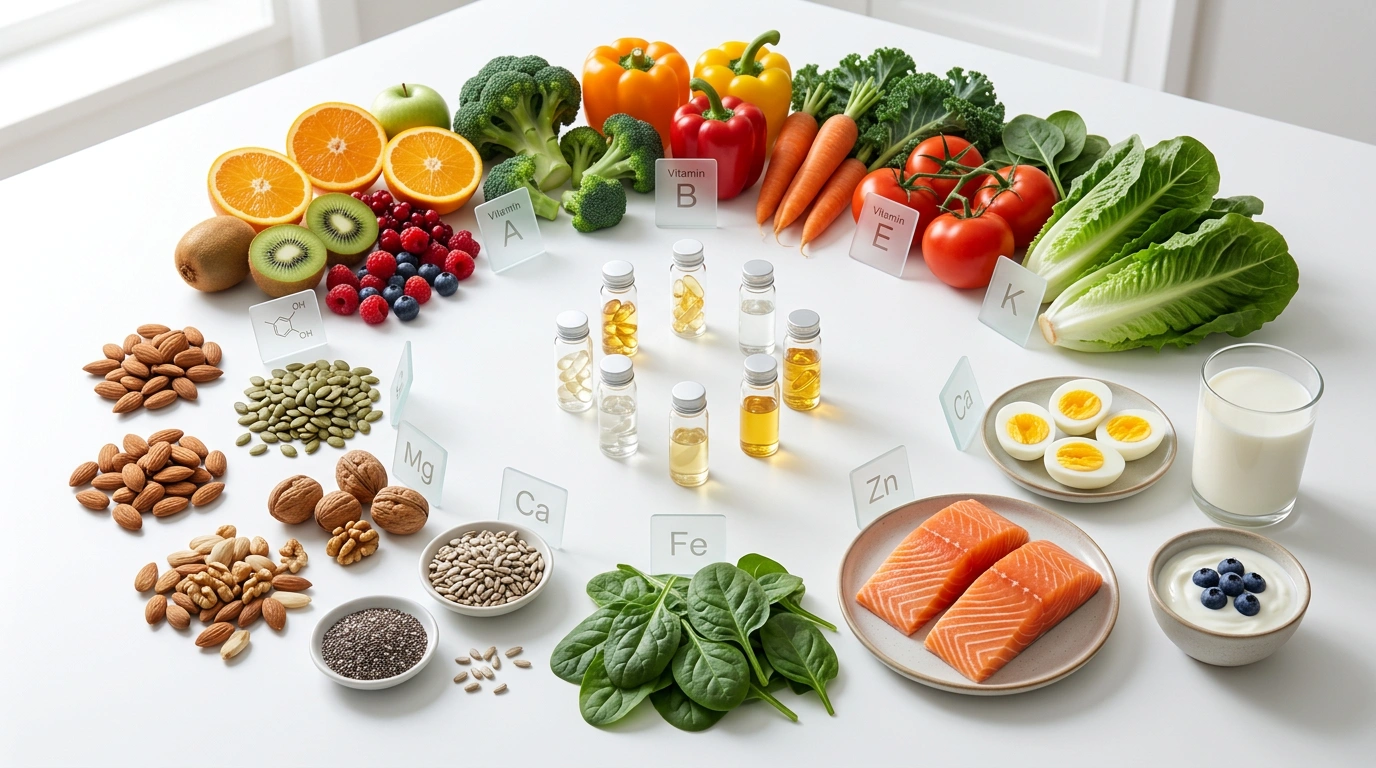
Good health is not built around one magic food, one supplement, or one perfect daily routine. Your body needs a wide range of nutrients every day to support everything from energy production and immune function to strong bones, healthy blood, nerve function, and normal cell growth. Among the most important are essential vitamins and minerals.
Most people can get many of these nutrients through a varied diet that includes fruits, vegetables, whole grains, beans, nuts, seeds, dairy products, eggs, seafood, and other nutrient-rich foods. However, dietary restrictions, limited food choices, certain life stages, or a documented deficiency can sometimes make supplementation worth considering.
That does not mean supplements should automatically replace healthy food. In most cases, they work best as a way to complement an already balanced diet.
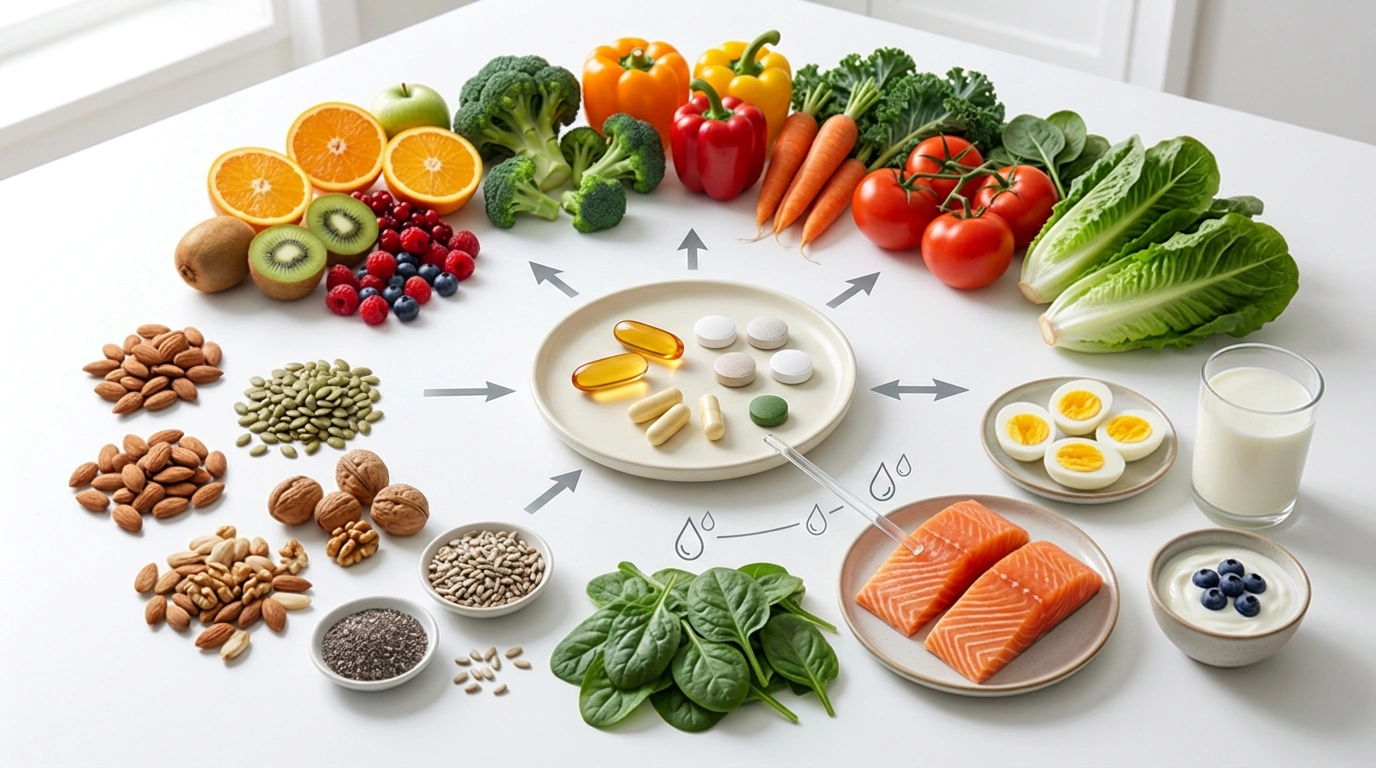
When shopping for supplements in the United States, it is also important to understand dosage, serving size, nutrient forms, and the information shown on a Supplement Facts label. Terms such as mg, mcg, Daily Value, chelated minerals, and bioavailability can make supplement shopping confusing if you do not know what they mean.
This guide breaks down the basics of vitamins and minerals, the roles they play, common food sources, supplement considerations, and practical tips for comparing products.
Vitamins and minerals are both micronutrients. Your body needs them in relatively small amounts, but that does not make them unimportant. In fact, many normal biological processes depend on having adequate amounts of these nutrients.
The biggest difference is simple: vitamins are organic compounds, while minerals are inorganic elements.
Vitamins are organic compounds that the body needs for normal growth, development, metabolism, and other biological functions. The word “organic” here refers to their chemical nature, not whether a food is labeled organic at the grocery store.
Because the body needs vitamins in small amounts, they are considered micronutrients rather than macronutrients like protein, carbohydrates, and fat.
There are two major groups:
Fat-soluble vitamins can be stored in body tissues, while water-soluble vitamins generally need more regular dietary intake. However, water-soluble does not mean that taking extremely high doses is automatically safe.
Many vitamins come naturally from foods. For example, colorful vegetables can provide vitamin A precursors, citrus fruits are well known for vitamin C, and leafy greens can provide vitamin K.
People sometimes search for a vitamin synonym, synonym vitamin, or synonyms of vitamins, but “micronutrients” is often the broader nutrition term. Searches such as vitamin letters or “vitamin ABC” can also refer to the familiar way people group vitamins by their names.
One common question is, are vitamins organic or inorganic? Vitamins are organic compounds. Minerals, in contrast, are inorganic elements.
Minerals are naturally occurring inorganic elements that the body requires for numerous functions. Some are needed in relatively larger amounts, while others are required only in very small quantities.
Examples include:
Minerals are commonly divided into major minerals and trace minerals based largely on how much the body needs.
Calcium and magnesium, for example, are major minerals, while zinc, iodine, and selenium are generally discussed as trace minerals.
You may also encounter terms such as vitamineral, vitaminerals, or natural mineral supplement when researching combination nutrition products. These terms generally point toward products containing multiple vitamins, minerals, or both.
It is worth remembering that minerals are elements. They are not “destroyed” by cooking in exactly the same way some vitamins can be affected by heat, light, or processing. However, minerals can be lost from foods when they leach into cooking water or when food portions and preparation methods change.
Vitamins do not provide calories like carbohydrates, protein, and fat. Instead, they help the body carry out important chemical and physiological processes.
The main function of vitamins is to help support normal body processes. Depending on the vitamin, this can include:
So, when someone asks, “What are the purpose of vitamins?” the answer is not limited to one function. Different vitamins have different jobs, and they often work together.
For example, B vitamins are closely involved in energy metabolism, vitamin C supports collagen formation and helps improve absorption of non-heme iron from plant foods, and vitamin D helps the body absorb calcium.
This is why focusing on only one nutrient can sometimes miss the bigger picture. A healthy diet provides a network of nutrients that work together.
There are plenty of useful facts about vitamins that can make nutrition easier to understand.
One interesting fact about vitamins is that the body handles different vitamins in very different ways. Vitamins A, D, E, and K are fat-soluble, meaning the body can store them. Vitamin C and the B vitamins are water-soluble and generally require more regular dietary intake.
Another fun fact about vitamins is that not every vitamin needs to come directly from a food in its final active form. Some nutrients can exist as precursors that the body converts into usable forms.
Vitamin D is another interesting example because the body can produce it in the skin after exposure to ultraviolet B radiation. However, vitamin D status can still vary widely between individuals based on factors such as sun exposure, skin coverage, season, geographic location, and diet.
These interesting facts about vitamins show why nutrition is more complicated than simply counting pills or choosing the supplement with the largest number on the label.
There are 13 recognized vitamins that are essential for human health: A, C, D, E, K, and eight B vitamins.
Vitamin A plays an important role in normal vision, immune function, reproduction, and healthy skin and tissues.
There are two broad dietary sources. Preformed vitamin A is found in animal foods such as liver, eggs, and dairy products. Plant foods can provide carotenoids such as beta-carotene, which the body can convert into vitamin A.
Orange and dark-green vegetables are especially useful sources of provitamin A carotenoids.
A deficiency can affect vision and immune health, while excessive intake of preformed vitamin A from supplements can also be harmful. This is one reason why more is not always better when choosing a supplement.
The B-vitamin family includes:
These nutrients support energy metabolism, nervous system function, red blood cell formation, and other important processes.
B vitamins are found across many food groups, including meat, poultry, seafood, eggs, dairy products, legumes, whole grains, nuts, seeds, and leafy vegetables.
Vitamin B12 deserves special attention because it naturally occurs mainly in animal-derived foods, although fortified foods and supplements can provide it. People following vegan diets may therefore need to pay particular attention to reliable B12 sources.
Searches such as vitamin D and B vitamins sometimes group these nutrients together because both are commonly discussed in daily supplement routines, but they perform different biological roles.
Likewise, searches for vitamin ABC or vitamin letters are usually shorthand ways of exploring different vitamin groups rather than official scientific categories.
Vitamin C is a water-soluble vitamin best known for its role in collagen production and antioxidant activity.
It also contributes to normal immune function and helps the body absorb non-heme iron from plant foods.
Good food sources include:
Getting vitamin C from whole foods also means getting other beneficial compounds and nutrients at the same time.
Vitamin D supports calcium absorption and plays an important role in bone health. It also contributes to normal muscle and immune function.
The body can produce vitamin D through sun exposure, but dietary sources include fatty fish, egg yolks, and fortified foods.
Vitamin D supplements are commonly discussed in the United States because vitamin D status can be affected by factors such as limited sun exposure, season, skin pigmentation, age, and dietary intake.
However, taking a high-dose vitamin D product simply because it is popular is not necessarily appropriate for everyone. If deficiency is a concern, discussing testing and supplementation with a healthcare professional can provide a more personalized approach.
Vitamin E is a group of compounds with antioxidant functions. It helps protect cells from oxidative damage and supports normal immune function.
Food sources include:
Because vitamin E is fat-soluble, extremely high supplemental doses should not be treated as automatically harmless.
Vitamin K is best known for its role in normal blood clotting. It also contributes to bone metabolism.
Leafy green vegetables such as spinach, kale, collard greens, and other greens can provide substantial amounts of vitamin K.
Anyone taking medications that affect blood clotting should speak with a healthcare professional before making significant changes to vitamin K intake or starting a supplement.
The easiest way to understand the major vitamins is to compare their primary roles and food sources.
| Vitamin | Main Function | Common Food Sources |
| Vitamin A | Vision, immune function, cell health | Eggs, dairy, vegetables |
| B Vitamins | Energy metabolism and nervous system function | Meat, legumes, whole grains |
| Vitamin C | Collagen production and antioxidant support | Citrus, berries, peppers |
| Vitamin D | Calcium absorption and bone health | Sunlight, fatty fish, fortified foods |
| Vitamin E | Antioxidant and cell protection | Nuts, seeds, vegetable oils |
| Vitamin K | Blood clotting and bone metabolism | Leafy green vegetables |
When people search for vitamin A B C and D, vitamin A D E K names, or simply vitamin letters, they are often trying to understand how the different vitamins fit together.
The important point is that there is no single “best” vitamin. Each one has a different role, and adequate intake across the entire diet matters more than focusing excessively on one nutrient.
Understanding these two categories is especially useful when evaluating supplements.
The fat-soluble vitamins are A, D, E, and K.
These vitamins can be stored in body tissues. Because the body can retain them, consistently taking very large supplemental doses may increase the risk of excessive intake.
This is different from saying that fat-soluble vitamins are bad or that supplements should always be avoided. Rather, dosage matters, and supplement decisions should be based on actual nutritional needs.
The water-soluble vitamins include vitamin C and the B vitamins.
They generally are not stored in the body in the same way as fat-soluble vitamins, so regular dietary intake is important.
The body can eliminate excess amounts of some water-soluble vitamins through urine, but this should not be interpreted as permission to take unlimited doses. Certain high-dose supplements can still cause unwanted effects.
The phrase water insoluble vitamins list can be confusing because “water-insoluble” is not the standard everyday classification used for essential vitamins.
Generally, vitamins that do not dissolve in water are associated with the fat-soluble group: A, D, E, and K.
The key distinction is how these nutrients dissolve and are handled by the body. Understanding this classification can help consumers make better decisions when reading supplement labels and comparing different formulations.
Vitamins often receive the most attention when people discuss supplements, but minerals are equally important. Your body needs minerals for bone structure, muscle contraction, nerve signaling, oxygen transport, fluid balance, thyroid function, immune support, and many other processes.
Some minerals are required in larger quantities, while others are needed in much smaller amounts. Common minerals found in foods and supplements include calcium, magnesium, zinc, iron, potassium, iodine, and selenium.
Calcium is one of the body’s most abundant minerals and is best known for supporting strong bones and teeth. However, its role extends beyond skeletal health.
Calcium also contributes to normal muscle contraction, nerve signaling, and other physiological processes.
Good food sources include:
A natural mineral supplement may be considered when dietary intake is inadequate, but supplementation is not automatically necessary for everyone. The amount a person needs can depend on age, diet, life stage, and other individual factors.
It is also important to consider the total amount of calcium consumed from food and supplements rather than looking at a supplement in isolation.
Magnesium participates in hundreds of biochemical reactions throughout the body. It contributes to normal muscle and nerve function, energy metabolism, protein synthesis, and bone health.
Food sources include:
Magnesium supplements can come in different forms, including magnesium citrate, glycinate, oxide, and other formulations. These forms can differ in absorption, elemental magnesium content, and gastrointestinal tolerance.
When comparing a magnesium supplement, do not simply choose the bottle with the largest number. Check how much elemental magnesium is actually provided per serving.
Zinc is a trace mineral involved in immune function, wound healing, protein synthesis, DNA production, and normal growth and development.
Foods containing zinc include:
Zinc is also common in multivitamins and targeted supplements.
Although zinc is essential, taking excessive amounts can interfere with copper absorption and potentially cause other problems. Therefore, a high-dose zinc supplement is not automatically better than a lower-dose product.
Iron is essential for hemoglobin, the protein in red blood cells that helps transport oxygen throughout the body.
Iron comes in two primary dietary forms: heme iron, found mainly in animal foods, and non-heme iron, found in plant foods and fortified products.
Common sources include:
Iron needs vary considerably between individuals. Age, sex, pregnancy status, diet, and other factors can influence requirements.
Because excess iron can be harmful, people should generally avoid taking high-dose iron supplements without a clear reason or professional guidance.
Potassium helps support normal muscle function, nerve transmission, and fluid balance. Fruits, vegetables, potatoes, beans, dairy products, and other foods can contribute potassium to the diet.
Iodine is particularly important for normal thyroid hormone production. Seafood, dairy products, eggs, and iodized salt are common sources.
Selenium functions as a component of several proteins and contributes to antioxidant and thyroid-related processes. Seafood, meat, eggs, dairy products, and some nuts can provide selenium.
These minerals illustrate an important nutrition principle: more is not necessarily better. Both deficiency and excessive intake can create problems, which is why supplements should be selected according to actual nutritional needs.
This is a common supplement question, but it begins with an important clarification: zinc is a mineral, not a vitamin.
The terms water-soluble and fat-soluble are primarily used to classify vitamins. Therefore, zinc technically does not belong to either category.
Instead, zinc is absorbed through the digestive system using specialized transport mechanisms. Its absorption can be affected by the overall diet and by compounds such as phytates found in some plant foods.
Zinc-rich foods include meat, shellfish, dairy products, beans, nuts, and seeds.
Zinc supplements may contain different forms, such as zinc gluconate, zinc citrate, zinc picolinate, or zinc oxide. When comparing products, it is useful to look at the actual amount of zinc supplied per serving rather than focusing only on the form or marketing claims.
The body needs zinc in relatively small amounts, so taking substantially more than recommended is not a smart shortcut to better immune health. Long-term excessive intake can contribute to copper deficiency and other unwanted effects.
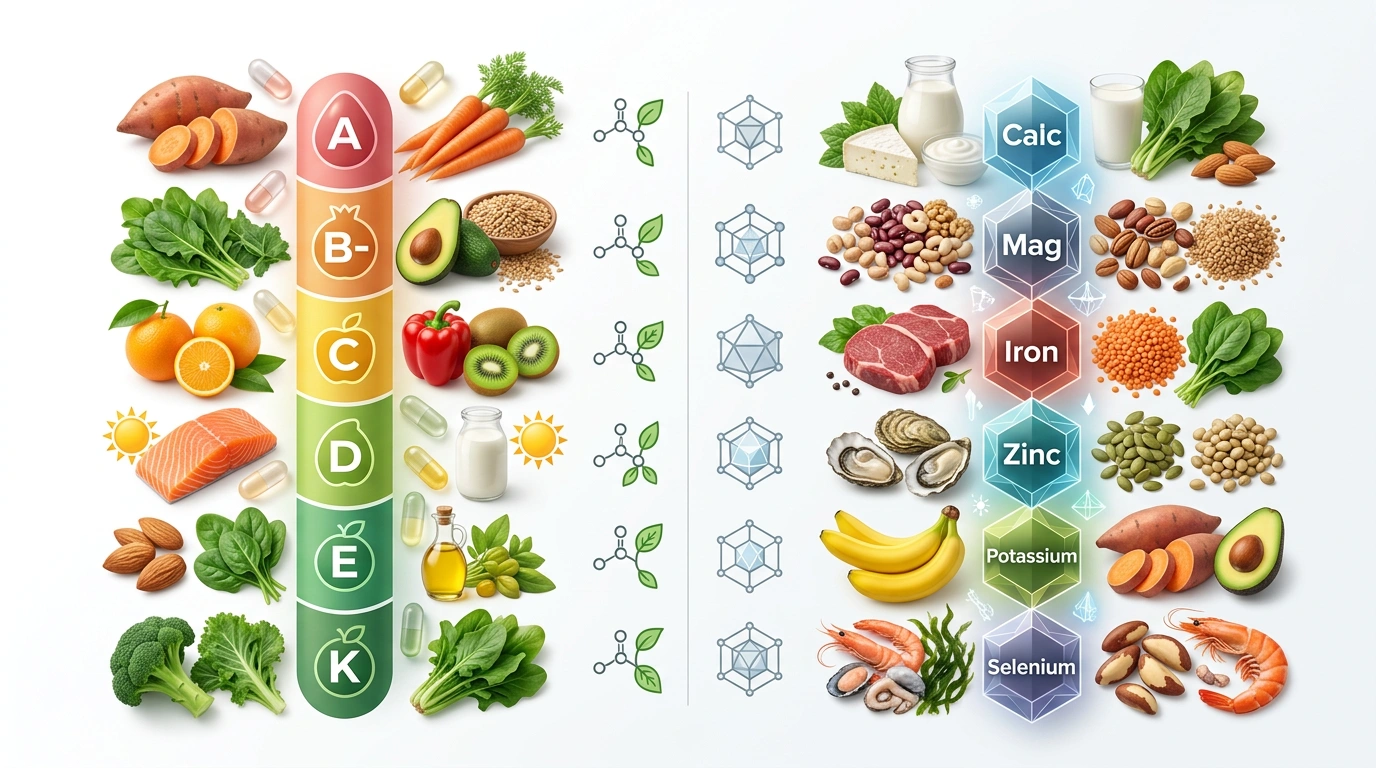
Vitamins and minerals are both essential micronutrients, but they differ chemically.
Vitamins are organic compounds, meaning they contain carbon and are produced by living organisms or can be synthesized. Minerals are inorganic elements that occur naturally in the environment.
Another important distinction is how they respond to processing.
Some vitamins can be affected by heat, oxygen, light, or food preparation. Minerals, being elements, are not destroyed by heat in the same way. However, minerals can still be lost from food during preparation, especially if they dissolve into cooking water that is discarded.
| Vitamins | Minerals |
| Organic compounds | Inorganic elements |
| Include A, B, C, D, E and K | Include calcium, iron, zinc, magnesium and others |
| Some are sensitive to heat/light | Not destroyed by heat in the same way |
| Often obtained from fruits, vegetables and other foods | Found in plant and animal foods |
| Can be water-soluble or fat-soluble | Classified by nutritional requirement and biological role |
The important takeaway is that you need both. A diet containing plenty of vitamins but inadequate minerals would not provide complete nutritional support, and the reverse is also true.
A food-first approach is generally one of the simplest ways to improve overall nutrient intake. Whole foods often provide several vitamins, minerals, fiber, protein, healthy fats, and other beneficial compounds at the same time.
Vitamin A and provitamin A carotenoids can be found in foods such as:
Orange and dark-green vegetables are particularly useful sources of beta-carotene.
B vitamins are spread across many food categories.
Whole grains, legumes, meat, poultry, seafood, eggs, dairy products, nuts, seeds, and leafy vegetables can all contribute different B vitamins.
For example, legumes and leafy greens can provide folate, while meat, seafood, eggs, and dairy are important sources of vitamin B12.
A varied diet is therefore more useful than trying to identify one “best” B-vitamin food.
Vitamin C is abundant in many fruits and vegetables.
Good sources include:
Eating a variety of colorful produce can help increase vitamin C intake while also providing fiber and other plant compounds.
Vitamin D is somewhat different because relatively few foods naturally contain large amounts.
Sources include:
Sunlight can also contribute to vitamin D production, although individual vitamin D status depends on many factors.
Nuts, seeds, vegetable oils, avocados, and some green vegetables can contribute vitamin E.
Vitamin K is especially abundant in leafy greens such as kale, spinach, collard greens, and similar vegetables.
Including these foods regularly can support an overall nutrient-rich eating pattern.
Many everyday foods provide important minerals.
Leafy greens can contribute magnesium, calcium, potassium, and other nutrients.
Beans and legumes provide magnesium, potassium, iron, and other minerals.
Whole grains can contribute magnesium, iron, zinc, and selenium.
Nuts and seeds are particularly useful sources of magnesium, zinc, and other minerals.
Dairy products provide calcium and can also contribute potassium and other nutrients.
Seafood can provide iodine, selenium, zinc, iron, and other minerals.
Meat and eggs provide nutrients such as iron, zinc, selenium, and vitamin B12.
Fruits and vegetables contribute potassium, magnesium, vitamin C, folate, carotenoids, and numerous other nutrients.
This is one reason nutrition experts often emphasize dietary variety instead of relying on a single food or supplement.
People occasionally search for vitamin G foods or ask, “What is in vitamin G?”
The important clarification is that Vitamin G is not an officially recognized essential vitamin in modern nutrition terminology.
The letter G has appeared historically in older nutritional naming systems and informal references. Some historical vitamin names were later changed or reclassified as scientists learned more about their chemical structures and biological roles.
This is why vitamin naming can sometimes appear confusing online.
The recognized vitamins include A, C, D, E, K, and the B-vitamin group. There is no standard modern category of essential “Vitamin G” that consumers need to obtain from a specific food.
If a supplement or website promotes a product around an unusual vitamin name, check the actual ingredient list and scientific identity rather than relying on the marketing term.
The phrase chelated vitamins is frequently used in the supplement industry, although the term can be technically misleading.
Strictly speaking, chelation is most commonly discussed in relation to minerals, not vitamins.
A chelated mineral is generally a mineral bound to another molecule, often an amino acid or organic compound. The purpose of this formulation is to create a particular chemical form that may influence stability, absorption, or tolerance.
For example, you may see terms such as chelated magnesium, chelated zinc, or mineral bisglycinate on supplement labels.
Manufacturers may use chelation because the form can have desirable characteristics compared with other mineral forms.
However, “chelated” does not automatically mean “best.”
When comparing a supplement, consider:
The term bioavailable vitamin is also commonly used in supplement marketing. Bioavailability refers to how much of a nutrient is absorbed and becomes available for the body to use.
A nutrient’s form can affect this process, but food composition, digestion, interactions with other nutrients, and individual differences can matter too.
Colloidal minerals benefits are often promoted in supplement marketing, but consumers should distinguish between claims and established evidence.
Colloidal mineral products generally contain minerals suspended in a liquid or another medium. They are marketed as an alternative to conventional mineral supplements.
Marketing claims can sometimes suggest that colloidal minerals are absorbed more effectively or provide unique health advantages. However, a supplement being presented as “natural,” “colloidal,” or “highly absorbable” does not automatically prove that it offers superior health outcomes.
When evaluating a colloidal mineral product, check:
Consumers should also be cautious about products that make broad health claims without providing credible evidence.
The word bioavailability describes how much of a nutrient is absorbed and becomes available for physiological use.
A supplement can contain a large amount of a nutrient, but that does not necessarily mean the body will absorb all of it.
Several factors can influence nutrient bioavailability.
Different chemical forms of the same mineral can have different absorption and tolerance characteristics.
This is one reason supplement labels may specify forms such as magnesium citrate, magnesium glycinate, zinc gluconate, or iron bisglycinate.
Nutrients in whole foods exist alongside protein, fat, fiber, water, and other compounds. These components can influence digestion and absorption.
For example, consuming a fat-soluble vitamin with a meal containing some dietary fat may influence its absorption.
Some nutrients interact with one another.
Iron absorption, for example, can be influenced by the composition of the meal and whether vitamin C-rich foods are consumed alongside plant sources of iron.
Similarly, certain compounds can reduce mineral absorption under particular dietary circumstances.
One of the biggest mistakes in supplement shopping is assuming that a larger number automatically means a better product.
A supplement containing 1,000 mg of a nutrient is not necessarily more useful than one containing 100 mg. The appropriate amount depends on the nutrient, the individual’s requirements, the form, and the reason for supplementation.
A quality supplement should provide an appropriate amount rather than simply the largest possible dose.
Understanding units is essential when comparing supplements.
A milligram (mg) is larger than a microgram (mcg).
The conversion is:
1 mg = 1,000 mcg
Therefore:
This matters because some vitamins and minerals are required in amounts measured in milligrams, while others are commonly listed in micrograms.
For example, vitamin B12 is often listed in micrograms, while some minerals may be listed in milligrams.
Imagine two products:
They are not dramatically different. Since 1 mg equals 1,000 mcg, Product B provides twice as much.
Without understanding mcg vs mg in vitamins, it is easy to misinterpret supplement strength.
Also pay attention to the serving size. A label may list a nutrient amount for two capsules rather than one.
A supplement bottle contains more useful information than just the product name and front-label claims.
The Supplement Facts panel tells you what the product contains and how much is provided.
Important information includes:
For example, if a product says the serving size is two capsules, the listed nutrient amounts usually apply to those two capsules—not necessarily to one.
This is particularly important when comparing products with different serving sizes.
When comparing supplements, do not focus only on bottle price.
Instead, examine:
Dosage: How much of each nutrient is actually provided?
Nutrient form: Is the mineral provided in a form you specifically prefer or need?
Serving size: Does one serving mean one capsule, two capsules, or more?
Number of servings: How long will one bottle actually last?
Added ingredients: Does the product contain unnecessary fillers, sweeteners, herbs, or other compounds?
Certifications: Does the manufacturer provide credible quality or testing information?
Cost per serving: A more expensive bottle may actually cost less per day if it contains substantially more servings.
A vitamin cheat sheet can be useful for learning the basic roles of different nutrients, while a reliable supplement database can help consumers research ingredients and products more systematically.
The goal is not to find the supplement with the longest ingredient list. The goal is to find a product that matches your nutritional needs and provides transparent information.
The term USDA organic vitamins can sound appealing, especially to shoppers who already prefer organic foods. However, organic certification and nutritional quality are two different things.
USDA Organic certification relates to how agricultural ingredients are produced, handled, and processed under applicable organic standards. It does not mean that an organic supplement automatically contains more vitamins or minerals, is more effective, or is safer for every person.
When comparing an organic supplement, look beyond the word “organic.”
Check:
An organic supplement may be a good personal preference for someone who wants organic ingredients, but the certification itself should not be treated as proof of superior nutritional effectiveness.
It is also useful to distinguish between an organic ingredient and the finished supplement. A product can contain some organic ingredients without every component necessarily being certified organic.
There is no universal rule that every vitamin should be taken first thing in the morning. The best timing can depend on the nutrient, supplement formulation, food intake, and individual tolerance.
Some people prefer taking morning supplements because attaching supplements to breakfast makes the routine easier to remember.
Fat-soluble vitamins such as A, D, E, and K may be better absorbed when taken with a meal containing some dietary fat.
B vitamins are often included in morning multivitamins because they participate in energy metabolism, although taking them in the morning is not a requirement for everyone.
Vitamin C can generally be taken at different times of the day, depending on the product and personal tolerance.
Certain minerals may be better tolerated with food, while others can have specific absorption considerations.
The most practical approach is consistency. If taking a supplement with breakfast helps you remember it and the label does not specify another requirement, a morning routine can be convenient.
Supplements can serve different purposes. Some are designed for general nutritional support, while others are used to address a specific nutrient gap.
Condition-specific supplements are products marketed or selected for people with particular nutritional needs.
For example, supplementation may be considered when someone has:
The important point is that the appropriate supplement depends on the underlying need.
A product marketed for a particular condition should not automatically be considered a treatment. Supplements can support nutritional adequacy, but they are not substitutes for diagnosis or appropriate medical care.
The phrase therapeutic vitamins generally refers to vitamin supplementation used at a specific dosage or for a particular nutritional or clinical purpose.
This differs from taking a standard multivitamin for general nutritional support.
High-dose supplementation deserves additional caution. Some vitamins and minerals can cause adverse effects when consumed in excessive amounts, especially when multiple products are combined.
If supplementation is being used to address a diagnosed deficiency or specific medical concern, a healthcare professional can help determine whether a particular nutrient, dosage, and duration are appropriate.
The concept of vitamins for balance is best understood as part of an overall healthy lifestyle rather than a promise that a supplement can create perfect health.
Micronutrient adequacy works together with:
A multivitamin may be useful for some people who struggle to consistently meet nutritional needs through food. However, it should complement rather than replace nutrient-rich foods.
Whole foods provide much more than isolated vitamins and minerals. Fruits, vegetables, legumes, whole grains, nuts, seeds, dairy products, seafood, eggs, and lean meats can provide combinations of nutrients that a single supplement cannot completely reproduce.
Some protein powders contain added vitamins and minerals, creating products that combine protein with micronutrient supplementation.
Protein powder with vitamins and minerals may appeal to people who want convenience from a single product, particularly when they use protein powder regularly.
However, the nutritional profile can vary considerably between products.
When comparing one, check:
A product with many added vitamins is not automatically better than a simpler protein powder.
Protein powder also should not automatically replace whole-food protein sources. Foods such as eggs, dairy, seafood, poultry, beans, lentils, nuts, and seeds provide protein alongside other nutrients.
For someone already taking a multivitamin, adding a fortified protein powder may also increase total intake of certain nutrients. Checking the combined labels can help prevent unnecessary overlap.
The supplement market includes many different product categories, from basic multivitamins to whole-food-oriented formulations and targeted mineral products.
Source of Life Gold vitamins are associated with the multivitamin category and are marketed around broad nutritional formulations.
When evaluating a multivitamin in this category, shoppers should focus on the actual nutrition facts rather than relying solely on the product name.
Compare:
A product with a long ingredient list is not automatically superior. The better choice is usually the one that fits the individual’s nutritional requirements and preferences.
The term nutri vitamins can refer broadly to daily nutritional supplements and multivitamin products.
A daily multivitamin can be convenient for people who have difficulty maintaining dietary variety, but it should not be viewed as a nutritional insurance policy that makes an unhealthy diet irrelevant.
Ingredient transparency is especially important. Consumers should be able to determine what nutrients are included, how much is provided, and what form the nutrients take.
Choosing the right supplement requires more than picking the product with the highest dosage or the largest number of capsules.
Consider:
For example, someone following a vegan diet may have different nutritional considerations from someone who regularly eats meat, seafood, eggs, and dairy.
Someone with a documented deficiency may also require a different approach from someone simply looking for general nutritional support.
Always check whether the label lists amounts in:
Then compare the serving size and % Daily Value.
A supplement containing several nutrients at extremely high percentages of the Daily Value is not necessarily a better choice.
The chemical form of a nutrient can matter.
Terms such as bioavailable vitamin, chelated minerals, citrate, glycinate, oxide, or other nutrient forms may appear on labels.
However, marketing terminology should not be the only factor in your decision.
Look for a nutrient form supported by appropriate evidence and consider tolerance, dietary needs, and professional recommendations when relevant.
Quality is one of the most important considerations when buying supplements.
Look for transparent manufacturers and, where applicable, independent or third-party testing information.
Quality assurance may involve:
Third-party certification does not mean a supplement is medically necessary, but it can provide additional information about manufacturing and product quality.
Bottle price can be misleading.
For example, a $30 bottle containing 30 servings costs $1 per serving, while a $40 bottle containing 120 servings costs about $0.33 per serving.
When comparing products, calculate:
Cost per serving = Product price ÷ Number of servings
Then compare the actual nutrients supplied per serving.
This makes it easier to distinguish between a genuinely economical supplement and one that only appears cheaper because the bottle contains fewer servings.
A natural mineral supplement and a multivitamin serve different purposes.
A single-mineral supplement may be appropriate when a person needs to focus on one particular mineral. A multivitamin generally combines several vitamins and minerals into one product.
Common categories include:
| Product Type | Typical Purpose |
| Single-mineral supplement | Focuses on one mineral |
| Multivitamin | Combines multiple vitamins and minerals |
| Combination formula | Targets several specific nutrients |
| Targeted supplement | Designed around a particular nutritional need |
| Whole-food source | Provides nutrients naturally through food |
A multivitamin can be convenient, but it may also contain nutrients you do not need in supplemental form.
Likewise, a single-mineral supplement may be unnecessary if the diet already provides adequate amounts.
The best approach is to identify the nutritional gap first and then decide whether supplementation actually makes sense.
Online searches for vitamins include many variations, abbreviations, historical terms, misspellings, and non-English phrases.
A vitamin synonym can simply refer to another way of describing a micronutrient. “Micronutrient” is a broader term that includes both vitamins and minerals.
Searches such as vitamin synonym, synonym vitamin, and synonyms of vitamins usually reflect this desire to understand alternative terminology.
You may also encounter:
These variations should not be confused with officially recognized vitamin categories.
The structure of a vitamin helps determine how it behaves inside the body.
Different vitamins have different molecular structures, which influence how they dissolve, travel through the body, interact with enzymes, and are stored.
This helps explain why some vitamins are fat-soluble while others are water-soluble.
Fat-soluble vitamins can associate with dietary fats and may be stored in tissues. Water-soluble vitamins generally circulate differently and are more readily excreted when present in excess, although this does not mean high doses are always harmless.
Different forms of the same nutrient can also behave differently. This is particularly relevant when comparing mineral supplements and various nutrient formulations.
The phrase new elements vitamins is not a standard scientific category. It may appear in search results or product marketing, but consumers should look for the actual nutrient names and recognized nutritional terminology.
When a supplement uses unusual terminology, check the Supplement Facts panel rather than relying on the front of the package.
Consumers sometimes encounter unusual vitamin names online, including vitamin O, vitamin N, and vitamin G.
These are not standard modern categories of essential vitamins.
“Vitamin O” has appeared in alternative-health marketing, but it is not recognized as an essential vitamin by mainstream nutrition science.
Vitamin N is sometimes used informally in wellness contexts, often referring to nature or exposure to natural environments. It is not an officially recognized vitamin.
As discussed earlier, Vitamin G is not an established essential vitamin in current nutritional classification. Historical vitamin naming can explain some of the confusion.
When researching supplements, it is safer to rely on recognized nutrient names, established nutrition references, and transparent ingredient labels.
A supplement routine does not need to be complicated.
Breakfast can be a convenient anchor for morning supplements.
Depending on individual needs, a person may take certain supplements with breakfast, particularly those that are better tolerated with food.
Fat-soluble vitamins may be taken alongside a meal containing some dietary fat when appropriate.
Some supplements can be easier on the stomach when taken with food.
Food can also influence the absorption of certain nutrients. For example, dietary fat can affect the absorption of fat-soluble vitamins.
Always follow the specific product’s directions rather than assuming that every supplement should be taken with the same type of meal.
If you take several products, keep track of them.
A simple list can include:
| Supplement | Serving | Time | Nutrients |
| Multivitamin | Label serving | Breakfast | Multiple nutrients |
| Mineral supplement | Label serving | As directed | Specific mineral |
| Protein powder | Label serving | As preferred | Protein + added nutrients |
Reviewing your complete routine can reveal overlapping ingredients.
For example, a multivitamin plus a fortified protein powder plus a separate mineral supplement could provide much more of a particular nutrient than you intended.
Supplements can be useful, but common mistakes can reduce their value or create unnecessary risks.
A larger dose is not automatically more effective.
Always follow the product label and professional guidance when applicable.
Check every Supplement Facts panel when taking multiple products.
A multivitamin, immune supplement, fortified protein powder, and separate mineral supplement may contain some of the same nutrients.
A label’s nutrient amounts usually correspond to the listed serving size.
If the serving size is two capsules, taking one capsule does not necessarily provide the amount shown in the panel.
Remember:
1 mg = 1,000 mcg
This simple conversion can prevent major misunderstandings when comparing products.
Natural ingredients can still have biological effects.
“Natural” does not automatically mean harmless, appropriate, or necessary.
Supplements should not become an excuse to ignore the diet.
Food provides a broad combination of nutrients and other beneficial compounds.
The cheapest bottle is not necessarily the best value.
Compare cost per serving, nutrient amounts, servings per container, and product quality.
Always check the expiration or best-by information and follow storage instructions.
Look for transparent labels and credible quality-control information when available.
Perhaps the biggest mistake is assuming that everyone needs a large collection of supplements.
The goal should be adequate nutrition—not the maximum number of capsules.
Supplements may be worth discussing when dietary intake is consistently inadequate or when nutritional needs are increased.
Potential situations include:
An oral supplement can be a convenient way to provide a specific nutrient when food intake alone is not sufficient.
However, condition-specific supplements should be selected carefully. If a nutritional deficiency is suspected, testing and professional guidance may be more useful than guessing.
For general wellness, vitamins for balance should support a nutrient-rich lifestyle rather than replace it.
Before purchasing a supplement, use this checklist.
Identify exactly which vitamin, mineral, botanical, or other ingredient is included.
Look at the specific form when it is provided.
Check the actual amount per serving.
Determine whether the listed amount applies to one capsule, two capsules, one scoop, or another quantity.
Use Daily Value as a reference point, but remember that individual nutritional needs can differ.
Confirm the unit before comparing products.
Calculate how long the bottle will last.
Review sweeteners, flavors, fillers, colors, herbs, allergens, and other ingredients.
Look for applicable certifications or independent testing information.
Check that the product is within its recommended shelf life.
If a manufacturer provides credible third-party testing or quality information, review what the testing actually covers.
This approach turns supplement shopping from a marketing exercise into a practical comparison.
There is no single vitamin or mineral that is universally the most important. Your body needs a range of essential micronutrients, including vitamins A, C, D, E, K, the B vitamins, and minerals such as calcium, magnesium, iron, zinc, potassium, iodine, and selenium.
The priority depends on individual dietary intake, age, life stage, and nutritional needs.
The main function of vitamins is to help the body perform normal biological processes. Depending on the vitamin, they support energy metabolism, immune function, blood formation, bone health, nervous system function, antioxidant protection, and cell growth and repair.
Vitamins are organic compounds. Minerals are inorganic elements. This chemical distinction is one of the fundamental differences between the two groups of micronutrients.
Vitamins are organic compounds, while minerals are inorganic elements. Vitamins include A, C, D, E, K, and the B vitamins. Minerals include calcium, magnesium, zinc, iron, potassium, iodine, and selenium.
Both are essential for normal health and should generally come from a varied, nutrient-rich diet.
A milligram is larger than a microgram.
1 mg = 1,000 mcg.
For example, 500 mcg equals 0.5 mg. Always check the unit and serving size when comparing supplements.
Strictly speaking, chelation is generally used to describe minerals rather than vitamins. A chelated mineral is bound to another molecule, often an amino acid or organic compound. This formulation may influence absorption, stability, or tolerance.
The word “chelated” does not automatically mean a supplement is superior.
Zinc is neither water-soluble nor fat-soluble because zinc is a mineral, not a vitamin. Water-soluble and fat-soluble are classifications primarily used for vitamins.
Zinc is absorbed through the digestive system and can be obtained from foods such as meat, seafood, dairy, beans, nuts, and seeds.
The four fat-soluble vitamins are:
Because these vitamins can be stored in body tissues, excessive supplemental intake can sometimes create risks.
Many people can obtain most or all required vitamins and minerals through a varied and balanced diet. However, individual circumstances can make certain nutrients more difficult to obtain.
Dietary restrictions, limited food variety, life stages, and documented deficiencies can all affect nutritional needs.
In some cases, a supplement may be appropriate to complement the diet.
No. A daily multivitamin is not automatically necessary for every person.
Some people may benefit from supplementation because of dietary restrictions, nutritional gaps, or specific needs, while others may already obtain adequate nutrients through food.
The most useful approach is to evaluate the overall diet and individual nutritional requirements before choosing a multivitamin.