Physical Address
304 North Cardinal St.
Dorchester Center, MA 02124
Physical Address
304 North Cardinal St.
Dorchester Center, MA 02124

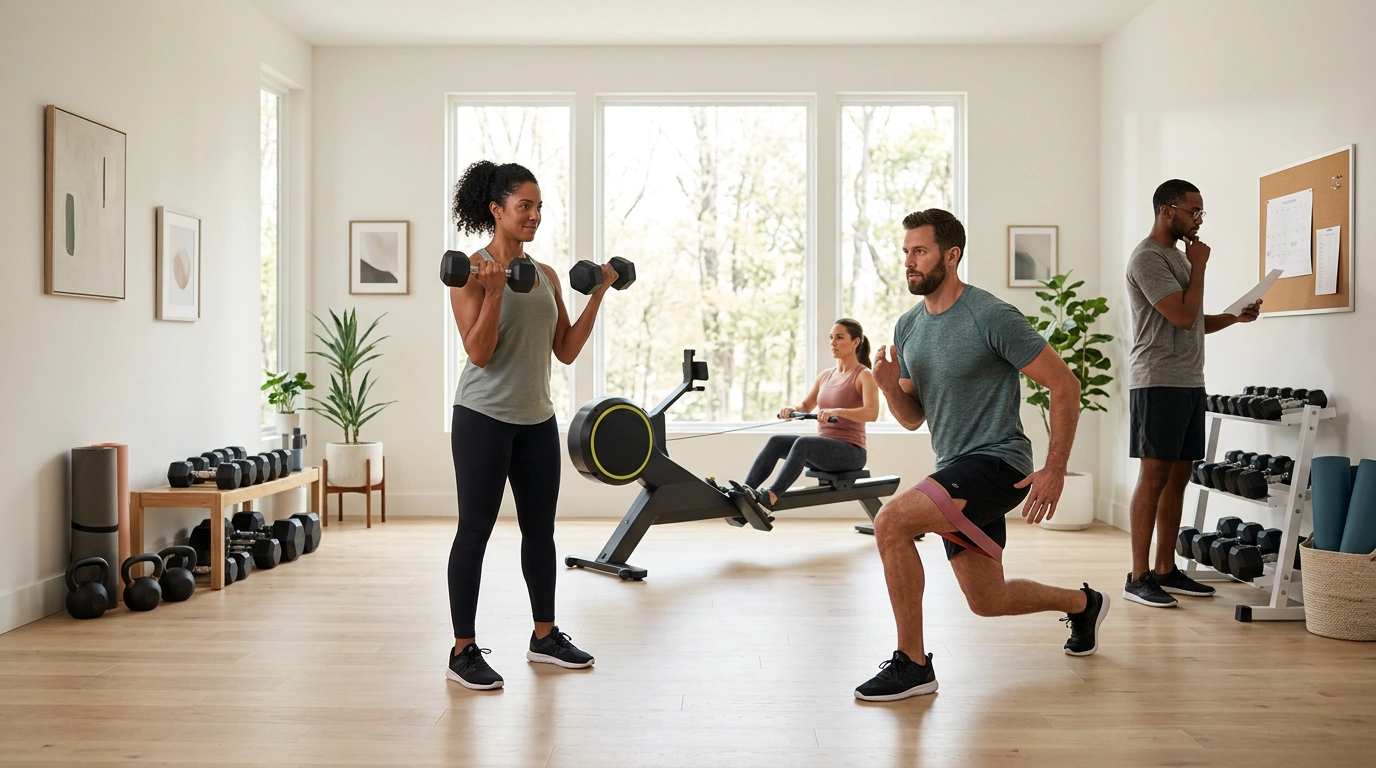
Starting a workout routine can feel exciting. You may begin with a clear goal, a new workout plan, and plenty of enthusiasm. But after a few days or weeks, that initial excitement can fade. Work, family responsibilities, stress, tiredness, slow results, or simply boredom can make exercise feel difficult to maintain.
If you have no motivation to workout, you are not necessarily lazy or undisciplined. Motivation naturally changes from day to day. Some days you may feel ready for a challenging gym session, while on other days even a short walk can feel like a major effort.
The key is understanding the difference between motivation and consistency. Motivation gets you started, but habits and routines help you keep going. You do not need to feel motivated every day to make progress. Instead, you can create an exercise routine that is easy enough to follow even when your motivation is low.
This guide explains how to stay motivated and consistent with your workouts, whether you exercise at home, go to the gym, walk outdoors, or combine several types of physical activity. You will also learn practical gym motivation tips, ways to stay consistent when motivation drops, and how fitness equipment can make exercise more convenient.
Losing motivation is one of the most common challenges people face when trying to maintain an exercise routine. Understanding why it happens can make it easier to overcome.
When you first start exercising, everything can feel new and exciting. You may imagine yourself becoming stronger, losing weight, improving your fitness, or reaching a specific goal quickly.
However, that initial excitement does not last forever.
Results can also take longer than expected. If you expect dramatic changes within a few weeks, slow progress may make you feel disappointed. Repeating similar workouts can also become boring, especially if you do not have a clear plan.
This is why relying entirely on motivation to work out can be unreliable. A better approach is to create routines that make exercise part of your normal schedule.
There are many reasons someone may experience no motivation to exercise or feel not motivated to workout.
Common causes include:
If your workouts constantly leave you exhausted, for example, you may start associating exercise with discomfort instead of something positive.
The solution is not always to push harder. Sometimes the best way to rebuild motivation to work out is to make exercise simpler, shorter, and more enjoyable.
If you are wondering how to motivate yourself to workout and keep working out, start by removing unnecessary pressure.
You do not need to exercise for an hour every day to develop a consistent routine.
If you are struggling to get started, try a 10- to 20-minute workout. You could walk, perform bodyweight exercises, stretch, cycle, or complete a short strength-training session.
A short workout is often better than waiting for the perfect opportunity to complete a long workout.
Once the habit becomes easier, you can gradually increase your workout duration or intensity.
Vague goals such as “get fit” can be difficult to measure.
Instead, choose a specific reason for exercising. Your goal might be:
A meaningful goal can make it easier to understand why you are exercising, especially on days when motivation is low.
One of the simplest ways to improve consistency is to decide in advance when you will exercise.
Instead of saying, “I will work out sometime this week,” choose specific days and times.
For example:
Treat these workout sessions like appointments.
A predictable schedule reduces the number of decisions you have to make. You do not need to repeatedly ask yourself, “Should I exercise today?”
One missed workout does not erase your progress.
If you planned to exercise four times but only completed three sessions, that is still three opportunities where you moved your body.
Consistency does not mean never missing a workout. It means returning to your routine after interruptions.
This mindset can help you avoid the all-or-nothing approach that causes many people to quit.

Sometimes the hardest part of exercising is simply starting.
When you feel not motivated to exercise, make a small commitment: exercise for just five minutes.
Put on your workout clothes, start moving, and tell yourself that you only need to continue for five minutes.
Once you begin, mental resistance often becomes smaller. You may decide to continue for another 10, 20, or 30 minutes.
And if you genuinely do not have the energy to continue, five minutes is still better than doing nothing.
Reduce the number of obstacles between you and your workout.
Prepare your clothes the night before. Keep your shoes somewhere visible. Place resistance bands or dumbbells where they are easy to access.
If you exercise at home, keep your workout area ready.
The easier it is to begin, the less you need to depend on motivation.
Your workout routine does not need to look identical every day.
You might have:
Full workout: A complete strength or cardio session.
Short workout: A 10- to 20-minute routine.
Walking day: A brisk walk outdoors or on a treadmill.
Mobility day: Gentle stretching, yoga, or mobility exercises.
Home workout: Bodyweight exercises or basic home fitness equipment.
Having different options helps you stay active when your energy, schedule, or mood changes.
Motivation is helpful, but habits are more reliable.
A consistent workout schedule, prepared equipment, a regular workout time, and environmental cues can encourage you to exercise even when you are not particularly excited about it.
For example, putting on your workout shoes after work can become a cue that signals the beginning of your exercise routine.
This is how healthy motivation can gradually become a sustainable habit.
For some people, getting to the gym is harder than completing the workout itself.
Pick a time that fits naturally into your lifestyle.
Some people prefer exercising in the morning because fewer responsibilities have appeared during the day. Others have more energy after work or during a lunch break.
The best gym time is usually the one you can consistently maintain.
Preparing your gym bag can eliminate small barriers.
Keep essentials ready, such as:
If everything is prepared, you can spend less time thinking about whether you are ready and more time actually exercising.
If you are struggling with how to get motivated to go to the gym, make attendance your first goal.
Instead of telling yourself that you must have an amazing workout, simply commit to getting inside the gym.
Once you arrive, you can decide whether you have enough energy for a full workout or a shorter session.
Reducing performance pressure can make gym attendance easier.
A workout partner can provide accountability and social motivation.
When someone is expecting you to show up, skipping a session can feel less tempting.
A gym buddy can also make exercise more enjoyable and provide encouragement during difficult workouts.
Your workout environment matters.
Listen to music you enjoy, choose exercises you actually like, follow a structured plan, and track your progress.
The more positive your gym experience becomes, the easier it can be to maintain your routine.
Good gym motivation tips do not have to be complicated.
A simple workout log can show you progress that may otherwise be difficult to notice.
You can record:
Seeing that you have consistently completed workouts for several weeks can become a powerful form of working out motivation.
Progress is not only about losing weight or building visible muscle.
Celebrate smaller achievements, such as:
These small wins reinforce positive behavior.
Boredom is a common motivation killer.
If you always perform the same workout, introduce variety.
You could alternate between:
Variety can keep exercise interesting while allowing you to develop different aspects of fitness.
A workout playlist can become a powerful psychological cue.
You might create a playlist specifically for exercise and only listen to it during workouts.
Other cues can include changing into workout clothes, filling your water bottle, or setting an alarm at the same time each day.
Over time, these actions can signal that it is time to move.
Accountability can come from a friend, personal trainer, workout partner, online fitness community, or family member.
You do not necessarily need someone physically beside you. Simply telling another person your weekly workout goal can increase your commitment.
Women may experience unique challenges when trying to maintain a fitness routine, including busy schedules, family responsibilities, social pressure, and unrealistic body expectations.
Effective ladies fitness motivation should focus on sustainable progress rather than comparison.
Your fitness journey should be based on your goals, not someone else’s body or workout routine.
You may want to become stronger, improve endurance, feel more energetic, support healthy weight management, or simply feel more comfortable being physically active.
Choose goals that are meaningful to you.
Fitness offers benefits that go beyond appearance.
Strength training can help you feel stronger during everyday activities. Regular movement can support energy and physical function. Reaching exercise goals can also improve confidence.
This broader perspective can create stronger women’s workout motivation than focusing exclusively on appearance.
You do not have to follow the same workout style as someone else.
You might enjoy:
The best workout is often one you are willing to perform consistently.
Social media can create unrealistic expectations about fitness.
People have different genetics, schedules, training histories, lifestyles, and goals. Comparing your progress with someone else’s highlight reel can reduce motivation.
Instead, compare yourself with where you were last month or last year.
That approach makes fitness motivation for women more personal and sustainable.
Sometimes you do not need more discipline—you simply need to make exercise feel interesting again.
Choose songs that make you feel energized and create a playlist specifically for exercise.
Music can make repetitive activities feel more enjoyable and help establish a familiar workout routine.
Look for fitness content that encourages realistic progress rather than perfection.
Useful inspiration should remind you that fitness is a long-term process.
Avoid accounts that make you feel inadequate or suggest that everyone should achieve the same body type or performance level.
A new activity can break up boredom.
Try a different class, walking route, strength-training movement, cycling session, or home workout.
You may discover an activity you genuinely enjoy.
A short challenge can provide a clear target.
For example, you might challenge yourself to complete three workouts per week for four weeks.
The goal is not to create extreme pressure. It is to create a manageable reason to stay engaged.
When motivation disappears, return to your original reason.
Maybe you wanted more energy, better strength, improved mobility, greater confidence, or a healthier lifestyle.
Your reason does not have to be dramatic. Even wanting to feel better during your daily activities can be enough.
You do not need a perfect motivational speech every time you exercise. Sometimes a short reminder is enough.
You can use simple phrases such as:
These workout motivation quotes can be used as phone reminders, journal notes, or captions.
For women, motivational messages can focus on confidence and personal growth:
The best women’s fitness motivation quotes should encourage realistic self-improvement rather than unrealistic appearance standards.
On difficult days, keep the message simple:
Everyone experiences days when they have no motivation to workout.
The goal is not to force yourself through every workout regardless of how you feel. Instead, learn how to adjust your routine.
If a 60-minute workout feels impossible, try 10 minutes.
You could:
A reduced workout can help maintain the habit without creating unnecessary pressure.
If you repeatedly feel unmotivated, ask whether you actually enjoy your current routine.
If running feels boring, try cycling. If traditional gym workouts feel repetitive, try a class. If traveling to the gym feels inconvenient, try a home workout.
Sometimes the solution is not more motivation but a better activity.
Low motivation can sometimes be connected to inadequate recovery.
Consider:
If you are constantly exhausted, increasing exercise intensity may not be the answer.
Your goals should be realistic and meaningful.
If you created a goal because you felt pressured by social media or other people, it may not provide enough motivation to sustain your routine.
Choose goals that fit your actual lifestyle.
Long-term fitness becomes easier when exercise provides rewards beyond appearance.
Intrinsic motivation comes from enjoying or valuing the activity itself.
You may exercise because:
These reasons can be more sustainable than relying only on external results.
Missing one workout does not ruin your progress.
Life will occasionally interfere with your schedule. Work deadlines, travel, family events, illness, or simple fatigue can happen.
The important thing is to return to your routine.
Instead of treating exercise as something separate from your life, make movement part of your normal week.
Walk when practical. Take active breaks. Schedule workouts. Choose activities you enjoy.
The goal is to create a healthy lifestyle where physical activity feels normal rather than temporary.
Do not wait until you reach a major goal before recognizing your progress.
Reward yourself for completing workouts, following your schedule, and maintaining your routine.
When you appreciate the process, workout consistency becomes easier to maintain.
The phrase exercises on motivation can be understood as activities that may help create a positive cycle of movement and motivation.
Exercise can create a simple cycle:
Exercise → accomplishment → improved confidence → greater willingness to exercise
After completing a workout, you may feel a sense of achievement. That positive experience can make the next workout feel easier to approach.
You do not need to wait for motivation before exercising. Sometimes taking action creates the motivation that helps you continue.
Your workout should reflect how you feel.
On high-energy days, you may enjoy a challenging strength or cardio session.
On moderate-energy days, choose a normal workout.
On low-energy days, walking, stretching, mobility exercises, or a short home workout may be more appropriate.
This flexible approach can help you avoid the cycle of pushing too hard, becoming exhausted, and then losing motivation.
Different workouts can serve different purposes.
Strength training can support muscular strength. Cardio can improve endurance. Walking can provide accessible movement. Mobility sessions can help you stay active on easier days.
A varied routine can be easier to maintain over time.
Motivation becomes easier when you create repeatable systems.
Choose a time when you are usually available.
Morning, lunch, or evening can all work. The important factor is consistency.
Put your clothes, shoes, water, towel, and equipment where you can easily find them.
For home workouts, keep basic equipment organized in one location.
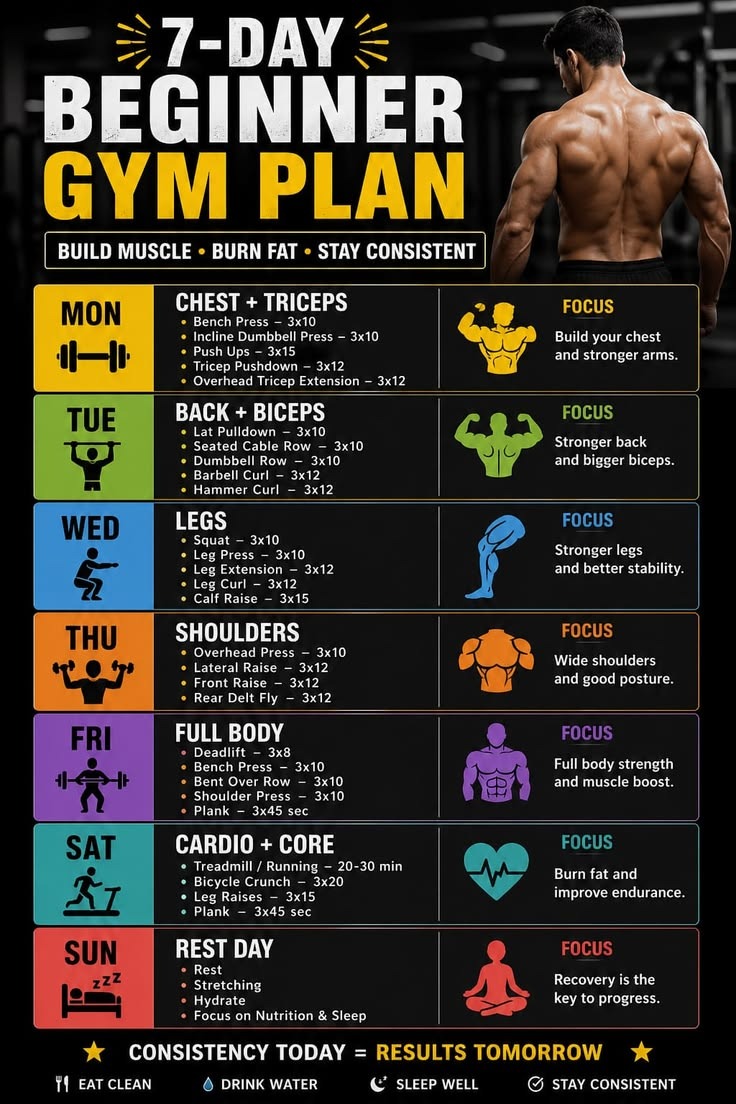
Your weekly plan does not have to be complicated.
For example:
Monday: Strength training
Tuesday: Walking
Wednesday: Rest or mobility
Thursday: Strength training
Friday: Cardio
Saturday: Optional home workout or outdoor activity
Sunday: Rest
The exact schedule can be adjusted according to your lifestyle.
Have a short backup routine ready.
If you cannot complete your normal workout, perform a 10-minute routine instead.
This prevents one busy day from becoming an entire missed week.
A calendar, notebook, fitness app, or simple checklist can help you see your progress.
The goal is not to create pressure. It is to make your consistency visible.
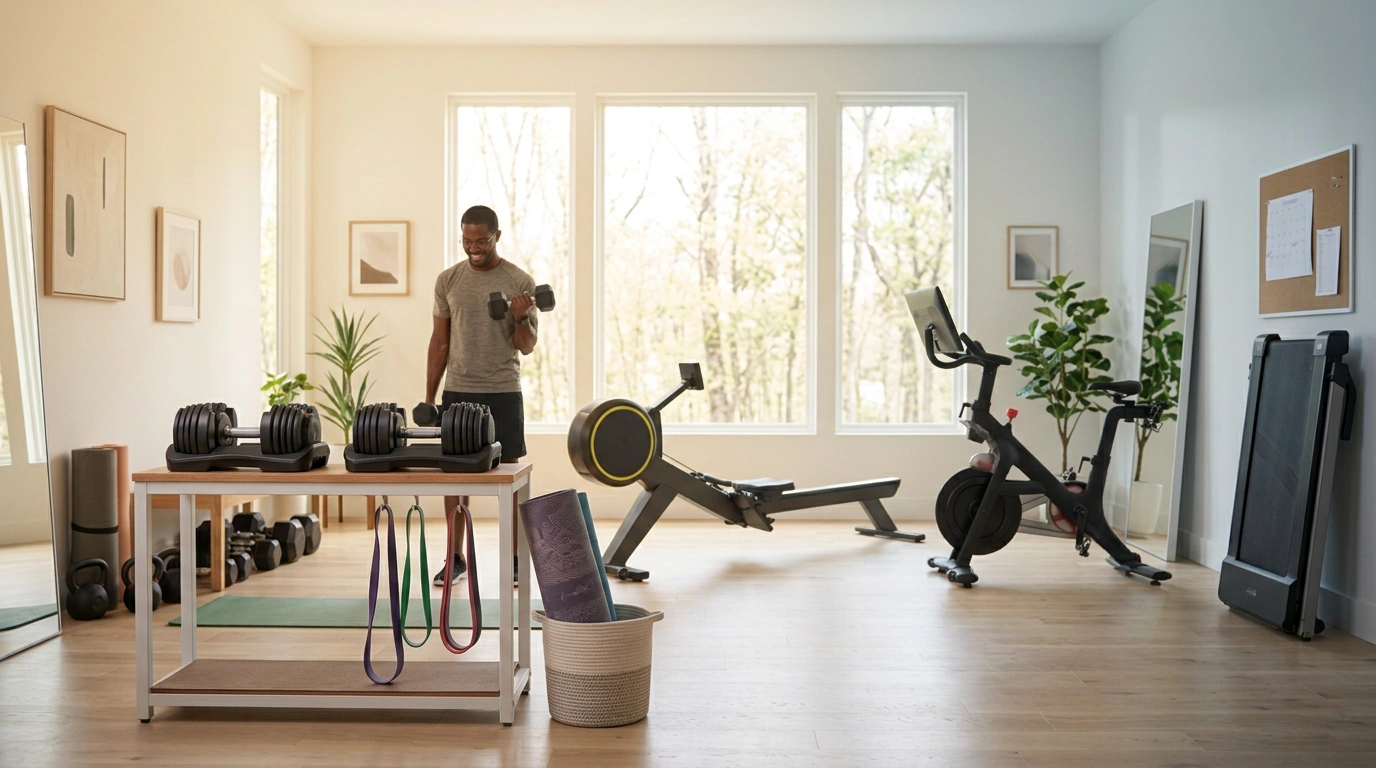
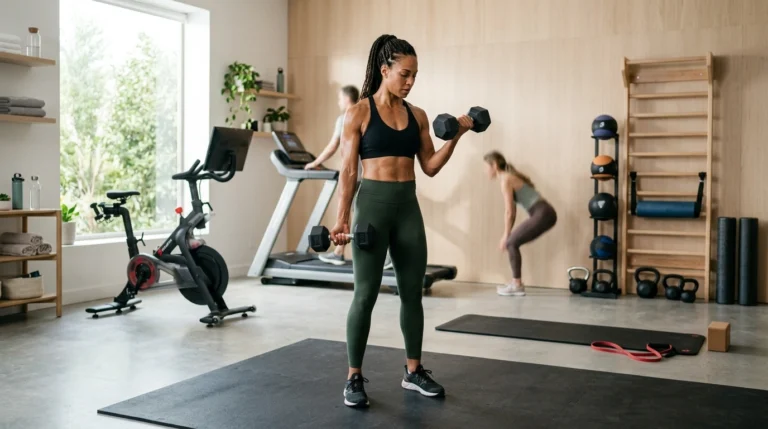
The right home workout equipment can reduce some of the practical barriers that make exercise difficult.
For people who struggle to get to the gym regularly, having basic fitness equipment at home can provide another way to stay active.
Beginners do not need an entire home gym.
Useful options may include:
Dumbbells: Useful for strength exercises involving the upper body, lower body, and core.
Resistance bands: Lightweight and versatile for strength and mobility exercises.
Yoga mats: Provide a comfortable surface for stretching, yoga, mobility work, and floor-based exercises.
Exercise bikes: Convenient for indoor cardiovascular workouts.
Treadmills: Useful for walking or running indoors, especially when weather or scheduling makes outdoor exercise difficult.
The best equipment depends on your goals, available space, budget, and preferred activities.
Convenience can have a major effect on consistency.
If your workout equipment is already at home, you may not need to drive to a gym. You can exercise around your schedule and reduce travel time.
For example, someone with a busy work schedule may find it easier to complete a 20-minute treadmill walk at home than spend additional time traveling to a gym.
Convenience does not automatically create motivation, but it can remove barriers that make exercise harder to start.
Consider your primary goal before purchasing equipment.
For cardio, treadmills and exercise bikes may be useful.
For strength training, dumbbells, resistance bands, and other strength-training equipment can provide options for progressive workouts.
For mobility, yoga mats and basic mobility accessories can make floor exercises more comfortable.
For full-body workouts, a combination of adjustable weights and resistance bands can provide considerable exercise variety without requiring a large space.
Motivation will eventually drop again. The goal is to have a strategy ready for those moments.
Set a minimum amount of movement that you can realistically complete even on difficult days.
For example:
“I will move for at least 10 minutes.”
This does not mean every workout has to be 10 minutes. It simply creates a minimum standard that keeps your routine alive.
One missed workout is normal.
The bigger problem occurs when one missed session turns into several weeks without exercise.
If you miss Monday, simply return Tuesday or Wednesday.
Think of consistency as returning repeatedly, not achieving perfection.
Tell someone about your weekly goal.
You could work out with a friend, join a fitness community, hire a trainer, or simply check in with someone about your progress.
Accountability can provide an additional reason to follow through.
A complicated fitness plan can become difficult to maintain.
You do not need dozens of exercises or a different routine every day.
A simple plan that fits your lifestyle is often more sustainable.
Fitness is not something you complete in a few weeks.
Your strength, endurance, mobility, confidence, and exercise habits can develop gradually.
Instead of asking, “How fast can I get results?” consider asking:
“What type of routine can I realistically maintain for the next year?”
That question shifts your focus from temporary motivation to sustainable progress.
If you are wondering how do I get motivated to go to the gym, start by making attendance the goal rather than expecting every session to be perfect. Choose a convenient time, prepare your gym bag in advance, use music you enjoy, and consider finding a workout partner. Once you arrive, commit to starting with a short warm-up or five-minute workout.
If you are asking how can I get motivated to workout, start small. Choose an activity you enjoy, create a realistic schedule, and remove barriers that make exercise difficult. You can also use the five-minute rule: commit to exercising for only five minutes and decide afterward whether you want to continue.
If you have no motivation to exercise, reduce the workout instead of automatically skipping it. Walk for 10 minutes, stretch, perform a few bodyweight exercises, or complete a short home routine. Also consider whether poor sleep, stress, excessive workout intensity, or boredom is contributing to your low motivation.
To understand how do I stay motivated to workout, focus on systems rather than motivation alone. Create a weekly schedule, prepare your equipment, track your workouts, set realistic goals, and keep a backup routine for busy days. Most importantly, do not let one missed session become a missed week.
Some of the best gym motivation tips for beginners include choosing a convenient workout time, starting with manageable workouts, tracking progress, preparing your gym bag in advance, finding a workout partner, and focusing on consistency rather than perfection.
To learn how to motivate yourself to workout, make your home workout area easy to access. Keep your equipment visible, prepare your workout clothes, create a simple routine, and choose a consistent time. Dumbbells, resistance bands, a yoga mat, treadmill, or exercise bike can also make home workouts more convenient depending on your goals.
Useful working out motivation quotes include “Consistency creates progress,” “Small steps still move you forward,” and “Progress matters more than perfection.” The most effective quote is one that reminds you to take action without creating unrealistic pressure.
Effective ladies workout motivation starts with personal goals rather than comparison. Women can improve consistency by choosing enjoyable activities, focusing on strength and energy, tracking personal progress, and avoiding unrealistic expectations created by social media. Walking, strength training, Pilates, yoga, cycling, and home workouts can all be part of a sustainable routine.
The most important lesson is that you do not need to feel motivated every time you exercise. Motivation will naturally rise and fall. What matters is creating a routine that is realistic enough to continue when motivation is low.
Start small, make exercise convenient, track your progress, choose activities you enjoy, and give yourself permission to have imperfect weeks. Over time, those small decisions can turn exercise from something you repeatedly have to force yourself to do into a normal and sustainable part of your lifestyle.