Physical Address
304 North Cardinal St.
Dorchester Center, MA 02124
Physical Address
304 North Cardinal St.
Dorchester Center, MA 02124

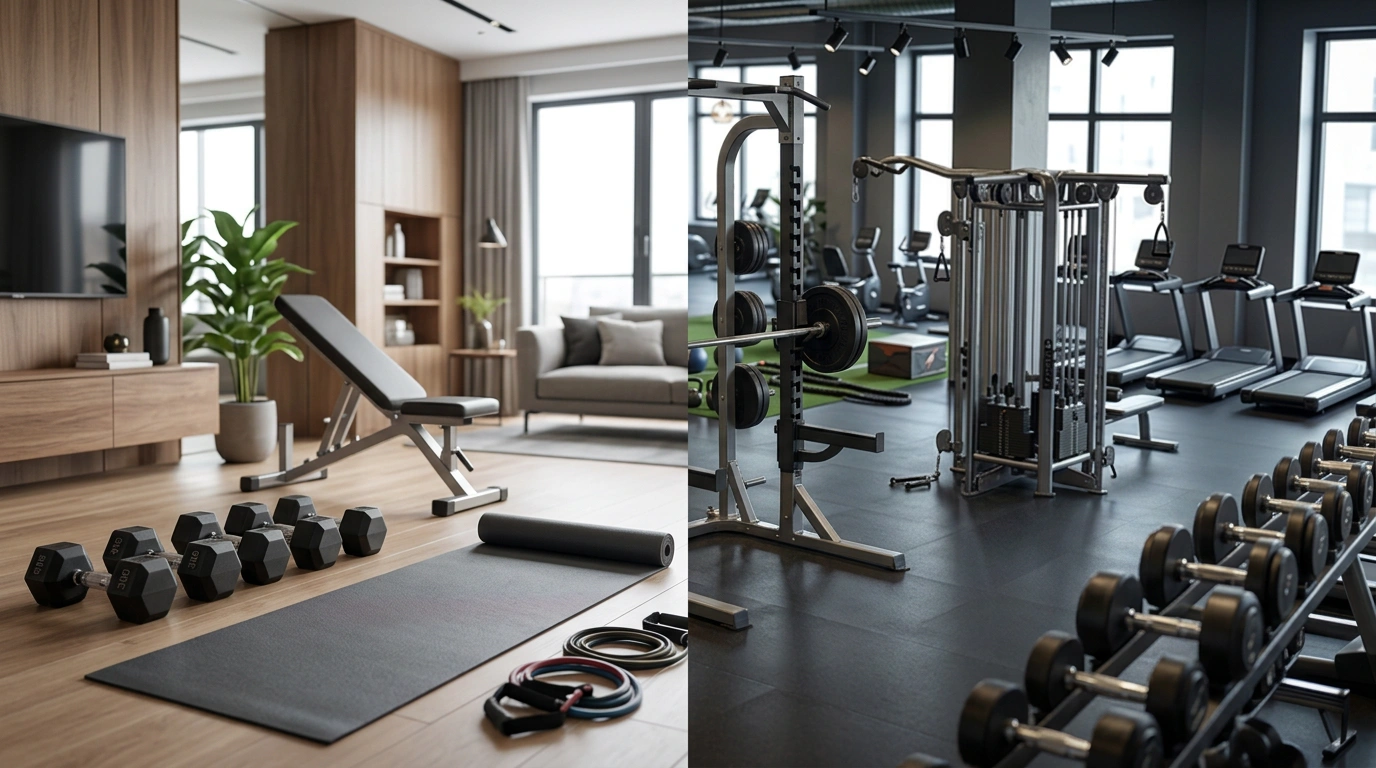
Choosing between a home workout and a gym workout can feel surprisingly difficult. Some people prefer the convenience of exercising in their living room, while others feel more motivated when they walk into a dedicated fitness facility. The good news is that both approaches can support better fitness, strength, weight management, and overall health when you follow a consistent routine.
The right choice in the home workout vs gym workout debate depends on your goals, schedule, budget, personality, and the type of training you enjoy. Before deciding whether you should work out at home or join a gym, it helps to understand the practical differences between working out from home vs gym training.
The biggest difference between exercising at home and training at a commercial gym is the environment and equipment available to you.
A home workout gives you control over your schedule and surroundings. A gym workout gives you access to a much larger selection of equipment and often provides professional guidance.
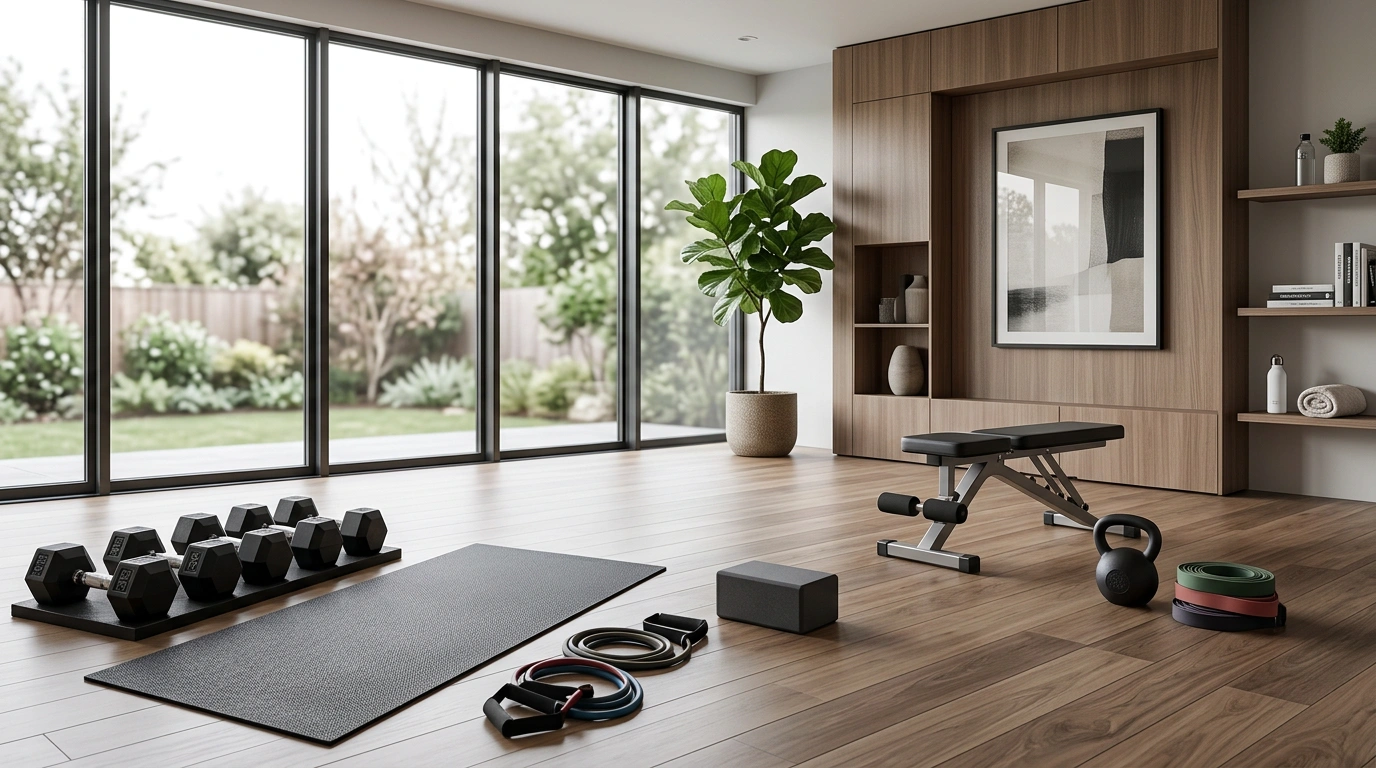
A home workout is any planned exercise routine performed at home rather than at a commercial fitness facility. You can exercise with little or no equipment, or you can create a dedicated exercise at home gym with equipment that fits your goals and available space.
Home workouts can include:
One major advantage is flexibility. You can exercise early in the morning, during a lunch break, or later in the evening without traveling to another location.
For people with busy schedules, this can make it easier to stay consistent. If you are wondering should workout at home, consider whether removing travel time and gym-related distractions would help you exercise more regularly.
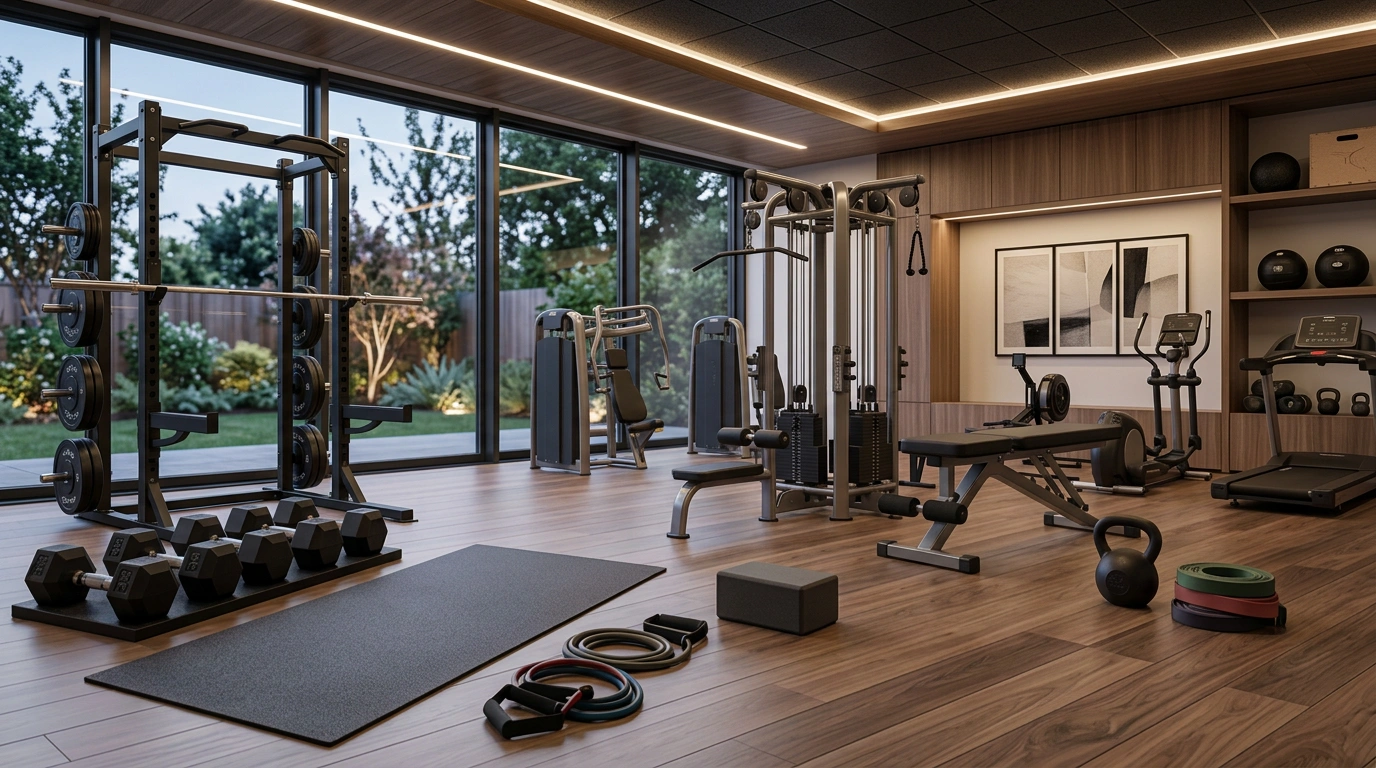
A gym workout takes place in a commercial fitness facility where you typically have access to a wide variety of strength and cardio equipment.
Depending on the gym, you may find:
A gym can also create a dedicated mental environment for gym and workout sessions. When you enter a gym, the primary purpose of the space is exercise. For some people, that separation from home makes it easier to focus.
The choice between gym and exercise at home ultimately comes down to which environment makes it easier for you to maintain a regular routine.
The gym vs home workout debate often focuses on which option is better. In reality, neither environment automatically produces better results.
Your results are influenced more by consistency, exercise selection, training intensity, progressive overload, recovery, nutrition, and whether your routine matches your goals.
Both options can support:
For example, someone who follows a structured home workout four or five days per week may make better progress than someone who pays for a gym membership but rarely attends.
Likewise, someone pursuing advanced strength training may progress more efficiently in a gym because of access to barbells, racks, machines, and heavier resistance.
This is why the gym versus home workout comparison should focus on your individual needs rather than assuming one location is universally superior.
Yes, do home workouts work for fitness and weight loss? They can, especially when your routine combines resistance training, cardiovascular activity, appropriate nutrition, and consistency.
Bodyweight exercises can challenge major muscle groups. HIIT can provide an efficient cardiovascular workout. Walking and running can increase daily activity and calorie expenditure. Dumbbells and resistance bands can add progressive resistance.
The key is progression.
If your workout becomes easier over time, you can increase repetitions, add resistance, increase difficulty, reduce rest periods, or choose a more challenging variation.
For weight management, exercise should also be combined with an appropriate eating pattern. A workout alone does not determine whether you lose body fat.
The best option can change depending on what you are trying to accomplish.
For weight loss, both home and gym workouts can be effective.
A home routine might combine bodyweight strength exercises with HIIT, walking, running, or home cardio equipment. A gym routine may include resistance training and cardio machines.
The most important factors include:
If a home workout is easier to fit into your schedule, it may be the better choice because you are more likely to complete it regularly.
On the other hand, a gym may provide more exercise variety and equipment, which can be useful if you enjoy structured training.
Building muscle requires challenging your muscles with progressively greater resistance over time.
Home workouts can build muscle, particularly when you use dumbbells, resistance bands, adjustable weights, or increasingly difficult bodyweight exercises.
For beginners and intermediate exercisers, home training can provide plenty of opportunities for progression.
However, a gym has a major advantage for advanced muscle-building programs. Commercial gyms typically provide heavier dumbbells, barbells, cable systems, machines, benches, and other equipment that make it easier to progressively increase resistance.
If your primary goal is significant muscle development, the gym may eventually become more practical.
Strength training can be performed at home, but equipment availability matters.
A beginner can improve strength with push-ups, squats, lunges, resistance bands, dumbbells, and other exercises. As strength increases, however, you may need heavier resistance to continue progressing.
A gym usually provides better access to:
For serious strength training, a commercial gym often offers a broader training environment.
For general fitness, either option can work very well.
A balanced program should ideally include:
Someone exercising at home vs gym can achieve these components by combining bodyweight exercises, resistance training, cardio, stretching, and outdoor activities.
The best environment is the one that allows you to perform a balanced routine consistently.
Convenience is one of the biggest reasons people choose home workouts.
Home training offers several practical benefits:
A 20- or 30-minute home session can often be completed without leaving your house.
This is particularly useful if your work schedule, family responsibilities, or commute makes gym attendance difficult.
A gym requires more planning, but it offers advantages that can make training easier for some people.
You may have access to:
For some people, physically going to a gym creates a stronger psychological commitment to exercise.
When comparing gym vs exercise at home, think about which environment reduces the biggest obstacle between you and a consistent workout routine.
Cost is another important part of the decision.
Home workouts can be extremely inexpensive. You can begin with bodyweight exercises and gradually add equipment.
Common purchases include:
The initial investment can vary significantly depending on how advanced you want your home setup to be.
A simple setup may cost relatively little, while a complete home gym can require a substantial upfront investment.
The advantage is that after purchasing your equipment, you generally do not have a recurring gym membership fee.
A gym membership usually involves recurring expenses. Depending on the facility, you may also encounter:
However, the membership provides access to equipment that could be expensive to purchase individually.
When deciding between workout at home or gym, compare the total long-term cost rather than looking only at the monthly membership price.
A person who needs extensive equipment may find a gym membership financially practical. Someone who mainly needs dumbbells and resistance bands may prefer investing in a home setup.
The gym at home vs gym membership decision depends heavily on how you plan to exercise.
| Factor | Home Gym | Gym Membership |
| Initial investment | Can be moderate to high | Usually lower upfront |
| Monthly cost | Usually low after setup | Recurring |
| Equipment variety | Depends on budget | Usually extensive |
| Privacy | High | Limited |
| Travel | None | Required |
| Trainers | Usually unavailable | Often available |
| Space | Requires room | No home space needed |
| Flexibility | Very high | Depends on gym |
A home gym may be worth considering if you exercise frequently, dislike commuting, prefer privacy, or want a long-term fitness setup.
It can be particularly useful when your home is close to your work and daily schedule, but traveling to a gym would make workouts harder to maintain.
A gym membership may be a better investment if you need professional guidance, want access to many machines, plan to lift heavier weights, or find that a dedicated environment improves motivation.
Beginners may also benefit from trainers who can demonstrate exercises and help establish proper technique.
Ultimately, gym at home vs gym membership is not simply a price comparison. It is a comparison of convenience, equipment, guidance, motivation, and long-term usability.
You do not necessarily have to choose one environment.
A hybrid approach can combine the convenience of home training with the equipment variety of a gym. This can be particularly useful for people with unpredictable schedules.
For example, you might use a gym for heavy strength sessions and complete shorter cardio or mobility sessions at home.
A simple hybrid schedule could look like this:
| Day | Workout |
| Monday | Gym strength training |
| Tuesday | Home cardio |
| Wednesday | Rest and mobility |
| Thursday | Gym workout |
| Friday | Home bodyweight workout |
| Saturday | Outdoor physical activity |
| Sunday | Rest |
This type of routine gives you flexibility while allowing you to take advantage of different training environments.
Combining home and gym training can provide:
For example, if you cannot make it to the gym on Friday, you can still complete a home workout.
This approach recognizes that gym and exercise do not have to happen in one location. The same applies to workout and exercise routines in general: consistency and appropriate training matter more than where every session takes place.
The following comparison can help you quickly evaluate the two options.
| Category | Home Workout | Gym Workout |
| Convenience | Excellent | Moderate |
| Equipment | Limited to what you own | Extensive |
| Privacy | Excellent | Moderate |
| Cost | Flexible | Recurring |
| Social motivation | Low | High |
| Trainer access | Limited | Often available |
| Heavy strength training | Depends on equipment | Excellent |
| Schedule flexibility | Excellent | Moderate |
| Beginners | Good | Good |
| Long-term use | Excellent with equipment | Excellent |
Neither option wins every category.
Home workouts are strongest in convenience, privacy, and flexibility. Gyms generally provide advantages in equipment variety, professional guidance, and heavy resistance training.
So, should you choose a workout at home or gym?
The answer depends on what makes regular exercise realistic for you.
A home workout may be the better option when:
You do not need a large home gym to start. A pair of dumbbells, resistance bands, an exercise mat, and enough space to move can support a surprisingly broad range of workouts.
A commercial gym may be better when:
A gym can also provide a structured environment that separates exercise from your home responsibilities.
A hybrid approach may be ideal when:
The best workout at home or gym strategy is ultimately the one you can maintain over the long term.
A home workout can be highly effective for general fitness, weight management, cardiovascular training, and muscle development, especially when you use progressive overload and follow a consistent routine. A gym becomes more advantageous when you need heavier weights, specialized machines, or advanced strength-training equipment.
Neither is automatically better. Exercise at home or gym training can produce excellent results. Choose home workouts if convenience and privacy are important. Choose a gym if equipment variety, professional guidance, or social motivation matters more to you.
Yes, do home workouts work? They can, provided your workouts are challenging enough and you progress over time. Bodyweight exercises, dumbbells, resistance bands, cardio, and HIIT can all contribute to a well-rounded fitness routine.
Yes, does home exercise work for muscle building? Home training can build muscle when resistance is sufficient and progressively increased. Dumbbells, adjustable weights, resistance bands, and challenging bodyweight exercises can all be useful. However, people pursuing advanced muscle growth may eventually benefit from the heavier equipment available at a commercial gym.
The answer depends on your goals and budget. Gym at home vs gym membership is essentially a comparison between convenience and equipment access. A home gym provides privacy and eliminates commuting, while a membership typically gives you access to a much broader range of equipment and professional services.
Yes. Regular physical activity can support cardiovascular fitness, muscular strength, mobility, healthy weight management, bone health, energy, stress management, and sleep. Your routine should be appropriate for your current fitness level and health needs.
Yes, you can should workout at home as a beginner if you feel more comfortable there. Starting with basic movements can help you develop consistency and confidence. A gym may be preferable if you want professional guidance or need help learning how to use equipment.
When searching for a gym, consider location, hours, equipment, membership costs, cleanliness, trainers, crowd levels, classes, and cancellation policies. Searching for city fitness near me or similar local terms can help you identify nearby options, but always evaluate whether the facility actually matches your goals and schedule.
The home workout vs gym workout decision does not need to be complicated.
If you value convenience, privacy, flexible scheduling, and independent training, working out at home can be an excellent choice. If you want extensive equipment, heavier resistance, professional guidance, or a motivating fitness environment, a gym may be more suitable.
And if you want the advantages of both, there is nothing wrong with combining them.
The most effective workout environment is ultimately the one that helps you exercise consistently, progress toward your goals, and maintain an active lifestyle for the long term.