Physical Address
304 North Cardinal St.
Dorchester Center, MA 02124
Physical Address
304 North Cardinal St.
Dorchester Center, MA 02124


Weight loss is often presented as a simple formula: eat less, exercise more, and watch the number on the scale go down. Real life is more complicated. Your food choices, activity level, sleep, stress, medications, health conditions, age, and daily routine can all affect how your body responds to weight-loss efforts.
A healthy way to lose weight is not about following the most restrictive diet or trying to lose as much weight as possible in a short period. It is about creating habits that help reduce excess body fat while providing your body with enough nutrition and supporting your overall health.
For many adults, gradual weight loss is easier to maintain than rapid loss. The Centers for Disease Control and Prevention (CDC) commonly describes about 1–2 pounds (0.5–0.9 kg) per week as a gradual pace, although the appropriate rate varies from person to person.
The bigger goal is not simply to lose weight. It is to build a lifestyle that you can continue after the initial weight-loss period ends.
A healthy approach usually combines a moderate calorie deficit with nutritious food, regular physical activity, adequate sleep, and habits that you can maintain.
A calorie deficit means your body is using more energy than you consume over time. That does not mean you need to drastically cut food or skip meals. A modest, manageable reduction is generally easier to maintain than extreme restriction.
Your meals should still provide important nutrients, including protein, fiber, vitamins, minerals, and healthy fats.
A balanced weight-loss routine can include:
The aim is to improve your overall eating and activity pattern rather than depend on one food, supplement, or short-term diet.
If you are wondering how to start losing weight, begin with your current routine instead of immediately following a strict diet.
Spend a few days paying attention to what you normally eat and drink, how often you snack, how much you move, and when you tend to eat more than planned. This can reveal habits that are easier to change than you might expect.
For example, you might notice that most of your extra calories come from sweetened drinks, frequent snacks, oversized portions, or restaurant meals.
You can then make a few targeted changes:
You do not need to change everything in the first week. A plan that is slightly easier to follow but lasts for months is usually more useful than an aggressive plan that lasts for ten days.
A weight-loss diet and exercise plan works best when the two support each other.
Food affects how many calories you consume, while physical activity increases energy expenditure and provides benefits that go beyond weight control. Regular exercise can support cardiovascular fitness, muscle strength, mobility, mood, and sleep.
For general health, adults are generally advised to get at least 150 minutes of moderate-intensity aerobic activity each week and perform muscle-strengthening activities on at least two days per week. People who are currently inactive can build toward these targets gradually.
Your activity does not have to involve a gym.
You could use:
If you have a health condition or have been inactive for a long time, it is sensible to discuss a suitable exercise plan with a healthcare professional.
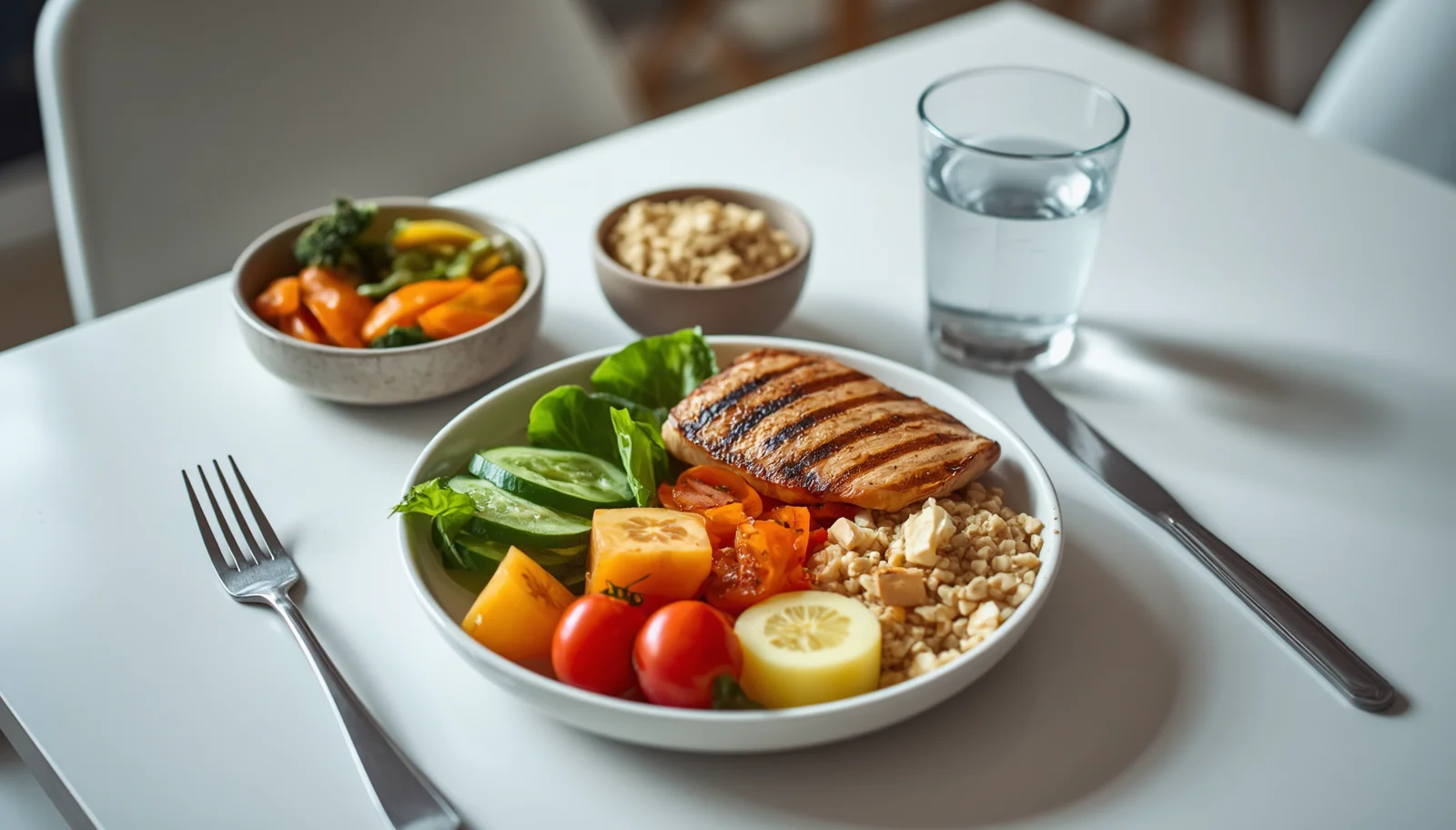
A healthy eating diet to lose weight should focus on food quality as well as portions.
Rather than building your diet around foods you are not allowed to eat, start with foods that provide useful nutrients and help you feel satisfied.
Protein can help you feel full and is particularly useful during weight loss because it supports the maintenance of lean tissue.
Good choices include eggs, fish, poultry, lean meat, Greek yogurt, milk, beans, lentils, tofu, and other protein-rich foods.
Vegetables, fruits, beans, lentils, oats, and whole grains provide fiber and can make meals more filling.
Whole fruit is generally a better everyday choice than relying heavily on fruit juice because it retains its fiber and requires more chewing.
Healthy foods can still contribute substantial calories when portions become very large. You do not need to measure every meal forever, but learning what reasonable portions look like can be useful.
Rice, potatoes, oats, whole-grain bread, beans, and other carbohydrate-containing foods can fit into a healthy weight-loss diet.
The better question is how much you are eating and what the overall meal looks like, rather than whether carbohydrates are automatically “bad.”
Soft drinks, sweetened coffee, energy drinks, and other sugary beverages can add a surprising amount of energy without making you feel as full as a meal.
Replacing some of these drinks with water or unsweetened alternatives can be a simple change.
People often search for what helps weight loss because changing food intake is only one part of the picture.
Sleep plays a role in appetite, energy, mood, and daily behavior. Adults generally need around 7–9 hours of sleep each night, although individual needs vary.
Consistently getting too little sleep can make healthy eating and regular exercise more difficult.
Stress does not automatically cause weight gain, but prolonged stress can affect eating behavior, sleep, and activity. Some people respond to stress by eating more frequently or choosing highly palatable foods.
Finding alternatives such as walking, relaxation exercises, hobbies, social support, or simply taking a break can help.
Exercise sessions are not the only way to become more active.
Walking during phone calls, taking the stairs, doing household tasks, standing periodically, and taking short walking breaks can increase your overall movement.
A single healthy meal does not cause major weight loss, and one high-calorie meal does not undo weeks of progress.
What matters is the pattern that you repeat most often.
If your goal is to improve body composition, you may be asking how to lose fat but not muscle.
Some loss of lean tissue can occur during weight loss, particularly when calorie restriction is aggressive. You can take steps to reduce the risk.
Strength training gives your muscles a reason to remain active while your body weight changes.
Depending on your fitness level, this could include squats, lunges, push-ups, rows, presses, resistance-band exercises, or free weights.
Adequate protein supports muscle maintenance. The amount you need depends on your body size, age, activity level, health status, and overall diet.
If you are unsure about your protein needs, a registered dietitian or healthcare professional can provide advice based on your individual circumstances.
Trying to lose weight as quickly as possible may make it harder to maintain muscle and can make the diet difficult to sustain.
A moderate approach gives you more room to eat nutritious food and continue exercising.
The answer to how fast can I lose weight varies.
The CDC commonly recommends gradual weight loss of around 1–2 pounds per week for people who are trying to lose weight. This is a general guideline, not a requirement that everyone should hit every week.
Your actual progress may be faster at first and slower later. Changes in water weight can also make the scale move considerably from one week to another.
Your starting weight, calorie intake, activity level, age, medications, medical conditions, sleep, and other factors can influence the rate.
For many adults, losing roughly 1–2 pounds (0.5–0.9 kg) per week is considered a gradual pace.
But the safest rate for you may be different.
Someone with a higher starting weight may lose weight faster initially, while someone who is already relatively lean may lose more slowly. There is no single weekly number that applies to every person.
If you are losing weight unexpectedly, experiencing symptoms, or considering a very restrictive diet, talk with a healthcare professional.
There is no fixed answer to how long does it take to lose weight.
It depends on your starting point, your goal, your eating pattern, activity level, health, and how consistently you follow your plan.
Weight loss also tends to slow as body weight decreases. Your body requires fewer calories at a lower weight, so the same eating pattern may produce a smaller calorie deficit over time.
For people with overweight or obesity, even a relatively modest reduction in body weight can be meaningful. The National Institute of Diabetes and Digestive and Kidney Diseases (NIDDK) notes that an initial goal of losing around 5–10% of starting body weight over about six months is often recommended in clinical weight-management approaches.
That makes long-term progress more useful than chasing an extreme short-term target.
The stages of weight loss are not identical for everyone, but your progress may change over time.
During the first few weeks of changing your diet, the scale may move relatively quickly. Some of this change can come from shifts in body water rather than body fat.
As you continue, weight loss may become slower and less predictable. Your body becomes smaller and therefore may use fewer calories during daily activities.
This is one reason why progress can appear to “stall” even when you are still making healthy choices.
Eventually, maintaining your new weight becomes the priority.
The habits that helped you lose weight—balanced eating, physical activity, appropriate portions, and regular sleep—remain useful during maintenance.
Weight maintenance should not be treated as an afterthought. It is part of successful weight management from the beginning.
Knowing how can I stick to a diet is often more valuable than finding another restrictive eating plan.
Start by making the diet fit your life.
If you normally eat with your family, choose meals that everyone can share. If you work long hours, keep a few simple healthy meals available instead of relying on complicated recipes. If you frequently eat outside the home, learn how to make reasonable choices at restaurants rather than avoiding them completely.
It can also help to avoid an “all or nothing” mindset.
Eating a dessert does not mean you have failed. Missing one workout does not mean you need to abandon the week. Return to your normal routine at the next opportunity.
Ask whether your eating plan is realistic.
Can you afford the foods? Can you prepare them? Can you eat this way during weekends and holidays? Does the plan give you enough energy? Can you imagine following it six months from now?
If the answer is no, the plan may be too restrictive.
A flexible eating pattern that you can maintain is usually more useful than a perfect diet that you cannot live with.
Weight loss tips for women need to account for individual differences rather than assuming every woman needs the same calorie intake or diet.
Age, activity level, body composition, medications, pregnancy, postpartum changes, and menopause can all affect weight management.
For general weight loss, the basic principles remain similar: eat a nutrient-rich diet, manage portions, stay physically active, include strength training, sleep adequately, and focus on habits that can continue long term.
Pregnancy is different. Weight loss should not be pursued during pregnancy unless specifically recommended and supervised by a healthcare professional. Women who are breastfeeding, experiencing significant hormonal changes, or managing a health condition may also benefit from individualized nutritional guidance.

Some people searching for how to lose weight without GLP-1 medications are looking for lifestyle-based options.
Nutrition, physical activity, sleep, stress management, and behavioral changes are important parts of weight management whether or not medication is used.
For some people with overweight or obesity, prescription weight-management medications may be appropriate. These decisions should be made with a qualified healthcare professional based on medical history, potential benefits, risks, and personal goals.
You should not start, stop, or change prescription medication based solely on information from a blog.
If you are wondering how to lose weight in two months, set a realistic goal rather than trying to force a dramatic change.
Think of eight weeks as a period for establishing habits.
Focus on regular meals, reducing sugary drinks, increasing vegetables and protein, improving sleep, and adding manageable physical activity.
Build a more consistent exercise routine. If appropriate, include strength training alongside walking or other aerobic activity.
Look at your progress honestly. If your weight has not changed, review portions, drinks, snacks, activity, and consistency before making drastic changes.
Focus on maintaining the habits you have developed. The aim is to finish the two months with a routine you can continue.
You may lose weight during this period, but the exact amount cannot be predicted accurately for everyone.
Weight loss success is not only about the number on the scale.
Other useful signs of progress include:
Body weight naturally fluctuates because of changes in water, food volume, sodium intake, hormones, and other factors. Looking at the trend over several weeks can provide a more useful picture than reacting to a single day’s measurement.
Weight management is not always simply a matter of willpower.
Medical conditions, medications, sleep problems, hormonal changes, genetics, and other factors can influence body weight.
Professional guidance can be particularly useful if:
A registered dietitian can also help you develop an eating plan that meets your nutritional needs while fitting your lifestyle.
For many adults, around 1–2 pounds (0.5–0.9 kg) per week is considered a gradual rate of weight loss. Your appropriate rate may be different depending on your starting weight, health, diet, activity, and other factors.
There is no universal number for everyone. A gradual loss of around 1–2 pounds per week is a commonly used guideline, but your healthcare professional may recommend a different pace.
Choose an eating pattern that fits your lifestyle rather than relying on strict rules. Plan for weekends and social events, keep nutritious foods available, and avoid treating one off-plan meal as a reason to quit.
It depends on your starting weight, target, calorie intake, activity, health, and consistency. Weight loss often slows over time, so there is no fixed timeline that applies to everyone.
Resistance training, adequate protein, and avoiding unnecessarily aggressive calorie restriction can help preserve muscle during weight loss. Individual protein and exercise needs vary.
Dietary changes can lead to weight loss, but regular physical activity supports overall health, increases energy expenditure, and can help with long-term weight maintenance. Strength training can also support muscle retention.
Yes. Weight loss does not require eliminating entire food groups or following an extreme diet. A balanced eating pattern with appropriate portions, adequate nutrition, and sustainable habits can work.
Lifestyle changes can support weight management without medication. For people who need additional treatment, a healthcare professional can discuss whether medication or another approach is appropriate.