Physical Address
304 North Cardinal St.
Dorchester Center, MA 02124
Physical Address
304 North Cardinal St.
Dorchester Center, MA 02124


A full body HIIT workout plan can be a great option when you want to improve cardiovascular fitness, burn calories, build conditioning, and make your workouts more time-efficient. Instead of spending an hour doing steady-state cardio, HIIT uses short periods of challenging exercise followed by recovery periods.
The best part is that HIIT does not have to look the same for everyone. A beginner may start with bodyweight squats and brisk walking intervals, while an experienced gym-goer may use dumbbells, kettlebells, sprints, or a treadmill.
This guide explains how to structure HIIT safely and effectively, whether you train at home, outdoors, or in a gym.
HIIT stands for High-Intensity Interval Training. A typical session alternates between periods of relatively hard exercise and periods of recovery.
For example, you might perform high knees for 30 seconds and then walk or rest for 30 seconds. You repeat that pattern several times before moving to the next exercise.
A full-body session combines movements that challenge multiple areas, including the legs, chest, back, shoulders, core, and cardiovascular system.
The basic structure of HIIT is simple:
A beginner does not necessarily need to exercise at maximum effort. The goal is to work at an intensity that feels challenging while still allowing you to maintain good technique.
For example, a 20/40 interval means 20 seconds of work followed by 40 seconds of recovery. A more advanced workout might use 40 seconds of work and only 20 seconds of rest.
HIIT can be efficient because you spend less time exercising while still challenging your cardiovascular system and muscular endurance.
HIIT and circuit training are related, but they are not exactly the same.
Circuit training generally means moving through several exercises in sequence. The emphasis can be strength, muscular endurance, cardio, or a combination of all three.
HIIT specifically focuses on intervals of higher-intensity work followed by recovery.
A circuit HIIT training workout could include squats, push-ups, mountain climbers, and jumping jacks performed in timed intervals. In contrast, a traditional circuit might involve completing a specific number of repetitions at each station with less emphasis on reaching a high cardiovascular intensity.
Interval strength training can also combine resistance exercises with timed recovery periods. It may feel similar to HIIT, but the primary goal can be strength development rather than cardiovascular conditioning.
Low intensity interval training uses the same general concept of alternating effort and recovery but at a lower intensity. It may be more appropriate for beginners, active recovery days, or people who prefer lower-impact exercise.
One of the biggest advantages of HIIT is that you do not need an extremely long workout.
So, how long should HIIT workouts be? For many people, the main workout can range from about 10 to 30 minutes, depending on fitness level, exercise selection, and intensity.
A 10-minute session can work when you are short on time.
A 15-minute session can provide a useful beginner workout.
A 20-minute workout is often enough for a well-structured full-body session.
A 30-minute HIIT workout can work for experienced trainees, especially when the session includes warm-up, intervals, recovery periods, and cool-down.
Remember that the total workout time is not the same as the time spent exercising at high intensity.
For example:
5–10 minutes: Warm-up
15–20 minutes: HIIT intervals
5 minutes: Cool-down
You can adjust the work-to-rest ratio based on your fitness level. Beginners may benefit from longer recovery periods, while advanced trainees can gradually increase work time.
HIIT is demanding, so doing more is not automatically better.
Your recommended frequency for HIIT workouts per week depends on your fitness level, recovery, other training, sleep, and overall workload.
A beginner may start with 1–2 HIIT sessions per week.
An intermediate trainee may perform around 2–3 sessions per week, provided recovery is adequate.
Advanced athletes may use HIIT more frequently depending on their sport or training program, but even experienced athletes need recovery.
If you also lift weights, run, play sports, or participate in other demanding activities, consider your entire training load rather than looking at HIIT in isolation.
For example, two HIIT sessions combined with three intense strength sessions can already create a substantial weekly workload.
The question “Can I do HIIT every day?” comes up often, but daily high-intensity training is usually unnecessary.
Your muscles, connective tissues, and nervous system need time to recover after demanding workouts. Doing intense sessions every day may also make it harder to maintain good exercise technique.
Instead, alternate challenging workouts with easier activities such as:
If you notice persistent soreness, unusual fatigue, declining performance, or a lack of motivation to train, consider reducing intensity or adding another recovery day.
A proper HIIT warm up prepares your body for faster, more demanding movements.
Skipping your warm-up and immediately jumping into burpees or sprint intervals is not a smart way to save time.
Start with several minutes of easy movement.
You could begin with:
The warm-up should increase your body temperature without exhausting you.
For a running-based workout, gradually increase your walking speed and transition into easy jogging before performing sprint intervals.
For a bodyweight workout, use easier versions of the exercises you plan to perform.
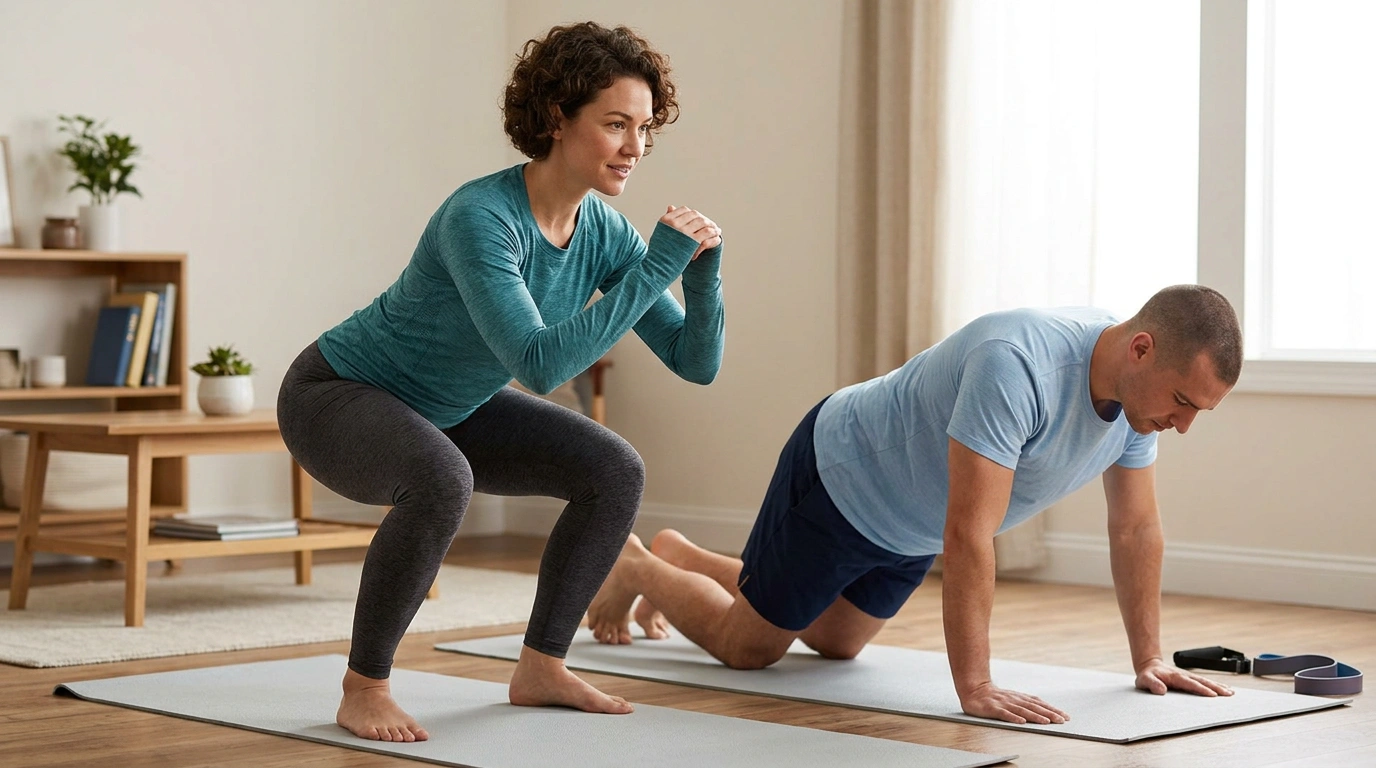
A full body HIIT workout plan for beginners should be simple enough to follow and challenging enough to improve fitness without turning every session into a punishment.
Try the following beginner routine:
| Exercise | Work | Recovery |
| Bodyweight Squats | 30 sec | 30 sec |
| High Knees | 30 sec | 30 sec |
| Push-Ups | 30 sec | 30 sec |
| Mountain Climbers | 30 sec | 30 sec |
| Reverse Lunges | 30 sec | 30 sec |
| Jumping Jacks | 30 sec | 30 sec |
| Plank | 30 sec | 30 sec |
Complete 1–3 rounds depending on your fitness level.
If standard push-ups are difficult, perform incline push-ups against a sturdy elevated surface.
If jumping movements bother your knees or ankles, replace jumping jacks with step jacks and high knees with marching high knees.
The goal is not to finish as quickly as possible. The goal is to complete the workout with controlled, repeatable movement.
People searching for a hiit workout plan for beginners pdf often want something they can save and follow repeatedly. A simple routine like this is easier to remember and track than an unnecessarily complicated program.
A HIIT calisthenics workout can be performed almost anywhere because it relies primarily on bodyweight movements.
Useful exercises include:
A simple calisthenics HIIT circuit could use four exercises for 20–30 seconds each, followed by a short recovery period.
For example:
Squats → Push-ups → Mountain climbers → Reverse lunges
Rest for 60–90 seconds and repeat.
This style of HIIT bodyweight training is particularly convenient for home workouts because you do not need a treadmill, dumbbells, or a full gym setup.
A HIIT workout for lower body can emphasize the glutes, quadriceps, hamstrings, calves, and lower-body endurance.
Consider:
Not every lower-body HIIT workout needs to include jumping.
For a lower-impact version, use regular squats, reverse lunges, controlled step-ups, and glute bridges.
For a more advanced session, combine explosive movements with strength-focused exercises. For example, perform squat jumps for 20 seconds followed by controlled reverse lunges for 40 seconds.
This approach lets you challenge both cardiovascular fitness and muscular endurance.
Although HIIT is often associated with running and jumping, you can also create a hiit chest workout using pushing exercises.
Useful options include:
A chest HIIT workout can combine a pushing movement with a cardio exercise.
For example:
Push-ups → jumping jacks → incline push-ups → high knees
If you use dumbbells, focus on controlled repetitions rather than trying to move heavy weight at a very high speed.
The goal is conditioning, not sacrificing technique to complete more repetitions.
The back can be trained with resistance-based movements while still keeping the interval format.
Good choices include:
A hiit workout back session can pair a rowing movement with a bodyweight cardio movement.
For example:
Dumbbell rows for 30 seconds → high knees for 30 seconds → resistance-band rows for 30 seconds → mountain climbers for 30 seconds.
Keep the resistance light enough that you can maintain proper posture throughout the interval.
HIIT for women can be structured around the same basic training principles used for anyone else: appropriate intensity, good exercise technique, progressive overload, and sufficient recovery.
A good HIIT training routine for women does not need to involve complicated exercises or extremely high-impact movements.
A practical home routine could include:
Beginners can use low-impact alternatives when needed.
For example, replace jump squats with regular squats, burpees with elevated burpees, and jumping jacks with step jacks.
The idea behind HIIT training workouts female programs should be progression, not punishment. As fitness improves, gradually increase work time, resistance, exercise complexity, or the number of rounds.
Whether you call it ladies HIIT workout, HIIT workouts women, or a HIIT workout plan for women, the basic training principles remain the same.
A simple weekly structure could include:
Monday: Full-body HIIT
Tuesday: Strength training or walking
Wednesday: Recovery
Thursday: HIIT
Friday: Strength training
Saturday: Light cardio or recreational activity
Sunday: Rest
Adjust the schedule according to your fitness level and other activities.
A HIIT workout for men can combine bodyweight movements, sprint intervals, dumbbells, kettlebells, and traditional strength exercises.
A more advanced session might include:
You can structure each exercise for 30–40 seconds with 20–30 seconds of recovery.
For example:
Goblet squats → push-ups → kettlebell swings → mountain climbers
Rest for 1–2 minutes and repeat.
A men HIIT workout should not automatically mean using the heaviest possible weights. HIIT works best when you can maintain proper movement quality throughout the interval.
Running is one of the simplest ways to perform HIIT because you only need a safe running surface and appropriate footwear.
Start with a gradual warm-up.
A beginner-friendly HIIT running workout could look like this:
5 minutes: Easy walking
3 minutes: Easy jogging
20 seconds: Faster run
70–100 seconds: Walking recovery
Repeat: 4–6 times
5 minutes: Easy walking cool-down
The faster interval does not have to be an all-out sprint.
If you are new to running, begin with a fast jog and gradually increase speed as your fitness improves.
Progress one variable at a time.
You could:
Avoid increasing everything simultaneously.
For example, if you currently perform four 20-second intervals, move to five intervals before dramatically increasing the sprint duration.
A treadmill can make interval training easier to control because you can set specific speeds and inclines.
Start with:
5 minutes: Walking warm-up
2–3 minutes: Easy jogging
20–30 seconds: Faster running
60–90 seconds: Walking recovery
Repeat: 4–6 times
5 minutes: Cool-down
If running is uncomfortable, use brisk incline walking instead.
An incline can increase the challenge without requiring very high speeds.
If you are comparing treadmills for HIIT, pay attention to:
A treadmill for walking does not necessarily have the same requirements as one intended for repeated sprint intervals.
For commercial purchases, consider how often you expect to use the machine and whether the treadmill can handle your planned training intensity.
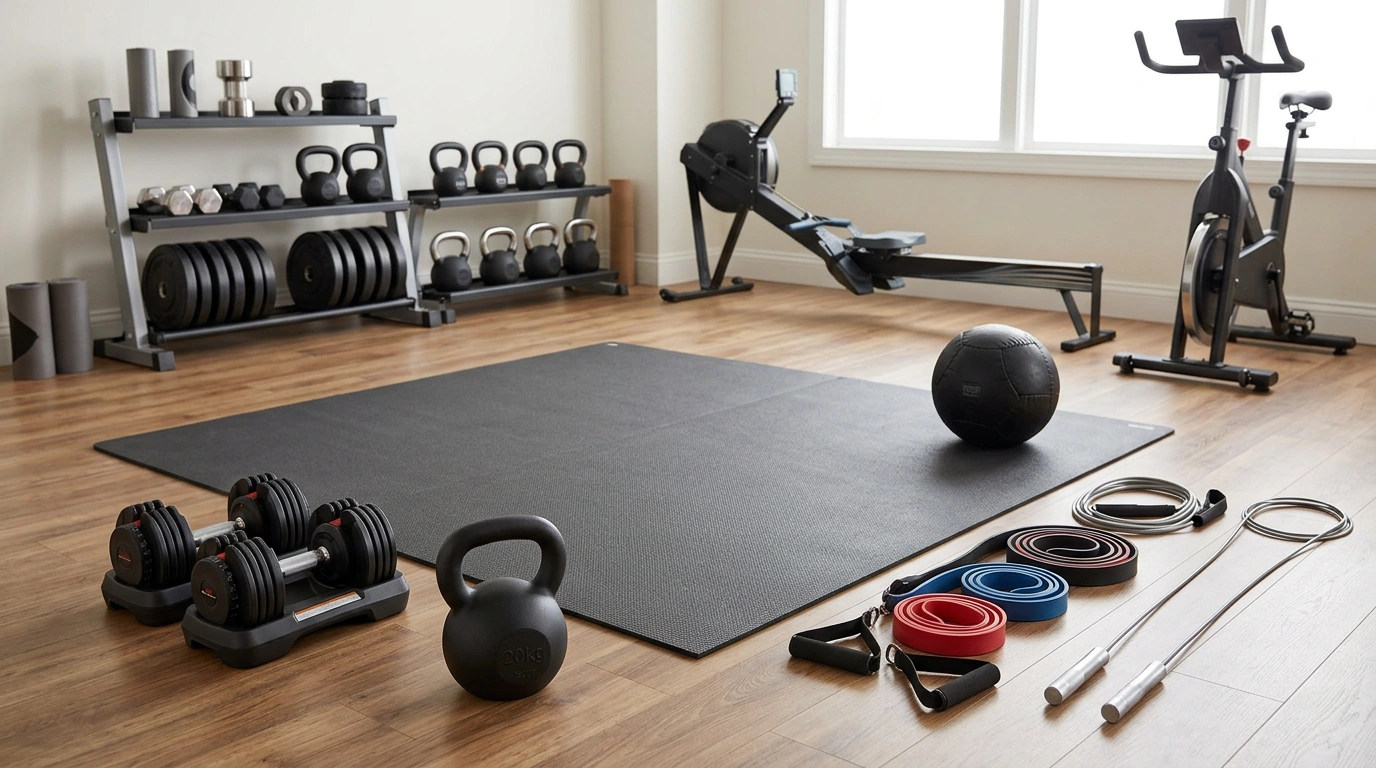
You can perform HIIT without equipment, but the right HIIT workout equipment can expand your exercise options.
Useful choices include:
You do not need to purchase everything.
For a small home gym, adjustable dumbbells and resistance bands can provide a lot of versatility.
A jump rope is inexpensive and useful for cardio intervals, while a kettlebell can add resistance to swings, squats, presses, and carries.
Cardio machines can make HIIT easier to control, especially when outdoor running is inconvenient.
Treadmill: Excellent for walking, running, incline work, and sprint intervals.
Exercise bike: Useful for low-impact intervals and beginner-friendly conditioning.
Air bike: Provides resistance based on your effort and can create demanding full-body intervals.
Rowing machine: Combines upper- and lower-body movement with cardiovascular conditioning.
Cross trainer: Provides lower-impact cardio and can be useful for people who prefer an elliptical-style movement.
Elliptical: A convenient option for lower-impact intervals.
Stair climber: Excellent for challenging the lower body and cardiovascular system.
There is no universal best high intensity cardio machine.
If you want low-impact exercise, an exercise bike, elliptical, or cross trainer may be a better starting point.
If running is your goal, a treadmill makes more sense.
If you want a full-body challenge, a rowing machine or air bike can be appealing.
When comparing high intensity interval training machines, think about your goals, available space, budget, comfort, and training experience.
HIIT can contribute to muscular development, especially when resistance exercises are included, but it should not automatically replace traditional strength training.
HIIT muscle gain workouts can include resistance-based movements such as:
For muscle growth, progressive overload remains important.
That means gradually increasing the challenge over time through additional resistance, repetitions, better control, or more demanding variations.
Nutrition and recovery matter too.
If muscle growth is your main goal, a dedicated resistance-training program will generally provide more precise control over training volume and progression than HIIT alone.
Combining HIIT and weight training can work well when your weekly schedule is organized carefully.
For example:
Monday: Upper-body strength
Tuesday: HIIT
Wednesday: Lower-body strength
Thursday: Recovery
Friday: Full-body strength
Saturday: HIIT
Sunday: Rest
You can also place HIIT after certain strength sessions when appropriate, but avoid turning every training day into an exhausting combination of heavy lifting and intense intervals.
The goal of HIIT and strength training is to complement each other rather than compete for recovery resources.
Bodybuilders may use HIIT for conditioning while keeping resistance training as the primary driver of muscle development.
An example could be:
Monday: Upper-body bodybuilding
Tuesday: HIIT
Wednesday: Lower-body bodybuilding
Thursday: Recovery
Friday: Upper/lower strength training
Saturday: Short HIIT session
Sunday: Rest
The exact structure should depend on your bodybuilding goals, training volume, and recovery.
If your legs are already heavily fatigued from squats, lunges, and leg presses, adding hard sprint intervals the next day may not be ideal.
The same principle applies to HIIT training bodybuilding programs: manage fatigue instead of simply adding more work.
One reason home HIIT workouts are popular is that you can adapt them to almost any space.
A no-equipment session might include:
You can perform four to six exercises for 20–40 seconds each.
For smaller apartments or shared spaces, choose quiet movements such as squats, reverse lunges, incline push-ups, and marching variations instead of repeated jumping.
If you have equipment, your options expand.
For example:
Dumbbells: Goblet squats, rows, presses
Kettlebell: Swings, squats, cleans
Resistance bands: Rows, presses, lateral movements
Treadmill: Walking, jogging, sprint intervals
Exercise bike: Short high-effort cycling intervals
A good HIIT training home workout does not require expensive equipment. Start with what you can use consistently and safely.
An IWT workout stands for Interval Weight Training.
It typically combines resistance exercises with cardiovascular intervals.
A basic IWT session might look like:
Strength block → Cardio interval → Recovery → Repeat
For example:
Goblet squats → rowing machine → rest
Then repeat the sequence.
IWT can be useful when you want to combine strength and cardiovascular conditioning within one workout.
The main difference is the structure and emphasis.
HIIT focuses on alternating high-intensity work and recovery.
IWT specifically incorporates resistance training and cardio intervals.
There can be overlap between the two, but they should not be treated as identical training systems.
A group HIIT workout can make interval training more social and engaging.
Set up several stations around the training area.
For example:
Station 1: Squats
Station 2: Push-ups
Station 3: Kettlebell swings
Station 4: Mountain climbers
Station 5: Jumping jacks
Station 6: Plank
Participants can work for 30 seconds and rotate after a short transition.
For mixed fitness levels, provide a beginner and advanced version of each movement.
For example, beginners can perform incline push-ups while advanced participants perform standard or decline push-ups.
Partner exercises can also make group sessions more interactive without requiring complicated equipment.
A well-designed HIIT moves list should include a combination of cardio, strength, and core exercises.
You do not need to use every movement in one session. Select exercises that match your fitness level and training goals.
Popular cardio-focused options include:
These movements can quickly elevate your heart rate.
Strength-focused HIIT movements include:
Use manageable resistance. When you are working against the clock, technique should come before heavier weight.
Core-focused movements include:
Mixing core exercises with standing movements can create a balanced full-body workout.
Once you understand the basic structure, you can create a HIIT training routine that fits your schedule and equipment.
Start with 4–8 movements.
Try to include different movement patterns.
For example:
This prevents your workout from focusing entirely on one muscle group.
Common interval formats include:
20/40: 20 seconds work, 40 seconds recovery
30/30: 30 seconds work, 30 seconds recovery
40/20: 40 seconds work, 20 seconds recovery
Beginners may find 20/40 easier to manage.
Intermediate trainees can experiment with 30/30.
The 40/20 format can be more demanding because the work period is longer and recovery is shorter.
Start with one or two rounds if you are new to HIIT.
As your conditioning improves, increase to three or four rounds.
More rounds are not automatically better. If your exercise technique deteriorates significantly, the workout has probably become too demanding.
Always leave room for preparation and recovery.
A practical session might look like:
5–10 minutes: Warm-up
15–25 minutes: HIIT
5 minutes: Cool-down
This makes your full body HIIT workouts easier to manage and repeat consistently.
Your body adapts to training, so a routine that feels difficult today may become easier after several weeks.
The solution is gradual progression.
You can increase intensity by:
Do not increase everything at once.
You can add:
For example, move from two rounds to three before adding several new exercises.
Reducing rest can make HIIT harder, but it should be done gradually.
If you currently use 30 seconds of work and 60 seconds of recovery, you could eventually move toward 30 seconds of work and 45 seconds of recovery.
There is no need to rush toward extremely short rest periods.
Equipment can create new progression opportunities.
You might add:
For people with commercial buying intent, choosing the right equipment is just as important as choosing the workout.
The best equipment is not necessarily the most expensive. It should match your available space, fitness level, budget, and training goals.
A few basic items can make bodyweight training more comfortable.
Exercise mat: Useful for planks, mountain climbers, burpees, and floor exercises.
Jump rope: Excellent for short cardio intervals and conditioning.
Resistance bands: Lightweight, portable, and useful for rows, presses, glute exercises, and mobility work.
For many beginners, these three pieces provide enough variety to start.
If you want to add resistance, consider:
Adjustable dumbbells: Great for squats, rows, presses, lunges, and carries while taking up relatively little space.
Kettlebells: Particularly useful for swings, goblet squats, cleans, and other dynamic movements.
Medicine balls: Useful for slams, rotational exercises, throws, and loaded movements where appropriate.
When buying equipment for HIIT, choose weight that you can control rather than simply selecting the heaviest option available.
For home cardio intervals, common options include:
A treadmill makes sense for people who enjoy running or incline walking.
An exercise bike is useful if you prefer lower-impact training.
A rowing machine can provide a full-body cardio challenge.
A cross trainer can be a comfortable choice for people who prefer an elliptical movement.
Before buying HIIT training equipment, consider:
Price: Set a realistic budget.
Space: Measure your available floor area before purchasing large machines.
Durability: Look for equipment designed to handle your expected frequency of use.
Versatility: Adjustable equipment can support more exercises.
Intensity levels: Make sure the equipment can challenge you as your fitness improves.
Beginner-friendliness: Choose equipment that you feel confident using correctly.
Home-gym compatibility: Consider storage, noise, ceiling height, and flooring.
These training methods can overlap, but each has a different primary emphasis.
| Training Type | Primary Goal | Typical Format |
| HIIT | Conditioning + cardiovascular fitness | Short intense intervals |
| Cardio | Aerobic endurance | Continuous or moderate effort |
| Strength Training | Strength + muscle | Resistance sets |
| Circuit Training | Full-body conditioning | Exercise stations |
| IWT | Strength + cardio | Weight + cardio intervals |
HIIT and circuit training can look similar, but circuit training does not always involve high-intensity intervals.
HIIT and weight training can also be combined when resistance exercises are included within interval sessions.
For people interested in hiit and strength training, the important question is what you want the program to accomplish.
If maximum strength is the priority, traditional strength training should receive enough attention.
If cardiovascular conditioning is the priority, HIIT may have a larger role.
If you want a mixture of both, interval strength training or IWT can be useful options.
The question “Can I do HIIT everyday?” has a simple answer: you can perform some form of exercise daily, but doing genuinely high-intensity sessions every day is not necessary for most people.
Recovery is part of training.
Going directly from sitting at your desk to sprinting or jumping is a poor strategy.
Spend 5–10 minutes preparing your body.
Your first workout should not feel like a competition.
Start at an intensity you can control and build from there.
Sleep, nutrition, hydration, rest days, and lower-intensity activity all contribute to progress.
Heavy dumbbells and fast intervals can become a risky combination when technique starts breaking down.
Use a manageable load.
A shorter, well-controlled workout is better than a longer workout filled with sloppy repetitions.
A machine or piece of equipment may look impressive but still be a poor fit for your home, fitness level, or training goals.
Choose equipment you will actually use.
Doing the same workout for months may eventually stop providing enough challenge.
Progress through additional rounds, resistance, work time, exercise difficulty, or better performance.
A weekly plan helps turn individual workouts into a consistent HIIT training program.
Monday: Full-body HIIT
Tuesday: Recovery or light walking
Wednesday: Strength training
Thursday: Rest
Friday: Full-body HIIT
Saturday: Light cardio
Sunday: Rest
This schedule gives you two HIIT sessions while leaving recovery between demanding workouts.
Monday: Upper-body strength
Tuesday: Full-body HIIT
Wednesday: Lower-body strength
Thursday: Easy cardio or recovery
Friday: Full-body strength
Saturday: HIIT running or treadmill intervals
Sunday: Rest
If your strength workouts are particularly intense, reduce HIIT volume accordingly.
Your best full body HIIT workout plan is one that you can consistently recover from and repeat week after week.
Most HIIT sessions can be completed in about 10–30 minutes, excluding or including warm-up and cool-down depending on how the program is structured. Beginners can start with shorter sessions.
Many beginners can start with 1–2 sessions per week. Intermediate trainees may use 2–3 sessions depending on their overall training load and recovery.
Daily high-intensity training is generally unnecessary. Give your body enough recovery between demanding sessions and use walking or low-intensity cardio on easier days.
HIIT can support muscular endurance and may contribute to muscle development when resistance exercises are included. However, dedicated strength training is generally more appropriate when maximizing muscle growth is the primary goal.
Useful HIIT workout equipment includes adjustable dumbbells, kettlebells, resistance bands, jump ropes, exercise mats, treadmills, exercise bikes, and rowing machines. Your best choice depends on your space, budget, and goals.
Yes. Beginners can use shorter work intervals, longer recovery periods, low-impact exercise variations, and fewer rounds. The intensity should increase gradually as fitness improves.
Absolutely. High intensity interval training at home can be performed with bodyweight movements such as squats, push-ups, lunges, mountain climbers, and jumping jacks. Equipment can be added later if desired.
There is no single best machine for everyone. Treadmills work well for running intervals, exercise bikes offer a lower-impact option, and rowing machines and air bikes can provide demanding full-body conditioning. Choose based on your goals, fitness level, comfort, and available space.