Physical Address
304 North Cardinal St.
Dorchester Center, MA 02124
Physical Address
304 North Cardinal St.
Dorchester Center, MA 02124

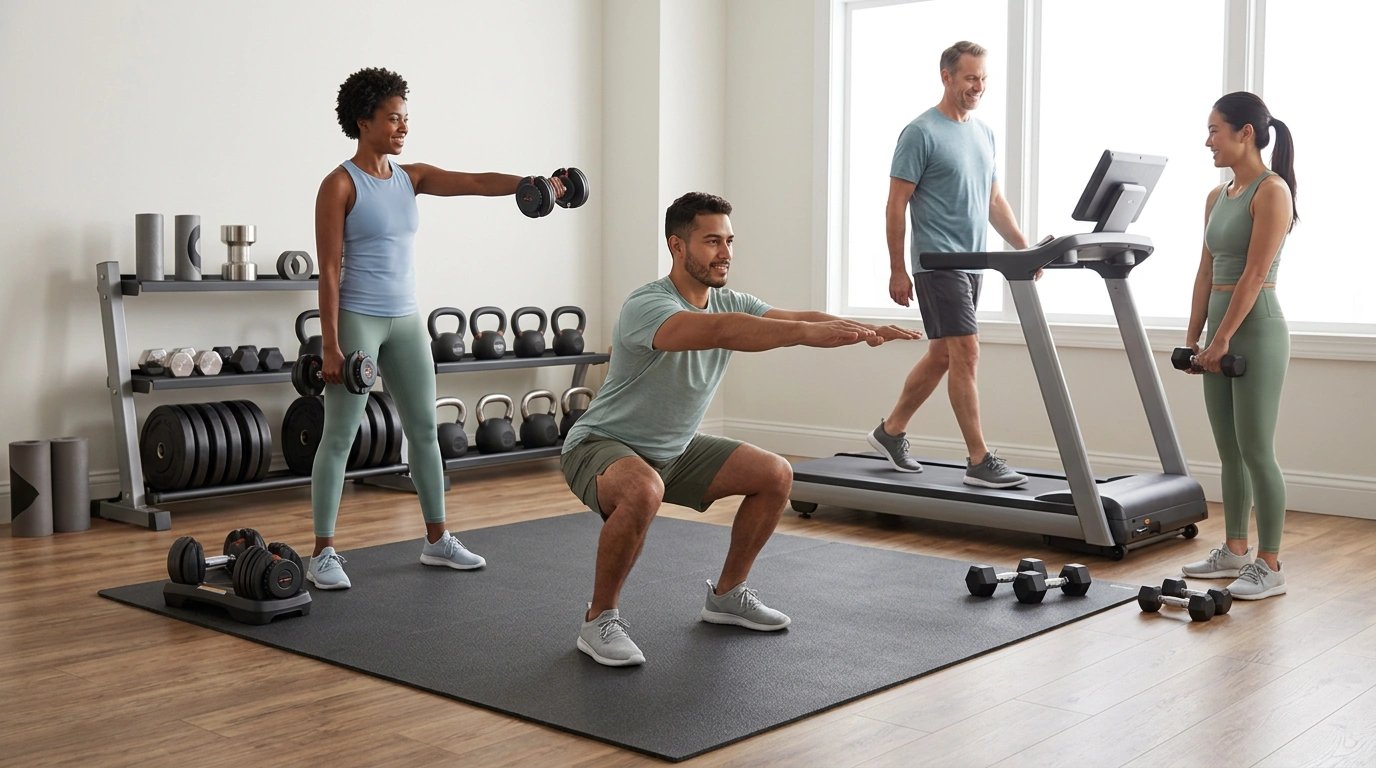
Starting a fitness routine can feel overwhelming, especially when you are not sure where to begin. You may be wondering what exercises you should do, how often you should work out, whether you need a gym membership, or if a beginner at home workout is enough to make progress.
The good news is that you do not need to be an experienced athlete to start improving your fitness. You simply need a realistic plan, patience, and a willingness to stay consistent. The best workout journey is not the one that leaves you exhausted after every session. It is the one you can continue week after week.
This guide explains how to start a fitness journey from the ground up. You will learn how to exercise when you are out of shape, what to do during your first gym visit, how to create a beginner workout schedule, how to choose between home workouts and fitness classes, and how to build healthy habits that last.
Before choosing exercises, decide what you want your fitness routine to accomplish.
Your goals might include:
Your goal does not have to be dramatic. Something as simple as being able to walk for 30 minutes without feeling exhausted is a worthwhile starting point.
When you know what you want to achieve, it becomes easier to choose exercises and measure your progress.
One of the most common beginner mistakes is trying to do too much too soon.
You might feel motivated during your first week and decide to exercise every day for an hour. Unfortunately, that approach can lead to excessive soreness, fatigue, frustration, or even injury.
Instead, start with manageable workouts. A 20- to 30-minute session performed consistently is often more useful than an intense workout that you only complete once.
Think of exercise as a habit rather than a short-term challenge. Your goal is to create an exercise journey that fits naturally into your lifestyle.
If you have been inactive, your muscles, joints, cardiovascular system, and nervous system need time to adapt.
Easing into an exercise program can help you:
The goal is not to prove how hard you can train on day one. The goal is to still be exercising months from now.
If you feel out of shape, do not assume you need an extreme workout program. In fact, beginning with simple activities can be one of the most effective approaches.
Walking is an excellent starting point for many beginners. You can control your pace, duration, and location, and you do not need complicated equipment.
Other beginner-friendly options include:
Start at a level that feels challenging but manageable.
When you are beginning from a sedentary lifestyle, increase your workout duration before dramatically increasing intensity.
For example, you might begin with 15 minutes of walking and gradually work toward 25 or 30 minutes.
Once regular activity becomes comfortable, you can add basic strength training.
Recovery days are also important. Rest does not mean you are failing. Recovery allows your body to adapt to the training you have completed.
A good starting workout plan can be surprisingly simple.
A beginner could start with:
The fastest way to get in shape is not necessarily the hardest workout. It is finding an activity level you can maintain and gradually improving it.
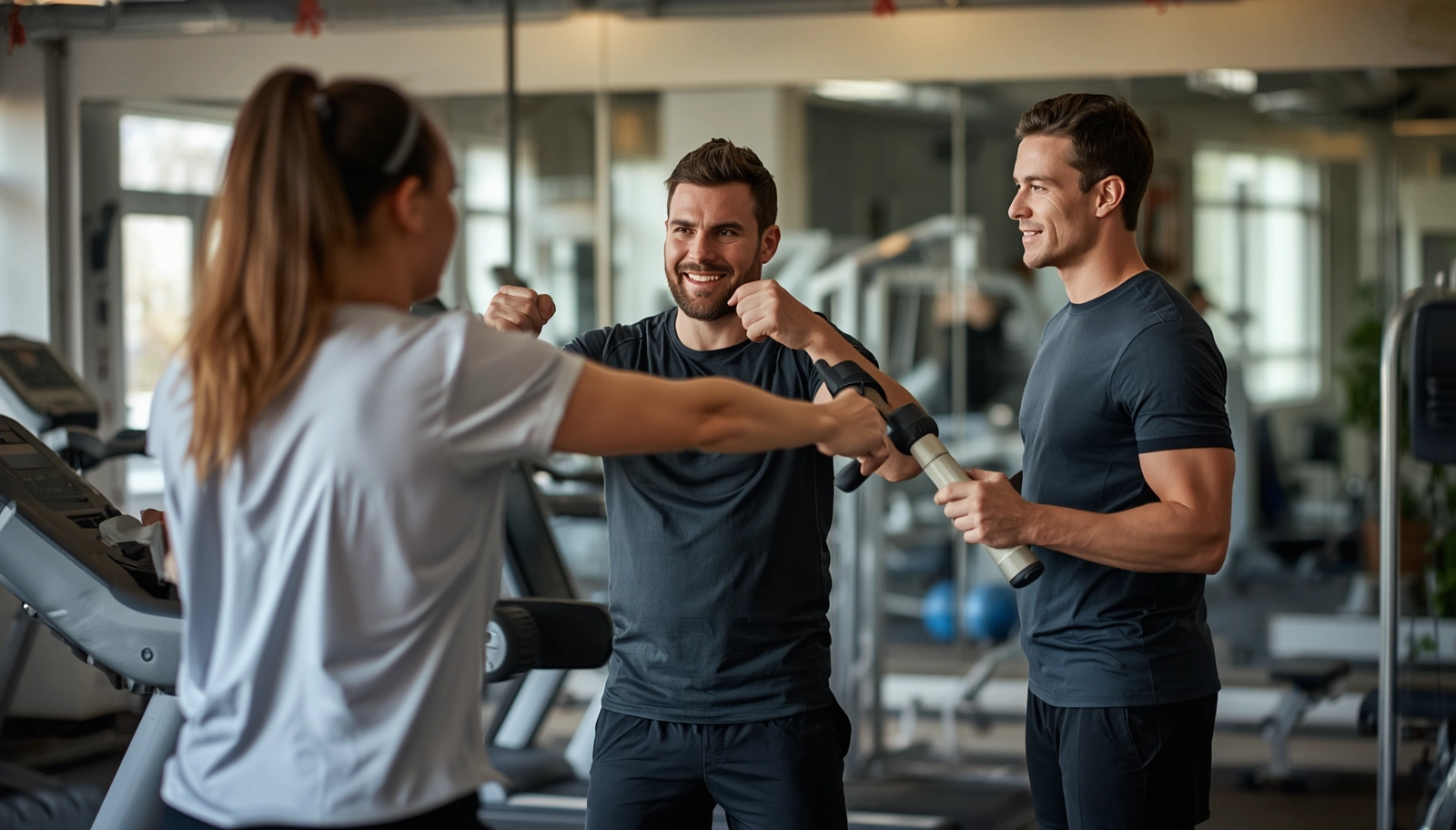
Walking into a gym for the first time can feel intimidating. Experienced members may appear to know exactly what they are doing, while you may not recognize half of the equipment.
Remember that everyone was a beginner once.
Most gyms have several basic areas, including:
Some gyms also provide an orientation where staff explain how the equipment works.
Take advantage of that opportunity if it is available.
Your first visit does not need to be a complete workout marathon.
Start with 5–10 minutes of easy cardio. Then learn a few simple machines or bodyweight movements.
A basic first session could include:
Keep the intensity moderate and concentrate on learning how the exercises feel.
If you do not know how to use a machine, ask a trainer or gym staff member. Asking questions is part of learning how to start going to the gym.
For your first few visits:
Your first goal is simply to become comfortable.
A first time in the gym workout should introduce your body to exercise without overwhelming it.
Spend approximately 5–10 minutes warming up.
Good options include:
The purpose is to prepare your body for movement rather than exhaust yourself.
After warming up, choose a few basic movements.
A beginner session might include:
Bodyweight squats: Learn to control the movement while keeping your feet stable.
Leg press: Use a light resistance and learn the machine setup.
Machine chest press: Practice controlled pushing movement.
Lat pulldown: Focus on pulling with control instead of using momentum.
Seated row: Keep your posture stable and move the handle smoothly.
Light core exercise: Try a short plank or another beginner-friendly core movement.
You do not need to perform dozens of exercises. A handful of well-controlled movements is enough for your first day.
Finish with several minutes of easy walking and gentle mobility.
Drink water and give your body time to recover.
A consistent schedule makes exercise easier because you do not have to decide every morning whether you are going to work out.
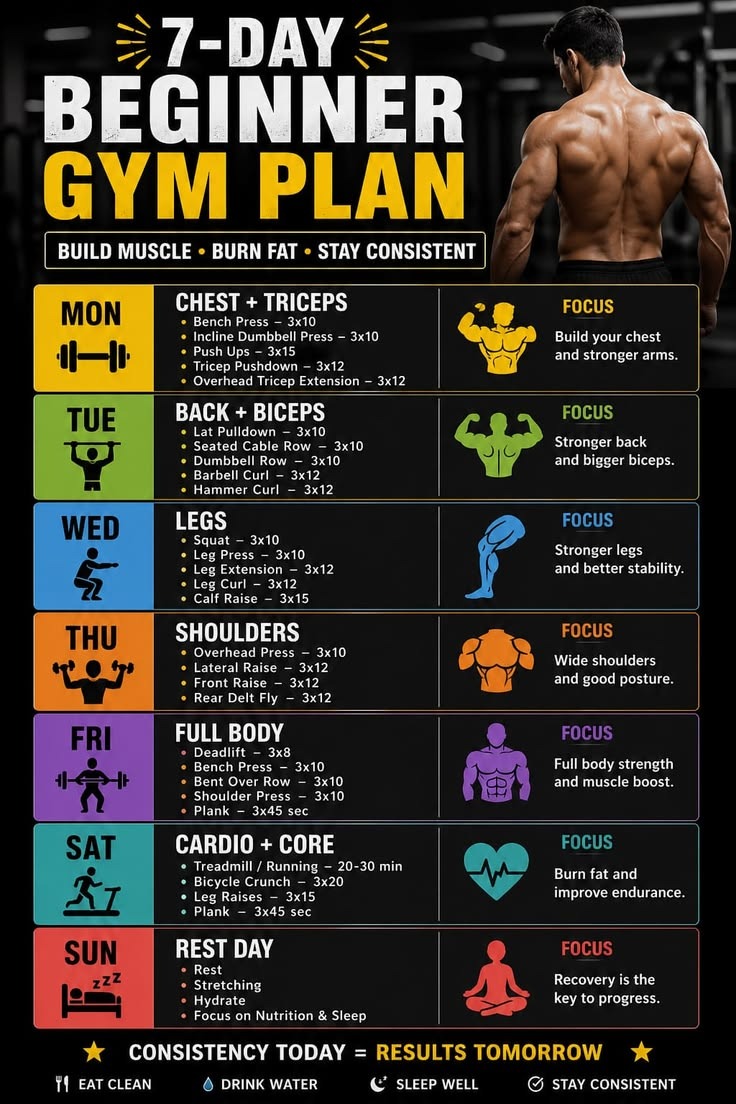
Here is an example of a manageable beginner workout schedule:
Monday: Full-body workout
Tuesday: Rest or easy walking
Wednesday: Light cardio
Thursday: Rest
Friday: Full-body workout
Saturday: Light recreational activity
Sunday: Rest
This is only an example. Your schedule should reflect your fitness level, work commitments, family responsibilities, and recovery needs.
For many beginners, two or three structured workouts per week are enough to establish a routine.
As your fitness improves, you can gradually increase frequency, duration, or intensity.
More exercise is not automatically better. The best fitness schedule is one you can realistically follow.
Try these simple strategies:
Consistency becomes easier when exercise is treated like an appointment rather than something you do only when you feel motivated.
A successful routine does not need to be complicated.
Start by identifying your priority.
For example:
Strength: Focus more heavily on resistance exercises.
Endurance: Include regular cardio and gradually increase duration.
Weight management: Combine physical activity with sustainable nutrition habits.
General fitness: Use a combination of strength, cardio, mobility, and recreational activity.
Muscle development: Prioritize resistance training and gradual progression.
Cardio can improve cardiovascular fitness and endurance, while strength training helps develop muscular strength and supports everyday movement.
Beginners can benefit from combining both.
You do not necessarily need separate complicated programs. Two full-body strength sessions and one or two cardio sessions can provide a solid foundation.
Your beginners workout routine should evolve.
Over time, you can:
Progress should be gradual rather than dramatic.
A step by step workout for beginners can make exercise much easier to understand.
Begin with several minutes of easy movement.
Choose exercises that involve fundamental patterns such as squatting, pushing, pulling, and hinging.
Technique should come before heavy resistance.
If you are unsure about an exercise, ask a qualified professional to demonstrate it.
Once you understand the movement, use a manageable resistance.
You can finish with easy cardio or mobility work depending on your goals.
Allow your heart rate to come down gradually and give your body time to recover.
Record exercises, repetitions, resistance, workout duration, and how you felt.
Tracking makes small improvements easier to recognize.
Knowing what to do before exercise can make your workout more comfortable and productive.
You do not need a complicated pre-workout routine. A few simple habits can prepare your body and mind.
Begin with light movement before more demanding exercises.
Depending on your workout, you might use:
Avoid turning your warm-up into another workout. You should feel more prepared afterward, not exhausted.
Before you begin, decide what you are going to do.
Know:
Having a plan can prevent you from wandering around the gym wondering what to do next.
Drink enough water throughout the day and pay attention to how your body feels during exercise.
Meal timing is personal. Some people prefer exercising after a light meal or snack, while others feel better training farther away from meals.
Avoid starting a demanding workout immediately after a very heavy meal if it makes you uncomfortable.
Fitness classes can be a great option if you prefer structure, instruction, and social motivation.
Some popular beginner-friendly choices include:
The right class depends on your interests and current fitness level.
If you have never exercised before, look for classes specifically labeled beginner, introductory, or low impact.
Working out alone gives you flexibility. You can choose your exercises, schedule, and pace.
A class provides a different experience.
Potential benefits include:
For someone who struggles to stay consistent alone, beginner fitness classes can make exercise more enjoyable.
When choosing among the best workout classes for beginners, consider:
Qualified instructors: The instructor should understand exercise technique and beginner needs.
Beginner-level sessions: Avoid advanced classes when you are just starting.
Appropriate class size: Smaller classes may provide more opportunities for individual feedback.
Clear demonstrations: Exercises should be explained and demonstrated before participants perform them.
Flexible schedules: A convenient class is easier to attend consistently.
A full-body gym routine can provide an effective foundation without requiring a huge number of exercises.
A basic session can include:
These movements train major muscle groups while teaching fundamental exercise patterns.
Before using a machine, adjust the seat, handles, or other settings to fit your body.
Start with light resistance and practice the movement.
Do not be embarrassed to ask gym staff for assistance. Learning how equipment works is part of becoming comfortable in a gym.
Good technique should remain your priority.
Once a workout starts feeling easier, you can gradually progress by:
Do not increase everything simultaneously.
Cardio does not have to mean running for miles.
Good options include:
Choose something you actually enjoy. Enjoyment can make regular exercise much easier to maintain.
Start with a duration that feels manageable.
If 20 minutes feels comfortable, you can gradually increase the duration over time.
You do not have to reach a specific number immediately.
Your goal is to build cardiovascular fitness gradually while allowing adequate recovery.
Cardio and strength training serve different purposes.
Cardio focuses primarily on cardiovascular endurance and sustained movement.
Strength training develops muscular strength and supports functional movement.
For general fitness, combining both can be an effective strategy.
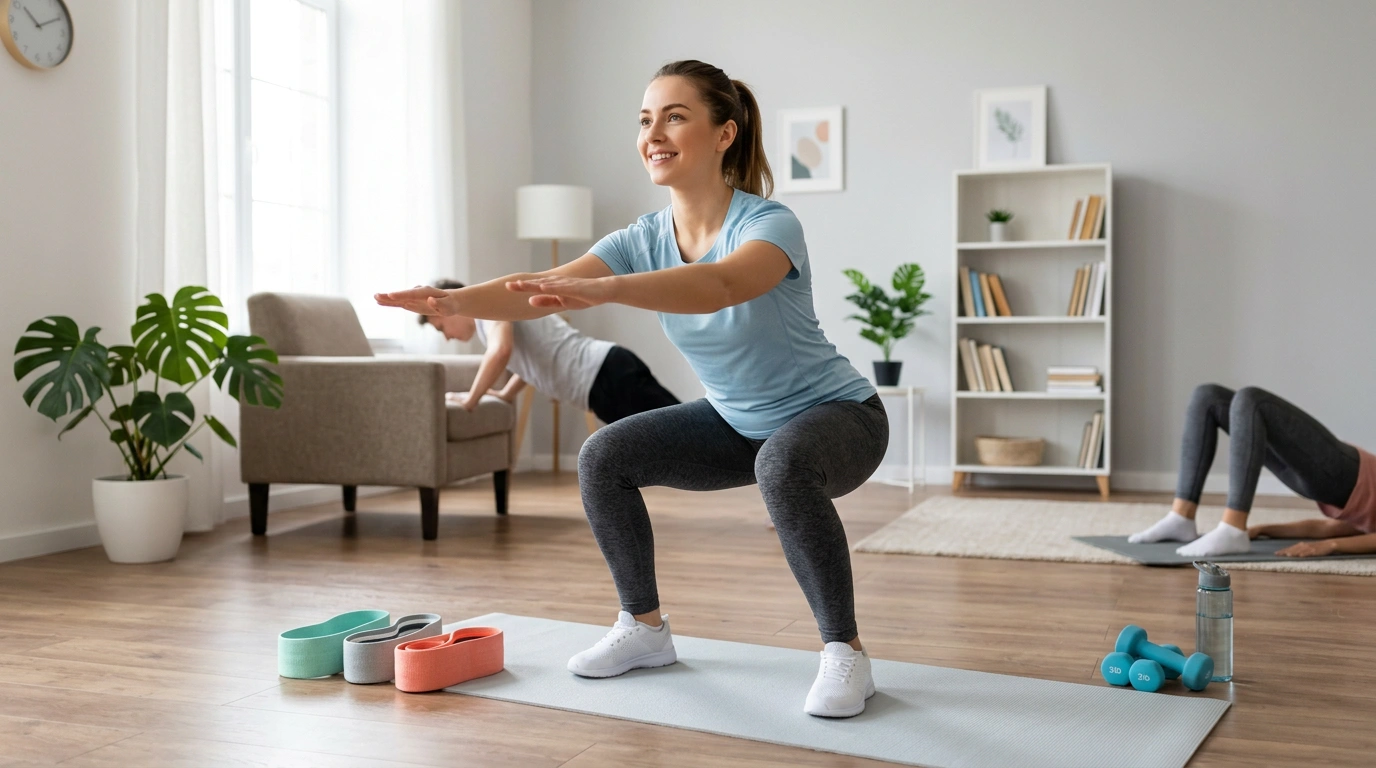
You do not need a gym membership to start exercising.
A beginner at home workout can be effective when it includes basic movements and is performed consistently.
Try exercises such as:
Modify movements when necessary.
For example, if a traditional push-up is too difficult, begin with your hands against a wall or elevated surface.
You can build a simple upper body workout without equipment using:
Wall push-ups: Great for beginners who are not ready for floor push-ups.
Incline push-ups: Use a stable elevated surface.
Knee push-ups: Reduce the amount of bodyweight you need to move.
Shoulder taps: Develop upper-body and core control.
Plank variations: Build core stability while requiring no equipment.
Focus on controlled repetitions rather than trying to complete as many as possible.
Your workout area does not need to be large.
Clear enough floor space to move safely and consider using a yoga mat for floor exercises.
If you want additional equipment later, basic options may include resistance bands, adjustable dumbbells, or a stable exercise bench.
Keep your workout area comfortable and free from distractions whenever possible.
Returning to exercise can be surprisingly difficult because your memory of your previous fitness level may not match your current ability.
If you have taken months or years away from exercise, begin below your previous level.
Start with:
Think of it as starting a new phase of your workout journey.
Your previous workout may have included heavy weights, long runs, or demanding training sessions.
That does not mean you should immediately return to the same routine.
Fitness can decline during periods of inactivity, and your body may need time to rebuild tolerance.
Gradual progression is a better strategy.
Start with light resistance and manageable cardio.
Track how you recover between sessions.
If your workouts become easier and recovery improves, gradually increase the workload.
Bodybuilding is not only for advanced lifters. Beginners can start resistance training while focusing on technique and gradual progress.
Start by learning foundational movements such as:
You do not need an advanced bodybuilding split immediately.
A simple full-body routine can teach you the fundamentals while training major muscle groups.
Progressive overload means gradually increasing the challenge placed on your body.
You can progress by:
Progress does not require adding weight every workout.
Muscle development requires more than training.
Recovery includes:
If you constantly feel exhausted, your program may be asking more from you than you can currently recover from.
Understanding basic workout principles can prevent many common mistakes.
A moderate workout performed regularly is usually more useful than occasional extreme sessions.
Learn the movement first. Increase resistance later.
Your body needs an appropriate challenge to adapt, but that challenge should increase gradually.
Rest days are not wasted days. Recovery allows your body to adapt.
A good workout concept includes a logical combination of strength, cardio, mobility, and recovery.
Following a training step by step approach can make your progress more predictable and sustainable.
Choosing where you exercise can have a major impact on consistency.
Look for:
The best gym is not necessarily the largest or most expensive. It is the one that makes you comfortable enough to keep showing up.
An independent gym membership gives you flexibility. You can train according to your own schedule and choose your own exercises.
Group classes provide structure and social accountability.
Personal training provides individualized guidance.
Structured beginner programs can be especially useful if you have no idea where to begin.
Personal training may be useful for:
A qualified trainer can help you understand how to start going to a gym and develop a routine appropriate for your current fitness level.
Starting exercise is one thing. Continuing for months and years is another.
A sustainable workout journey should fit your actual life.
Long-term goals can give you direction, but short-term goals make progress feel achievable.
Instead of saying, “I want to completely transform my body,” consider goals such as:
Small achievements build confidence.
You do not have to measure everything.
A simple workout log can include:
You may discover that progress is happening even when changes in the mirror are difficult to notice.
If you hate every workout, staying consistent becomes much harder.
Try different activities.
You could:
Exercise should challenge you, but it does not need to feel like punishment.
Fitness takes time.
Some weeks you may make noticeable progress. Other weeks may feel slower.
Your weight, strength, endurance, energy, sleep, and motivation can all fluctuate.
Do not assume that one difficult week means your plan is not working.
Consistency matters more than perfection.
Understanding what not to do can be just as useful as learning what to do.
Trying to match an experienced athlete’s workout can leave you extremely sore and discouraged.
Start at your own level.
Jumping directly into demanding exercise without preparing your body can make the first part of your workout feel unnecessarily difficult.
Use several minutes of light movement and dynamic preparation.
More weight does not automatically mean better results.
If you cannot control the movement, reduce the resistance and focus on technique.
Your body needs time to recover.
Beginners often benefit from alternating training and recovery rather than exercising intensely every day.
An advanced athlete’s routine may involve years of training experience.
Your program should reflect your current ability, not someone else’s.
Cardio is valuable, but strength training is also important for general fitness.
A balanced routine can include both.
Everyone starts with a different body, fitness history, lifestyle, and level of experience.
Compare your current performance with where you were a few weeks ago.
That is a much more useful measurement.
If it is your first time at the gym, start slowly. Spend five to ten minutes warming up, learn how a few basic machines work, and perform simple full-body exercises using light resistance.
A first session should focus more on learning than lifting heavy.
If you are unsure about equipment, ask a qualified trainer or gym staff member for help.
A good starting workout plan can include two or three workouts per week.
For example, you could perform two full-body strength sessions and one light cardio session.
Keep workouts relatively short and include recovery days.
As your fitness improves, you can gradually increase duration, resistance, or training frequency.
If you are wondering how to start exercising when you’re out of shape, begin with activities you can perform comfortably.
Walking, light cycling, mobility work, and simple bodyweight exercises are good starting points for many people.
Begin with manageable sessions and gradually increase your activity.
If you have a medical condition or concerns about starting exercise, speak with a healthcare professional before beginning a new program.
If you are asking how to start working out again, do not immediately return to your old workout level.
Start with shorter sessions and lighter resistance. Relearn your movement patterns and pay attention to recovery.
As your body readapts, gradually increase the workload.
There is no safe shortcut that replaces consistent training and healthy lifestyle habits.
The fastest way to get in shape is generally to establish a realistic routine that combines regular physical activity, appropriate strength training, cardiovascular exercise, adequate recovery, and sustainable nutrition.
Trying to rush the process can make consistency harder.
A beginner can often start with two or three structured workouts per week.
Your ideal beginner workout schedule depends on your current fitness level, exercise type, recovery ability, and lifestyle.
Rest days are especially important when you are new to training.
Knowing what to do before exercise is simple: hydrate, prepare your workout, and perform an appropriate warm-up.
Start with light movement and dynamic exercises that prepare the muscles and joints for the activity you are about to perform.
Avoid starting a demanding workout immediately after a very heavy meal if it causes discomfort.
Neither option is automatically better.
Beginner fitness classes may be helpful if you enjoy structured sessions, instructor guidance, and social motivation.
Working out alone may be better if you prefer flexibility and privacy.
The best choice is the one that helps you exercise consistently.