Physical Address
304 North Cardinal St.
Dorchester Center, MA 02124
Physical Address
304 North Cardinal St.
Dorchester Center, MA 02124

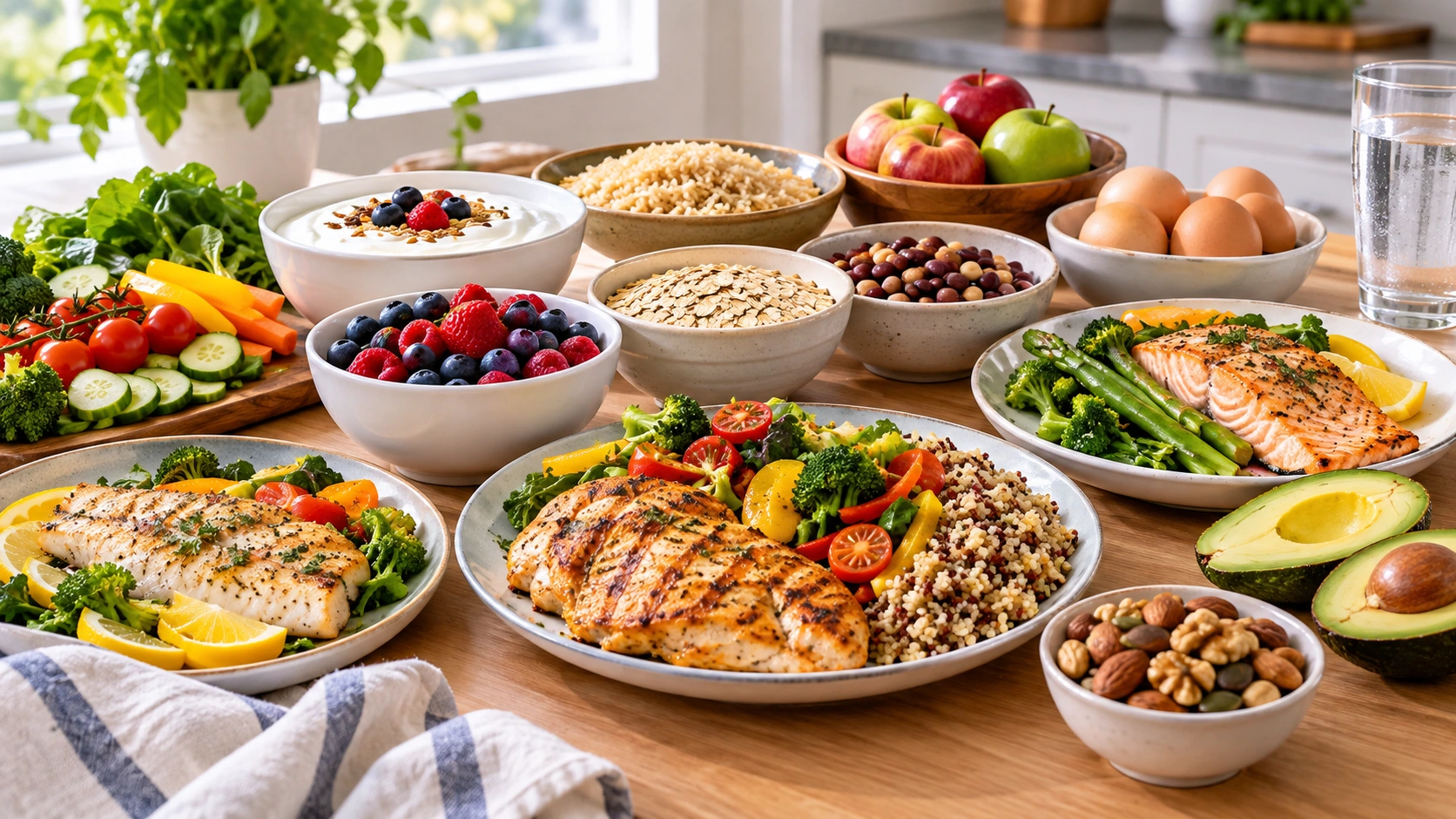
Managing your weight does not require eliminating entire food groups or surviving on tiny meals. For most people, a more sustainable approach is to build everyday meals around foods that provide protein, fiber, vitamins, minerals, healthy fats, and enough volume to help you feel satisfied.
For Americans trying to improve their eating habits, the best foods for weight management and healthy living are usually practical foods that can fit into regular breakfasts, lunches, dinners, snacks, grocery lists, and restaurant meals. Chicken, fish, eggs, beans, vegetables, fruit, oats, brown rice, Greek yogurt, nuts, and other minimally processed foods can all have a place in a balanced diet.
The goal is not simply to find the lowest-calorie food. A healthy eater also needs to consider nutritional value, portion size, hunger, activity level, food preferences, and overall eating patterns.
This is why best foods for weight loss should be viewed as foods that make a balanced diet easier to maintain rather than magical fat-burning foods. A whole food diet for weight loss can provide plenty of nutrients while helping people manage their overall calorie intake.
Whether you cook at home, meal-prep for work, shop at a U.S. grocery store, or eat out several times a week, understanding how different foods affect fullness and meal quality can make weight management much more practical.
So, what is a proper diet to lose weight? There is no single menu that works identically for everyone. A sustainable weight-management diet generally provides enough nutrients and energy while allowing an individual to maintain an appropriate calorie balance over time.
Instead of focusing on one food or eliminating carbohydrates completely, build meals around nutrient-dense foods and adjust portions according to your individual needs.
A balanced diet can include:
This structure allows you to create meals that are nutritious without making the diet unnecessarily restrictive.
The phrase “diet is 80 percent of weight loss” is commonly repeated online, but it should not be treated as a scientific formula that assigns an exact percentage to diet.
Food intake certainly plays an important role in body-weight management because calorie intake affects energy balance. However, physical activity, sleep, stress, genetics, medications, health conditions, environment, and long-term eating habits can also influence weight.
For example, someone who eats nutritious foods but regularly consumes portions much larger than their energy needs may still struggle with weight management. Conversely, someone who makes moderate changes to portions, protein intake, vegetable intake, and activity may be able to develop a more sustainable routine.
The more useful question is not whether diet represents exactly 80 percent of weight loss. It is whether your overall lifestyle makes healthy eating and an appropriate energy balance realistic enough to maintain.
The 90 10 diet generally refers to a flexible eating concept in which most meals are based on nutritious foods while a smaller portion of the diet allows room for discretionary foods.
For example, someone might focus most of their meals on vegetables, fruit, lean protein, whole grains, beans, and other nutrient-dense foods while occasionally enjoying pizza, dessert, chips, or another favorite food.
The 90/10 idea should not be treated as a strict medical formula. Its practical value is that it can encourage flexibility instead of creating a mindset where one less-nutritious meal is considered a failure.
A sustainable diet can include foods chosen for enjoyment as well as foods chosen primarily for nutrition.
One useful concept for weight management is calorie density. Understanding it can help you create larger, more satisfying meals without relying entirely on calorie counting.
So, what is calorie density?
Calorie density refers to the number of calories provided by a specific amount or weight of food. Foods with high water and fiber content often have fewer calories for a given volume, while foods containing large amounts of fat or very little water can provide substantially more calories in a smaller amount.
For example, vegetables and many fruits contain significant amounts of water and tend to provide relatively few calories compared with their physical volume.
This does not mean low-calorie foods are automatically healthier than higher-calorie foods. Nuts, seeds, avocado, and olive oil are relatively calorie-dense but can provide valuable nutrients and healthy fats.
Therefore, calorie density and nutritional value are related concepts, but they are not the same thing.
Low caloric density foods can be useful when your goal is to eat satisfying portions while managing total calorie intake.
Examples include:
These foods can contribute volume to meals without necessarily adding large amounts of calories.
Terms such as low density food, low calorie whole foods, low calorie foods, light food, and even informal searches such as lo cal generally point toward foods that provide relatively few calories per serving.
However, “low calorie” should not be confused with “eat unlimited amounts.” Portion size still matters, especially when foods are combined with calorie-dense sauces, oils, dressings, cheese, or toppings.
The phrase low to no calorie foods is also somewhat misleading because virtually all foods containing meaningful macronutrients provide calories. Water, unsweetened tea, and some noncaloric beverages are exceptions, but they do not replace the nutritional value of actual food.
People often search for the highest volume lowest calorie foods because they want meals that feel substantial.
Vegetables are among the most useful choices for this purpose. A large salad containing lettuce, cucumber, tomatoes, peppers, and other vegetables can occupy considerable space on a plate while providing relatively few calories before higher-calorie toppings are added.
Other high volume low calorie choices include broth-based vegetable soups, berries, melon, steamed vegetables, zucchini, cauliflower, and air-popped popcorn.
The idea behind high volume foods for weight loss is not that volume itself causes weight loss. Rather, foods with plenty of water, fiber, and physical volume may help some people feel more satisfied while managing calorie intake.
At the same time, some foods can be both calorie-dense and highly nutritious. Nuts and seeds, for example, can be useful parts of a healthy diet even though they are not low-calorie foods.
Protein is one of the most useful nutrients to prioritize when building meals for weight management. It contributes to satiety and helps support muscle tissue, particularly when combined with resistance training and adequate overall nutrition.
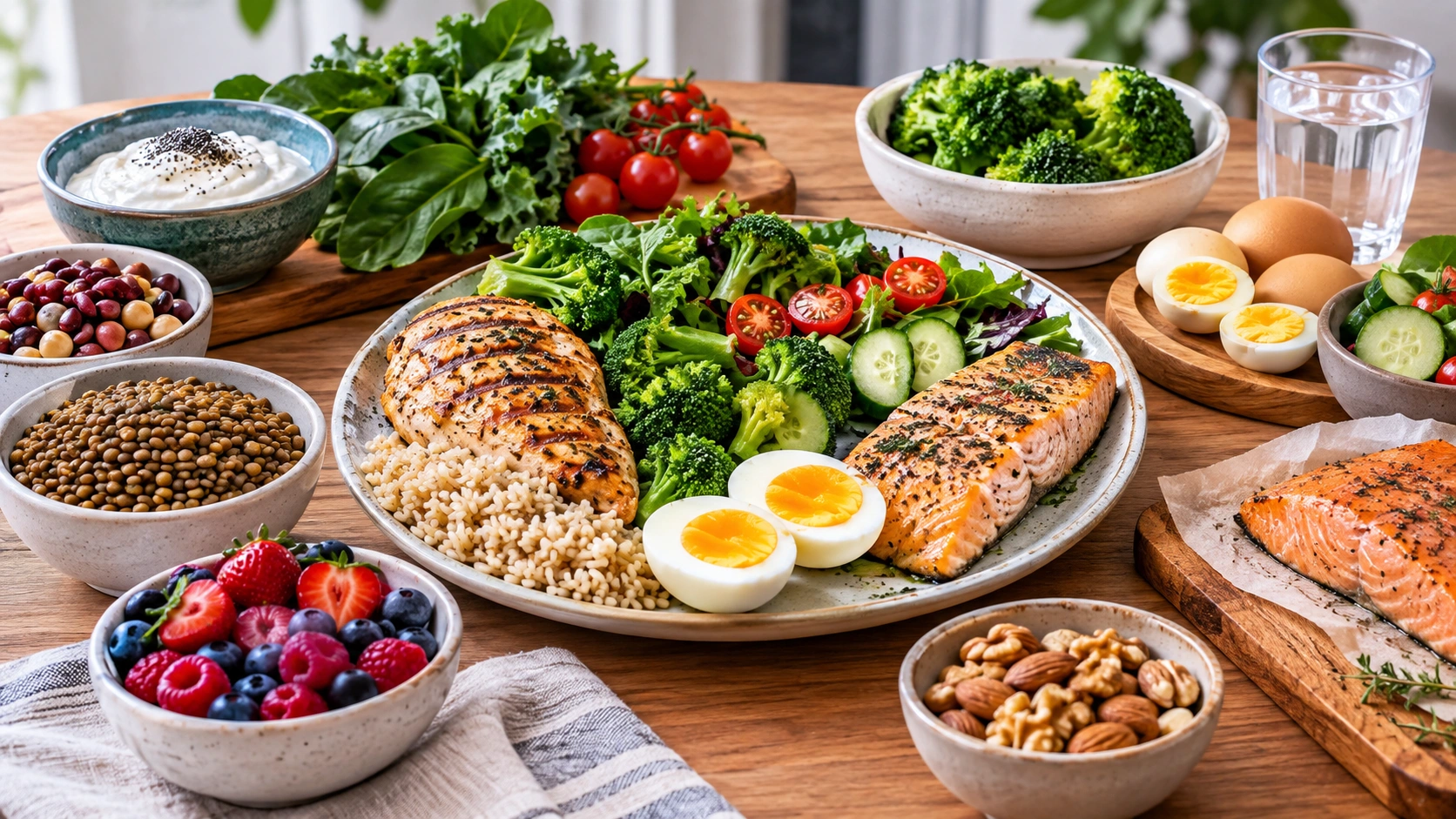
A meal containing protein can often be more satisfying than a meal consisting primarily of refined carbohydrates.
Good protein choices include:
Protein also becomes particularly important during weight loss because maintaining muscle is an important consideration. Losing body weight is not simply about making the number on the scale smaller; maintaining a healthy body composition matters too.
Rather than eating nearly all your protein at dinner, distributing protein across breakfast, lunch, dinner, and snacks can make meals more balanced.
For example, an American-style breakfast of eggs with whole-grain toast and fruit provides a different nutritional profile from a breakfast consisting primarily of a sugary pastry and sweetened coffee.
When people search for the lowest calorie meats, they are usually looking for lean protein sources that provide substantial protein without large amounts of added fat.
Common options include:
Turkey: Lean turkey breast can provide substantial protein with relatively little fat, depending on the product.
Chicken: Skinless chicken breast is a popular lean protein for meal preparation.
Fish: Many fish varieties provide protein, while some also supply beneficial omega-3 fatty acids.
Lean beef: Lean cuts can fit into a weight-management diet when portions are appropriate.
The preparation method can dramatically change the final calorie content. Grilling, baking, roasting, steaming, or air-frying with limited added oil can keep meals relatively straightforward.
Deep-frying or covering lean meat with creamy sauces, butter, or large amounts of cheese can substantially increase the calorie content.
So, is turkey good for weight loss?
Lean turkey can be a useful protein choice for people managing their weight. Its usefulness comes primarily from its protein content and versatility, not because turkey has special fat-burning properties.
If you are asking is turkey good for losing weight, the answer depends on how it fits into the overall meal and diet.
For example, grilled turkey breast paired with roasted vegetables and a moderate serving of brown rice can make a balanced meal. Processed turkey products can be different because some contain significant amounts of sodium, added ingredients, or other components that may make them less comparable to plain turkey.
Cooking method also matters. A lean turkey burger prepared with minimal added oil is different from a heavily processed or fried turkey product.
Portion size remains important as well. Even lean protein contributes calories, so “lean” does not mean unlimited.
For people looking for foods good for weight loss and muscle gain, turkey can be one option alongside chicken, fish, eggs, low-fat dairy, beans, lentils, and other protein-rich foods.
Vegetables are among the most useful foods for creating filling, nutrient-rich meals. They provide fiber, vitamins, minerals, and water while many varieties are relatively low in calories.
There is no single vegetable that melts body fat. Instead, the best veggies for weight loss are often the ones you enjoy, can buy regularly, and can use to build satisfying meals.
Useful choices include:
These can all contribute to a diet focused on nutrient density and reasonable calorie intake.
Leafy greens can form the foundation of salads and bowls. Broccoli and cauliflower work well as roasted or steamed side dishes. Mushrooms can add volume and savory flavor to omelets, stir-fries, and grain bowls. Cucumbers and tomatoes can make sandwiches, wraps, and salads more substantial.
That is why searches such as best vegetables to lose weight, best veggies to lose weight, vegetables good for weight loss, and weight loss vegetables often point toward the same general strategy: increase the amount and variety of vegetables in balanced meals.
The healthiest vegetables for losing weight are not necessarily exotic or expensive. Everyday vegetables from a regular American supermarket can work extremely well.
Filling vegetables can help increase the physical volume of meals.
For example, instead of serving a large portion of pasta by itself, you could combine a moderate serving of whole-wheat pasta with grilled chicken, mushrooms, spinach, tomatoes, and zucchini.
Similarly, a burrito bowl can contain a moderate amount of rice alongside beans, grilled chicken, lettuce, tomatoes, peppers, salsa, and other vegetables.
This approach allows vegetables to complement protein and carbohydrates rather than treating them as a punishment food.
Is kale good for weight loss? Kale can certainly fit into a weight-management diet. It provides fiber and several vitamins and minerals while being relatively low in calories.
But kale does not independently cause fat loss. Its value comes from how it contributes to an overall nutritious eating pattern.
You can add kale to salads, soups, smoothies, grain bowls, omelets, or roasted vegetable dishes. If you dislike raw kale, cooking it can make it easier to eat regularly.
Is corn low calorie? Corn can fit into a healthy weight-management diet, although it is more calorie-dense than many non-starchy vegetables.
Corn also provides carbohydrates and fiber, making it different nutritionally from leafy greens or cucumbers.
The key is how much you eat and what you add to it. A serving of plain corn is very different from corn covered with butter, cheese, creamy sauces, or other high-calorie toppings.
A diet built around minimally processed foods can make healthy eating easier because many whole foods provide a combination of nutrients, fiber, protein, and volume.
A whole food diet for weight loss generally emphasizes foods that are minimally processed or close to their original form.
This can include:
A whole-food approach does not mean every packaged food must be eliminated. Frozen vegetables, canned beans, canned fish, plain yogurt, and other convenient foods can still be practical choices.
The goal is to make nutrient-dense foods the foundation of the diet.
A practical whole foods list for weight loss might include:
| Food group | Examples |
| Vegetables | Broccoli, spinach, carrots, peppers, tomatoes |
| Fruits | Apples, berries, oranges, bananas |
| Whole grains | Oats, brown rice, quinoa, barley |
| Legumes | Beans, lentils, chickpeas |
| Protein | Eggs, chicken, turkey, fish |
| Dairy | Greek yogurt, cottage cheese |
| Healthy fats | Nuts, seeds, avocado |
| Pantry staples | Canned beans, tuna, oats, whole-grain pasta |
The advantage of creating a list like this is that it makes grocery shopping easier. Instead of asking which single food will cause weight loss, you can stock your kitchen with ingredients that make balanced meals possible.
Whole grain foods to lose weight can include oats, brown rice, quinoa, barley, whole-grain bread, and whole-wheat pasta.
Whole grains provide carbohydrates and, depending on the food, meaningful amounts of fiber and other nutrients. They can also make meals more satisfying than relying exclusively on highly refined grain products.
Portion size still matters. A large bowl of even a nutritious whole grain can provide substantial calories, particularly when combined with oil, cheese, creamy sauces, or other calorie-dense ingredients.
The idea that rice causes weight gain is an oversimplification.
Rice itself does not automatically cause someone to gain body fat. Weight change depends on the overall relationship between energy intake and expenditure over time, along with other factors that affect body weight.
A moderate serving of rice can fit into a balanced meal when paired with protein and vegetables.
For example, a meal containing grilled chicken, brown or white rice, broccoli, peppers, and a flavorful vegetable-based sauce can be quite different from consuming a very large serving of rice with little protein or vegetables.
The type of rice can also affect fiber and nutritional content, but portion size and the overall composition of the meal remain important.
For weight management, there is usually no need to fear rice. Instead, learn how to include it in portions that work for your individual needs.
Building meals around protein and fiber can make weight management easier because both can contribute to fullness. Instead of thinking only about whether a meal is “low calorie,” consider whether it is satisfying enough to help you stay consistent.
A bowl of vegetables alone may be low in calories but leave you hungry shortly afterward. Adding chicken, beans, lentils, fish, eggs, or Greek yogurt can make the meal more substantial.
This is one reason high protein high fiber low calorie meals are useful for people trying to manage their weight without constantly feeling deprived.
Protein can support fullness and help maintain muscle during weight loss. Fiber can add bulk to meals and support normal digestive health.
Combining the two can create meals that are both nutritious and practical.
For example:
Meal volume also matters. A meal containing vegetables, lean protein, and a moderate amount of whole grains may feel more substantial than a much smaller meal dominated by calorie-dense foods.
If you’re looking for easy low calorie dinner ideas, focus on simple combinations rather than complicated recipes.
Grilled chicken + vegetables + brown rice: Season chicken with herbs and spices, add roasted broccoli or zucchini, and serve with a moderate portion of brown rice.
Turkey + salad + whole-grain wrap: Lean turkey, lettuce, tomatoes, cucumber, and a whole-grain wrap can create a quick dinner with protein and vegetables.
Fish + roasted vegetables: Baked salmon or another fish with asparagus, green beans, broccoli, or cauliflower makes a nutrient-rich dinner.
Lentil bowl + vegetables: Lentils can provide both protein and fiber. Add tomatoes, greens, peppers, cucumber, and a modest portion of whole grains.
Greek yogurt + fruit: For someone who wants a lighter evening meal or snack, plain Greek yogurt with berries or another fruit can provide protein without requiring extensive cooking.
The important point is that low-calorie meals should still provide enough food and nutrients to be satisfying.
The best healthy lunches for weight loss are not necessarily tiny salads. A balanced lunch can contain protein, vegetables, carbohydrates, and a small amount of healthy fat.
Some good lunches for weight loss include:
If you work in an office, preparing lunch the night before can make healthy choices easier. A meal-prep container with chicken, roasted vegetables, quinoa, and a small amount of dressing can be ready to take to work.
For people who regularly eat lunch at restaurants, choosing grilled protein, vegetables, a moderate carbohydrate portion, and sauces on the side can make restaurant meals easier to fit into a weight-management routine.
So, what to eat for dinner to lose weight?
There is no special dinner food that causes fat loss. Instead, dinner can follow the same balanced structure used throughout the day.
A useful template is:
Protein + vegetables + moderate carbohydrate + optional healthy fat
For example, grilled fish with roasted vegetables and a moderate serving of potatoes can be a balanced dinner. Another option is chicken with brown rice and a large serving of mixed vegetables.
You do not automatically gain weight because you eat carbohydrates at dinner. Total food intake, meal composition, activity, and your overall dietary pattern matter more than simply whether a food is eaten before or after a particular time.
Healthy fats deserve a place in a balanced diet, even when the goal is weight management.
Foods such as avocado, nuts, seeds, olive oil, and certain fish provide unsaturated fats and other nutrients.
Dietary fat also helps the body absorb fat-soluble vitamins and provides essential fatty acids.
The challenge is that fat contains more calories per gram than protein or carbohydrates. Therefore, foods that are nutritious and calorie-dense can still make it easier to consume more calories than intended if portions are very large.
A tablespoon of olive oil, a small handful of nuts, or a portion of avocado can be useful additions to a meal. You don’t need to eliminate them, but you may want to pay attention to portions.
Is butter good for losing weight?
Butter is not a weight-loss food, but it does not need to be completely forbidden either.
Butter is calorie-dense and primarily contributes fat. Using a small amount to add flavor to vegetables, toast, or another meal can fit within an overall balanced diet.
The issue comes when butter is used generously throughout the day and contributes substantial calories without adding much volume.
For everyday cooking, people may also use olive oil, avocado oil, or other cooking fats depending on their dietary preferences and cooking method.
The larger principle is portion awareness. A healthy eating pattern does not require labeling every food as either completely “good” or “bad.”
When asking what’s the most calorie dense food, it is useful to understand that foods containing large amounts of fat tend to be especially calorie-dense.
Examples include:
Some of these foods can still be nutritious. Nuts and seeds, for example, provide protein, fiber, vitamins, minerals, and unsaturated fats.
The concept of calorie density is therefore not a simple measure of whether a food is healthy. A food can be calorie-dense and nutritious at the same time.
People sometimes search for the most calorie dense food in the world, but for practical weight management, identifying one “highest” food is less useful than learning which everyday foods can make calorie intake rise quickly.
This also explains why a small amount of nut butter or cooking oil can contribute as many or more calories than a much larger serving of vegetables.
One of the biggest challenges during weight management is hunger. Choosing foods that provide protein, fiber, water, and volume can make it easier to maintain a reasonable eating pattern.
What keeps you full longer varies from person to person, but several characteristics tend to help:
Protein: Chicken, fish, eggs, Greek yogurt, cottage cheese, beans, lentils, and other protein-rich foods can contribute to satiety.
Fiber: Vegetables, fruits, legumes, oats, and whole grains can add bulk and support fullness.
Food volume: Water-rich vegetables and fruits can make meals physically larger without adding excessive calories.
Healthy fats: Nuts, seeds, avocado, and other sources of unsaturated fat can contribute to a satisfying meal when portions are appropriate.
Water-rich foods: Soups, vegetables, fruits, and other foods with substantial water content can contribute to meal volume.
This is why foods that keep you full the longest are often meals rather than individual “magic” foods.
A grilled chicken salad containing vegetables, beans, and a moderate amount of avocado may be more satisfying than a small processed snack even if the calorie totals are similar.
If you’re wondering how to feel full longer, start by improving meal composition.
Try these strategies:
The goal is not to eliminate convenient foods. Instead, make meals more nutritionally complete so snacks do not have to carry the entire burden of keeping you satisfied.
How can I eat less without feeling constantly hungry?
One practical approach is to reduce calorie density rather than simply shrinking every portion.
For example, you could reduce the amount of a calorie-dense ingredient while increasing vegetables and maintaining adequate protein.
Instead of eating a large serving of pasta with a creamy sauce, you could have a moderate portion of whole-grain pasta with chicken, mushrooms, spinach, tomatoes, and a lighter sauce.
This can create a larger physical meal while controlling overall calories.
The same principle applies to sandwiches, burrito bowls, soups, salads, and homemade dinners.
The objective is not simply to eat as little as possible. It is to create meals that provide enough nutrition and satisfaction to make the eating pattern sustainable.
Weight management often starts before you sit down for a meal. What you keep in your kitchen can influence what is easiest to prepare when you’re hungry.
A practical healthy grocery list for weight loss can include:
Protein
Vegetables
Fruit
Whole grains
Healthy fats
You can adjust the list according to your household, budget, cultural preferences, allergies, and cooking habits.
Protein foods should be convenient enough to use throughout the week.
Chicken breast can be grilled in batches and used in salads, wraps, bowls, and dinners. Eggs are useful for breakfast and quick meals. Greek yogurt works for breakfast or snacks. Beans and lentils are affordable sources of protein and fiber.
Fish can also provide high-quality protein, with certain varieties providing omega-3 fats.
Keeping a mixture of fresh, frozen, and shelf-stable protein sources can make meal planning easier.
For example, frozen fish, canned tuna, canned beans, eggs, and dry lentils can all remain available when fresh food runs out.
For vegetables, choose a combination of fresh and frozen options.
Frozen broccoli, spinach, mixed vegetables, and cauliflower can be particularly convenient because they require little preparation.
For fruit, apples, oranges, berries, bananas, and melons can provide variety.
Buying fruits and vegetables you actually enjoy is important. There is little benefit in buying an expensive vegetable that remains untouched in the refrigerator.
A well-stocked pantry can make balanced meals much easier.
Useful staples include:
These ingredients can be combined in many ways, reducing the temptation to order takeout simply because there is “nothing to eat.”
When hunger hits between meals, having nutritious options available can make a major difference.
Useful healthy snacks whole foods include:
If you enjoy crunchy snacks, air-popped popcorn can be a useful option because it provides substantial physical volume.
People sometimes search for low calorie munchies, but the better strategy is to choose snacks that are both enjoyable and reasonably filling.
“Fresh filling” foods such as fruit, vegetables, yogurt, and other minimally processed choices can be useful when you want something between meals without turning every snack into a highly calorie-dense eating occasion.
The terms “cutting” and “shredding” are commonly used in fitness communities to describe periods when someone attempts to reduce body fat while preserving as much muscle as practical.
The best foods for a cut are generally foods that make it easier to consume adequate protein and nutrients while controlling overall calories.
Useful choices include:
These foods can form the foundation of a structured eating plan without requiring extreme restriction.
When creating best cutting meals, think in terms of meal structure rather than a specific list of “fat-burning” recipes.
A typical meal could contain lean protein, a generous serving of vegetables, a moderate carbohydrate portion, and a controlled amount of dietary fat.
Examples include:
Chicken rice bowl: Grilled chicken, brown rice, broccoli, peppers, salsa, and a small amount of avocado.
Turkey wrap: Lean turkey, whole-grain wrap, lettuce, tomato, cucumber, mustard, and a side of fruit.
Fish and potatoes: Baked fish, roasted potatoes, green beans, and a side salad.
Lentil bowl: Lentils, quinoa, roasted vegetables, greens, and a small amount of olive-oil-based dressing.
These options cover many searches related to foods to eat while shredding, best foods to eat on a cut, meals for cutting, foods when cutting, cut foods, and what to eat on a cut without treating cutting as a requirement for extreme dieting.
People looking for foods good for weight loss and muscle gain should generally prioritize adequate protein while choosing nutrient-dense foods that fit their energy needs.
Chicken, turkey, fish, eggs, Greek yogurt, cottage cheese, beans, lentils, tofu, vegetables, fruit, oats, rice, potatoes, and whole grains can all contribute to this type of eating pattern.
The exact amount of food needed will depend on factors such as body size, activity level, training, goals, and individual circumstances.
Searches for what I ate in a day to lose weight are popular because people want to see what a realistic day of eating might look like.
However, one person’s menu should not be treated as a universal prescription. Calorie and nutrient needs vary substantially between individuals.
A balanced breakfast could include:
This combination provides protein, carbohydrates, and fruit while leaving room to adjust portions according to individual needs.
A practical lunch could contain:
Another option could be a turkey and vegetable whole-grain wrap with fruit.
Dinner might include:
This structure provides a satisfying meal without requiring the complete elimination of carbohydrates.
Good snack options can include:
Very specific calorie targets, such as 1,300 calorie meals, should not be treated as universally appropriate. For some adults, 1,300 calories may be insufficient depending on body size, activity, age, sex, health status, and other factors.
Likewise, foods described as 50 calorie or 200 calories are not automatically better simply because they contain fewer calories. The nutritional value and ability to satisfy hunger matter too.
A healthy weight-management plan should be individualized rather than built around an arbitrary calorie number.
A low-fat eating pattern can be useful for some people, but reducing fat does not automatically make a diet healthier or more effective for weight management. The quality of the foods you choose and the overall balance of your diet still matter.
If you’re wondering what to eat on a low fat diet, build meals around naturally lean and minimally processed foods.
Good options include:
Vegetables and fruits can provide volume and nutrients without contributing large amounts of fat. Beans and lentils can provide both protein and fiber, while lean meats and low-fat dairy can make it easier to meet protein needs.
However, a low-fat diet does not mean eliminating all dietary fat. Foods such as nuts, seeds, avocado, and certain fish provide nutrients and unsaturated fats that can be part of a balanced diet.
Not necessarily.
A product labeled “low fat” can still contain substantial amounts of added sugar, refined carbohydrates, sodium, or other ingredients. For example, a low-fat dessert may still be highly processed and calorie-dense.
Instead of judging food by a single label, consider:
This is why low fat and healthy should not automatically be treated as synonyms.
The same principle applies to “fat-free” foods. Removing fat does not necessarily make a food more nutritious.
Online searches often turn ordinary foods into supposed weight-loss solutions. In reality, no single food guarantees fat loss.
Do hot foods help you lose weight?
Spicy or hot foods may make meals more enjoyable for some people, and certain spicy ingredients contain compounds that have been studied for possible effects on appetite and energy expenditure.
However, this does not mean eating hot peppers or spicy foods will produce meaningful weight loss by itself.
A spicy chicken and vegetable stir-fry can be a useful weight-management meal because it contains protein and vegetables. The benefit comes from the overall meal rather than the heat level.
Be careful with spicy sauces as well. Some sauces can contain significant amounts of added sugar, sodium, or calories.
Will popcorn make you gain weight?
Popcorn itself does not automatically cause weight gain.
Plain air-popped popcorn can be relatively low in calorie density and provides some fiber. Because it takes up substantial physical space, it can also be a satisfying snack for some people.
The calorie content can change quickly when popcorn is prepared with large amounts of butter, oil, caramel, cheese, or other toppings.
A large movie-theater popcorn covered in butter-style topping is nutritionally very different from a bowl of plain air-popped popcorn at home.
The takeaway is simple: consider the entire preparation, not just the food’s name.
Can you eat whatever you want and still lose weight?
In theory, an individual may be able to include many different foods while still losing weight if their overall energy intake remains appropriate for their needs.
But that does not mean food quality is irrelevant.
Someone could technically include dessert, pizza, burgers, or chips while managing calories, but a diet dominated by these foods may make it harder to obtain enough protein, fiber, vitamins, and minerals.
A more sustainable strategy is to make nutrient-dense foods the foundation while allowing room for foods you enjoy.
This approach can provide both nutritional quality and flexibility.
The question “ate more and lost weight” can sound confusing because weight management is not simply about the physical amount of food.
A person can eat a larger physical volume of food while consuming fewer calories if the foods have lower calorie density.
For example, a large plate of vegetables, lean protein, fruit, and a moderate serving of whole grains may contain fewer calories than a much smaller amount of fried or highly processed food.
This is the difference between:
Eating more food by weight or volume does not necessarily mean eating more calories.
Understanding calorie quality can help make weight management less restrictive.
What are empty calorie foods?
The phrase “empty calories” is commonly used to describe foods and beverages that provide calories with relatively little nutritional value.
Examples can include:
However, the phrase should be used carefully. A food does not become nutritionally worthless simply because it contains sugar or fat.
For example, fruit contains naturally occurring sugar but also provides fiber, vitamins, minerals, and water. Milk contains naturally occurring carbohydrate and fat depending on the variety, but it also provides protein and other nutrients.
The overall food matrix matters.
What is a discretionary calorie?
A discretionary calorie is generally understood as calories that can be used for foods outside the nutrient-dense foods emphasized in a balanced eating pattern, after accounting for nutrient needs.
For example, a person may choose to have a small dessert after dinner without that meaning their entire diet is unhealthy.
This is why concepts such as discretionary calories, good calories and bad calories, and good and bad calories need context.
Foods do not always fit neatly into “good” and “bad” categories. Quantity, frequency, preparation, and the rest of the diet can all change their role.
A cookie eaten occasionally alongside an otherwise nutritious diet is not nutritionally equivalent to replacing most meals with highly processed snacks.
Rapid weight-loss promises can be appealing, especially when social media presents dramatic before-and-after transformations. But sustainable weight management usually requires an approach that can continue beyond a few days or weeks.
Searches for 7 day juice fast weight loss recipes reflect interest in very restrictive approaches.
A juice-based diet can provide fluids and some vitamins and minerals depending on the ingredients, but juice generally contains much less fiber than whole fruit and may provide very little protein.
A strict juice fast can therefore make it difficult to obtain adequate protein, fiber, essential fats, and overall nutrition.
It can also be difficult to maintain socially and practically.
If someone enjoys juice, it can be included as part of a balanced eating pattern. But relying exclusively on juice for an extended period is very different from including a glass of fruit or vegetable juice alongside normal meals.
Weight loss strategies should be judged by sustainability and nutritional adequacy rather than by how quickly the scale changes over a few days.
A no flour no sugar diet foods approach can mean different things depending on the person.
Some people may reduce refined flour and added sugar because doing so helps them eat more whole foods. That can be a reasonable behavioral strategy.
However, completely eliminating every food containing flour or naturally occurring sugar is not necessarily required for healthy weight management.
Whole-grain bread, oats, whole-wheat pasta, and other grain foods can provide useful nutrients. Whole fruits contain naturally occurring sugar along with fiber and micronutrients.
A better approach for many people is to distinguish between highly refined foods and nutrient-dense carbohydrate sources rather than treating all carbohydrates as identical.
Starving myself to lose weight is not a sustainable weight-management strategy.
Severely restricting food can make it difficult to obtain enough protein, vitamins, minerals, essential fats, and other nutrients. It can also make hunger, fatigue, and adherence more difficult.
If you’re asking am I eating enough, that is an important question, particularly if you are exercising regularly, feeling persistently weak or fatigued, or repeatedly struggling with restrictive eating.
The goal should not be to eat as little as possible.
Sustainable calorie reduction generally means creating a manageable difference between energy intake and expenditure while still eating enough nutritious food to support normal body functions and daily activity.
People with specific medical conditions, a history of eating disorders, or significant concerns about restrictive eating should discuss an appropriate eating pattern with a qualified healthcare professional.
Eating at restaurants does not have to mean abandoning your weight-management goals.
If you’re searching healthy food near me, healthy food near.me, healthy food near me within 0.5 mi, or low calorie food near me, focus on the menu rather than assuming a restaurant is automatically healthy or unhealthy.
Useful restaurant options may include:
Searching for low calorie places to eat can be useful, but restaurant calorie information is not always available or perfectly comparable.
The more practical skill is learning how to modify an ordinary meal.
When eating out, look for:
Grilled protein: Chicken, fish, turkey, shrimp, or another lean protein.
Vegetables: Steamed, grilled, roasted, or fresh vegetables can increase meal volume.
Whole grains: Brown rice, whole-grain bread, or other higher-fiber carbohydrate options when available.
Sauces on the side: This gives you more control over how much dressing or sauce you use.
Smaller portions: Consider splitting an entrée, ordering a smaller size, or saving part of the meal for later.
Water or low-calorie beverages: Drinks can contribute substantial calories without making you feel significantly fuller.
Takeout can still fit into a healthy lifestyle.
For example, when ordering a bowl, you might choose grilled chicken, vegetables, beans, and a moderate rice portion rather than loading the meal with multiple high-calorie sauces.
With burgers, adding a side salad or vegetables and choosing a smaller portion can change the overall meal.
With pizza, pairing a few slices with a salad or vegetable side can provide more volume without requiring you to completely avoid pizza.
The goal is not perfection. It is learning how to make reasonable choices repeatedly.
A food containing very few calories is not automatically the best choice.
For example, a very small snack may contain fewer calories than a balanced meal but provide little protein or fiber and leave you hungry soon afterward.
Weight management works better when calorie awareness is combined with nutritional quality.
A diet can technically be low in calories while still being difficult to maintain if meals contain very little protein and fiber.
Adding eggs to breakfast, beans to lunch, Greek yogurt as a snack, or chicken and vegetables to dinner can make meals more satisfying.
Not eating enough can create another problem.
People sometimes assume that faster weight loss is always better and therefore cut food intake excessively. This can make it difficult to maintain energy, exercise effectively, or obtain adequate nutrients.
If you regularly feel excessively hungry, tired, weak, or preoccupied with food, your current approach may need reconsideration.
The idea of neg calorie foods suggests that certain foods supposedly require more energy to digest than the calories they provide.
While digestion does use energy, claims that specific foods create a meaningful calorie deficit simply because the body processes them are not a sound foundation for a weight-loss plan.
Celery, cucumber, lettuce, and similar foods can be excellent choices because they provide water, fiber, and micronutrients with relatively few calories.
You do not need to believe they are “negative calorie” foods to include them.
There is no single fat burn fat diet or magical food that automatically burns body fat.
The same applies to searches for super foods for losing weight or communities describing themselves as fat loss foodies.
Foods can support a healthy eating pattern, but body-fat reduction depends on the overall combination of energy intake, activity, nutrition, behavior, and time.
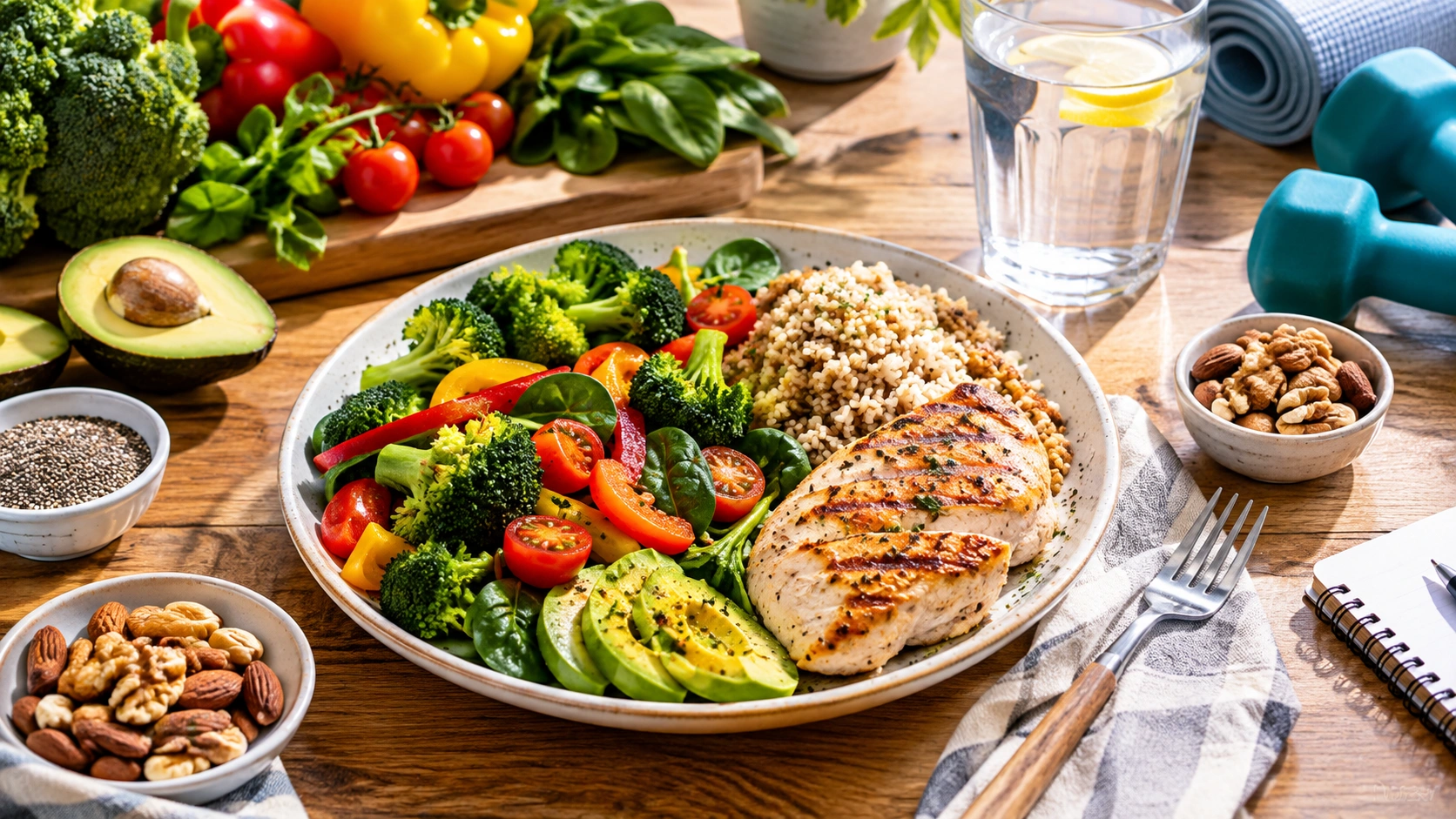
A simple plate structure can bring together the major principles discussed throughout this guide.
Fill a substantial portion of your plate with vegetables such as broccoli, spinach, peppers, carrots, cauliflower, tomatoes, mushrooms, or green beans.
This can increase meal volume while contributing fiber, vitamins, minerals, and water.
Use the next portion for protein such as chicken, turkey, fish, eggs, beans, lentils, tofu, or Greek yogurt.
Protein helps make meals more satisfying and supports muscle maintenance.
The remaining portion can contain foods such as:
There is no need to eliminate carbohydrates simply because you want to manage your weight.
A small amount of avocado, nuts, seeds, or an oil-based dressing can add flavor and nutrients.
Because fats are calorie-dense, portion awareness is useful.
The plate method is a starting point rather than a rigid rule.
A highly active person may need more food than someone with a sedentary routine. Someone trying to gain muscle may have different nutritional needs from someone attempting to reduce body fat.
Your portions can therefore change according to body size, activity, training, hunger, goals, and individual dietary requirements.
The central idea remains the same: combine vegetables, protein, whole grains or other carbohydrates, healthy fats, calorie awareness, and satisfying food volume.
The food to eat for weight loss is not one specific item. A balanced pattern can include vegetables, fruit, lean protein, beans, lentils, whole grains, low-fat dairy, nuts, and seeds.
Foods that provide protein and fiber while fitting your overall calorie needs can make weight management easier.
Foods containing protein, fiber, water, or a combination of these can be particularly satisfying. Examples include chicken, fish, eggs, Greek yogurt, beans, lentils, vegetables, fruit, oats, and other whole grains.
The foods that keep you full longest will vary by person, so experiment with different meal combinations.
There is no single best vegetable. The best vegetables to lose weight are generally those you enjoy and can eat regularly.
Leafy greens, broccoli, cauliflower, mushrooms, cucumber, zucchini, tomatoes, peppers, carrots, and other vegetables can all contribute to a nutrient-rich weight-management diet.
Yes, lean turkey can fit well into a weight-management diet because it provides protein and can be relatively lean depending on the cut and preparation.
However, turkey itself does not automatically cause weight loss. Portion size, preparation, and the rest of the meal still matter.
A balanced dinner can include lean protein, plenty of vegetables, a moderate serving of carbohydrates, and a small amount of healthy fat.
For example, grilled chicken with roasted vegetables and brown rice can be a practical option. Fish with potatoes and green vegetables is another possibility.
The best foods for a cut are generally nutrient-dense foods that make it easier to manage calories while consuming adequate protein.
Chicken, turkey, fish, eggs, Greek yogurt, beans, lentils, vegetables, fruit, oats, potatoes, rice, and whole grains can all fit into a cutting diet.
If you’re wondering how can I eat less, consider reducing calorie density rather than simply making every meal tiny.
Increase vegetables, include adequate protein, choose fiber-rich foods, drink enough fluids, eat slowly, and pay attention to portion sizes of calorie-dense foods.
A meal that contains protein, vegetables, and a moderate amount of whole grains can often be more satisfying than a small meal made mostly from refined foods.
It is possible to include many enjoyable foods in a weight-management diet, but that does not mean food quality is irrelevant.
Pizza, desserts, burgers, or other discretionary foods can sometimes fit into an overall balanced pattern. However, a diet based mostly on these foods may make it harder to obtain adequate protein, fiber, vitamins, and minerals.
The most sustainable approach is usually to make nutritious whole and minimally processed foods the foundation while leaving reasonable room for foods you enjoy.