Physical Address
304 North Cardinal St.
Dorchester Center, MA 02124
Physical Address
304 North Cardinal St.
Dorchester Center, MA 02124

Building muscle takes more than spending hours in the gym. A consistent resistance-training program, enough protein, adequate calories, quality sleep, and recovery all work together to support strength and muscle development. Supplements can help fill nutritional gaps and make it easier to meet certain goals, but they should not replace a balanced diet or well-designed workout routine.
For some people, the priority is gaining lean muscle. Others may want to increase strength, gain weight, recover better, or maintain muscle as they get older. That is why the best muscle building supplements can vary from person to person.
Among the most commonly used evidence-based options are protein supplements, creatine, and selected vitamins or minerals when dietary intake is inadequate. Understanding what each product actually does can help you choose the best supplements for muscle gain without wasting money on unnecessary products.
There is a big difference between a supplement that supports a specific nutritional or training need and one that simply promises dramatic results.
Protein supplements can make it easier to reach your daily protein target. Creatine can support repeated high-intensity exercise and strength performance. Certain vitamins and minerals are important for normal body functions, especially when someone has an inadequate intake.
So, when looking for the best supplement to build muscle, start with your overall diet and training plan. A supplement cannot compensate for consistently missing workouts, inadequate protein, or insufficient calories.
For many people, the foundation of a practical muscle-building approach includes:
Rather than searching for one magical muscle builder supplement, think about which product solves a specific problem in your routine.
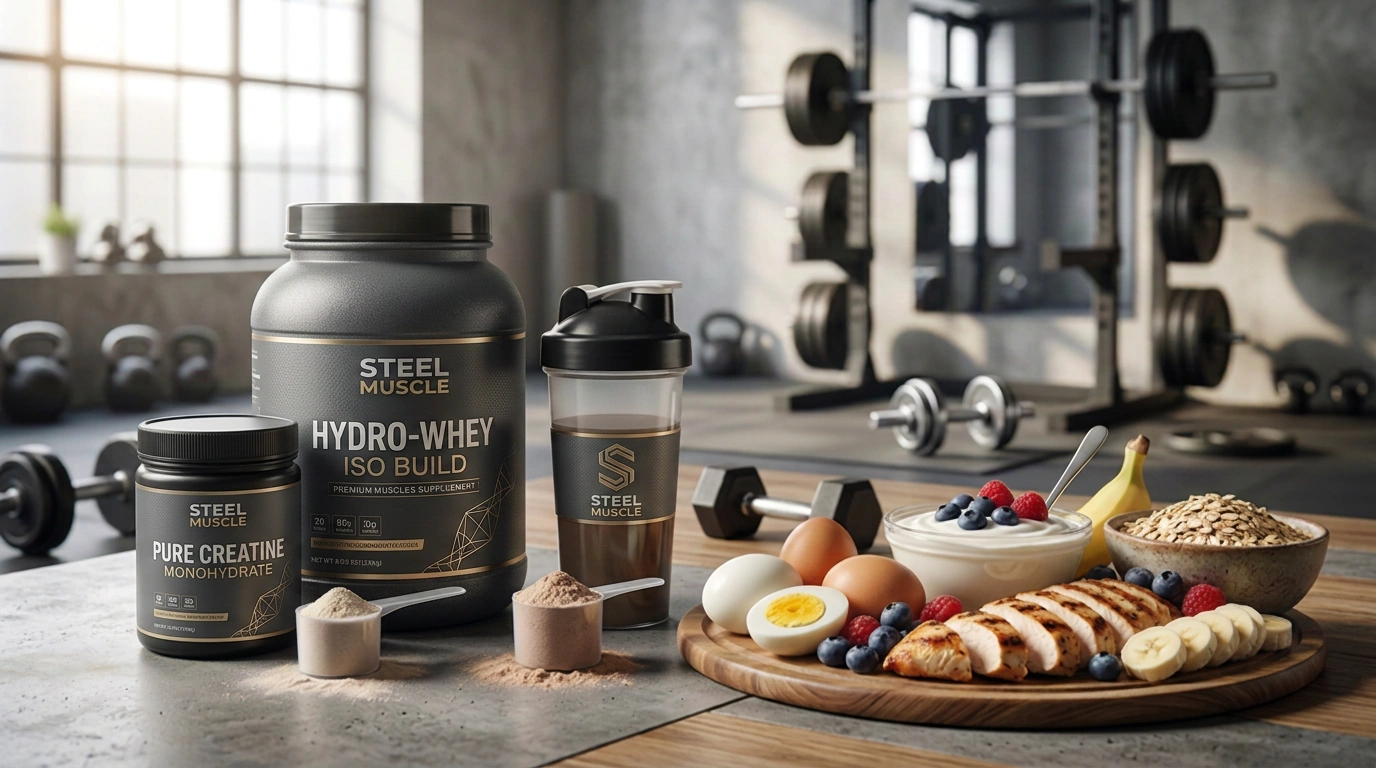
Protein provides amino acids that your body uses to build and repair muscle tissue. If you already consume enough protein through foods such as eggs, dairy, poultry, fish, meat, beans, lentils, and soy, you may not need protein powder every day.
However, a protein powder can be convenient when meals are busy or when reaching your protein target through food alone is difficult.
Common choices include whey, casein, soy, pea, and other plant-based proteins.
Whey protein is popular because it is convenient and provides a complete amino acid profile. Casein protein digests more slowly and can be useful when you want a protein-rich option that keeps you satisfied for longer. Plant-based powders can also work well, particularly when they provide a suitable combination of essential amino acids.
When comparing the best protein powder for muscle building, look beyond the front of the package. Check the protein amount per serving, ingredient list, added sugars, serving size, allergens, and overall cost.
A useful question is not simply, “What protein powder is best for gaining muscle?” Instead, ask: Which protein supplement fits my dietary preferences, budget, digestion, and daily protein needs?
A protein supplement for building muscle is most useful when it helps you consistently reach an appropriate protein intake.
Protein powder for gaining muscle mass does not automatically create muscle. Your muscles still need a training stimulus, enough energy, and adequate recovery.
Protein shakes can be especially convenient after workouts or between meals. They can also be combined with foods such as oats, fruit, milk, yogurt, or nut butter when you need additional calories.
For someone trying to gain lean muscle, a protein powder can provide protein without requiring a large increase in food volume. For someone trying to bulk, a higher-calorie shake may be more appropriate.
The key distinction is that protein supplements for muscle mass provide concentrated protein, while mass gainers typically combine protein with additional carbohydrates and calories.
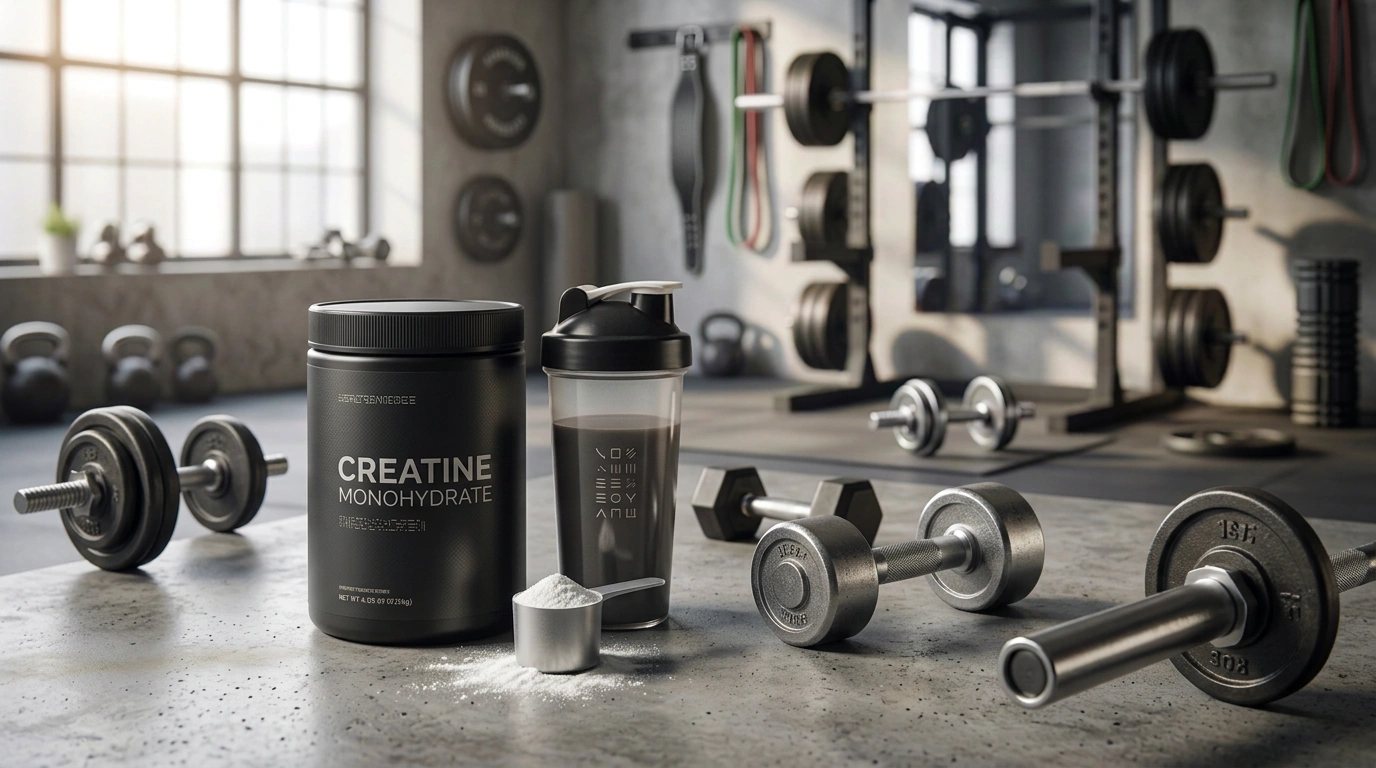
Creatine is one of the most researched sports supplements and is widely used by people who participate in strength training and other high-intensity activities.
For most healthy adults who choose to supplement, creatine monohydrate is the straightforward option. It has been extensively studied and is generally favored because it is effective, affordable, and simple to use.
Creatine helps increase the availability of energy for short, intense efforts. Over time, that can support training performance, strength development, and muscle growth when combined with resistance training.
You do not need a complicated creatine stack to benefit. Consistent daily use is generally more important than constantly changing products.
People often search for the best creatine for muscle gain, but the most important consideration is usually the form, quality, dosage, and consistency rather than an elaborate formula.
Creatine may also increase body weight because muscles can hold more water. This is different from gaining body fat and should not automatically be interpreted as an unwanted result.
Anyone with a medical condition, who is pregnant or breastfeeding, or who takes medications should discuss supplement use with an appropriate healthcare professional.
Muscle gain and weight gain are related, but they are not exactly the same thing.
If your goal is to build muscle, simply eating as much as possible can lead to unnecessary fat gain. A controlled calorie surplus combined with resistance training is generally a more sensible strategy.
Protein powders, calorie-dense shakes, and mass gainers can help people who struggle to eat enough food. However, they work best as additions to an already nutritious diet.
People looking for supplements for weight gain and muscle gain often need two things: enough protein and enough total calories.
A practical approach may include:
The best supplement for weight gain depends on why you are struggling to gain weight. Someone who cannot consume enough protein may benefit from protein powder, while someone who cannot eat enough calories may prefer a calorie-dense shake or mass gainer.
There is no need to rely on products promising extremely fast weight gain. Healthy weight gain should focus on adequate nutrition rather than simply increasing the number on the scale.
Healthy weight gain supplements can be useful when they make it easier to consume enough calories and protein. A homemade shake containing milk or a fortified alternative, oats, fruit, yogurt, and nut butter can often provide substantial nutrition without relying on an expensive commercial product.
Be cautious with products marketed as fast weight gain supplements or supplements that claim to increase weight dramatically in a short period. Rapid changes are not necessarily an indication of quality muscle gain.
Building lean muscle requires balancing muscle-building nutrition with calorie management.
A lean muscle builder strategy usually combines progressive resistance training with adequate protein and a calorie intake that matches the individual’s goal.
The best supplements for lean muscle are generally not radically different from those used for traditional muscle gain. Protein and creatine may be useful, while the overall calorie intake determines whether body weight increases, decreases, or stays relatively stable.
Products marketed as supplements to build lean muscle while simultaneously burning large amounts of fat should be evaluated carefully. Marketing claims can make complicated goals sound easier than they actually are.
For people trying to gain muscle while reducing body fat, the fundamentals remain important:
This approach is more sustainable than relying on a so-called fat burn muscle gain supplement.
Natural foods should also remain the foundation. Eggs, Greek yogurt, chicken, fish, lean beef, tofu, beans, lentils, whole grains, vegetables, fruits, nuts, and seeds can all contribute to a muscle-building diet.
Women can use many of the same evidence-based supplements used by men. The idea that women require completely different muscle-building supplements is often overstated.
The best supplements for female muscle building depend on dietary intake, training goals, and individual preferences.
Protein powder can be useful when daily protein needs are difficult to meet through food. Creatine can also be considered by women who participate in resistance training. Other supplements may be appropriate when a dietary deficiency or specific nutritional need exists.
Women’s muscle building supplements should therefore be selected based on actual needs rather than marketing designed specifically around gender.
For women who regularly train at a gym, a simple supplement routine may be enough. Best gym supplements for women can include protein powder and creatine, while hydration, carbohydrates, and overall food intake remain equally important.
There is also no requirement to use a large collection of women bodybuilding supplements to make progress.
More products do not necessarily mean better results. A simple routine that you can follow consistently is often more useful than an expensive supplement stack filled with ingredients you do not need.
Building and maintaining muscle becomes increasingly important with age. For men over 40, changes in activity levels, recovery, nutrition, and muscle mass can make a consistent strength-training routine especially valuable.
The best muscle building supplements for men over 40 are not necessarily different from those used by younger adults. Instead, the focus should be on meeting individual nutritional needs and supporting a well-rounded fitness routine.
Protein is one of the most practical options. Adequate protein provides the amino acids needed for muscle repair and maintenance, especially when combined with resistance training. Protein powder can be useful when meals alone do not provide enough protein.
Creatine is another commonly used option for active adults. It can support high-intensity exercise and strength training, which may help improve training quality over time.
However, supplements should not replace proper nutrition, sleep, and exercise. Men with medical conditions or those taking medications should speak with a healthcare professional before starting new supplements.
A simple approach is usually more practical than an extensive supplement routine. Protein, creatine, adequate calories, hydration, and a nutrient-rich diet can provide a strong foundation.
Some people may also require specific vitamins or minerals if their diet does not provide enough. Testing or professional guidance can help identify actual deficiencies rather than relying on unnecessary supplementation.
The phrase natural muscle building supplements is common in the fitness industry, but “natural” does not automatically mean effective, safe, or better.
Herbal ingredients can have different levels of scientific evidence. Some may support specific aspects of health or exercise, while others have limited research behind the muscle-building claims made in advertisements.
When evaluating a natural supplement, look at the actual ingredient, dosage, available research, potential interactions, and product quality.
Avoid products that promise dramatic muscle growth without consistent training and nutrition. Real muscle development takes time.
People searching for herbs for muscle growth may find products containing ingredients marketed for testosterone support, energy, strength, or muscle development.
The evidence for these products varies considerably. Some ingredients may have preliminary research, while others have little convincing evidence that they significantly increase muscle mass.
This is especially important with products marketed as natural muscle building pills or muscle gain pills. A supplement being sold as a natural alternative does not mean it can deliver the same results as a structured resistance-training and nutrition program.
Before purchasing an herbal muscle-building product, consider:
These questions can help separate useful products from aggressive marketing.
Some people searching for a muscle building drug may actually be looking for products that promise extremely fast increases in muscle size or strength.
It is important to distinguish nutritional supplements from performance-enhancing or unapproved drugs. These substances can carry significant health risks and should not be treated as ordinary fitness supplements.
For sustainable results, focus on progressive resistance training, sufficient protein, appropriate calorie intake, recovery, and evidence-based supplementation.
Amino acids are the building blocks of protein. When you eat protein-rich foods or take protein supplements, your body breaks the protein down into amino acids that can be used for various functions, including muscle repair and growth.
Essential amino acids, or EAAs, are particularly important because your body cannot produce enough of them on its own.
Leucine is one of the most important essential amino acids associated with stimulating muscle protein synthesis.
However, focusing only on leucine is not necessarily the best strategy. Muscle growth requires a complete supply of amino acids, which is why consuming enough high-quality protein throughout the day is usually more important than relying on a single amino acid supplement.
For this reason, the best amino acid for muscle growth is not necessarily something you need to supplement separately if your diet already provides sufficient complete protein.
Foods such as eggs, dairy, meat, fish, soy, and other high-quality protein sources naturally provide essential amino acids.
Muscle protein synthesis supplements should be viewed as part of an overall nutrition and training strategy.
Several factors work together:
Protein powders can be convenient because they provide concentrated protein without requiring extensive meal preparation.
For people who already consume enough protein, adding multiple amino acid products may provide little additional value. It is often more useful to evaluate your complete diet first.
Muscle recovery is essential for anyone trying to improve strength or build muscle. Training provides the stimulus, but recovery allows your body to adapt.
A challenging workout can temporarily increase muscle fatigue and create the need for adequate nutrition, rest, and hydration.
There is no single best supplement for muscle recovery for every person.
Protein is one of the most practical choices because it supplies amino acids needed for muscle repair. If you are not getting enough protein from food, a protein shake can make reaching your daily target easier.
Creatine may also support training performance and long-term improvements in strength and muscle when used consistently.
However, recovery is much broader than supplementation.
Pay attention to:
If you regularly feel exhausted or unusually sore, adding another muscle recovery supplement may not solve the underlying issue. Your workout intensity, nutrition, sleep, and recovery schedule may need adjustment.
Vitamins are important for normal body functions, but they should not be confused with direct muscle-building agents.
A nutrient deficiency can negatively affect health and physical performance. Correcting a deficiency can therefore be important, but taking excessive amounts of vitamins does not automatically lead to larger muscles.
There is no single best vitamin for muscle growth.
Vitamin D, B vitamins, vitamin C, vitamin A, and other micronutrients each contribute to different processes in the body.
For people who exercise regularly, maintaining adequate vitamin and mineral intake supports overall health and normal physiological function.
A balanced diet can provide many of these nutrients through foods such as:
If your diet is limited or a healthcare professional identifies a deficiency, targeted supplementation may be appropriate.
Bodybuilders and serious gym-goers often focus heavily on protein, calories, and supplements while overlooking basic micronutrient intake.
Good vitamins for bodybuilding should be considered as part of complete nutrition rather than a shortcut to muscle growth.
A multivitamin can sometimes help fill nutritional gaps, but it should not replace fruits, vegetables, whole grains, protein-rich foods, and other nutrient-dense foods.
Taking very high doses of vitamins is also not a reliable muscle-building strategy. More is not automatically better.
People searching for vitamins for weak muscles should also be careful about assuming that a vitamin deficiency is the cause. Muscle weakness can have many possible causes. Persistent or unexplained weakness should be evaluated by a healthcare professional.
If you are wondering what vitamins help you gain weight, the important point is that most vitamins do not provide significant calories.
Weight gain primarily requires consuming enough energy over time. Vitamins support normal body functions but are not generally a major source of calories.
If someone has a nutritional deficiency, correcting it may support overall health and normal appetite or energy levels. However, gaining healthy weight still requires adequate calories, protein, carbohydrates, and fats.
For people who struggle to eat enough, a nutritious shake can be more useful than simply taking additional vitamins.
A food supplement to gain weight might combine protein, carbohydrates, and healthy fats to increase calorie intake while also providing useful nutrients.
A common mistake is assuming that a larger supplement routine will produce faster results.
Instead, start by identifying your actual nutritional needs.
For example, someone who already eats enough protein may not need several protein products. Someone who eats a balanced diet may not need a large collection of vitamin supplements. Likewise, someone consuming enough calories may not need a mass gainer.
The most effective approach is to build your supplement routine around specific goals:
For muscle growth: prioritize adequate protein and resistance training.
For strength: consider creatine alongside progressive training.
For weight gain: increase calories and protein.
For lean muscle: manage calories while maintaining sufficient protein and resistance training.
For recovery: prioritize protein, hydration, carbohydrates, sleep, and appropriate training volume.
Supplements can be useful tools, but they work best when they support a strong foundation rather than trying to replace it.
Starting a muscle-building routine can feel confusing when you see shelves full of protein powders, creatine products, pre-workouts, amino acids, vitamins, and other fitness products. The good news is that beginners generally do not need a complicated supplement routine.
The most important foundations are resistance training, adequate protein, enough calories, hydration, and quality sleep. Supplements should simply make those basics easier to follow.
For many beginners, fitness supplements for beginners can be kept simple.
Protein powder may be useful if you struggle to get enough protein from foods such as eggs, chicken, fish, dairy, beans, lentils, or soy. A protein shake is primarily a convenient food option rather than a magic muscle-building product.
Creatine is another option commonly considered by people beginning resistance training. Consistent use can support high-intensity exercise and strength development over time.
Other supplements should be considered based on individual needs rather than simply because they are popular online.
A beginner can use a simple priority system:
There is no need to start with a dozen products. The best exercise supplements for beginners are the ones that provide a clear benefit and fit naturally into your routine.
A supplement stack is simply a combination of supplements used for a particular goal. More products do not automatically produce better results.
A beginner may benefit from a very small stack, while an experienced athlete may have more specific nutritional requirements.
One practical muscle building stack can include protein powder and creatine.
Protein powder helps make it easier to reach daily protein needs, while creatine can support high-intensity training performance.
Someone trying to gain weight may also use a calorie-dense shake or mass gainer if eating enough food is difficult.
The important thing is that each product should have a clear purpose.
A basic stack might include:
There is no requirement to buy a complicated bodybuilding supplement stack containing numerous ingredients.
The best stack for muscle growth depends on your diet, training program, body composition goals, and ability to meet nutritional needs through food.
For many people, a simple combination of protein and creatine is enough to complement a well-structured resistance-training program.
You may also need additional calories if your goal is to gain body weight.
Before buying best muscle building stacks, consider whether you actually need each product. A stack with fewer supplements can be easier to afford, use, and evaluate.
Bulking requires more than simply consuming large amounts of supplements. You need a consistent calorie surplus and enough protein to support muscle development.
The best bulking supplements may include protein powder, creatine, and a calorie-dense shake.
A mass gainer can be convenient for people who have a small appetite or busy schedule. However, you can also create your own high-calorie shake using ingredients such as milk, Greek yogurt, oats, banana, nut butter, and protein powder.
Homemade shakes offer more control over ingredients, calories, and portion sizes.
Pre-workout nutrition can help you feel energized and perform well during training. You do not necessarily need a commercial pre-workout supplement to accomplish this.
The ideal approach depends on how long before exercise you eat and how your digestive system responds.
The best pre workout food for muscle gain generally combines carbohydrates with a moderate amount of protein.
Carbohydrates provide an accessible source of energy for exercise, while protein contributes amino acids to your overall daily intake.
Some convenient choices include:
If you are eating shortly before training, choose foods that are relatively easy to digest.
You also need to consider hydration. Starting a workout dehydrated can negatively affect how you feel and perform.
Do energy drinks block muscle growth? Not necessarily.
Energy drinks typically contain caffeine and may contain significant amounts of sugar or other ingredients. Caffeine can increase alertness and may improve exercise performance for some people.
However, excessive stimulant intake can create problems. It may cause jitteriness, digestive discomfort, increased heart rate, or difficulty sleeping.
Sleep is especially important for people trying to build muscle. If an energy drink consumed late in the day prevents you from sleeping properly, the potential downside may outweigh the temporary energy boost.
Energy drinks are therefore optional rather than essential for muscle development.
Digestive health can influence your ability to consume and tolerate a varied diet, but probiotics should not be considered a primary muscle-building supplement.
Research into probiotics for muscle growth is still developing. Different probiotic strains may have different effects, and evidence does not currently make probiotics a foundational muscle-building supplement for everyone.
Instead, focus on overall dietary quality.
Fiber-rich foods such as vegetables, fruits, whole grains, beans, lentils, nuts, and seeds can support a healthy diet while providing valuable nutrients.
If you have persistent digestive symptoms, it is better to discuss them with a healthcare professional than to automatically purchase a probiotic product.
With so many products available, knowing how to evaluate a supplement can save both money and frustration.
When comparing the best supps for muscle building, start with the ingredient label.
Look for:
Avoid assuming that a long ingredient list means a better product.
If a label uses a proprietary blend and does not disclose individual ingredient amounts, it can be difficult to determine whether you are getting meaningful doses.
The container price does not tell you the real value of a supplement.
Instead, compare the cost per serving and, when relevant, the cost per gram of protein or amount of the active ingredient.
For protein powder, consider:
Total price ÷ total grams of protein = approximate cost per gram of protein.
For creatine, compare the price against the number of servings and the amount of creatine provided per serving.
Also check subscription discounts and bundle offers carefully. A discount is only valuable if you actually need the products.
When comparing best supplements for muscle gain, quality, transparency, effective dosage, convenience, and price should all be considered.
Different goals require slightly different approaches. The following comparison can help simplify your options.
| Goal | Supplement Category | Main Reason |
| Muscle growth | Protein + creatine | Supports protein intake and training performance |
| Strength | Creatine | Supports repeated high-intensity exercise |
| Weight gain | Protein + calorie-dense supplements | Helps increase protein and calorie intake |
| Lean muscle | Protein + creatine | Supports muscle development while managing calories |
| Bulking | Protein + calorie surplus | Supports overall mass gain |
| Recovery | Protein + adequate nutrition | Supports normal muscle repair |
| Beginner fitness | Protein + creatine | Provides a simple foundation |
| Women’s muscle growth | Protein + creatine | Supports training and muscle development |
| 40+ muscle maintenance | Protein + resistance training | Supports muscle retention |
This table is a starting point rather than a prescription. Individual nutritional needs can vary substantially.
Supplements can be convenient, but whole foods should remain the foundation of your nutrition plan.
Protein-rich foods such as eggs, poultry, fish, lean beef, Greek yogurt, cottage cheese, milk, tofu, beans, and lentils can provide protein along with other nutrients.
Carbohydrate sources such as oats, rice, potatoes, whole grains, fruit, and whole-grain bread can provide energy for training.
Healthy fats from nuts, seeds, avocado, olive oil, and nut butters can make it easier to increase calories when needed.
A food supplement to gain weight can be useful when someone has difficulty eating enough, but regular meals should still provide much of the diet.
Similarly, protein supplements for muscle mass are best viewed as a convenient way to increase protein intake rather than a replacement for protein-rich foods.
Supplements are most useful when they complement a structured training and nutrition plan.
Muscle development requires a training stimulus.
A good resistance-training program should gradually challenge your muscles through progressive overload. This may involve increasing weight, repetitions, training volume, or improving exercise performance over time.
Compound exercises such as squats, presses, rows, and deadlift variations can be useful components of a strength program, depending on your experience and goals.
Consistency matters more than having a perfect workout every time.
Nutrition provides the energy and building materials needed to support training.
Focus on:
Someone trying to gain muscle while reducing body fat may need a different calorie strategy from someone focused exclusively on bulking.
This is why supplements for muscle growth and fat loss should not be viewed as a replacement for proper calorie management.
Recovery deserves just as much attention as training.
Aim for consistent sleep, adequate hydration, rest days, and manageable training volume.
Stress management can also make it easier to maintain a consistent fitness routine.
Even the best supplements for muscle gain and strength cannot compensate for consistently poor sleep, inadequate calories, or excessive training.
Many people spend more money on supplements than they need to because they focus on products before fixing the basics.
Common mistakes include:
A large stack can make it difficult to know which products are actually helping.
Buying amino acids or specialty products does not make up for consistently inadequate total protein.
If your goal is muscle and weight gain, you need enough energy to support that goal.
No supplement can replace progressive resistance training.
Claims such as “instant muscle,” “rapid gains,” or “guaranteed transformation” should be viewed skeptically.
Too much caffeine can affect sleep, anxiety, digestion, and overall well-being.
Training harder while sleeping poorly is not necessarily a better strategy.
Choose products that clearly disclose their ingredients and amounts.
Muscle development takes time. Short-term weight changes may include water, glycogen, fat, and food weight rather than new muscle tissue.
A higher price does not automatically mean a supplement is more effective.
Some expensive products contain useful ingredients, but less expensive products may provide the same primary ingredient at a lower cost.
When comparing best supplements for lean muscle, best weight gain supplements, or best supplements for muscle gain, look at the formulation rather than the packaging.
Consider:
Third-party testing can provide additional assurance regarding product quality and manufacturing standards, although it does not guarantee that a product will produce a particular fitness result.
The best supplement is usually one that has a clear purpose, provides useful ingredients at appropriate amounts, fits your budget, and can be used consistently.
There is no single supplement that works for everyone. Protein powder can help meet protein needs, while creatine can support high-intensity training and strength. Both work best alongside resistance training, adequate calories, and sufficient recovery.
Creatine monohydrate is a well-studied and commonly used form. For many healthy adults, it is a straightforward choice because it is effective, widely available, and relatively affordable.
Whey protein is a popular choice, but casein and plant-based proteins can also work. The best option depends on your dietary preferences, allergies, digestion, protein requirements, and budget.
Protein powder and calorie-dense shakes can help increase protein and calorie intake. Mass gainers can also be convenient for people who struggle to eat enough calories through regular meals.
Women can generally use many of the same evidence-based supplements as men. Protein and creatine are two commonly considered options for women who participate in resistance training.
Protein can support muscle repair when your diet does not provide enough. However, adequate calories, carbohydrates, hydration, sleep, and appropriate training volume are equally important for recovery.
Energy drinks do not inherently block muscle growth. However, excessive caffeine or sugar intake can become counterproductive if it affects sleep, hydration, appetite, or overall nutrition.
Beginners generally do not need a large supplement stack. Start with adequate protein, calories, hydration, resistance training, and sleep. Protein powder can be used when dietary protein is insufficient, and creatine may be considered when appropriate.