Physical Address
304 North Cardinal St.
Dorchester Center, MA 02124
Physical Address
304 North Cardinal St.
Dorchester Center, MA 02124

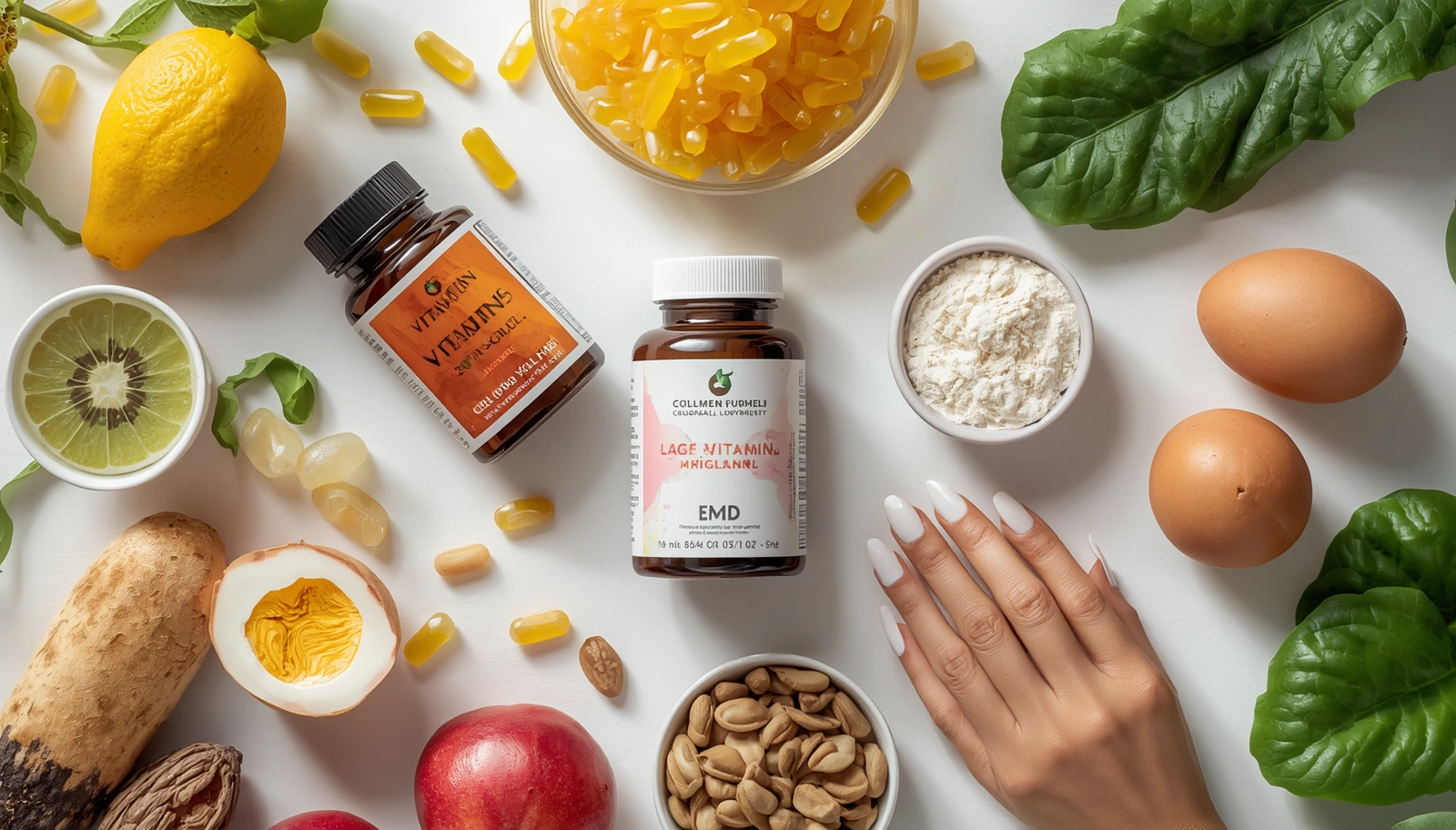
Healthy skin, strong hair, and resilient nails are often influenced by more than your daily beauty routine. Nutrition plays an important role in providing the vitamins, minerals, protein, and other nutrients your body needs to maintain these tissues. This is why hair, skin, and nails vitamins have become increasingly popular among people looking for convenient ways to support their overall beauty and wellness routine.
However, there is no single vitamin that solves every skin, hair, or nail concern. Nutritional needs vary from person to person, and supplements are most useful when they help address an actual nutritional gap. A balanced diet that includes protein, fruits, vegetables, whole grains, healthy fats, and adequate fluids should remain the foundation.
In this guide, you’ll learn which nutrients matter most, how to evaluate beauty supplements, whether gummies are worth considering, what men and women should look for, and how to choose a quality formula.
The phrase vitamin for hair skin and nails usually refers to a supplement containing a combination of nutrients associated with normal tissue maintenance. Hair, skin, and nails have different structures, but they share several nutritional requirements.
For example, protein provides amino acids used to build keratin, a structural protein found in hair and nails. Vitamin C supports normal collagen formation, while zinc contributes to normal cell function and maintenance of skin.
Instead of focusing on one nutrient, some people prefer a comprehensive formula containing several vitamins and minerals. This can be convenient, particularly for individuals whose diets may not consistently provide adequate amounts of certain nutrients.
Common searches include vitamins skin hair, hair skin vitamins, vitamins for hair nails, and vitamin for hair and nail. Although these terms sound similar, the most appropriate supplement depends on the individual’s diet, nutritional status, and specific needs.
Several nutrients are commonly included in formulas designed for beauty and tissue support:
The important point is that more is not necessarily better. High doses of certain nutrients can cause unwanted effects, so supplements should be used according to the product directions and individual nutritional needs.
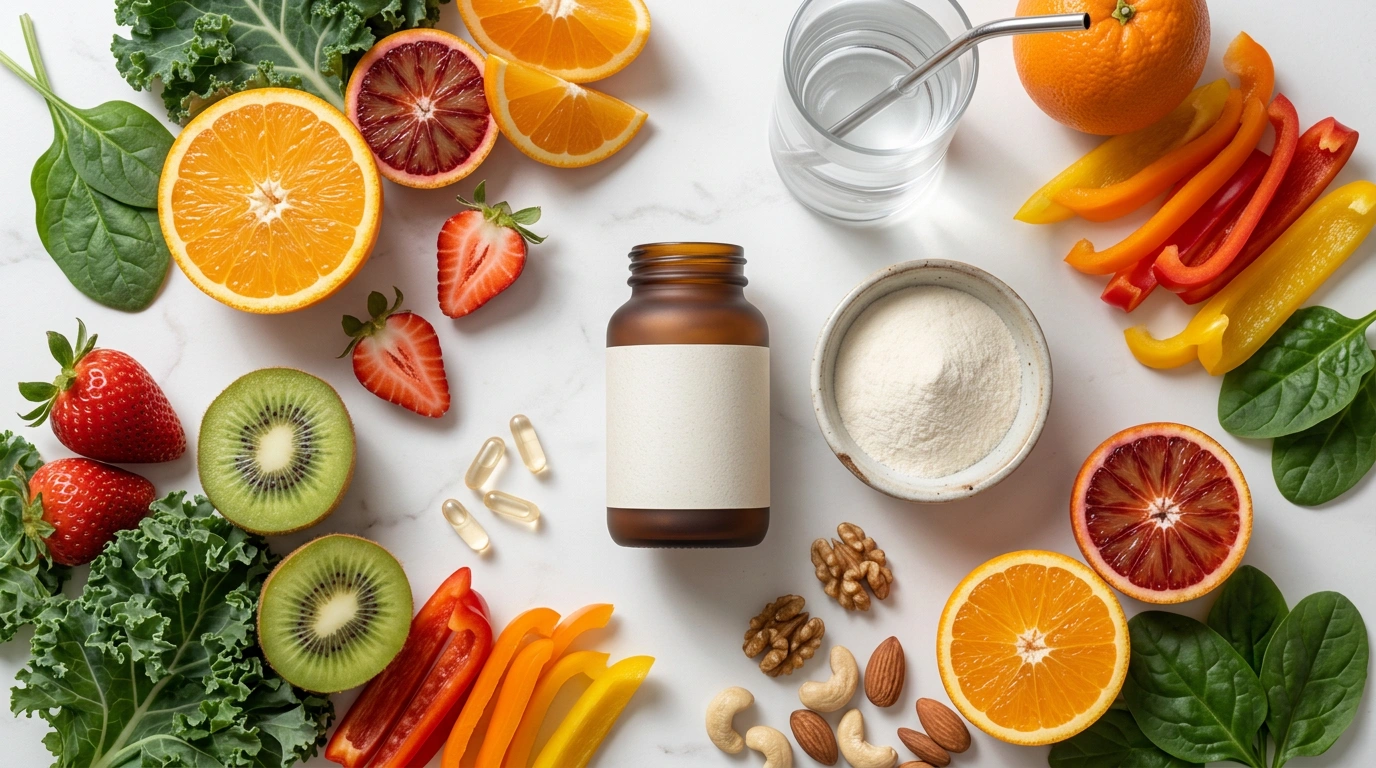
When people search for the best vitamins for glowing skin, they are often looking for nutrients that support normal skin structure, antioxidant protection, and overall skin health.
Vitamin C is particularly relevant because it contributes to normal collagen formation. Collagen is an important structural component of skin, helping provide its normal strength and structure.
Vitamin E is another antioxidant commonly found in skin-focused supplements. Zinc also contributes to the maintenance of normal skin.
A healthy diet matters just as much. Citrus fruits, berries, colorful vegetables, nuts, seeds, seafood, eggs, legumes, and other nutrient-rich foods can provide many of the nutrients associated with healthy skin.
Therefore, healthy skin vitamins should complement—not replace—a nutritious diet and appropriate skincare routine.
There is an important difference between nutritional supplements and topical skincare products.
Topical products are applied directly to the skin and may contain ingredients designed for specific cosmetic concerns. Oral supplements provide nutrients through the diet and digestive system.
Searching for vitamins skin care, beauty vitamin, beauty supplement, or beauty supplements can lead to many products with very different formulas. Before purchasing, check the Supplement Facts label rather than relying only on marketing claims.
Look for:
Nutrition is important for normal tissue maintenance and repair. Several nutrients may be relevant to the body’s normal healing processes.
Vitamin C supports collagen formation and normal immune function. Zinc contributes to normal skin maintenance and cell function. Protein provides amino acids required to build and maintain body tissues.
Vitamin E also contributes antioxidant activity, while adequate overall nutrition supports the body’s normal recovery processes.
People searching for the best vitamins for skin healing or best supplements for skin healing should remember that supplements are not a substitute for appropriate medical care when a wound is serious, infected, persistent, or unusually slow to heal.
Hair grows through a natural cycle involving periods of growth, transition, and resting. Because hair growth is gradual, nutritional changes generally cannot produce instant results.
So, what’s best vitamin for hair growth? There is no universal answer.
A nutrient can be particularly important when someone is deficient in it. Iron, zinc, vitamin D, vitamin B12, folate, and other nutrients can be relevant to overall health, while biotin is commonly marketed for hair support.
However, taking large amounts of a nutrient without a demonstrated need does not automatically make hair grow faster.
People asking what is good vitamin for hair should first consider their overall diet, lifestyle, existing supplements, and possible reasons for hair changes.
Several nutrients may be relevant when evaluating a hair-support supplement.
Biotin is one of the most recognizable ingredients in hair formulas. It contributes to normal energy metabolism and the maintenance of normal hair.
Vitamin D plays numerous roles throughout the body. Low vitamin D status has been investigated in relation to various hair conditions, although supplementation should be based on individual needs rather than assumptions.
Vitamin C contributes to collagen formation and helps with normal iron absorption. This makes it particularly relevant when dietary iron intake is a concern.
Zinc contributes to normal hair maintenance, while iron is essential for oxygen transport. In people with inadequate iron status, addressing the underlying issue may be important for overall health.
Vitamin B12 and folate support normal blood formation and cell-related processes.
This is why some people search for vitamin C supplements for hair, supplements for hair growth and nails, or supplements for hair and nail growth. A balanced formula can be convenient, but the right choice depends on individual nutritional needs.
Hair and nails share some structural characteristics, particularly their dependence on keratin and adequate nutritional building blocks.
People considering supplements for hair and nails or a supplement for nails and hair should examine the entire ingredient profile instead of choosing a product based only on its biotin content.
Consider:
A hair nail supplement may be useful as a convenient nutritional addition, but it should not be viewed as a guaranteed solution for hair loss or brittle nails.
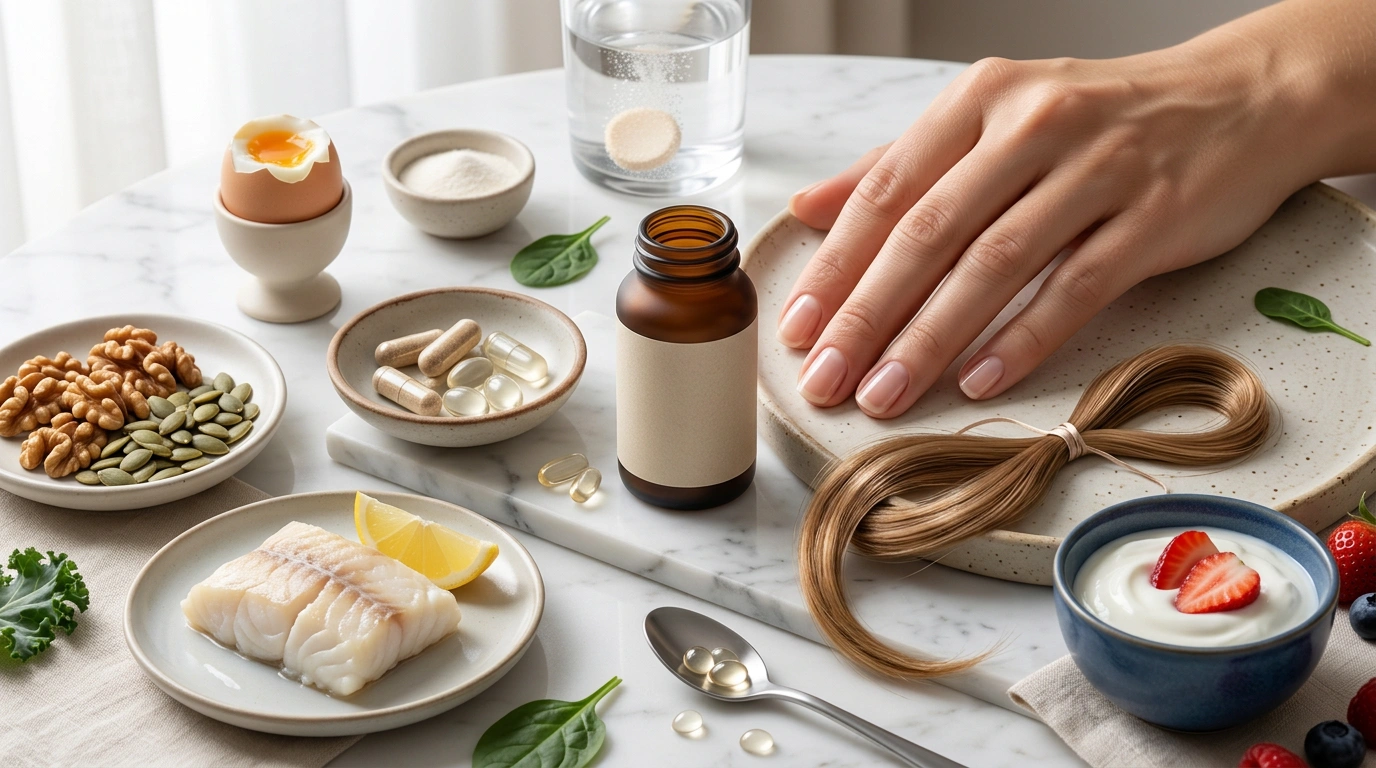
Searches such as vitaminas para el pelo uñas y piel, vitaminas para pelo uñas y piel, and vitaminas para el cabello uñas y piel reflect the growing interest in combined beauty supplements across different languages and markets.
These terms generally refer to products designed to provide nutrients associated with hair, skin, and nail health.
Other related searches include vitaminas para el cabello y uñas and vitaminas para el pelo y uñas. Regardless of the language used to search, the same principle applies: evaluate the actual ingredients, doses, nutritional value, and quality of the supplement.
The Portuguese-language search vitamina para unha e cabelo generally means a vitamin for nails and hair.
A formula designed for these goals may contain:
Biotin is commonly associated with hair and nail supplements, but it should not automatically be assumed to be the most important nutrient for everyone.
Protein is also important because hair and nails contain keratin, which is a protein. A diet consistently low in protein may make it difficult to meet the body’s nutritional requirements.
Brittle or weak nails can have many possible causes, including repeated exposure to water and chemicals, physical trauma, aging, certain health conditions, and nutritional deficiencies.
Adequate protein provides amino acids used in the body’s structural proteins. Zinc contributes to normal maintenance of nails, while biotin is commonly included in nail-support formulas.
Iron can also be relevant when inadequate iron status is present.
Rather than relying on a single vitamin for hair and nail, consider your overall nutritional pattern. A balanced diet containing eggs, fish, poultry, dairy or fortified alternatives, beans, lentils, nuts, seeds, fruits, and vegetables can provide a broad range of nutrients.
Biotin is a popular ingredient in beauty supplements, but a single nutrient is not always the best option.
Someone with an identified nutritional deficiency may need targeted supplementation, while another person may prefer a broader hair skin nail multivitamin for convenience.
The phrase biotin or hair skin and nails can therefore represent two different approaches: choosing one nutrient versus selecting a combination formula.
When comparing products, look beyond the front label. Check the complete Supplement Facts panel and determine whether the formula provides reasonable amounts of nutrients without unnecessary megadoses.
Collagen is a structural protein found throughout the body and is especially associated with connective tissues and skin.
Collagen supplements for hair skin and nails are popular because collagen is closely connected with skin structure. Research on oral collagen peptides has shown potential benefits for certain measures of skin appearance and hydration, but results can vary between individuals and products.
Claims about collagen directly increasing hair or nail growth should be viewed more cautiously. Collagen supplements provide amino acids, but they are not a replacement for adequate total dietary protein.
When considering supplements for hair nails and skin, evaluate collagen as one component of a broader nutritional strategy rather than a magic beauty ingredient.
Yes. Protein is fundamental to the structure of hair and nails.
Hair is primarily composed of keratin, a tough structural protein. Nails also contain keratin. Your body requires adequate amino acids to build and maintain proteins throughout the body.
This is why protein of hair and nails is an important concept when building a healthy beauty routine.
Good dietary protein sources include:
People seeking healthy hair skin and nails should therefore think beyond supplements. Meeting overall protein and micronutrient needs through a varied diet is an important first step.
Hair Skin and Nails Vitamins Ingredients to Look For
Choosing a beauty supplement can be confusing because products often contain long ingredient lists and different serving sizes. Instead of focusing only on claims such as “best,” “advanced,” or “complete,” examine the actual hair skin and nails vitamins ingredients.
The goal is to identify nutrients that have a legitimate nutritional role and determine whether the product fits your individual needs.
Biotin is a B vitamin frequently found in hair skin and nail multivitamin formulas. It contributes to normal energy metabolism and helps maintain normal hair and skin.
Biotin can be obtained from foods such as eggs, nuts, seeds, fish, meat, and some vegetables. Although biotin deficiency can affect hair and skin, deficiency is uncommon in many people who eat a varied diet.
Vitamin C is an antioxidant and contributes to normal collagen formation. Collagen is important for normal skin structure.
Citrus fruits, strawberries, kiwi, peppers, broccoli, and tomatoes are good dietary sources. Vitamin C is therefore a common vitamin for hair skin and nails because of its role in collagen formation and normal iron absorption.
Vitamin D is involved in numerous functions throughout the body, including normal immune and bone function. Food sources include fatty fish, egg yolks, fortified foods, and certain mushrooms, while the body can also produce vitamin D through sunlight exposure.
Whether supplementation is appropriate depends on factors such as diet, sun exposure, and individual nutritional status.
Vitamin E acts as an antioxidant and helps protect cells from oxidative stress. Nuts, seeds, vegetable oils, spinach, and other foods can provide vitamin E.
It is commonly included in beauty formulas because antioxidant nutrients are relevant to overall skin health.
Zinc contributes to normal skin, hair, and nail maintenance and supports normal immune function.
Foods containing zinc include oysters, meat, poultry, dairy products, beans, nuts, and seeds. People following restrictive diets may need to pay particular attention to zinc intake.
Iron is essential for oxygen transport and other biological processes. Dietary sources include meat, poultry, seafood, beans, lentils, spinach, and fortified cereals.
Iron supplementation should not be taken casually because excessive iron can be harmful. If iron deficiency is suspected, testing and professional guidance can help determine whether supplementation is appropriate.
Vitamin B12 supports normal red blood cell formation and nervous system function. It is naturally found primarily in animal-derived foods, although fortified foods and supplements can provide it for people following vegetarian or vegan diets.
People who avoid animal products may need to pay particular attention to reliable B12 sources.
Folate is important for normal cell division and DNA synthesis. Leafy green vegetables, beans, peas, citrus fruits, and fortified grains are common sources.
Folate is especially important during certain stages of life, so individual requirements can vary.
Collagen is a structural protein found in connective tissues and skin. Collagen peptides are widely used in beauty supplements.
While collagen supplements may support certain aspects of skin appearance for some individuals, they should be considered alongside overall protein intake and dietary quality.
Protein provides amino acids required to build and maintain tissues. Since both hair and nails contain keratin, adequate protein intake is an important part of maintaining normal growth and structure.
A supplement cannot compensate for a consistently inadequate diet.
A quality formula is not necessarily the one with the longest ingredient list. When comparing products, look for transparent ingredient labeling and practical serving sizes.
Important factors include:
It is also important to compare the product with other supplements you already take. Combining several multivitamins or fortified products can unintentionally increase your intake of certain nutrients.
The popularity of beauty gummies has grown because they are convenient, portable, and often easier to take than traditional tablets.
But does hair skin and nails gummies work? The answer depends largely on what the gummy contains and whether the person taking it actually needs those nutrients.
A gummy containing biotin, vitamin C, zinc, or other nutrients can help provide those nutrients. If someone has an inadequate intake or deficiency, correcting that nutritional problem may be meaningful.
However, taking a gummy does not automatically cause faster hair growth, clearer skin, or stronger nails.
The ingredient profile is more important than the gummy format itself. Two gummies can look similar while providing very different amounts of vitamins and minerals.
The question do hair skin and nail gummies work is best answered by looking at individual circumstances.
Potential advantages include:
There are also limitations.
Many gummies contain added sugars, and some provide relatively small amounts of certain nutrients. Some formulas may emphasize marketing ingredients without providing a balanced nutrient profile.
When comparing hair skin and nail gummies, look at the Supplement Facts label rather than choosing based solely on flavor, packaging, or influencer recommendations.
Terms such as hair skin nails gummy, hair skin nail gummy, and gummy hair skin nails vitamins can describe many different formulations. Always compare the actual ingredients and serving sizes.
Hair and nails grow gradually, so nutritional changes should not be judged after only a few days.
Hair growth occurs through a biological cycle, and visible changes can take months. Nails also grow slowly, meaning improvements in nail appearance may require consistent care over time.
Skin can change more quickly, but results vary depending on age, genetics, skincare habits, diet, sleep, hydration, and other factors.
If a supplement is correcting a nutritional deficiency, improvements may be more meaningful than when someone already consumes adequate nutrients.
Consistency matters, but patience and realistic expectations are equally important.
For people following a plant-based lifestyle, vegan gummies for hair skin and nails can offer a convenient alternative to traditional supplements.
However, “vegan” does not automatically mean nutritionally superior. Vegan consumers should examine both the ingredients and the nutritional profile.
Some gummies use gelatin, which is derived from animals. Vegan products typically use plant-based alternatives such as pectin.
When shopping for a vegan beauty supplement, check for:
Vegan hair skin and nails vitamins can be useful when they help fill specific nutritional gaps.
People following vegan diets may need to pay particular attention to vitamin B12, iron, zinc, vitamin D, iodine, omega-3 fats, and protein, depending on their dietary pattern.
However, needs vary significantly. A well-planned vegan diet can provide many nutrients through beans, lentils, tofu, tempeh, whole grains, nuts, seeds, fruits, and vegetables.
When evaluating a vegan supplement, make sure it complements your diet rather than unnecessarily duplicating nutrients you already consume.
The effectiveness of a supplement is not determined simply by whether it is vegan or non-vegan.
A vegan formulation can provide useful nutrients just as a non-vegan formulation can. What matters is the nutritional profile, dosage, ingredient quality, and whether the supplement addresses an actual need.
For someone with an adequate diet, taking a beauty supplement may provide limited additional benefits. For someone with a nutritional gap, targeted supplementation may be more useful.
Yes. Can guys take hair skin and nails vitamins? In general, beauty supplements are not automatically restricted to women.
Hair, skin, and nails require nutrients regardless of sex. Men can also experience nutritional deficiencies, brittle nails, dry skin, or changes in hair health.
A formula does not necessarily need to be marketed specifically toward men to be appropriate. The most important considerations are ingredients, serving size, dietary needs, and existing supplementation.
Can men take hair skin and nails vitamins? Yes, but men should evaluate the same important factors as anyone else.
Before adding a supplement, check whether it overlaps with a multivitamin, sports supplement, fortified protein powder, or other products already being used.
This is especially important for nutrients such as zinc, vitamin D, iron, and certain B vitamins.
For example, men should generally avoid taking iron-containing supplements simply because iron is included in a beauty formula unless there is a specific reason to do so.
Men comparing hair skin and nails vitamins for men can look for a balanced nutritional profile containing nutrients such as:
The best formula is not necessarily the one with the highest dosage. Instead, consider whether the product fills a nutritional gap and fits your overall diet.
Men should also consider the actual reason for hair changes. Hair thinning can have genetic, hormonal, nutritional, medical, and age-related causes. A supplement may not address the underlying cause.
People searching for vitamins for dandruff may assume that dandruff is always caused by a vitamin deficiency. That is not necessarily the case.
Dandruff can be associated with scalp conditions, oil production, sensitivity, yeast on the scalp, irritation, and other factors.
Nutrition contributes to overall health, but taking a vitamin is not considered a universal treatment for dandruff.
Scalp care can include regular cleansing, appropriate dandruff shampoos, avoiding irritating hair products, and maintaining a balanced diet.
Persistent, severe, painful, or inflamed scalp symptoms may require evaluation by a dermatologist.
Several nutrients contribute to overall nutritional health and may be relevant to maintaining healthy hair and scalp.
Zinc supports normal skin maintenance and immune function. Vitamin D plays important roles throughout the body. B vitamins support normal energy metabolism and other biological functions.
Vitamin C contributes to collagen formation and helps with normal iron absorption. Protein provides amino acids required for tissue maintenance.
Healthy fats are also an important part of a balanced diet. Sources such as avocados, nuts, seeds, olive oil, and fatty fish can contribute beneficial fats and other nutrients.
For people interested in hair skin vitamins, the goal should be overall nutritional adequacy rather than relying on one product to solve every scalp concern.
The answer depends on why someone is taking them.
Do hair and nail vitamins really work? They can be helpful when they provide nutrients that a person is not getting adequately from food. Correcting a deficiency can support normal biological functions and may improve certain deficiency-related concerns.
But if someone already consumes sufficient nutrients, taking additional amounts does not necessarily produce dramatic cosmetic results.
Hair and nail growth are also naturally slow. Hair follicles operate through growth cycles, while nails require time to grow from the nail matrix toward the visible edge.
This means supplement users should avoid expecting overnight transformations.
No supplement works identically for everyone.
The reasons behind hair, skin, or nail concerns can vary widely. Nutritional deficiencies are only one possibility.
Other factors can include:
Therefore, will hair skin and nails vitamins work depends on the underlying situation.
If you experience sudden or significant hair loss, persistent nail changes, or unexplained skin problems, addressing the underlying cause is more important than simply adding a beauty supplement.
The question does hair skin and nails work without a nutritional deficiency has a nuanced answer.
Supplements can provide nutrients even when someone is not deficient, but that does not mean higher intake will necessarily produce better cosmetic outcomes.
For many people, the best strategy is to establish a strong nutritional foundation first.
Focus on:
If a nutrient deficiency is suspected, targeted testing and professional guidance can help determine whether supplementation is appropriate.
Ultimately, do hair skin and nail vitamins work depends on the ingredients, dosage, individual nutritional status, and reason for use.
A quality supplement can be a convenient addition to a healthy lifestyle, but it should not be treated as a replacement for a balanced diet or medical evaluation.
The strongest approach is usually to identify nutritional gaps, choose an appropriately formulated product, follow the serving instructions, and give the body enough time to respond.
Choosing the right supplement can be difficult because there are many products marketed as the best hair skin and nails vitamins. Instead of choosing based only on popularity or advertising, compare the ingredients, dosage, serving size, quality, and value.
A hair skin nail multivitamin combines several nutrients in one formula. This can be convenient for people who want a single daily supplement rather than multiple individual products.
Individual vitamins may make more sense when a specific nutritional need has been identified. For example, someone with low vitamin D may need a targeted vitamin D supplement rather than a general beauty formula.
A combination product may include biotin, vitamin C, zinc, vitamin E, vitamin D, and other nutrients. However, more ingredients do not automatically mean better results.
When comparing a hair and skin supplement or supplements for hair nails and skin, consider whether the formula actually fits your nutritional needs.
The best format is often the one you can take consistently.
Gummies are convenient and easy to chew, but they may contain added sugar and sometimes provide fewer nutrients per serving.
Capsules can provide concentrated formulas and usually contain little or no added sugar.
Tablets are another practical option and are often available at a lower cost per serving.
Compare:
The delivery format matters less than the actual nutritional profile.
Before buying a beauty supplement, check the Supplement Facts label carefully.
Look for:
Avoid assuming that an expensive product is automatically higher quality. Comparing the cost per serving can provide a more useful picture of value.
When reading hair skin and nails gummies reviews, look beyond the star rating.
Useful reviews should mention how long the person used the product, whether they followed the recommended serving, and what they realistically expected.
Pay particular attention to:
Reviews can help evaluate convenience and user experience, but personal results are not proof that a supplement will work the same way for everyone.
If you come across weem hair skin nails reviews, compare the product itself rather than relying solely on customer comments.
Check the ingredient list, serving size, dosage, price, and customer feedback. Look at whether reviewers discuss actual use over a reasonable period rather than expecting immediate results.
Comparing the product with similar hair skin nail multivitamin formulas can also help determine whether you are getting good value.
People searching for cvs hair skin and nails products may find several supplement formats, including gummies, tablets, and capsules.
When shopping at a major U.S. retailer, compare products by:
Retail availability is convenient, but the same basic evaluation principles apply whether you purchase online, from a pharmacy, or from another retailer.
For shoppers searching for hair nail and skin vitamins Costco, larger packages can sometimes offer a lower cost per serving.
However, buying a larger bottle is only a good value if the formula meets your needs.
Compare the total number of servings, active ingredients, dosage, expiration date, and price per serving before purchasing.
For people searching for the best vitamins for glowing skin, important nutrients include:
Vitamin C supports normal collagen formation, while vitamin E provides antioxidant activity. Zinc contributes to normal skin maintenance.
A healthy diet and consistent skincare routine remain important foundations.
There is no single what’s best vitamin for hair growth answer for everyone.
Nutrients commonly considered in hair-support formulas include:
For someone searching for a vitamin for hair growth female, the right choice depends on individual nutritional needs and the potential cause of hair changes.
Women experiencing significant or sudden hair loss should consider discussing the issue with a healthcare professional rather than relying only on supplements.
People looking for supplements for hair and nails often choose formulas containing biotin, zinc, vitamin C, iron, and other nutrients.
Protein is also important because nails contain keratin.
A hair nail supplement may be convenient, but nail problems caused by injury, excessive moisture exposure, nutritional deficiencies, or health conditions may require more specific solutions.
The best overall beauty supplement depends on what you actually need.
A multi-nutrient formula may be convenient for general nutritional support. Gummies can be useful for people who dislike pills, while capsules and tablets may offer more concentrated formulas with less added sugar.
Vegan formulations can work well for plant-based diets, while collagen supplements are another popular option for people particularly interested in skin support.
Terms such as beauty supplement, beauty supplements, and beauty vitamin describe a broad category rather than one specific type of product. Always compare the Supplement Facts label before buying.
Supplements work best alongside a nutritious diet.
Build meals around:
Protein provides amino acids needed for structural proteins, while fruits and vegetables provide vitamins, minerals, antioxidants, and fiber.
A supplement may make sense when your diet does not provide enough of a specific nutrient or when a healthcare professional recommends supplementation.
Avoid taking multiple products simply because each claims to support beauty. Overlapping formulas can unnecessarily increase your intake of certain nutrients.
Follow the product’s recommended serving and do not assume that higher doses produce faster results.
A complete beauty routine includes more than supplements.
Prioritize:
These habits can complement nutritional support and help maintain overall health.
Cual es la mejor vitamina para la piel? Vitamin C is one of the most important nutrients because it supports normal collagen formation. Vitamin E and zinc also contribute to healthy skin function.
There is no single best vitamin for everyone. Biotin, vitamin D, zinc, iron, vitamin C, and adequate protein can all be relevant depending on nutritional status.
Which vitamin is good for skin? Vitamin C is especially important for collagen formation, while vitamin E and zinc also support normal skin maintenance.
Do hair skin and nail vitamins work? They can help when they provide nutrients that are lacking in the diet. They are less likely to create dramatic results when nutritional intake is already adequate.
Do hair skin and nail gummies work? Gummies can provide useful nutrients, but their effectiveness depends on the ingredients, dosage, and individual nutritional needs. The gummy format itself does not make a supplement more effective.
Yes. Can men take hair skin and nails vitamins? Men can use these supplements when the ingredients and dosage are appropriate for their individual needs.
Vegan hair skin and nails vitamins can be a convenient option for people following a plant-based diet. Check for adequate nutrients, especially B12, and look for vegan or gelatin-free labeling.
Common hair skin and nails vitamins ingredients include biotin, vitamin C, vitamin D, vitamin E, zinc, iron, B12, folate, and sometimes collagen. The ideal formula depends on individual nutritional needs.