Physical Address
304 North Cardinal St.
Dorchester Center, MA 02124
Physical Address
304 North Cardinal St.
Dorchester Center, MA 02124

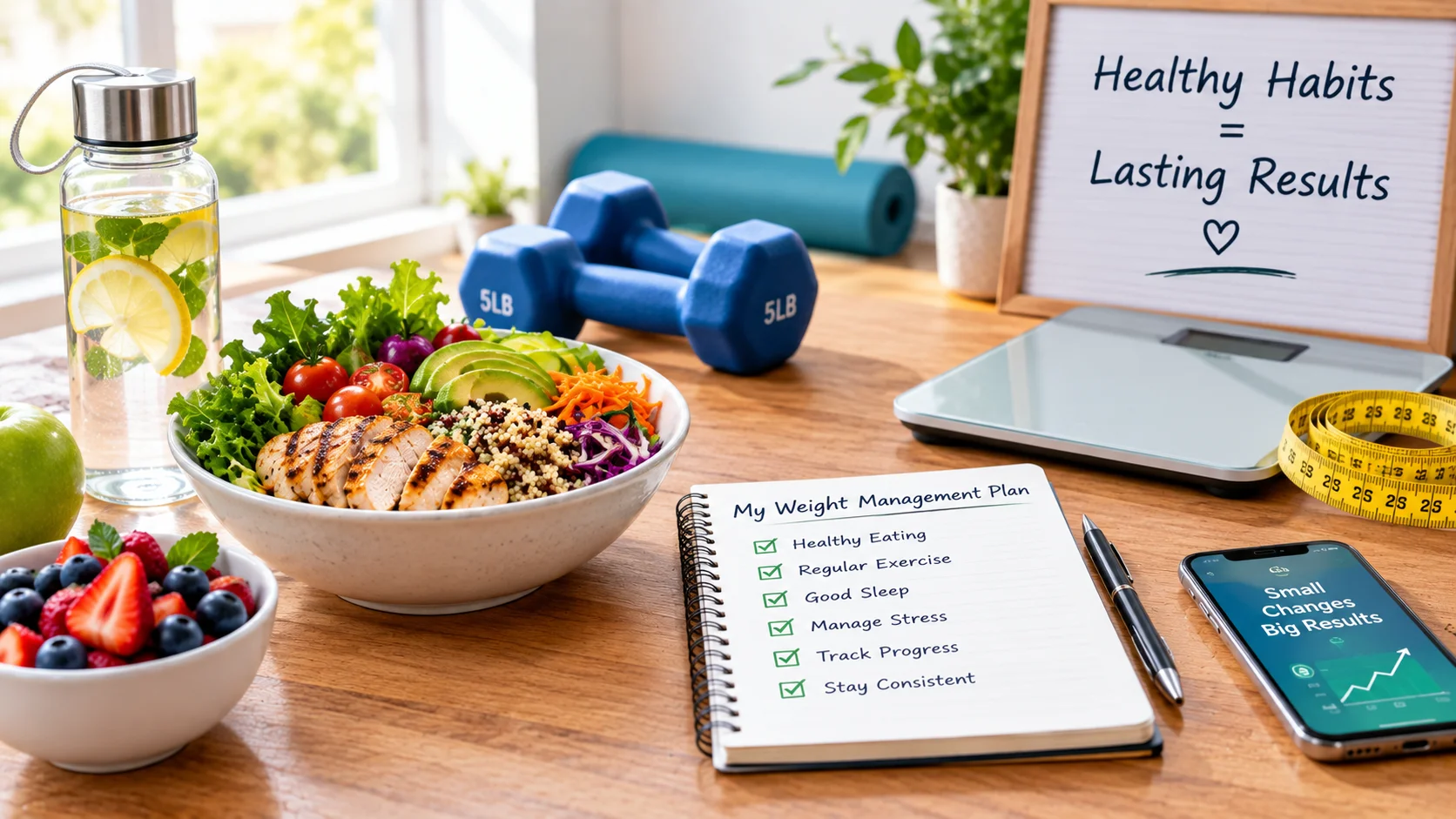
Managing your weight is about much more than watching the number on a scale. For many people in the United States, the real goal is to improve energy, mobility, fitness, eating habits, and long-term health while developing routines that can actually be maintained.
The most effective weight management strategies that actually work are usually not based on extreme diets or short-term challenges. Instead, they combine realistic nutrition changes, regular physical activity, behavior changes, progress tracking, and long-term maintenance.
Weight management also looks different for everyone. A strategy that works well for one person may not be appropriate for another because factors such as age, activity level, medications, health conditions, eating patterns, and personal goals can all affect progress.
This guide explains practical ways to manage your weight, understand common obstacles, set realistic goals, and evaluate professional weight-management options.

Knowing what to eat is only one part of successful weight management. The bigger challenge for many people is staying consistent when work becomes stressful, weekends get busy, or motivation starts to disappear.
If you are searching for how to stick to a diet, start by making your routine easier rather than depending entirely on motivation.
Motivation naturally changes. A better approach is to create simple habits that require fewer daily decisions.
For example, you might establish regular meal times, prepare several meals in advance, keep nutritious foods available, and schedule physical activity at a consistent time.
The goal is not perfection. It is creating a routine that remains manageable even on ordinary, imperfect days.
Healthy eating does not have to mean preparing a completely different meal every day.
Choose several breakfasts, lunches, dinners, and snacks that you enjoy and can prepare easily. Repeating some meals can reduce decision fatigue and make your eating pattern easier to follow.
Focus on balanced meals that include nutrient-dense foods, adequate protein, fiber-rich carbohydrates, vegetables, fruits, and healthy fats.
Social situations do not have to completely derail your progress.
Before going to a restaurant, consider what types of meals will fit your overall eating pattern. You can also look at the menu beforehand, choose portions that match your needs, and avoid arriving extremely hungry.
The same principle applies to parties and family gatherings. One meal does not determine your long-term results.
An overly restrictive plan can become difficult to maintain.
Instead of labeling every food as “good” or “bad,” consider how foods fit into your overall eating pattern. A flexible approach can make it easier to participate in birthdays, holidays, dinners, and other social occasions without feeling that you have failed.
The scale is only one measurement.
You can also monitor behaviors such as:
These behaviors are often more actionable than focusing on daily weight fluctuations.
There are many legitimate reasons to lose weight, but the most sustainable motivation usually comes from goals that matter personally to you.
Health-related goals may include improving risk factors associated with excess body weight, supporting physical function, or making everyday activities easier.
Other motivations may include:
People also search for weight loss inspiration quotes, inspirational quotes about losing weight, inspirational quotes weight loss, and losing weight inspiration quotes when they need encouragement.
Motivational quotes can provide a temporary boost, but lasting progress generally depends more on practical systems than inspiration alone.
A useful mindset is to focus on what you want to gain from healthier habits rather than only what you want to lose.
BMI is commonly used as a screening measurement based on height and weight. Because body weight is part of the BMI calculation, changes in body weight can affect your BMI.
However, BMI should not be treated as a complete measurement of health.
If you are wondering how can I get my BMI down, sustainable changes in body weight may lower BMI over time.
A practical approach includes:
You may also see searches such as how do you lower your BMI, how to get my BMI down, and how do I get my BMI down.
The basic principle is straightforward: because BMI incorporates body weight, reducing body weight generally reduces BMI for a person whose height remains unchanged.
But BMI has limitations.
It does not directly measure body-fat percentage, muscle mass, fat distribution, fitness, or overall health. A person with substantial muscle mass, for example, may have a higher BMI without having the same body-composition profile as someone with higher body fat.
For this reason, waist circumference, blood pressure, blood glucose, cholesterol levels, fitness, and other health markers may provide additional information.
Another useful measurement is percentage of weight loss or percent weight change.
For example, someone who weighs 200 pounds and loses 10 pounds has experienced a 5% reduction in body weight.
The calculation is:
Weight lost ÷ starting weight × 100 = percentage of weight loss
Looking at percentage change can provide more context than using the same number of pounds for everyone.
The key is to avoid treating one percentage as a universal target. Individual goals should take into account starting weight, health status, medications, age, lifestyle, and professional guidance when appropriate.
Large weight-loss goals can feel overwhelming when viewed as one number.
Instead of focusing only on the final target, divide the process into smaller milestones.
This makes it easier to monitor progress and identify which habits are actually working.
If you are asking how can I lose 60 pounds, how to lose 60 lbs, or how to lose 60 pounds, the first step is to stop viewing the entire goal as one short-term project.
A 60-pound goal may require substantial lifestyle changes and considerable time.
Break it into smaller milestones. Rather than constantly thinking about losing all 60 pounds, focus on the next phase of your plan.
Your strategy may include:
You may also encounter searches for how to lose 60 pounds fast. The word “fast” can encourage unrealistic expectations.
Trying to force very rapid weight loss can make it harder to maintain muscle, meet nutritional needs, exercise consistently, and sustain the plan.
A better approach is to create a strategy you can continue after reaching your initial goal.
A 70-pound goal requires an even stronger emphasis on long-term planning.
People searching how can I lose 70 pounds, how to lose 70 lbs, or how to lose 70 lbs in 3 months may be looking for a specific timeline.
However, the safest timeline depends on individual circumstances.
Instead of working backward from an aggressive deadline, create realistic milestones.
For example, your plan can include:
Searches such as how to lose 70 lbs in 6 months, how can I lose 70 pounds in 6 months, how long does it take to lose 70 lbs, and how long does it take to lose 70 pounds reflect the importance of timelines.
There is no single timeline that applies to everyone.
A qualified healthcare professional can help determine whether a particular goal and pace are appropriate for your situation.
An 80-pound weight-loss goal generally requires a long-term lifestyle strategy rather than a temporary diet.
If you are asking how can I lose 80 pounds, how do I lose 80 pounds, or how to lose 80 pounds, begin by identifying the habits that need to change.
These may include:
Long-term weight management also requires monitoring.
Someone searching how long to lose 80 lbs or how long does it take to lose 80 pounds should understand that the answer depends on starting weight, calorie intake, activity, adherence, health conditions, medications, and other factors.
The goal should be sustainable progress rather than an arbitrary deadline.
A 100-pound goal is a major long-term objective and should generally be approached in stages.
If you are searching how do I lose 100 pounds, how to lose 100 pounds, how to lose 100 lbs, how to lose 100lbs, or how to lose a hundred pounds, consider creating several smaller milestones.
A staged approach might involve:
Some people search for how to lose a 100 pounds in a year or how can I lose 100 pounds in a year.
Others search for how to lose 100 pounds in 3 months, how to lose 100 pounds in three months, or how do I lose 100 pounds in 3 months.
A three-month deadline for such a large amount of weight loss can create unrealistic expectations and potentially unsafe behavior. Rapid-loss approaches may increase the risk of inadequate nutrition, fatigue, muscle loss, and difficulty maintaining results.
The same principle applies to searches such as how to lose 100 pounds in 6 months female and how long should it take to lose 100 pounds.
Women and men can have different nutritional, hormonal, physiological, and lifestyle considerations, but there is still no universal timeline.
For a large weight-loss goal, professional guidance may be particularly useful.
Surgery is not the only approach to weight management.
Many people can work toward healthier body weight through nutrition, physical activity, behavior changes, and professional support when appropriate.

If you are searching how to lose weight without surgery, focus on building several complementary habits rather than looking for one solution.
A comprehensive approach may include:
Nutrition changes: Build meals around nutrient-dense foods and appropriate portions.
Exercise: Combine aerobic activity, resistance training, and daily movement based on your abilities.
Behavioral strategies: Identify triggers for overeating, improve meal planning, and establish routines.
Professional nutrition support: A registered dietitian or qualified healthcare professional can help personalize nutritional recommendations.
Medical weight management: Some people may benefit from structured medical care depending on their health history and individual circumstances.
Long-term maintenance: The plan should continue after initial weight loss rather than ending when a target number is reached.
This holistic approach to weight loss is generally more useful than focusing on a single “optimal weight loss” trick.
The broader objective is sustainable weight management, sometimes described online as “weightloss management.”
For people whose goals involve improving body composition, athletic performance, or physical function, “performance weight loss” may also be discussed. However, performance goals should not replace adequate nutrition or recovery.
For some people, changing diet and exercise habits independently is enough. Others may benefit from structured support, especially when they have a significant amount of weight to lose, previous attempts have not worked, or health conditions and medications make weight management more complicated.
When comparing a weight management program, look beyond marketing claims and focus on how the program actually works.
A well-structured program should begin with an assessment rather than immediately giving everyone the same diet or exercise plan.
Look for the following components.
Personalized assessment: The provider should consider your current weight, health history, eating patterns, activity level, goals, medications, and relevant health factors.
Qualified professionals: Depending on the program, this may include physicians, registered dietitians, exercise professionals, behavioral-health professionals, or other appropriately qualified practitioners.
Nutrition guidance: The program should explain how meals, portions, protein, fiber, beverages, and overall calorie intake fit into your goals.
Exercise recommendations: Physical activity should be appropriate for your current fitness level and abilities rather than assuming everyone can follow the same workout.
Progress monitoring: A structured program should have a method for reviewing progress and adjusting the plan.
Behavioral support: Sustainable weight management often involves changing routines, identifying eating triggers, improving consistency, and learning how to handle setbacks.
Follow-up care: Ask what happens after the initial consultation or first few weeks. Long-term maintenance should be part of the conversation.
Transparent pricing: You should understand what the program includes, what costs extra, and whether follow-up appointments or additional services have separate fees.
Clear expectations: Be cautious of programs promising dramatic results without explaining the process, limitations, risks, or individual differences.
A credible program should help you understand not only how to lose weight, but also how to maintain your progress.
A weight loss program can range from a self-directed lifestyle plan to a structured service involving healthcare professionals.
Neither approach is automatically appropriate for everyone.
| Factor | DIY Weight Management | Professional Program |
| Personalization | Usually self-directed | Can be individually tailored |
| Accountability | Depends on the individual | May include regular follow-ups |
| Cost | Often lower | May involve consultation or program fees |
| Convenience | Highly flexible | Depends on provider schedule |
| Monitoring | Self-monitoring | May include professional review |
| Professional support | Limited | May include qualified specialists |
| Maintenance | Self-managed | May include ongoing support |
People researching professional weight management, personalized weight management, weight management services, or a weight loss clinic should compare what each provider actually offers.
A clinic may provide nutrition counseling, medical evaluation, exercise recommendations, behavioral support, or other services. The exact approach varies considerably between providers.
Some programs also use the term medical weight management. This generally refers to weight management that incorporates healthcare assessment and, when clinically appropriate, medical treatment options.
The important question is not simply whether a program is called “medical” or “professional.” Ask what assessment, monitoring, treatment, and follow-up are actually included.
Before paying for a program, ask:
These questions can help separate a structured service from a program that mainly sells a quick promise.
The weight-loss market includes many treatments and products that promise to accelerate results.
Some may focus on appetite, body appearance, wellness, or temporary changes in measurements rather than long-term weight management.
Before paying for a treatment, understand what it is designed to do, what evidence supports it, what risks may exist, and whether the claimed benefit is actually related to long-term weight loss.
Searches for iv drip for weight loss have become common as consumers look for treatments marketed around hydration, vitamins, metabolism, or wellness.
However, an IV infusion should not automatically be interpreted as a proven weight-loss strategy.
Consumers should ask:
A service can provide hydration or another intended medical purpose without being an effective standalone solution for long-term weight management.
Marketing language should therefore be evaluated separately from evidence.
Ear seeds weight loss is another search topic associated with alternative approaches to weight management.
Ear seeds are typically associated with auricular practices in which small seeds or similar materials are placed on points of the ear.
People may use them as a complementary wellness practice, but consumers should distinguish between an approach that may help someone feel supported in changing habits and a treatment proven to produce substantial, sustained weight loss.
If a provider claims that ear seeds alone will cause significant weight loss, ask what clinical evidence supports that specific claim.
A more realistic approach is to consider any complementary practice separately from the core behaviors that influence long-term weight management.
Searches for cupping therapy for weight loss reflect interest in another alternative treatment.
Cupping involves creating suction on the skin using cups. Depending on the technique, temporary skin discoloration can occur.
Claims about weight loss should be evaluated carefully.
A temporary change in swelling, fluid distribution, or appearance is not necessarily the same thing as losing body fat.
Anyone considering cupping should also understand potential risks and make sure the practitioner follows appropriate hygiene and safety practices.
Most importantly, consumers should not substitute a complementary treatment for evidence-based nutrition, physical activity, or appropriate medical care.
Another area of interest is non-invasive body contouring.
Consumers may encounter products marketed as 9-in-1 ultrasonic 40k cavitation slimming beauty machine or similar equipment.
The important distinction is between body contouring and actual long-term weight management.
Body-contouring services or devices may be marketed for changing the appearance or circumference of specific body areas. That does not necessarily mean they produce the same outcome as reducing overall body weight or improving long-term metabolic health.
Before purchasing a device or treatment, ask:
Consumers should be particularly cautious when product descriptions use words such as “slimming,” “fat burning,” or “weight loss” without clearly explaining what outcome has actually been demonstrated.
Weight loss does not always occur in a perfectly predictable pattern.
Someone can follow a plan consistently and still experience weeks where the scale changes very little.
That does not necessarily mean the strategy has completely failed.
If you are searching why cant i kose weight, several factors may be worth reviewing.
Portion sizes, cooking oils, sauces, snacks, drinks, and restaurant meals can contribute more calories than expected.
This does not mean you need to obsessively track every calorie. It simply means that periodically reviewing portions and food choices can identify patterns you may have overlooked.
A portion can gradually become larger without you noticing.
For example, adding a little more cereal at breakfast, larger snacks during the afternoon, or an extra serving at dinner can change total energy intake over time.
People sometimes become less active without realizing it.
If someone starts exercising but spends much more of the rest of the day sitting, their overall activity may not increase as much as expected.
Daily movement matters.
Walking, household activity, standing, taking stairs, and other routine movements can contribute to overall energy expenditure.
Scale weight can change because of fluid fluctuations.
Salt intake, carbohydrate intake, hormonal changes, exercise, stress, and other factors can temporarily influence body weight.
For that reason, a single weigh-in does not necessarily tell you whether your long-term strategy is working.
A person may eat well during the week but regularly consume much more on weekends.
Instead of labeling this as a failure, look for patterns.
Ask:
Identifying the pattern creates an opportunity to change it.
Sleep can influence appetite, energy, exercise behavior, and food choices.
Improving sleep may therefore support a broader weight-management strategy even though sleep itself is not a substitute for nutrition and activity changes.
Stress can affect eating behavior, sleep, motivation, and daily activity.
If stress is consistently interfering with your plan, addressing the underlying routine may be more useful than simply trying to increase dietary restriction.
Some medications and health conditions can influence body weight or make weight management more challenging.
If you are experiencing unexpected weight changes or persistent difficulty despite consistent lifestyle changes, discussing the situation with a healthcare professional may be appropriate.
Searches such as eating more and losing weight can be confusing because weight management is influenced by total energy intake, expenditure, body composition, food choices, activity, and individual physiology.
Someone may lose weight after increasing food intake if their previous intake was highly restrictive and the change also alters activity, adherence, food composition, or other behaviors.
The phrase itself does not mean that eating more will universally cause weight loss.
The broader lesson is to avoid reducing weight management to a single food rule.
People often ask, is it easier to gain weight or lose weight?
There is no universal answer because individual physiology, environment, eating patterns, activity, medications, sleep, stress, and health conditions can all affect weight change.
For some people, maintaining a lower body weight can require ongoing lifestyle changes rather than a temporary diet.
That is why maintenance should be considered from the beginning.
The question do you lose weight when you get older does not have one universal answer.
Weight can change with age because of differences in muscle mass, activity, appetite, health conditions, medications, and lifestyle.
Unintentional weight loss later in life can sometimes be a sign that deserves medical evaluation, particularly when it is persistent or accompanied by other symptoms.
Professional guidance may be appropriate if you experience:
A healthcare professional can help determine whether additional evaluation is appropriate and whether a structured treatment plan makes sense.
For people considering a weight loss consultation, the appointment can also be an opportunity to discuss realistic goals, current habits, medical history, medications, and available options.
Search behavior often reveals how strongly people want fast results.
Queries such as how to starve yourself, fastest way to lose 20 pounds for a woman, lose 20 pounds in 2 weeks, how to lose 25 pounds in a month, and how to lose 7 pounds a week reflect an understandable desire for rapid progress.
But extreme restriction is not a sustainable weight-management strategy.
Severely restricting food can create several problems.
Very restrictive diets can make it difficult to obtain enough protein, vitamins, minerals, fiber, and other essential nutrients.
Rapid weight loss can involve loss of lean tissue, particularly when nutrition and resistance training are inadequate.
Preserving muscle is important for strength, mobility, and physical function.
Severe restriction can make everyday activities and exercise more difficult.
That can create a cycle where reduced energy leads to less movement, which can make the overall plan harder to maintain.
The more extreme the diet, the harder it may be to continue.
A plan that works for five days but becomes impossible afterward is usually less useful than a moderate strategy that can be maintained for months.
Extreme dieting and rapid weight loss can carry health risks, particularly when undertaken without appropriate medical supervision.
Even if an aggressive approach produces short-term weight loss, returning to previous eating patterns can lead to regain.
The same principle applies to searches about losing 100 pounds in a few months. A large weight-loss goal should generally be approached as a long-term process rather than a race against the calendar.
Instead of asking, “How quickly can I lose this weight?” a more useful question is:
“What strategy can I realistically maintain after I reach my goal?”
That question shifts the focus from short-term scale changes to sustainable weight management.

A sustainable strategy should connect nutrition, activity, behavior, monitoring, and maintenance.
Rather than looking for one perfect diet or treatment, consider how different parts of your lifestyle work together.
A useful framework includes:
Nutrition: Choose an eating pattern that provides adequate nutrients while supporting your individual goals.
Activity: Combine daily movement with structured exercise appropriate for your fitness level.
Behavior: Identify routines, triggers, and environments that influence your food choices.
Monitoring: Use several measurements instead of relying exclusively on the scale.
Adjustment: Expect that your plan may need to change as your weight, fitness, schedule, and circumstances change.
Maintenance: Continue the habits that helped you make progress rather than treating weight loss as a temporary project.
For many people, this approach is more realistic than constantly searching for the newest diet, supplement, treatment, or rapid-loss technique.
The most useful weight-management plan is one that fits your actual life and can evolve as your needs change.
The best weight management strategies that actually work are usually built around realistic habits rather than short-term restrictions.
A sustainable plan should give you a clear starting point, manageable actions, ways to measure progress, and a strategy for handling setbacks.
The following seven-step framework can help organize the process.
Start by deciding what you actually want to accomplish.
Your goal might involve:
A scale goal can be useful, but it should not be the only measure of success.
Consider your time horizon as well. A sustainable plan generally needs enough time for new habits to become routine.
Instead of setting a goal around the fastest possible result, ask whether the target fits your current lifestyle, responsibilities, health needs, and ability to maintain the required behaviors.
For larger weight-loss goals, divide the final target into smaller milestones.
This can make a long process feel more manageable and allows you to evaluate what is working along the way.
Before changing everything at once, understand where you are starting.
Consider:
BMI can provide a useful screening measurement, but it should not be interpreted as a complete assessment of health.
For some people, waist circumference and other health markers may provide additional context.
Your starting point also includes your lifestyle.
For example, someone who currently gets very little physical activity may benefit from gradually increasing daily movement before attempting an intensive exercise routine.
Likewise, someone who frequently skips meals and becomes extremely hungry later may need a more consistent meal structure.
The goal is to build from your current reality rather than following a generic plan designed for someone else.
Weight management is influenced by energy intake and energy expenditure, but calorie management does not have to mean extreme restriction.
A moderate approach may be easier to maintain than a very aggressive deficit.
Focus on food quality and overall eating patterns as well as calories.
Build meals around foods such as:
Protein can help support muscle maintenance and may contribute to fullness.
Fiber-rich foods can also support fullness and digestive health.
Portion awareness is useful, especially with foods that are highly calorie-dense.
You do not necessarily need to eliminate favorite foods. Instead, consider how portions and frequency fit into your overall eating pattern.
A sustainable nutrition strategy should provide enough nutrients while supporting your individual goal.
Exercise is an important part of a comprehensive weight-management strategy, but it does not need to begin with an extreme workout schedule.
Start with activities that you can perform consistently.
Examples include:
Walking: One of the simplest ways to increase daily movement. You can begin with manageable sessions and gradually increase duration or frequency.
Cardio: Activities such as cycling, swimming, jogging, dancing, or other aerobic exercise can improve cardiovascular fitness.
Resistance training: Strength training can help maintain and build muscle while improving strength and physical function.
Daily movement: Household activities, walking during breaks, taking stairs, and reducing prolonged sitting can all contribute to overall activity.
The ideal combination depends on your current fitness level, preferences, schedule, and health status.
If you have a medical condition, significant physical limitations, or have been inactive for a long period, consider discussing an appropriate exercise plan with a qualified professional.
Tracking can help you understand whether your strategy is producing the changes you want.
However, tracking does not have to mean weighing yourself multiple times a day or recording every detail of your life.
Consider monitoring several indicators.
Daily weight can fluctuate because of hydration, food intake, sodium, hormonal changes, and other factors.
Looking at trends over time can provide more useful information than reacting to individual measurements.
Changes in waist circumference may provide additional information about changes in body size.
Measure consistently under similar conditions rather than comparing measurements taken randomly.
Progress may also appear as:
These changes can be meaningful even when the scale is moving slowly.
A short-term food journal can help identify patterns.
You may discover that most additional calories come from beverages, restaurant meals, evening snacks, or weekend eating.
The purpose is to understand your habits, not to create anxiety around food.
Track behaviors that you can control.
For example:
These measurements can help you focus on the process rather than becoming overly dependent on the scale.
Weight-loss plateaus are common.
When progress slows, the first response should not necessarily be to drastically cut food intake.
Instead, review the plan.
Ask yourself:
You may discover that the original plan is still working but that progress is temporarily hidden by normal fluctuations.
If the plateau persists, consider making small, sustainable adjustments.
You might increase daily walking, review portion sizes, improve meal planning, or modify your exercise routine.
If you are consistently following your plan and still experiencing significant difficulty, professional support may be appropriate.
Weight loss is only one part of successful weight management.
The next challenge is maintaining the progress.
Avoid thinking of your diet as something that ends immediately after reaching your goal.
Instead, gradually establish routines that you can continue long term.
Maintenance may involve:
You do not need to follow your weight-loss routine perfectly forever.
The objective is to develop a lifestyle that supports your health without requiring constant extreme effort.
There is no single amount that is realistic for every person.
The answer depends on starting body weight, calorie intake, physical activity, health conditions, medications, adherence, and other individual factors.
People searching for normal weight loss per month kg should avoid treating one number as a universal target.
A sustainable rate is generally more useful than trying to achieve the maximum possible monthly loss.
Rapid weight loss may be appropriate in some medically supervised circumstances, but it should not be pursued independently through extreme restriction.
If you are asking how much weight can you realistically lose in a month, consider your starting point and discuss an appropriate goal with a healthcare professional when necessary.
The answer varies significantly between individuals.
If you search how much weight can you lose in 12 weeks or how much weight can I lose in 12 weeks, remember that a 12-week period is long enough to establish meaningful habits but not necessarily long enough to safely achieve a very large weight-loss goal.
Rather than setting an aggressive deadline, focus on consistent nutrition, activity, sleep, and behavior changes.
Your progress can then be evaluated over time.
The question is losing 30 pounds in 3 months healthy cannot be answered appropriately without knowing the person’s starting weight, health status, nutritional needs, medications, and circumstances.
For some individuals, rapid weight loss may occur under medical supervision. For others, attempting to lose 30 pounds in three months could encourage excessive restriction or other unhealthy behaviors.
The important issue is not simply whether the number is technically possible.
Consider whether the strategy provides adequate nutrition, protects physical function, is medically appropriate, and can be maintained.
If you are considering a large weight-loss goal within a short timeframe, professional guidance can help establish a safer and more individualized plan.
People often search is losing 20 pounds in 4 months healthy or how can I lose 20 pounds in 4 months.
Whether that goal is appropriate depends on the individual.
Four months provides substantially more time to establish sustainable habits than an extremely short deadline.
Instead of trying to force a specific weekly result, consider creating a moderate calorie strategy, increasing activity, maintaining adequate nutrition, and monitoring your progress.
If the goal requires extreme restriction to achieve, the target or timeline may need to be reconsidered.
The answer to how much weight would I lose if I stopped drinking depends on how much alcohol you currently consume, what replaces those calories, and how your eating and activity habits change.
Alcohol can contribute calories without providing the same level of fullness as many nutrient-dense foods.
Some people may therefore reduce their overall calorie intake after reducing or eliminating alcohol.
However, there is no guaranteed amount of weight loss.
If alcohol has been a regular part of your diet, reducing it may also change social habits, sleep, appetite, and food choices.
If you drink heavily or regularly, stopping suddenly can sometimes cause withdrawal symptoms that require medical attention. People with concerns about alcohol dependence should seek appropriate healthcare guidance rather than attempting abrupt withdrawal without support.
Yes, can being sick make you lose weight is a reasonable question because illness can affect appetite, digestion, hydration, and energy expenditure.
Temporary weight loss during an illness may partly reflect reduced food intake or changes in fluid balance rather than meaningful loss of body fat.
Unexpected or persistent weight loss should not automatically be considered a positive outcome.
If you lose weight without trying, especially if the change continues after recovery or occurs alongside other symptoms, speak with a healthcare professional.
Do you lose weight when you get older is another question without a universal answer.
Body weight can change with age because of differences in:
Some adults gain weight over time, while others lose weight.
Unintentional weight loss should receive particular attention if it is significant, persistent, or accompanied by symptoms such as weakness, appetite changes, digestive problems, or other health concerns.
How long does losing weight take depends on the starting point and the strategy being used.
Factors include:
Small goals may take weeks or months, while larger goals can require substantially more time.
The most useful timeline is usually one that allows you to make progress while maintaining adequate nutrition, physical activity, and quality of life.
A very fast result is not automatically a better result.