Physical Address
304 North Cardinal St.
Dorchester Center, MA 02124
Physical Address
304 North Cardinal St.
Dorchester Center, MA 02124

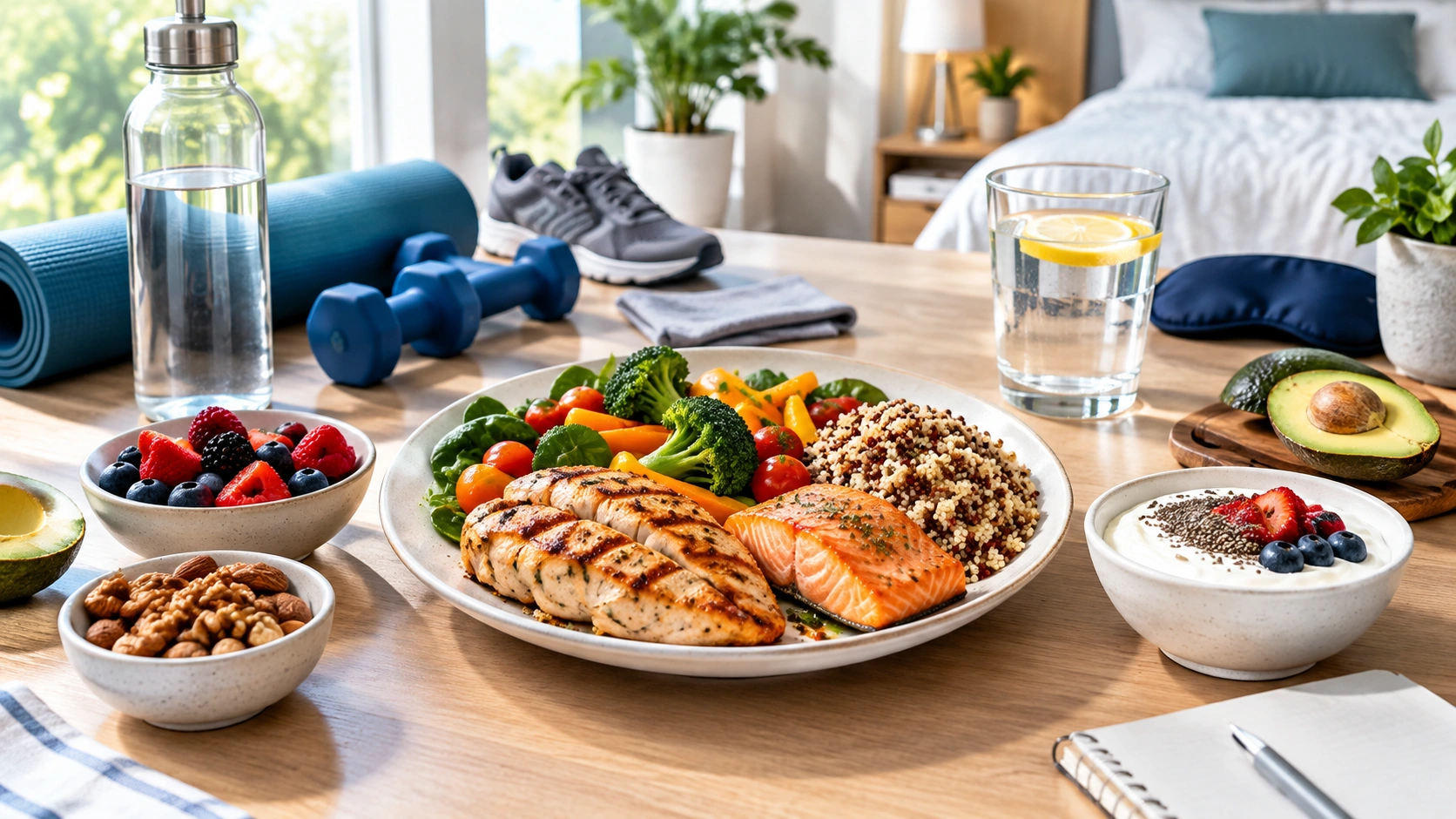
Healthy living in 2026 is less about following the newest diet trend and more about building habits that can realistically fit into everyday life. For people in the United States, that may mean preparing meals at home more often, choosing better options when eating out, staying physically active, getting enough sleep, managing stress, and using health-related products or services carefully.
A healthy lifestyle does not require perfection. It is a combination of regular choices that support nutrition, movement, recovery, and overall wellbeing.
Current U.S. health guidance emphasizes nutrient-dense foods such as vegetables, fruits, protein foods, whole grains, healthy fats, and dairy or suitable alternatives while encouraging people to limit excessive added sugars, sodium, and highly processed foods.
This guide explains the practical side of nutrition and healthy eating in 2026, including how to build balanced meals, create healthy habits, plan your lifestyle, shop smarter, and evaluate health-related products.
Healthy eating is not simply eating fewer calories or eliminating carbohydrates. It means building an overall eating pattern that provides the nutrients your body needs while still allowing flexibility.
A balanced meal can include:
Protein can come from eggs, poultry, seafood, lean meats, beans, lentils, soy, nuts, seeds, and other foods. Vegetables and fruits provide vitamins, minerals, fiber, and other beneficial compounds.
Fiber is particularly important because it supports digestive health and can help with fullness. Good sources include fruits, vegetables, whole grains, legumes, nuts, and seeds.
Healthy eating also includes hydration. Water is usually a practical primary beverage, while individual hydration needs can vary based on activity, climate, health status, and other factors.
Food is important, but nutrition is only one part of health.
A healthy lifestyle also includes:
The CDC describes healthy weight and overall health as involving healthy eating, physical activity, sleep, and stress reduction rather than relying on food alone.
This matters because two people can eat similar foods but have very different lifestyles. Someone who eats nutritious meals but rarely moves, sleeps poorly, and experiences constant stress may need to look beyond their diet.
Healthy eating should not automatically mean strict dieting.
A restrictive approach may remove entire food groups without a clear nutritional reason. While some people need specific dietary restrictions for medical or personal reasons, unnecessary elimination can make eating more difficult and reduce variety.
A sustainable approach focuses on:
Instead of asking, “What foods can I never eat again?” a more useful question is, “How can I make most of my everyday choices more nutritious?”
That shift can make healthy eating easier to maintain.
You do not need to change your entire life at once.
Start with practical habits such as:
These habits may look simple, but simplicity is often what makes a routine sustainable.
Healthy habits work better when they become predictable.
For example, meal planning can reduce last-minute food decisions. A regular sleep schedule can make it easier to get adequate rest. Scheduled exercise can prevent physical activity from becoming something you only do when you have free time.
Consistency does not mean every day has to look identical. It means your overall pattern supports your goals.
A healthy routine can be organized around the major parts of your day.
Morning: Hydrate, eat a balanced breakfast if it fits your routine, and get some movement.
Workday: Plan meals and snacks, take movement breaks, and avoid spending the entire day sitting.
Evening: Eat a balanced dinner, reduce unnecessary screen time, prepare for the next day, and create a relaxing bedtime routine.
Night: Keep your sleep schedule as consistent as practical.
For U.S. adults, the CDC recommends at least seven hours of sleep for most adults, although sleep needs vary by age.
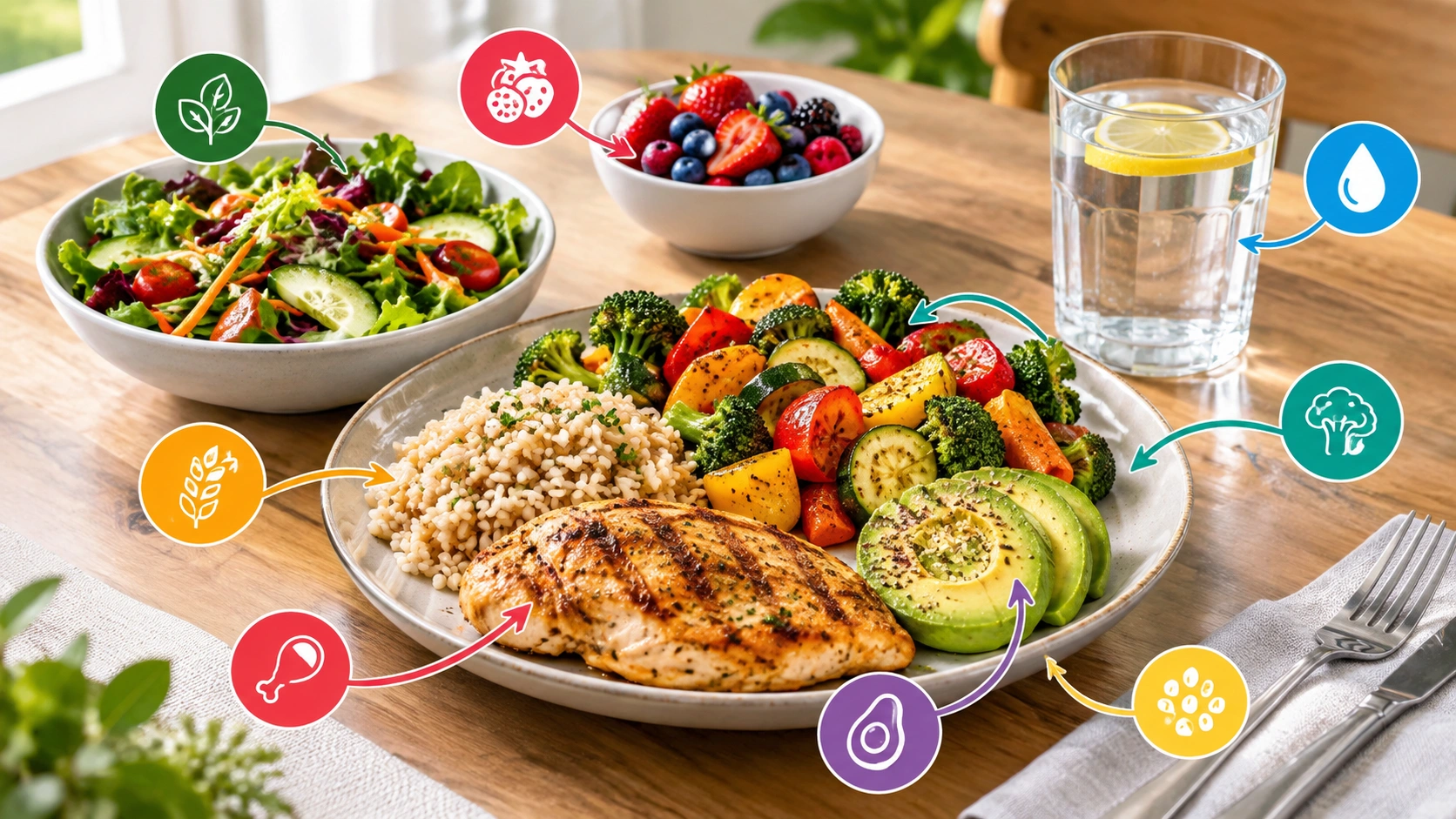
A simple way to build meals is to combine several food groups instead of focusing on a single nutrient.
For example, a balanced dinner could include grilled chicken, roasted vegetables, brown rice, and a small amount of olive oil or avocado.
Another option could be salmon with potatoes, a large salad, and fruit.
For a vegetarian meal, beans or lentils can provide protein alongside vegetables and whole grains.
The exact proportions do not have to be identical at every meal. Your overall eating pattern matters more than one individual plate.
Nutrient-dense foods provide important nutrients without relying primarily on added sugars or highly refined ingredients.
Examples include:
Frozen and canned options can also be practical. For example, frozen vegetables may be useful for busy households, while canned beans can make meal preparation faster.
Healthy eating does not have to mean buying expensive specialty foods.
Nutrition habits can be improved without obsessively tracking everything.
Try:
Reading labels can be particularly useful when comparing packaged foods. Look beyond front-of-package marketing and check serving size, protein, fiber, added sugars, sodium, and the ingredient list.
A healthy lifestyle includes movement and recovery as well as nutrition.
Physical activity can support cardiovascular health, muscle and bone health, sleep, mood, and healthy weight management.
Movement does not have to mean spending an hour in a gym.
It could include:
The best activity is often one you can perform consistently.
A practical healthy lifestyle combines:
Nutrition: Eat a varied diet with nutrient-dense foods.
Physical activity: Move regularly and include structured exercise when possible.
Sleep: Give your body adequate time to recover.
Hydration: Drink fluids regularly.
Stress management: Build healthy ways to handle everyday pressure.
Avoiding tobacco: Avoid smoking and other tobacco products.
Alcohol: If you drink, understand that less alcohol generally means lower health risk; people who do not drink do not need to start.
Preventive healthcare: Keep appropriate appointments, screenings, and vaccinations.
Nutrition supplies energy and nutrients needed for daily activities and recovery. Physical activity increases the body’s demand for energy and nutrients. Sleep influences recovery and daily functioning, while stress can affect appetite and food choices.
That is why a complete health strategy should not treat diet as an isolated activity.
When people decide to improve their health, they often try to change everything simultaneously.
That can create unnecessary pressure.
A better starting point is to evaluate your current routine.
Ask yourself:
You do not need a perfect answer. The purpose is to identify the biggest opportunities for improvement.
Small changes can be easier to maintain.
Instead of immediately creating a complicated meal plan, you could prepare two or three meals in advance.
Instead of committing to an unrealistic exercise schedule, start with regular walking and gradually add strength training.
Instead of trying to completely change your diet overnight, replace some less nutritious choices with better alternatives.
Fad diets often promise fast results, but sustainable health requires a broader approach. CDC guidance specifically notes that fad diets can restrict nutritional intake and tend to fail over the long term.
A sustainable lifestyle allows flexibility.
You can enjoy a restaurant meal without deciding that your entire routine has failed. You can miss a workout and return to your schedule the next day.
The goal is not perfection. The goal is creating a pattern you can repeat.
Beginners can simplify the process by choosing one priority at a time.
For example:
Week 1: Drink more water.
Week 2: Add vegetables to lunch and dinner.
Week 3: Begin regular walking.
Week 4: Create a consistent bedtime.
This approach gives you time to learn what works.
One of the most practical strategies is to replace rather than completely restrict.
Try:
You do not have to eliminate every less nutritious food.
Tracking can help you understand patterns.
You could record:
The purpose is not to judge yourself. It is to identify what makes your routine easier or harder.
If you experience a setback, return to your normal routine instead of waiting for a new week or month.
A practical routine can include:
Healthy eating guidance for U.S. adults emphasizes a variety of nutrient-dense foods while limiting excess sodium, added sugars, and highly processed choices.
Busy schedules are one of the biggest barriers to healthy eating.
Meal preparation can help.
You could prepare:
Then combine these ingredients into quick meals throughout the week.
Healthy convenience foods can also fit into a balanced routine. Frozen vegetables, canned beans, prewashed greens, plain yogurt, canned fish, and other practical foods can reduce preparation time.
Technology can support healthy habits when used appropriately.
Useful categories include:
However, an app should make your life easier rather than create unnecessary stress.
Breakfast does not need to be complicated.
Options include:
Eggs + whole-grain toast + fruit
Oatmeal + berries + nuts
Greek yogurt + fruit + seeds
Whole-grain breakfast wrap + eggs + vegetables
If you prefer not to eat breakfast, your overall nutritional intake across the day still matters.
Batch cooking can save time.
Prepare one or two protein sources, vegetables, and carbohydrate options at the beginning of the week. You can then create different combinations.
For example:
This approach provides variety without requiring completely different cooking every day.
Keep simple foods available.
Good options can include:
The goal is to make nutritious choices convenient.
Eating restaurant or takeaway food can still fit into a healthy lifestyle.
When ordering, consider:
You can also save part of a large restaurant portion for another meal.
A complete routine can combine:
The CDC notes that regular physical activity can improve sleep quality and reduce risks associated with several chronic conditions.
A realistic routine could look like this:
Morning: Wake at a consistent time, drink water, eat breakfast if desired, and get some movement.
Midday: Eat a balanced lunch and take walking or movement breaks.
Afternoon: Have a planned snack if needed and continue drinking fluids.
Evening: Eat a balanced dinner, reduce unnecessary screen time, and prepare for tomorrow.
Night: Follow a consistent bedtime routine.
The objective is not to create a rigid schedule. It is to create predictable behaviors that support your health.
Recovery is part of a healthy lifestyle.
Rest includes:
Sleep is especially important. The CDC recommends at least seven hours for most adults and notes that consistent sleep habits can support health and wellbeing.

Start by making nutrient-dense foods more available.
Your grocery cart can include:
The objective is not to remove every processed food. It is to make nutritious foods the foundation of your normal diet.
Plan meals around your actual schedule.
For example:
Breakfast: Eggs and whole-grain toast
Lunch: Chicken, rice, and vegetables
Snack: Yogurt and fruit
Dinner: Fish, potatoes, and salad
The specific foods can change according to your budget, culture, preferences, allergies, and nutritional requirements.
For general health, U.S. guidance recommends adults get at least 150 minutes of moderate-intensity aerobic activity each week or an equivalent amount of vigorous activity, along with muscle-strengthening activity on at least two days per week.
That could include brisk walking, cycling, swimming, running, or other activities.
Create a consistent bedtime and wake time.
A supportive sleep environment should be:
Reducing electronic-device use before bed may also help support better sleep habits.
Stress management does not have to involve complicated techniques.
Options include:
Your lifestyle should evolve.
If meal preparation takes too long, simplify it.
If your workout schedule is unrealistic, reduce the frequency and build gradually.
If you constantly skip breakfast but feel fine without it, your routine may not need to force breakfast.
Personalization is one of the most important parts of sustainable healthy living.
A working adult might prepare meals on Sunday, keep nutritious snacks at work, take short walking breaks, and maintain a consistent bedtime.
Even small movement breaks can help reduce the amount of time spent sitting.
Families can focus on shared meals, grocery planning, outdoor activities, and keeping nutritious snacks available.
Children and adults do not need identical portions or nutritional requirements, but family routines can make healthy behaviors easier to practice.
People who exercise regularly may need to pay particular attention to:
More exercise does not automatically mean every person needs supplements. Food quality and adequate overall nutrition remain important foundations.
The major nutritional categories include:
Macronutrients: Protein, carbohydrates, and fats provide energy and support different body functions.
Micronutrients: Vitamins and minerals are needed in smaller amounts but remain essential.
Fiber: Found in foods such as vegetables, fruits, whole grains, beans, nuts, and seeds.
Hydration: Fluids support normal body functions and help replace water lost throughout the day.
A complete exercise routine can combine:
You do not have to become an athlete to benefit from physical activity.
Exercise creates a need for recovery. Sleep provides an important opportunity for the body and brain to recover.
A sustainable routine therefore includes both activity and rest.
For beginners, these habits provide a practical starting framework:
These habits can be adjusted according to individual needs.
Habit stacking can make new behaviors easier.
For example:
Your environment also matters. If fruit is visible and convenient while highly processed snacks are harder to access, your default choices may change.
When shopping, check:
Do not judge a food solely by one number.
For example, a food containing more fat is not automatically unhealthy. The type of fat, overall ingredients, portion, and place within your diet all matter.
Whole or minimally processed foods include foods such as vegetables, fruits, eggs, fish, beans, and whole grains.
Highly processed foods can include products formulated with multiple ingredients and may be high in added sugars, sodium, refined carbohydrates, or saturated fat.
However, convenience foods can still have a place in a balanced diet.
The goal is not perfection. It is an overall pattern that provides adequate nutrition.
A practical grocery list can include:
Protein: Eggs, chicken, fish, beans, lentils, yogurt
Vegetables: Leafy greens, broccoli, carrots, peppers, frozen vegetables
Fruit: Apples, berries, oranges, bananas
Whole grains: Oats, brown rice, whole-grain bread
Healthy fats: Nuts, seeds, avocado, olive oil
Snacks: Yogurt, fruit, nuts, hummus, vegetables
Food provides a combination of nutrients and other beneficial components.
A varied diet can provide:
Supplements can be useful in certain circumstances, but they should not automatically replace a balanced diet.
A supplement may be appropriate when someone has a documented nutrient deficiency, follows a restrictive dietary pattern, has increased nutritional needs, or has a health circumstance where supplementation is recommended.
The right choice depends on the individual.
Before purchasing, look at:
Be cautious of products promising dramatic results, “detoxification,” effortless weight loss, or guaranteed health outcomes.
For specific supplementation questions, especially if you take medications or have a medical condition, discuss the product with a qualified healthcare professional.
This is where healthy living becomes a commercial investigation topic.
Not every product or service is necessary. The question is whether it genuinely solves a problem in your routine.
A meal-planning app may be useful if you struggle with:
Compare personalization, ease of use, subscription cost, and whether the app actually saves time.
Meal-delivery services can be convenient for busy Americans.
Compare:
Convenience is valuable only if the service fits your budget and eating preferences.
Fitness trackers can monitor things such as activity, workouts, heart rate, sleep, and habits.
They can provide useful feedback, but they should not turn every health decision into a number.
Common options include:
Consider available space, budget, noise, storage, maintenance, and how frequently you are likely to use the equipment.
Useful products may include:
The best product is often the one that removes friction from a habit you already want to maintain.
For food and supplements, examine ingredients and nutrition information.
For equipment and physical products, examine materials, construction, safety information, and product transparency.
More features do not automatically mean better value.
Ask:
Consider both upfront and recurring costs.
A cheaper product may be poor value if it breaks quickly. A more expensive product may be worthwhile if it solves a real problem and lasts longer.
Look for detailed reviews rather than relying only on star ratings.
Pay attention to repeated comments about:
Check warranty terms, return policies, customer support, and the amount of product information provided.
Sustainable nutrition focuses on variety, balance, flexibility, and long-term adherence.
Extreme diets often depend on rigid rules.
If an approach cannot realistically fit your work, family, budget, culture, and social life, maintaining it may become difficult.
Your body already has organs and systems responsible for processing and eliminating waste.
Be skeptical of products promising to “flush toxins” or dramatically transform health in a few days.
A healthier long-term approach is to focus on adequate nutrition, physical activity, sleep, hydration, and appropriate medical care.
Health marketing can make products sound more powerful than the available evidence supports.
Before buying, ask:
This approach can help you separate practical health products from unnecessary purchases.
Start with five categories:
Food: What do you normally eat?
Exercise: How often do you move?
Sleep: Are your sleep patterns consistent?
Hydration: Do you drink fluids regularly?
Stress: What situations make healthy choices harder?
Choose measurable but practical goals.
For example:
Your plan can include:
Breakfast: 2–3 rotating options
Lunch: 2–3 easy meals
Dinner: 3–4 combinations
Snacks: Fruit, yogurt, nuts, vegetables, or other suitable choices
You do not need seven completely different breakfasts, lunches, and dinners.
Organize your list by category:
This can reduce impulse purchases and make weekly meal planning easier.
Choose activities you enjoy.
A beginner might start with walking and gradually introduce strength training. Someone who already exercises might combine aerobic activity with resistance training and recovery days.
Every few weeks, ask:
Your healthy lifestyle plan should be flexible enough to change as your life changes.
Start with simple habits such as eating more nutrient-dense foods, drinking water, moving regularly, sleeping consistently, managing stress, and planning meals.
There is no single habit that determines overall health. Nutrition, physical activity, sleep, stress management, hydration, preventive healthcare, and avoiding tobacco all contribute to a healthier lifestyle.
Important factors include healthy eating, regular physical activity, sufficient sleep, stress management, social connection, avoiding tobacco, responsible alcohol choices, and preventive healthcare.
Start gradually. Choose one or two changes, make them practical, track your consistency, and add new habits once your routine becomes manageable.
Focus on variety, vegetables, fruits, protein foods, whole grains, healthy fats, fiber, hydration, and reasonable portions while limiting excessive added sugar, sodium, and highly processed foods.
Yes. Healthy eating and regular physical activity can support physical health, while adequate sleep, stress management, and social connection contribute to broader wellbeing. Regular physical activity is also associated with benefits for sleep, mood, and chronic disease risk.
No. Nutrition is a major part of health, but a complete lifestyle also includes movement, sleep, stress management, preventive care, and other daily behaviors.
Not necessarily. Many people can meet nutritional needs through a varied diet. Supplements may be appropriate in specific circumstances, but they should be selected based on individual needs rather than marketing claims.
Look at quality, ingredients or materials, useful features, price, long-term value, reviews, warranty, return policies, and customer support.
Keep the habits simple, make them convenient, track progress without becoming obsessive, prepare for difficult days, and return to your routine after setbacks.