Physical Address
304 North Cardinal St.
Dorchester Center, MA 02124
Physical Address
304 North Cardinal St.
Dorchester Center, MA 02124

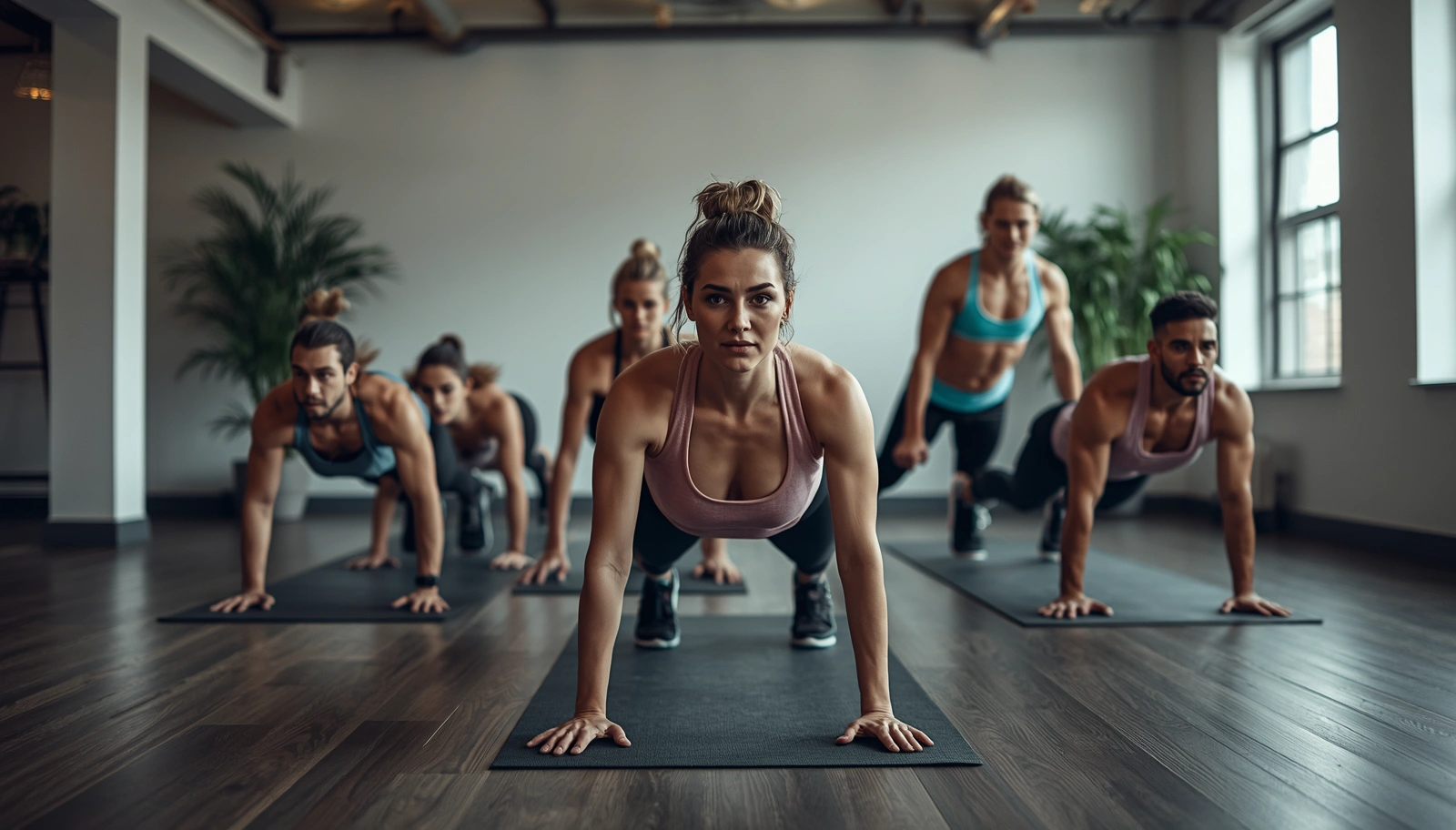
Bodyweight training is one of the simplest ways to build strength, improve endurance, support healthy weight management, and stay active without joining a gym. Whether you are a beginner starting your fitness journey or someone who already exercises regularly, bodyweight exercises can be adapted to almost any fitness level.
Exercises such as push-ups, squats, lunges, planks, mountain climbers, and burpees use your body as resistance. This makes them practical for home training, small spaces, and busy schedules. You can perform many weight free exercises in a bedroom, living room, backyard, or other comfortable space with little or no equipment.
Bodyweight training can also support muscle endurance and cardiovascular fitness. When strength movements are combined with faster exercises, you can create a cardio bodyweight workout that challenges both your muscles and your heart. For people interested in bodyweight fat loss, regular exercise combined with appropriate nutrition, sleep, and recovery can contribute to a healthy overall routine.
The key is to start at an appropriate level, learn proper technique, and gradually increase the challenge.
Bodyweight exercises are resistance exercises in which your body provides most or all of the resistance. Instead of relying on barbells or machines, you use movements such as pushing, pulling, squatting, lunging, jumping, bracing, and balancing to challenge your muscles.
They can be performed almost anywhere and modified according to your current ability. For example, someone new to exercise might perform wall push-ups, while a more experienced person may use decline push-ups or more advanced variations.
The basic principles of bodyweight training are similar to other forms of resistance exercise.
Resistance: Your body weight creates the primary resistance.
Repetitions: A repetition is one complete movement, such as lowering and raising yourself during a push-up.
Sets: A set is a group of repetitions performed together.
Tempo: Moving slowly can increase muscular tension, while controlled faster movements can improve power and conditioning.
Range of motion: Performing an exercise through a comfortable, controlled range of motion can help develop strength and movement quality.
Progression: As an exercise becomes easier, you can increase repetitions, add sets, reduce rest, slow the tempo, or move to a harder variation.
Recovery: Muscles need adequate recovery between challenging sessions. Training harder does not automatically mean training better.
Understanding these body basics can help beginners create more effective workouts rather than simply doing as many repetitions as possible.
Bodyweight training beginner programs are easy to customize. You do not need to start with advanced exercises or complete long workouts.
A beginner can start with simple movements such as wall push-ups, bodyweight squats, glute bridges, bird dogs, and short planks. As strength and coordination improve, those exercises can gradually become more challenging.
Another advantage is accessibility. You can perform many exercises to do at home without buying expensive equipment. This makes bodyweight training useful for people who want to establish a consistent exercise habit before investing in home equipment.
A well-designed bodyweight routine can provide several fitness benefits.
Bodyweight movements train muscles to work together rather than isolating every muscle individually. Squats, lunges, push-ups, and crawling movements can improve practical strength for everyday activities.
Repeated bodyweight movements challenge your muscles to continue working over time. This can improve muscular endurance, especially when exercises are performed in circuits.
Some bodyweight movements can raise your heart rate significantly. Mountain climbers, burpees, high knees, jump squats, and skater jumps can turn a strength session into a conditioning workout.
Single-leg exercises, lunges, bird dogs, and skater jumps require coordination and balance. Practicing these movements can help improve body awareness.
Your core works during many bodyweight exercises, even when the exercise is not specifically an abdominal movement. Push-ups, lunges, bear crawls, and squats all require some degree of trunk control.
A bodyweight workout weight loss routine can increase physical activity and calorie expenditure while helping maintain or develop muscle. However, fat loss depends on your overall energy balance, nutrition, activity level, sleep, and consistency.
The following exercises can be combined into beginner, intermediate, or advanced routines. Choose variations that allow you to maintain good technique.
Primary muscles: Chest, shoulders, triceps, and core
Beginner level: Wall push-ups or incline push-ups
How to perform: Start in a plank position with your hands slightly wider than shoulder width. Keep your body relatively straight as you bend your elbows and lower your chest toward the floor. Push through your hands to return to the starting position.
Main benefit: Push-ups develop upper-body pushing strength while also requiring core stability.
How to make it harder: Progress from wall push-ups to incline push-ups, standard push-ups, and eventually decline push-ups.
Primary muscles: Quadriceps, glutes, and hamstrings
Beginner level: Partial squats or squats to a stable chair
How to perform: Stand with your feet approximately shoulder width apart. Push your hips back and bend your knees while keeping your chest controlled. Lower as far as you can comfortably while maintaining good form, then drive through your feet to stand.
Main benefit: Squats build lower-body strength and muscular endurance.
How to make it harder: Try slower tempo squats, pause squats, jump squats, or eventually single-leg variations.
Primary muscles: Glutes, quadriceps, and hamstrings
Beginner level: Short-range stationary lunges
How to perform: Stand upright and take a controlled step forward. Lower your body by bending both knees while keeping your torso stable. Push through the front foot to return to the starting position.
Main benefit: Forward lunges improve unilateral leg strength, balance, and coordination.
Keep your front knee controlled and avoid rushing through the movement. Beginners can use a wall or sturdy surface for balance if needed.
Primary muscles: Glutes, quadriceps, and hamstrings
Beginner level: Supported reverse lunges
How to perform: From a standing position, step one foot backward. Lower your body under control, then push through the front foot to return to standing.
Main benefit: Reverse lunges are often easier for beginners to control because stepping backward can reduce the tendency to push the front knee too far forward.
They are also useful for developing lower-body strength and balance without requiring weights.
Primary muscles: Glutes, hamstrings, and hip stabilizers
Beginner level: Basic glute bridge
How to perform: Lie on your back with your knees bent and feet flat on the floor. Brace your core and squeeze your glutes as you raise your hips. Pause briefly at the top before lowering with control.
Main benefit: Glute bridges strengthen the posterior chain and support hip stability.
How to make it harder: Add a longer pause at the top, increase repetitions, or progress to single-leg glute bridges.
Primary muscles: Abdominals, core stabilizers, shoulders, and hips
Beginner level: Short plank holds from the knees or elevated surface
How to perform: Place your forearms or hands on the floor and extend your legs behind you. Keep your body aligned and brace your abdominal muscles. Avoid allowing your lower back to sag.
Main benefit: Planks develop core stability and abdominal endurance.
How to make it harder: Increase the hold time or progress to shoulder taps and other dynamic plank variations.
Primary muscles: Core, shoulders, hips, and legs
Beginner level: Slow mountain climbers
How to perform: Begin in a high-plank position. Bring one knee toward your chest, return it, and alternate with the other leg. Start slowly and increase speed as your technique improves.
Main benefit: Mountain climbers combine core strength with cardio and conditioning.
They are especially useful in a bodyweight workout cardio session because they can raise your heart rate while challenging multiple muscle groups.
Primary muscles: Full body
Beginner level: Step-back burpees without the jump
How to perform: Start standing. Squat down and place your hands on the floor. Step or jump your feet backward into a plank position. Return your feet toward your hands and stand up. Beginners can remove the push-up and jump.
Main benefit: Burpees provide full-body conditioning and cardiovascular endurance.
Because they are high-intensity, focus on controlled technique rather than completing as many repetitions as possible.
Primary muscles: Quadriceps, glutes, hamstrings, and calves
Beginner level: Fast bodyweight squats without jumping
How to perform: Perform a controlled squat and then drive through your feet to jump upward. Land softly with your knees slightly bent and immediately prepare for the next repetition.
Main benefit: Jump squats develop explosive lower-body power while also challenging cardiovascular conditioning.
Use a lower-impact squat variation if jumping causes discomfort.
Primary muscles: Hip flexors, quadriceps, calves, and core
Beginner level: Marching high knees
How to perform: Stand tall and alternately raise your knees toward your waist while moving your arms naturally. Beginners can march instead of running.
Main benefit: High knees improve cardiovascular fitness, coordination, and lower-body endurance.
They are easy to add to a short living room workout because they require very little space.
Primary muscles: Glutes, quadriceps, hamstrings, and calves
Beginner level: Low, stable step
How to perform: Use a sturdy platform that cannot slide or tip. Place one foot on the platform and push through that leg to step up. Step down carefully and alternate sides.
Main benefit: Step-ups develop lower-body strength, balance, and coordination.
Never use an unstable chair or surface. Safety should come before increasing the height of the platform.
Primary muscles: Triceps, shoulders, and chest
Beginner level: Short-range dips using a very stable surface
How to perform: Position your hands on a stable surface behind you. Keep your shoulders controlled as you bend your elbows and lower your body slightly. Push through your hands to return.
Main benefit: Triceps dips can strengthen the upper body, particularly the triceps.
Only use a surface that is strong and completely stable. If shoulder discomfort occurs, choose another triceps exercise.
Primary muscles: Shoulders, triceps, and upper chest
Beginner level: Elevated pike push-ups
How to perform: Start with your hands on the floor and raise your hips into an inverted V position. Bend your elbows to lower your head toward the floor, then press back upward.
Main benefit: Pike push-ups place greater emphasis on the shoulders than standard push-ups.
They are also useful as a progression toward more advanced calisthenics movements.
Primary muscles: Lower back, glutes, shoulders, and posterior chain
Beginner level: Alternating arm-and-leg lifts
How to perform: Lie face down with your arms extended. Gently lift your arms and legs from the floor while keeping the movement controlled. Avoid forcing the range of motion.
Main benefit: Superman exercises can develop posterior-chain endurance and body awareness.
Primary muscles: Core, glutes, shoulders, and back
Beginner level: Basic alternating bird dog
How to perform: Start on your hands and knees. Extend one arm and the opposite leg while keeping your torso stable. Return them to the floor and switch sides.
Main benefit: Bird dogs are excellent for beginners because they combine core stability, balance, and coordination without requiring high-impact movement.
Primary muscles: Core, shoulders, legs, and arms
Beginner level: Slow stationary bear crawl
How to perform: Start on your hands and feet with your knees slightly lifted. Move the opposite hand and foot forward while keeping your hips controlled.
Main benefit: Bear crawls provide a full-body endurance challenge while developing coordination and core control.
Primary muscles: Quadriceps, glutes, and lower-body stabilizers
Beginner level: Short holds
How to perform: Stand with your back against a wall and slide downward until your knees are comfortably bent. Hold the position while keeping your torso against the wall.
Main benefit: Wall sits develop isometric strength and quad endurance.
They are particularly accessible for beginners because there is no complicated movement pattern.
Primary muscles: Abdominals and obliques
Beginner level: Slow alternating bicycle crunches
How to perform: Lie on your back with your knees bent. Bring one knee toward your chest while rotating your torso toward it, then switch sides.
Main benefit: Bicycle crunches challenge the abdominal muscles and obliques while requiring controlled coordination.
Avoid pulling aggressively on your neck.
Primary muscles: Core, shoulders, arms, and legs
Beginner level: Short-range inchworms
How to perform: Stand upright, bend forward, and place your hands on the floor. Walk your hands forward until you reach a plank-like position. Then walk your hands back and stand.
Main benefit: Inchworms combine core strength, shoulder stability, mobility, and full-body coordination.
Primary muscles: Glutes, quadriceps, calves, and core
Beginner level: Side-to-side step
How to perform: Step or jump laterally from one side to the other, landing softly on one leg. Use your arms naturally to maintain balance.
Main benefit: Skater jumps develop balance, leg power, cardio fitness, and athletic conditioning.
Beginners should start with side-to-side steps before adding larger jumps.
You do not always need a long workout to stay active. A well-structured 15 minute bodyweight workout can be useful when your schedule is busy.
Start with easy movements such as:
The goal is to gradually increase movement and prepare your body for the workout.
Try the following circuit:
Rest briefly when needed and repeat according to your fitness level.
Beginners can reduce the repetitions or use easier variations. More experienced exercisers can increase the number of rounds or reduce rest.
Finish with slow walking, controlled breathing, and gentle stretches for the legs, chest, shoulders, and hips.
A short workout may not provide the same training volume as a longer session, but consistency matters. If 15 minutes is realistic for you, it can be much more useful than repeatedly planning a one-hour workout that never happens.
A bodyweight workout cardio routine combines movements that challenge your muscles while increasing your heart rate.
Good options include:
A strength-focused bodyweight session generally uses controlled repetitions and more recovery between sets. A cardio-focused routine uses faster movements, shorter rest periods, or continuous exercise.
A mixed conditioning workout can combine both approaches. For example, you could perform push-ups and squats followed by mountain climbers and high knees.
The right approach depends on your goal. Someone training for general fitness may benefit from combining strength and cardio rather than focusing exclusively on one.
A bodyweight workout circuit allows you to move between several exercises with limited rest.
Perform five exercises for approximately 30 seconds each:
Rest for 30–60 seconds after the circuit and repeat one to three rounds.
Perform six exercises for approximately 40 seconds each:
Rest briefly between exercises and take a longer recovery period between rounds.
Perform eight exercises for approximately 45 seconds each:
The exact work-to-rest ratio should match your fitness level.
To increase difficulty, you can add rounds, increase work time, reduce rest, use harder exercise variations, or improve movement quality.
A 20 minute workout bodyweight routine gives you slightly more time than the 15-minute version, allowing for a longer warm-up and more total training volume.
Use marching, arm circles, bodyweight squats, hip movements, and light jogging in place.
Perform the following movements:
Perform each movement for a controlled interval followed by a short recovery. Repeat the circuit as your fitness level allows.
Slow your pace and perform gentle mobility movements.
The biggest difference between the 15-minute and 20-minute routines is not necessarily intensity. The extra five minutes can provide more warm-up time, additional exercise volume, or a more gradual cooldown.
A bodyweight workout weight loss routine can be a useful part of a broader weight-management strategy.
Bodyweight training can increase physical activity and calorie expenditure. Strength-focused movements can also help maintain muscle while you work toward reducing body fat.
For better results, combine resistance exercise with appropriate nutrition. Your overall calorie intake, protein intake, daily activity, sleep, and consistency all influence body composition.
A practical approach is to combine:
There is no single exercise that directly removes body fat from a specific area. Bodyweight fat loss occurs as part of an overall change in energy balance and body composition.
Learning how to get in shape at home starts with creating a routine that you can realistically maintain.
Start with a manageable number of weekly sessions instead of trying to exercise intensely every day.
Build your routine around squats, push-ups, lunges, glute bridges, planks, and other fundamental movements.
Once an exercise becomes easy, increase repetitions, sets, movement control, or exercise difficulty.
Walking, jogging, marching, high knees, cycling, or bodyweight circuits can increase cardiovascular activity.
Regular exercise works best when supported by balanced meals containing protein, vegetables, fruits, whole grains, and healthy sources of fats.
Sleep and rest are important parts of fitness. Your body adapts during recovery, not simply while you exercise.
Track repetitions, workout duration, exercise variations, or how difficult each session feels.
You do not need an elaborate home exercise program. A few effective exercises to do at home performed consistently can create a strong foundation.
A calisthenics at home workout uses bodyweight movements to develop strength, coordination, mobility, and control.
Calisthenics overlaps significantly with general bodyweight training, but it often places greater emphasis on movement skill, body control, and progressive exercise variations.
A simple starting routine can include:
Beginners should focus on mastering basic movement patterns before attempting advanced skills.
Progression can come from several methods.
Repetitions: Gradually perform more quality repetitions.
Exercise variations: Move from easier versions to more challenging versions.
Tempo: Slow down the lowering portion of an exercise to increase control.
Range of motion: Gradually work through a comfortable and controlled range.
Rest: As conditioning improves, you may be able to perform similar work with slightly shorter recovery periods.
The goal is not to rush toward advanced movements. Consistent technique and gradual progression are more sustainable.
A female home workout plan for beginners can be built around the same fundamental movement patterns used in general fitness. Exercise selection should be based on fitness level, goals, preferences, and any individual limitations.
Perform controlled sets and rest as needed.
Try:
Keep the intensity comfortable.
Use this day for recovery or light everyday movement.
Include:
Include:
The weekend can be used for rest, walking, recreation, or optional light activity.
Home workouts men can use many of the same fundamental exercises that work for any adult. The key is progressive overload rather than simply choosing exercises based on gender.
A practical full body workout at home for men could include:
Perform two to four sets depending on your fitness level.
To make the routine harder, increase repetitions, use more challenging variations, slow down the movement, add sets, or eventually introduce external resistance.
Bodyweight exercises for teenagers can be an effective way to develop movement skills, strength, coordination, and confidence.
Teenagers should focus on proper technique, gradual progression, age-appropriate training, and adequate recovery. If a young person is new to structured exercise, supervision from a qualified adult or fitness professional can be helpful.
A beginner routine may include:
The emphasis should be on fitness and movement quality rather than extreme dieting or aggressive weight-loss goals.
Avoid excessive training volume. Rest, sleep, hydration, and adequate nutrition are important for young people who exercise regularly.
The answer to can you do full body workouts everyday depends on workout intensity, volume, exercise selection, and your ability to recover.
Doing some form of light movement every day can be perfectly reasonable. However, performing a hard full-body strength workout every day is not necessary for most people.
If you train intensely, your muscles need time to recover and adapt. A better approach may be to alternate harder sessions with lighter workouts, walking, mobility work, or rest days.
For is it ok to do full body workouts everyday, consider the difference between light movement and high-intensity training.
A 15-minute mobility session or easy walk is very different from repeatedly performing challenging push-ups, jump squats, burpees, and lunges to muscular fatigue.
Daily movement can be useful, but daily hard training may increase fatigue and make it harder to maintain performance.
Signs that you may need more recovery include persistent soreness, unusual fatigue, declining workout performance, poor sleep, or a lack of motivation.
You can make progress with frequent training if the total workload is appropriate.
Your progress depends on:
For example, you could alternate strength-focused days with lighter cardio and mobility days rather than performing the same hard workout every day.
A good set of home exercise programs should match your current ability.
Try:
Focus on controlled movement and consistency.
Once the basics become comfortable, progress to:
You can increase repetitions, sets, or work intervals gradually.
More experienced exercisers may use:
Advanced training should still prioritize technique. Difficulty should increase because of better control and progressive overload, not simply because exercises are performed faster.
A living room workout can be surprisingly effective. You usually need enough space to lie down, extend your arms and legs, and move safely without hitting furniture.
Useful small-space exercises include:
If jumping is too loud or unsuitable for your environment, use low-impact alternatives such as step-touch movements, marching, or controlled squats.
A yoga mat can provide a more comfortable surface for floor exercises. Remove objects that could cause you to trip before beginning.
Weight free exercises can provide an effective foundation for strength, endurance, mobility, and general fitness. However, external resistance can eventually become useful for people who want more progressive loading.
Bodyweight training may be enough when your primary goals are:
Exercises such as push-ups, squats, lunges, planks, and burpees can be progressively modified.
You may consider adding weights when basic bodyweight exercises no longer provide enough challenge.
External resistance can make it easier to progressively overload certain muscles, especially the legs, back, shoulders, and posterior chain.
This does not mean you need a complete home gym. A few versatile pieces of equipment can complement your existing routine.
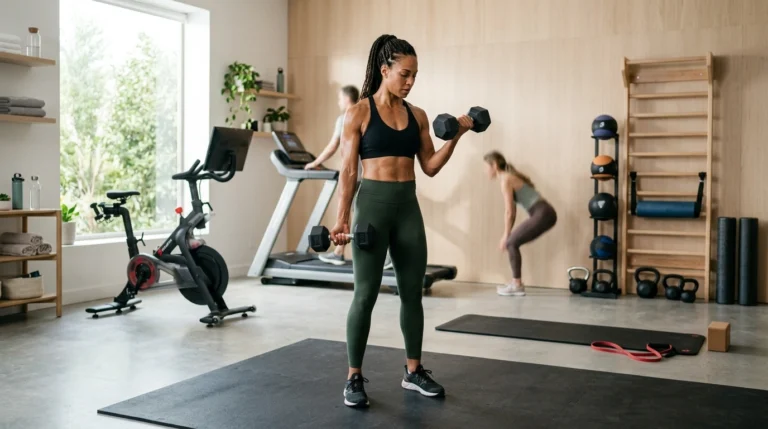
A home weight set for beginners can be useful once you have established a consistent exercise routine and want additional resistance.
Adjustable dumbbells are particularly practical because one set can provide multiple resistance levels without taking up much space. Resistance bands are another affordable and versatile option.
Depending on your goals and available space, you may also consider:
Beginners do not need to purchase everything at once. Start with equipment that supports the exercises you actually plan to perform.
Once you have access to equipment, weights at home exercises can complement bodyweight movements.
Hold a dumbbell or kettlebell near your chest while performing a squat.
Hold dumbbells at your sides while performing controlled forward or reverse lunges.
Use a stable position and pull the dumbbell toward your torso while keeping your back controlled.
Press dumbbells overhead while maintaining a stable standing or seated position.
Hold dumbbells while hinging at your hips to train the hamstrings and glutes.
Place an appropriate weight across your hips while performing glute bridges.
External resistance gives you another way to apply progressive overload without abandoning bodyweight exercises.
Progressive overload is one of the most important principles in effective training.
If you can perform an exercise easily with good technique, gradually add repetitions.
Instead of performing one set, you can add another set as your fitness improves.
For conditioning-focused training, slightly reducing rest can increase the challenge.
A slower lowering phase can increase muscular tension and improve control.
Move from incline push-ups to standard push-ups, or from standard squats to jump squats or single-leg variations when appropriate.
If bodyweight variations are no longer challenging enough, add dumbbells, resistance bands, or another suitable form of resistance.
This progression strategy works for both bodyweight training beginner routines and more advanced home training.
If you are searching for how make body stronger at home, focus on the fundamentals rather than quick fixes.
Strength develops through consistent resistance training and progressive overload. Your nutrition and recovery habits also influence how well you adapt to training.
Focus on:
You do not need to train until exhaustion every day. A structured routine performed consistently is usually more sustainable.
A diy body fitness approach means creating a practical routine around the resources already available to you.
You might use:
For example, a simple home session could include squats, push-ups, glute bridges, lunges, planks, and mountain climbers.
The objective is not to make your workout complicated. A simple routine that you repeat consistently can be more valuable than a complicated program you rarely complete.
Avoiding common mistakes can make your training safer and more productive.
Do not sacrifice technique simply to increase repetitions.
Your body needs time to adapt. Increase training gradually.
A short warm-up can prepare you for more demanding movements.
If the same workout becomes extremely easy, you may need to increase the challenge.
Rest days and lighter sessions are part of a complete training plan.
Use full-body movements to develop balanced fitness.
Strength, endurance, and body-composition changes take time and consistency.
A sustainable home training routine should fit your schedule and current fitness level.
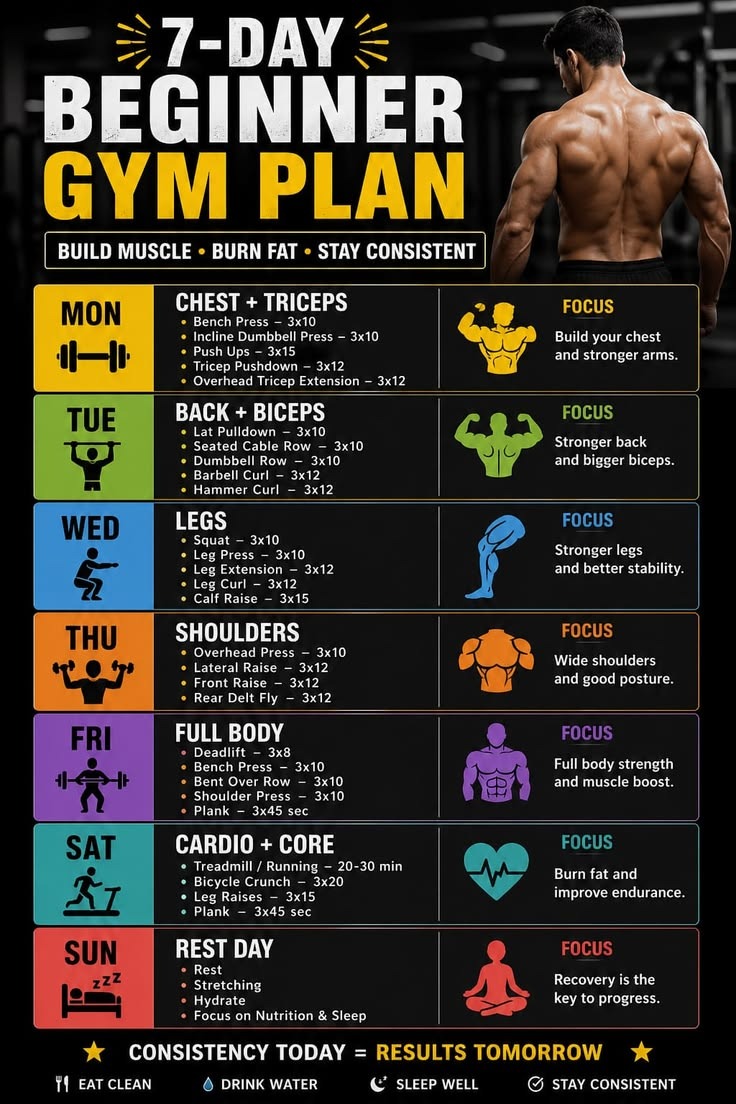
A simple weekly structure might look like this:
Monday: Full-body strength
Tuesday: Light cardio or walking
Wednesday: Full-body strength
Thursday: Mobility or active recovery
Friday: Full-body strength and conditioning
Saturday: Optional recreational activity or walking
Sunday: Rest
You can adjust the schedule according to your goals and recovery needs.
Your home workouts do not have to be identical every day. Variety can keep training interesting while allowing different muscles and movement patterns to receive appropriate recovery.
You can perform light movement every day, but most people do not need hard full-body strength workouts every day. Recovery is important, particularly after challenging sessions.
It can be appropriate to move daily if intensity and volume are managed. Alternating hard workouts with lighter activity or recovery days is often more practical than performing intense training every day.
Yes. A bodyweight workout weight loss routine can increase physical activity and calorie expenditure while supporting muscle development and endurance. Nutrition and overall energy balance also play major roles.
A useful 15 minute bodyweight workout can include push-ups, squats, lunges, mountain climbers, and planks, with a short warm-up and cooldown. Adjust repetitions and exercise variations to your fitness level.
Yes. Bodyweight training beginner programs can start with simple exercises such as wall push-ups, squats, glute bridges, bird dogs, and short plank holds.
Some of the most versatile exercises to do at home include push-ups, squats, lunges, glute bridges, planks, mountain climbers, and bodyweight circuits.
Yes. If you are wondering how to get in shape at home, start with consistent bodyweight strength training, cardio, balanced nutrition, adequate sleep, and gradual progression.
A home weight set for beginners is not required to start exercising. However, adjustable dumbbells, resistance bands, or other compact equipment can be useful when bodyweight exercises are no longer challenging enough or when you want more exercise variety.
Many beginners can start with several structured sessions per week while using other days for walking, mobility, or rest. The ideal frequency depends on workout intensity, fitness level, and recovery.
Yes. Bodyweight exercises can develop strength, particularly when exercises are progressively modified. Push-ups, squats, lunges, pike push-ups, and single-leg movements can become challenging as your ability improves.
Bodyweight training can stimulate muscle growth when the exercises provide enough resistance and are progressed over time. More advanced variations or external resistance may eventually be useful for continued progression.
A 20 minute workout bodyweight routine can be effective for general fitness when performed consistently and structured appropriately. Longer workouts may provide more total volume, but a shorter workout is still valuable when it fits your schedule.
Yes. Repeated bodyweight movements and circuits can improve muscular and cardiovascular endurance. Exercises such as mountain climbers, burpees, high knees, and skater jumps are particularly useful for conditioning.