Physical Address
304 North Cardinal St.
Dorchester Center, MA 02124
Physical Address
304 North Cardinal St.
Dorchester Center, MA 02124


Building muscle is one of the most common fitness goals for people who step into a gym, yet many struggle to see consistent results. It’s easy to assume that lifting the heaviest weights or spending hours in the gym is the fastest path to a stronger physique. In reality, the best gym workouts to build muscle faster involve much more than simply working harder. Smart programming, proper nutrition, adequate recovery, and consistent progression are the real drivers of long-term muscle growth.
Whether you’re a beginner starting your first bodybuilding workout, an intermediate lifter looking to break through a plateau, or someone returning to the gym after a break, following a structured program for gaining muscle can make a significant difference. A well-designed routine ensures every major muscle group receives the right amount of training while giving your body enough time to recover and grow stronger.
Muscle growth also depends heavily on your lifestyle outside the gym. Eating enough high-quality protein, consuming sufficient calories, getting 7–9 hours of sleep, and managing stress all play important roles in recovery and performance. Even the most effective workouts at the gym cannot compensate for poor nutrition or inadequate rest.
Another common mistake is changing workout routines too frequently. While variety has its place, constantly switching exercises often prevents progressive overload—the gradual increase in training demand that stimulates muscle growth. Following a proven plan for several weeks allows you to improve your strength, refine your technique, and build lean muscle more efficiently.
This complete guide explores the science behind muscle building, explains how to structure an effective training program, compares popular workout splits, and shares practical strategies that work for beginners, intermediate lifters, and advanced athletes. By the end, you’ll understand exactly how to create a sustainable routine that helps you gain size, improve strength, and build the physique you’re working toward.
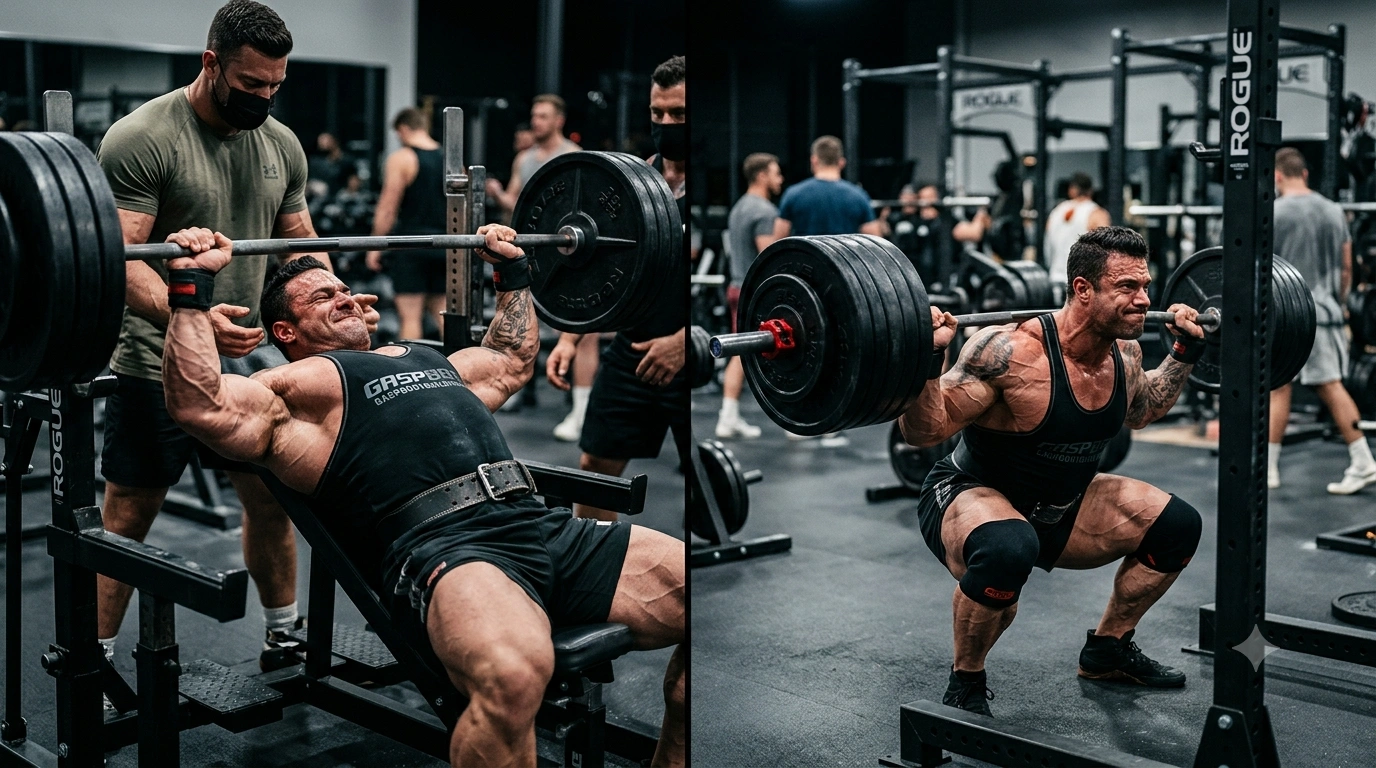
Not every workout produces the same results. The best gym workouts to build muscle faster focus on progressive overload, balanced exercise selection, and consistent training over time rather than random exercises performed without a plan.
An effective bodybuilding workout starts with compound movements. These exercises train multiple muscle groups at once, allowing you to lift heavier weights and stimulate greater muscle growth. Squats, deadlifts, bench presses, overhead presses, pull-ups, and rows should form the foundation of almost every bulking workout.
After completing your compound lifts, isolation exercises help target individual muscles that need additional attention. Movements like biceps curls, lateral raises, leg extensions, and triceps pushdowns increase training volume without placing excessive stress on your entire body.
One of the most important principles behind every successful program for gaining muscle is progressive overload.
Progressive overload means gradually increasing the challenge placed on your muscles over time. You can do this by:
Small improvements each week encourage your muscles to adapt and grow stronger.
Understanding the difference between compound and isolation exercises helps you create a balanced routine.
Compound exercises include:
Benefits include:
Isolation exercises include:
These exercises improve muscle symmetry and help develop weaker body parts after your primary lifts.
Many lifters believe they need a new routine every week to continue growing. In reality, repeatedly changing workouts often slows progress.
A good good bodybuilding routine should remain consistent for at least 8–12 weeks while gradually increasing training intensity. This allows your body to master movement patterns, improve strength, and maximize muscle-building potential.
Several myths continue to confuse people trying to build muscle.
Myth 1: More workouts always produce more muscle.
Training every day without adequate recovery often leads to fatigue rather than growth.
Myth 2: You must train until failure every set.
While occasional high-intensity sets can be effective, constantly reaching failure increases recovery demands and may reduce training quality.
Myth 3: Machines are better than free weights.
Both have benefits. Free weights improve stability and coordination, while machines help isolate muscles safely.
Myth 4: Muscle growth happens during workouts.
The gym provides the stimulus, but actual muscle repair and growth occur during recovery.
Understanding how muscles grow helps explain why proper programming is more important than simply lifting heavy weights.
Muscle growth, also called hypertrophy, occurs when your muscles adapt to resistance training. During challenging workouts, tiny microscopic tears develop in muscle fibers. After training, your body repairs these fibers, making them slightly thicker and stronger than before.
Mechanical tension is created when muscles produce force against resistance.
Heavy compound lifts like squats, deadlifts, and bench presses generate high levels of tension, making them among the most effective exercises for muscle growth.
Controlled muscle damage is another factor contributing to hypertrophy.
Exercises performed through a full range of motion create small amounts of stress within muscle fibers. Recovery then allows these fibers to rebuild stronger.
While soreness can occur, excessive soreness isn’t necessary for progress.
Metabolic stress refers to the familiar “muscle pump” experienced during higher-repetition training.
This occurs because blood, nutrients, and metabolic by-products accumulate inside working muscles. Although the pump itself doesn’t directly build muscle, it contributes to an environment that supports hypertrophy.
Perhaps the most overlooked aspect of muscle growth is recovery.
After resistance training, your body begins muscle protein synthesis—a process that repairs damaged fibers and builds new muscle tissue.
To maximize recovery:
Without recovery, muscle growth slows regardless of workout intensity.
Many beginners fear taking rest days because they think they’ll lose progress.
In reality, muscles become stronger during recovery—not while lifting weights.
Rest days help:
Training hard is important, but recovering well is equally essential for long-term success.
An effective training program doesn’t happen by accident. Building a routine that supports consistent muscle growth requires planning, realistic goals, and a balance between training intensity and recovery.
The first step is identifying your primary objective. Are you training to gain size, increase strength, improve athletic performance, or simply become healthier? Your answer determines how your training program for mass gain should be structured.
Next, prioritize compound lifts as the foundation of your workouts. These exercises allow you to train multiple muscle groups efficiently while creating the greatest stimulus for muscle growth. Isolation exercises should then be added to improve weak areas and increase overall training volume.
Weekly volume is another important factor. Most people achieve excellent results by training each muscle group 10–20 quality sets per week, depending on experience and recovery ability. Rather than performing dozens of exercises in a single session, focus on mastering a smaller number of movements with proper form.
A good bodybuilding program also includes progressive overload, scheduled recovery days, and regular performance tracking. Recording your weights, repetitions, and sets makes it easier to identify progress and know when it’s time to increase training demands.
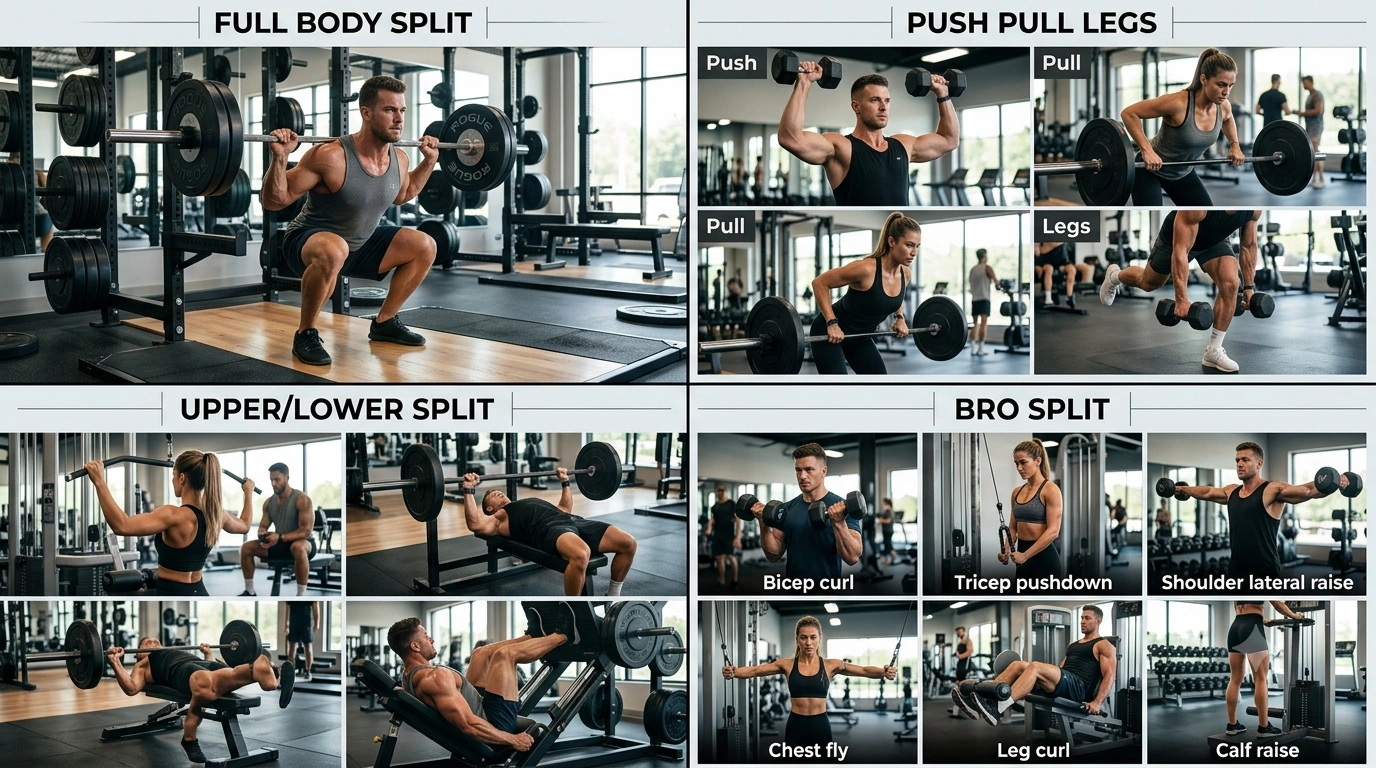
Choosing the right workout split is one of the most important decisions you’ll make when trying to build muscle. The best workout split for hypertrophy is one that matches your experience level, recovery ability, training schedule, and overall fitness goals. While there isn’t a single “perfect” split for everyone, the most effective routines all have one thing in common—they train each major muscle group consistently while allowing enough time for recovery.
A well-planned muscle group workout schedule helps you balance training volume, reduce fatigue, and make steady progress through progressive overload. Instead of randomly training different muscles every day, following a structured plan ensures that every workout contributes toward your muscle-building goal.
A full-body workout trains every major muscle group during each session. This approach is especially effective for beginners because it allows frequent practice of fundamental exercises while providing multiple growth opportunities each week.
A typical full-body routine includes:
Most beginners can perform this routine three times per week with a rest day between sessions. Since each muscle is trained multiple times weekly, strength and coordination improve quickly.
The upper-lower split divides workouts into upper-body and lower-body training days. It offers an excellent balance between workout frequency and recovery, making it popular among intermediate lifters.
A weekly schedule might look like this:
This structure allows each muscle group to recover for several days before being trained again while still accumulating enough weekly volume for hypertrophy.
The Push Pull Legs split is one of the most widely used bodybuilding routines because it groups muscles based on movement patterns.
Push Day
Pull Day
Leg Day
This split works well for people training five to six days per week. Since related muscle groups work together, recovery is easier to manage, and workout quality remains high.
The classic Bro Split focuses on one major muscle group per workout.
Example:
Although this approach allows high training volume for individual muscles, each muscle is typically trained only once every seven days. While experienced bodybuilders can still achieve excellent results with this method, research suggests that training each muscle twice weekly often produces better hypertrophy for most people.
Your experience level largely determines the ideal split.
Beginners
Intermediate Lifters
Advanced Lifters
Rather than searching endlessly for the “perfect” workout split, choose one that fits your schedule and follow it consistently for at least 8–12 weeks before making adjustments.
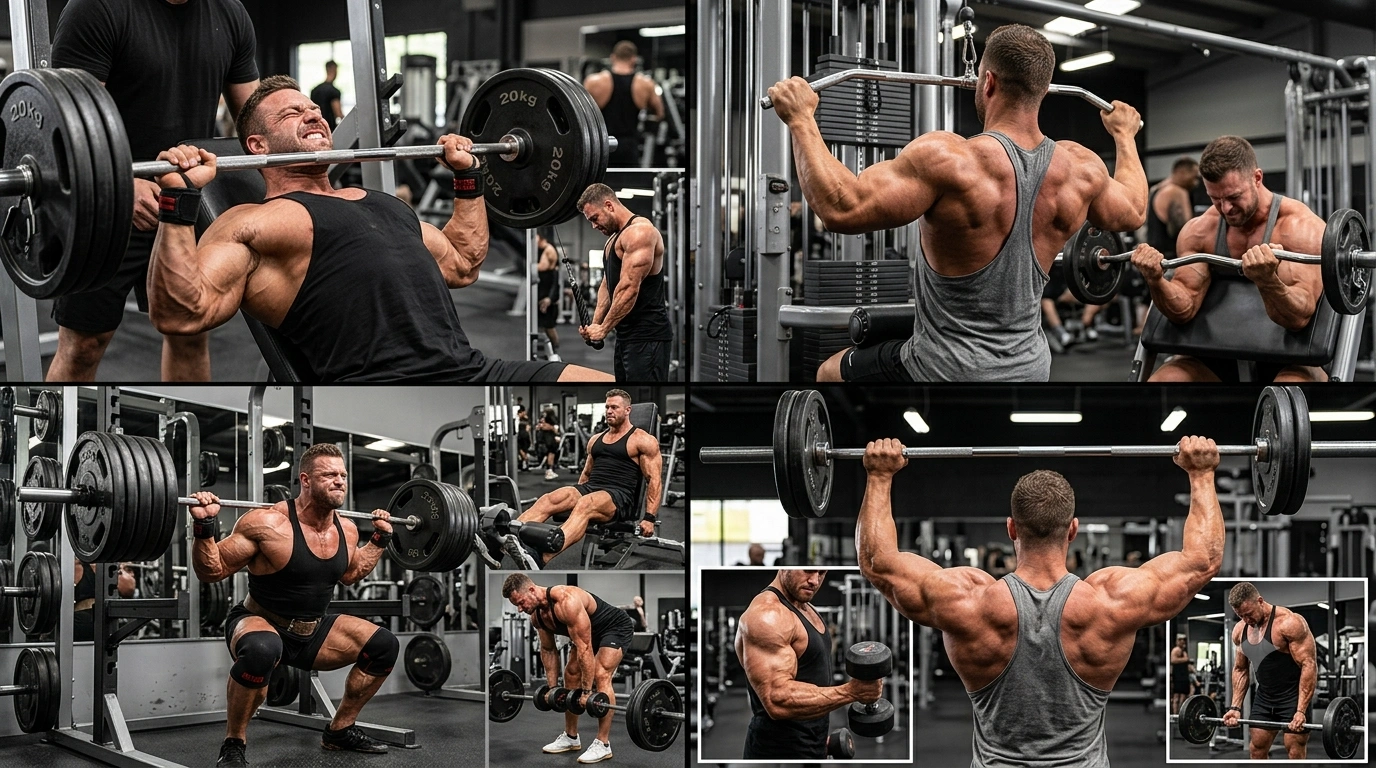
Among all training programs, a 4 day gym workout remains one of the most effective options for building lean muscle. It provides enough weekly training volume to stimulate growth while leaving adequate recovery time between sessions.
Unlike high-frequency programs that may overwhelm beginners or busy professionals, a four-day split balances intensity with recovery. This allows you to train hard without accumulating excessive fatigue.
Benefits of a 4 day weight lifting routine include:
Many intermediate workout plans use this structure because it allows every major muscle group to receive focused attention while still maintaining overall weekly balance.
The first workout focuses on pushing muscles, emphasizing chest development while training the triceps as assisting muscles.
Recommended exercises:
Finish the session with five to ten minutes of stretching for the chest, shoulders, and triceps to improve mobility and recovery.
The second workout targets the entire posterior chain while building pulling strength and arm size.
Recommended exercises:
Focus on controlled movement and a full range of motion rather than swinging the weights.
Leg training forms the foundation of every serious muscle-building program. Strong legs improve athletic performance, stimulate overall muscle growth, and increase total-body strength.
Recommended exercises:
Warm up thoroughly before heavy compound lifts and prioritize proper technique to reduce injury risk.
The final workout develops shoulder width and finishes the week with focused arm training.
Recommended exercises:
Shoulder health is essential for long-term progress, so prioritize controlled form over heavy weights, especially during lateral raises and face pulls.
After completing all four sessions, schedule one or two recovery days with light walking, stretching, or mobility work. This recovery period allows your muscles to repair and grow stronger before beginning the next training week.
If your primary goal is to gain size and build a stronger physique, following the best bulking workout routine is essential. Bulking isn’t about eating everything in sight or lifting random heavy weights. Instead, it’s a structured approach that combines progressive resistance training, proper nutrition, and adequate recovery to maximize lean muscle growth while minimizing unnecessary fat gain.
A successful bulking workout focuses on compound exercises, sufficient weekly training volume, and gradual increases in weight or repetitions. Combined with a moderate calorie surplus and high-quality protein intake, this strategy creates the ideal environment for muscle hypertrophy.
The foundation of every best bulking workout includes several proven principles.
Progressive Overload
Increase the challenge gradually by adding weight, repetitions, or sets over time.
High Training Volume
Aim for 10–20 quality working sets per muscle group each week depending on your recovery ability.
Moderate Rep Range
Most hypertrophy-focused exercises should be performed for 6–12 repetitions.
Adequate Rest
Rest 60–90 seconds for isolation movements and 2–3 minutes for heavy compound lifts.
Even the best bulking workout routine cannot compensate for poor nutrition.
Focus on:
A clean calorie surplus of approximately 250–400 calories above maintenance is usually enough for steady muscle gain without excessive fat accumulation.
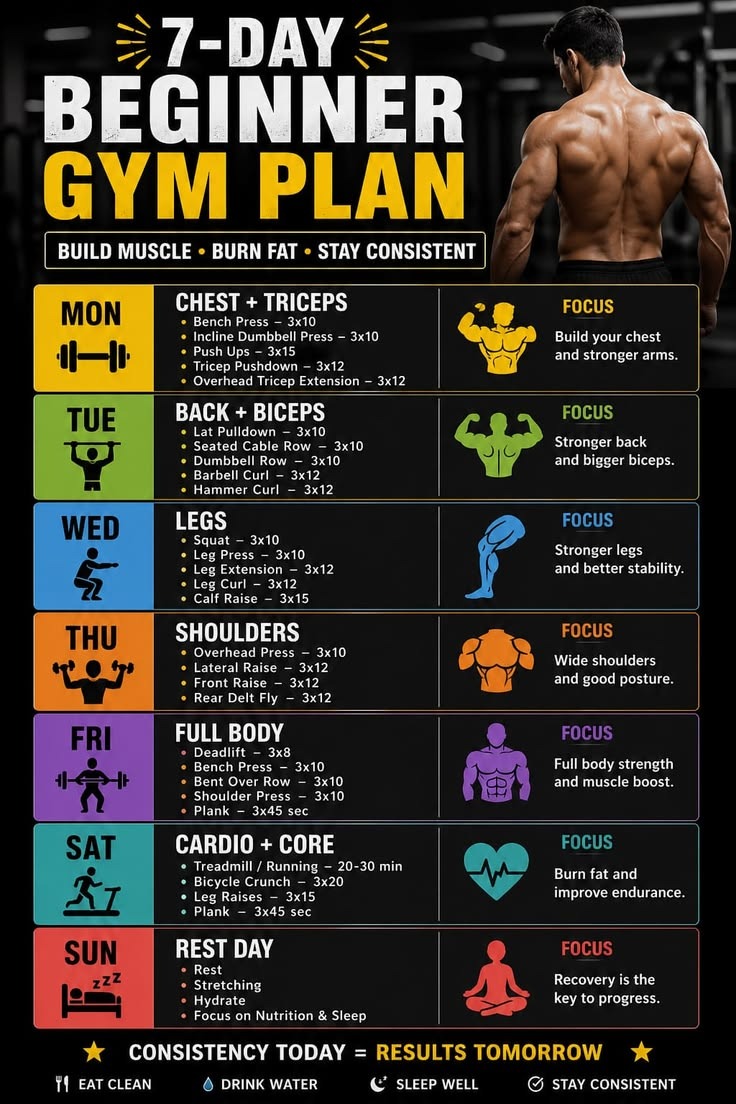
Monday – Chest & Triceps
Tuesday – Back & Biceps
Thursday – Legs
Friday – Shoulders & Arms
This bulking workout routine provides sufficient volume while allowing muscles enough recovery time between sessions.
A well-designed men’s gym workout routine should prioritize building lean muscle while improving overall strength and athletic performance. Beginners should first master proper lifting technique before increasing training intensity, while intermediate and advanced lifters can incorporate additional volume and advanced training methods.
New lifters benefit most from focusing on compound exercises.
Weekly schedule:
Each session should include:
This simple gym exercise routine for men develops coordination, builds strength, and establishes a solid training foundation.
Once basic movement patterns are mastered, transition into a four-day split.
Example:
This structure increases weekly volume while improving recovery.
Experienced lifters often train five or six days weekly, incorporating techniques like supersets, drop sets, paused repetitions, and higher overall volume.
Regardless of experience level, the best workout routine for men always emphasizes consistency, progressive overload, and proper recovery rather than chasing new exercises every week.
A balanced weekly workout routine for men should also include mobility work, stretching, and at least one complete recovery day.
A structured bodybuilding workout program provides a clear roadmap for muscle growth by balancing exercise selection, training frequency, intensity, and recovery.
Unlike random gym sessions, a complete bodybuilding plan ensures every muscle group receives enough weekly stimulation while preventing overtraining.
Monday
Chest & Triceps
Tuesday
Back & Biceps
Wednesday
Rest or Light Cardio
Thursday
Legs
Friday
Shoulders & Arms
Saturday
Core, Mobility, Optional Weak Point Training
Sunday
Rest
This schedule forms the basis of many successful bodybuilding workout plans.
Each workout should begin with heavy compound lifts before progressing to isolation movements.
Compound exercises:
Isolation exercises:
Different repetition ranges produce different training adaptations.
Most bodybuilding workout programs prioritize the 6–12 rep range because it provides an ideal combination of mechanical tension and training volume.
Recovery between sets affects workout quality.
Recommended rest:
Avoid rushing through workouts. Quality repetitions produce better results than simply finishing faster.
Every successful bodybuilding routine is built around gradual progression.
Increase difficulty by:
Small improvements every week eventually lead to significant muscle growth over months of consistent training.
For naturally lean individuals, gaining quality weight often feels just as challenging as losing weight does for others. A proper weight gain workout combines resistance training with sufficient calorie intake to maximize muscle growth rather than fat gain.
Train four to five times weekly, focusing on compound lifts.
Each muscle group should receive approximately 10–20 quality sets every week.
Support your weight gain exercise plan with:
Consume protein after workouts to support muscle protein synthesis.
Each session should challenge your muscles while maintaining excellent exercise form.
Choose weights that allow you to complete your target repetitions while leaving one or two repetitions in reserve on most sets.
A successful workout schedule for weight gain emphasizes gradual progression instead of lifting maximum weight every session.
If you’re just beginning your fitness journey, remember that start working out gain weight requires patience. Building quality muscle is a long-term process, but consistent training and proper nutrition will steadily transform your physique.
Many lifters wonder whether they should follow a 3 day lifting program or a 4 day weight lifting routine. The answer depends on your experience level, recovery ability, and weekly schedule.
Advantages:
Disadvantages:
Advantages:
Disadvantages:
For most beginners, three quality workouts each week are enough to build noticeable muscle during the first several months.
Intermediate lifters often benefit more from transitioning to a four-day split because it allows additional weekly volume without excessive fatigue.
Ultimately, the best program is the one you can follow consistently while continuing to improve over time.
Once you’ve built a strong foundation, an advanced workout routine can help you continue gaining muscle by increasing training intensity and overall workload. Advanced lifters often reach a point where simply adding more weight isn’t enough. Strategic programming becomes essential to stimulate new muscle growth while preventing plateaus.
Advanced athletes typically perform 15–20 quality sets per muscle group each week. This increased volume provides additional stimulus for hypertrophy, provided recovery, nutrition, and sleep are optimized.
Drop sets involve performing an exercise until near failure, reducing the weight immediately, and continuing for additional repetitions. This technique increases metabolic stress and helps recruit more muscle fibers.
Supersets combine two exercises with little or no rest between them.
Examples include:
Supersets improve workout efficiency while increasing training intensity.
Pyramid sets gradually increase the weight while reducing repetitions.
Example:
This method develops both strength and muscle size.
Training intensely for months without reducing workload can lead to fatigue and stalled progress.
Every 6–8 weeks, reduce training volume or intensity by approximately 40–50%. Deload weeks allow muscles, joints, and the nervous system to recover fully.
A well-designed muscle definition routine also includes mobility work, stretching, and recovery sessions to support long-term performance.
You don’t need an expensive commercial gym to build muscle. A properly planned home gym exercise routine can produce impressive results using just a few versatile pieces of equipment.
Investing in quality equipment expands your training options significantly.
Recommended equipment:
Perform each exercise for 3–4 sets.
Even with limited equipment, muscle growth is possible by:
Creative exercise combinations routines can keep home workouts challenging without requiring dozens of machines.
A 30 day muscle gain plan won’t completely transform your physique, but it can establish the habits necessary for long-term success.
Focus on:
Add:
Increase:
Challenge yourself with:
After 30 days, you’ll likely notice:
Meaningful muscle growth becomes much more noticeable after following a structured workout plan 3 months consistently.
Goals:
Increase:
Prioritize:
By the end of three months, many lifters experience measurable increases in strength, muscle size, and overall fitness.
Many beginners believe more exercises automatically produce more muscle. In reality, quality matters more than quantity.
For most workouts:
This usually equals:
Understanding how many exercises per workout to build muscle helps prevent excessive fatigue while ensuring adequate training volume.
Many people ask when is the best time to workout to gain muscle. Research suggests that consistency matters more than the specific hour you train.
Benefits:
Advantages:
Benefits:
The best training time is the one you can maintain consistently every week.
Certain compound movements consistently outperform others for total muscle growth.
Develop:
Build:
Targets:
Improve:
Strengthen:
Develop:
Excellent for:
These 7 exercises to build muscle should remain the foundation of almost every muscle-building program.

Training provides the stimulus, but nutrition provides the building blocks.
For every successful bulking workout, prioritize:
Helpful supplements include:
A quality program for gaining muscle always combines structured training with balanced nutrition.

Even dedicated gym-goers sometimes make mistakes that slow progress.
Common errors include:
Avoiding these mistakes helps every bodybuilding workout become more productive and supports consistent improvement in your workouts at the gym.
Yes. A properly structured four-day program provides enough training volume and recovery for most beginners and intermediate lifters.
Upper-Lower and Push-Pull-Legs splits are among the most effective because they balance training frequency with recovery.
A routine emphasizing compound lifts, progressive overload, and adequate weekly training volume works best for building lean muscle.
Most workouts include 5–8 total exercises, depending on the muscle groups being trained.
Absolutely. Beginners should start with lighter weights, prioritize proper form, and increase intensity gradually.
The best time is whenever you can train consistently while maintaining energy and focus.
You can improve strength, learn proper technique, and begin building muscle within 30 days, though significant muscle growth typically takes several months.
A four-day resistance training program combined with a moderate calorie surplus and sufficient protein intake is highly effective.
Yes. With progressive overload and basic equipment like adjustable dumbbells and resistance bands, you can build impressive muscle at home.
A full-body workout performed three times per week or a four-day Upper-Lower split provides an excellent foundation for beginners.