Physical Address
304 North Cardinal St.
Dorchester Center, MA 02124
Physical Address
304 North Cardinal St.
Dorchester Center, MA 02124


Starting a workout routine sounds simple until you try to fit it into a busy day. You might wonder which exercises to do, whether you need gym equipment, or how long you should work out without exhausting yourself.
The good news is that you can start with very little. A comfortable pair of walking shoes, some open space, and 15–20 minutes are enough for your first few sessions. You do not need to be fit before you begin exercising.
This 4-week beginner workout plan gives you a straightforward way to get started. It combines walking, simple strength exercises, and rest days so you can build a routine without trying to change everything at once.
Your first goal is to find a routine that fits your current fitness level and everyday schedule. If you spend most of the day sitting, even a short walk and a few basic exercises can be a reasonable starting point.
Instead of promising yourself an hour at the gym every day, start with something more realistic. For example, you could plan two strength workouts and two short walks each week.
Write down your planned workout times. If you miss a session because work runs late or family responsibilities come up, move it to another convenient day rather than giving up on the week.
You do not have to run, lift heavy weights, or follow a demanding fitness program. Walking, dancing, cycling, and bodyweight exercises can all be part of a beginner routine.
Pick activities that feel manageable. If you dislike running, start with walking. If the gym feels intimidating, exercise at home until you feel ready to try something different.
Look for a time when you are most likely to follow through. A short walk during lunch or a bodyweight workout before dinner may be easier to maintain than an early-morning session you regularly skip.
Keep your starting routine simple enough that you can repeat it next week.
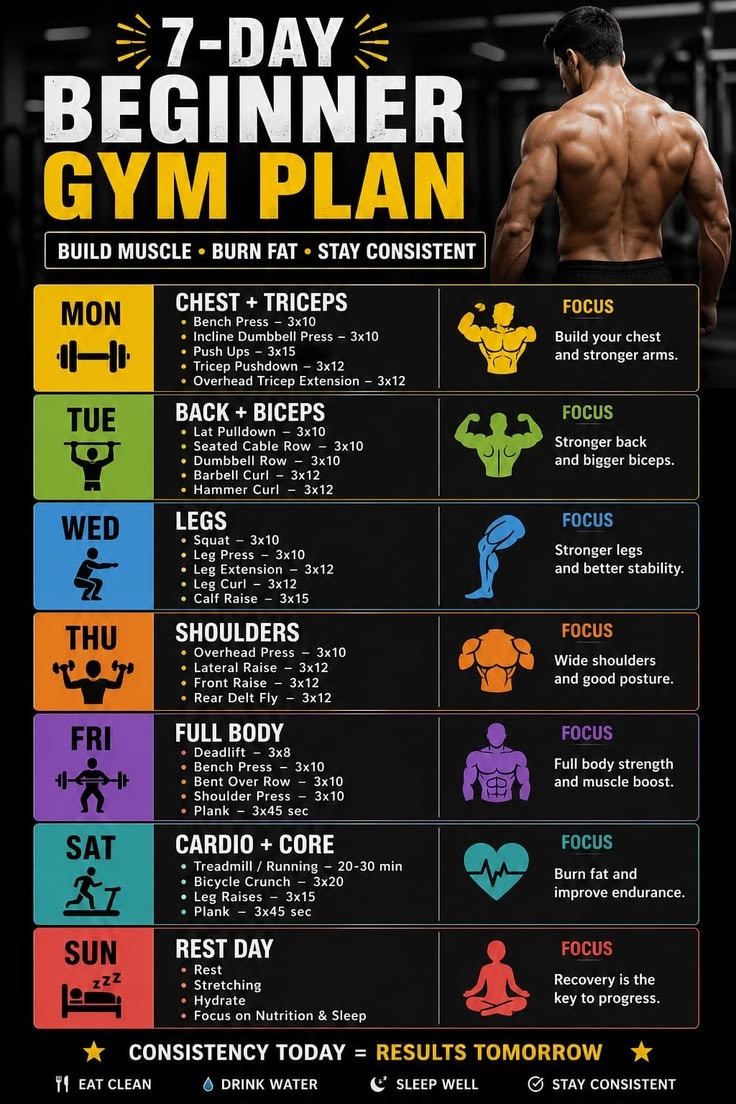
A balanced workout routine includes aerobic activity, strength training, and some work on mobility and balance.
You can introduce these activities over time. There is no need to squeeze every type of exercise into your first workout.
For many beginners, three planned exercise days per week offer a reasonable starting point. You can add short walks on other days if you feel comfortable.
Here is how different schedules might work:
| Workout days | Example routine |
| 2 days | Two full-body strength sessions |
| 3 days | Two strength sessions and one cardio session |
| 4 days | Two strength sessions and two cardio sessions |
| 5 days | Two strength sessions and three light-to-moderate cardio sessions |
These are examples rather than strict rules. Your starting point depends on your current activity level, schedule, and recovery needs.
Start with about 15–30 minutes per session, including your warm-up and cool-down. If 15 minutes feels like enough for now, that is fine.
The CDC recommends that adults work toward at least 150 minutes of moderate-intensity aerobic activity each week and muscle-strengthening activity on at least two days. You can build toward these targets gradually instead of trying to meet them during your first week.

This schedule combines two strength days with walking and recovery. You can follow it at home without buying special equipment.
Your first week is about learning the movements, not testing your limits.
| Day | Workout |
| Monday | Full-body strength workout, 15–20 minutes |
| Tuesday | Easy walk, 10–15 minutes |
| Wednesday | Rest or gentle movement |
| Thursday | Full-body strength workout, 15–20 minutes |
| Friday | Easy walk, 10–15 minutes |
| Saturday | Optional light activity |
| Sunday | Rest |
For strength days, begin with one set of each exercise described below. Move slowly enough to stay in control, and take breaks whenever you need them.
Keep the same schedule. Repeating familiar exercises helps you learn proper technique and makes it easier to see what feels different from your first session.
If the workouts feel manageable, add a few minutes to your walks or try a second set of one or two exercises. If you are still getting used to the routine, there is no need to increase anything yet.
By the third week, you may feel more comfortable with movements such as squats and wall push-ups.
If you are recovering well, add a few repetitions or extend one walk slightly. You could also try a more challenging variation of an exercise, provided you can maintain good form.
Change one part of the routine at a time. There is no advantage to making every workout longer and harder in the same week.
Look back at the previous three weeks. Have you completed more sessions? Do the exercises feel easier? Can you walk a little longer without needing as many breaks?
These are useful signs of progress, even if your appearance has not changed.
Continue with the same schedule if it works for you. If certain exercises remain difficult, keep practicing them before moving to harder versions. Four weeks is a foundation for building a habit, not a deadline for reaching a particular fitness goal.
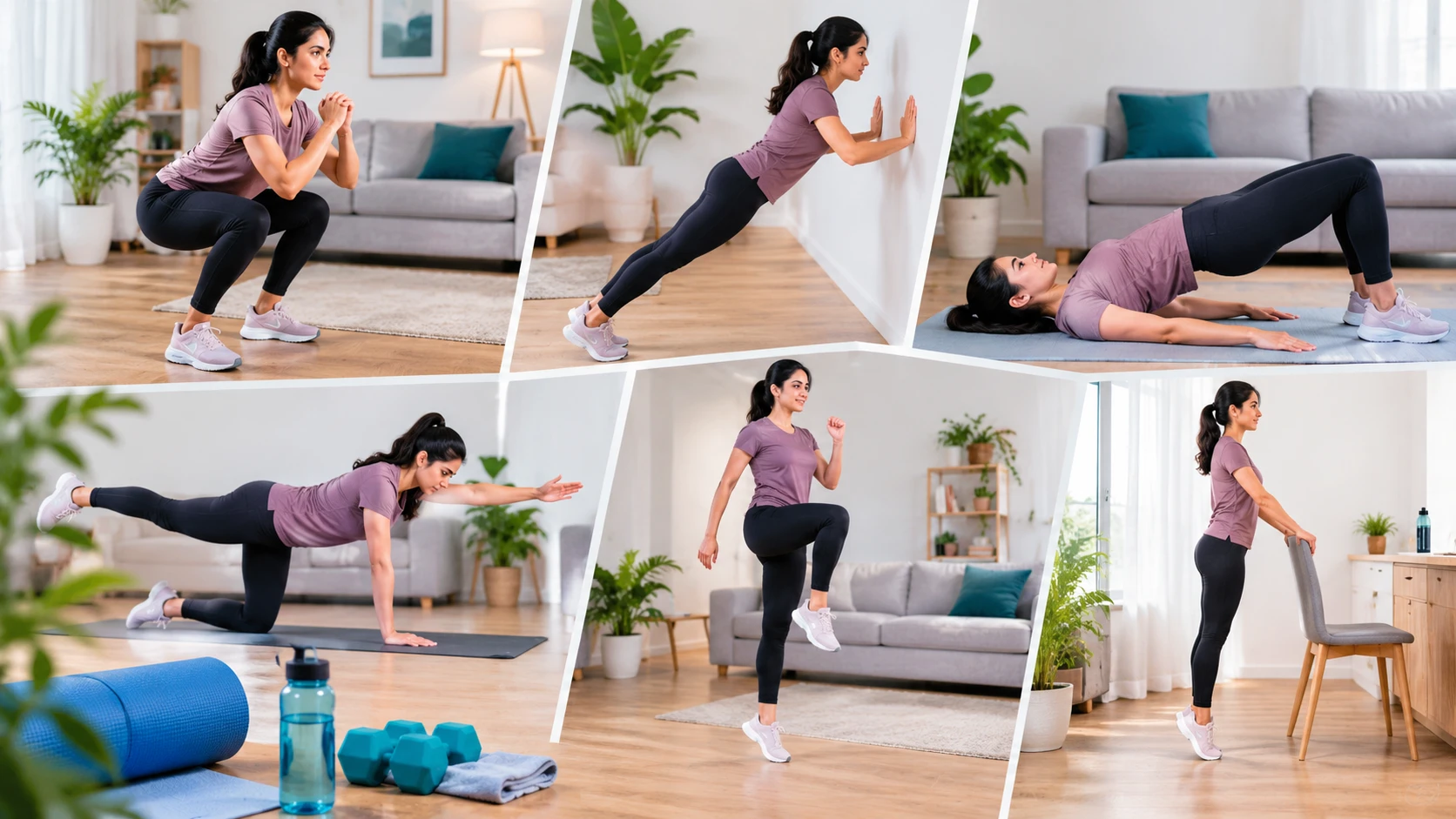
You can complete this routine in a small living room or another clear, stable space. Wear comfortable clothing, keep water nearby, and use a sturdy chair or countertop for support when needed.
Stand with your feet about shoulder-width apart. Push your hips back and bend your knees as if you are sitting down on a chair. Stand up again, keeping the movement controlled.
Start with 6–10 repetitions. If a full squat feels difficult, practice sitting down on a sturdy chair and standing back up.
Place your hands on a wall at shoulder height. Step back a little, bend your elbows, and bring your chest toward the wall. Push back to the starting position.
Try 6–10 repetitions. Stand closer to the wall if you need an easier version.
Lie on your back with your knees bent and your feet flat on the floor. Tighten your glutes and lift your hips comfortably, then lower them slowly.
Start with 8–12 repetitions. Avoid arching your lower back to lift your hips higher.
Start on your hands and knees. Extend your right arm and left leg while keeping your torso steady. Return to the starting position and switch sides.
Try 5–8 repetitions per side. Keep the movement small if extending your arm and leg together makes balancing difficult.
Stand tall and march at a comfortable pace, lifting one foot at a time. Move your arms naturally and slow down whenever you need to.
Continue for one to three minutes. You can use this exercise as a gentle cardio session or between strength exercises.
Stand near a sturdy chair or countertop. Hold it for balance if necessary, lift your heels, pause briefly, and lower them slowly.
Begin with 8–12 repetitions.
During Week 1, one set of each exercise is enough to learn the movements. You can work toward two sets when the first set feels manageable and your technique remains steady.
Rest for around 30–90 seconds between sets, or longer if needed. You should finish feeling that you worked your muscles, not that you pushed yourself to exhaustion.
Do not jump straight into challenging movements when your body is still at rest. Begin with five minutes of easy walking or marching in place. Add gentle shoulder rolls and comfortable hip and ankle movements.
Before squats or push-ups, practice a few easy repetitions. This gives you a chance to settle into the movement before completing the full set.
After your workout, slow down with a few minutes of easy walking. You can finish with gentle stretches for the muscles you used. Hold each stretch in a comfortable position without bouncing or forcing the movement.
A warm-up and cool-down do not need to be complicated. The important thing is to prepare for exercise and ease out of the session comfortably.
One common beginner mistake is assuming that every workout needs to be harder than the last. In reality, your body needs time to adjust to new movements and activity levels.
Increase repetitions when you can complete your current set with control. Add walking time when your current duration feels comfortable. If you eventually introduce weights or resistance bands, start with a manageable level and focus on technique.
Pay attention to how you feel later that day and the following morning. Mild muscle soreness can happen after unfamiliar exercise, but sharp pain, joint pain, chest pain, dizziness, or unusual shortness of breath should not be ignored. Stop exercising if concerning symptoms occur and seek appropriate medical care.
If you have a chronic health condition, a significant injury, or concerns about starting an exercise program, ask a healthcare professional for guidance suited to your situation.
Rest days give your body time to recover. You can take a gentle walk on a rest day if you feel comfortable, but you do not have to stay active every day to make progress.
Watch for these common mistakes:
Missed a workout? Simply return to your schedule when you can. You do not need to double your next session or squeeze two workouts into one day.
Make it easy to get started. Put your walking shoes somewhere visible, choose your workout time in advance, and keep your first sessions short enough to fit into an ordinary day.
Track a few useful details, such as the number of workouts you complete, how long you walk, or how many controlled repetitions you perform. You do not need an expensive fitness tracker to see whether you are becoming more consistent.
It also helps to choose activities you enjoy. If walking outdoors feels better than using a treadmill, choose the walk. If you prefer exercising while watching a favorite show, a short home workout may suit you better.
The goal is to find a routine that fits your life rather than organizing your entire life around exercise.
You can do some form of physical activity every day if the intensity matches your abilities, but you do not need to perform strength workouts daily. Alternate more demanding sessions with lighter activity or rest.
Yes. Fifteen minutes is a useful starting point, particularly if you have been inactive. As you become more comfortable, you can increase your activity time gradually.
Both are useful. Walking helps build aerobic fitness, while strength exercises develop muscular strength. This plan includes both without requiring long sessions.
Yes. Walking, bodyweight squats, wall push-ups, glute bridges, and other simple exercises can help you develop fitness at home. Equipment can provide more options later, but it is not essential for getting started.
It varies from person to person. Over several weeks, you may notice that a walk feels easier or that you can complete an exercise with better control. Changes in strength, endurance, and appearance depend on consistency, starting fitness, recovery, and other individual factors.
Mild soreness may improve with gentle movement, but you should avoid pushing through significant pain. Choose rest or light activity if needed. Severe, persistent, or unusual symptoms warrant medical advice.
Continue with your next planned session when practical. One missed workout will not erase your progress, and you do not need to compensate with extra exercise.