Physical Address
304 North Cardinal St.
Dorchester Center, MA 02124
Physical Address
304 North Cardinal St.
Dorchester Center, MA 02124

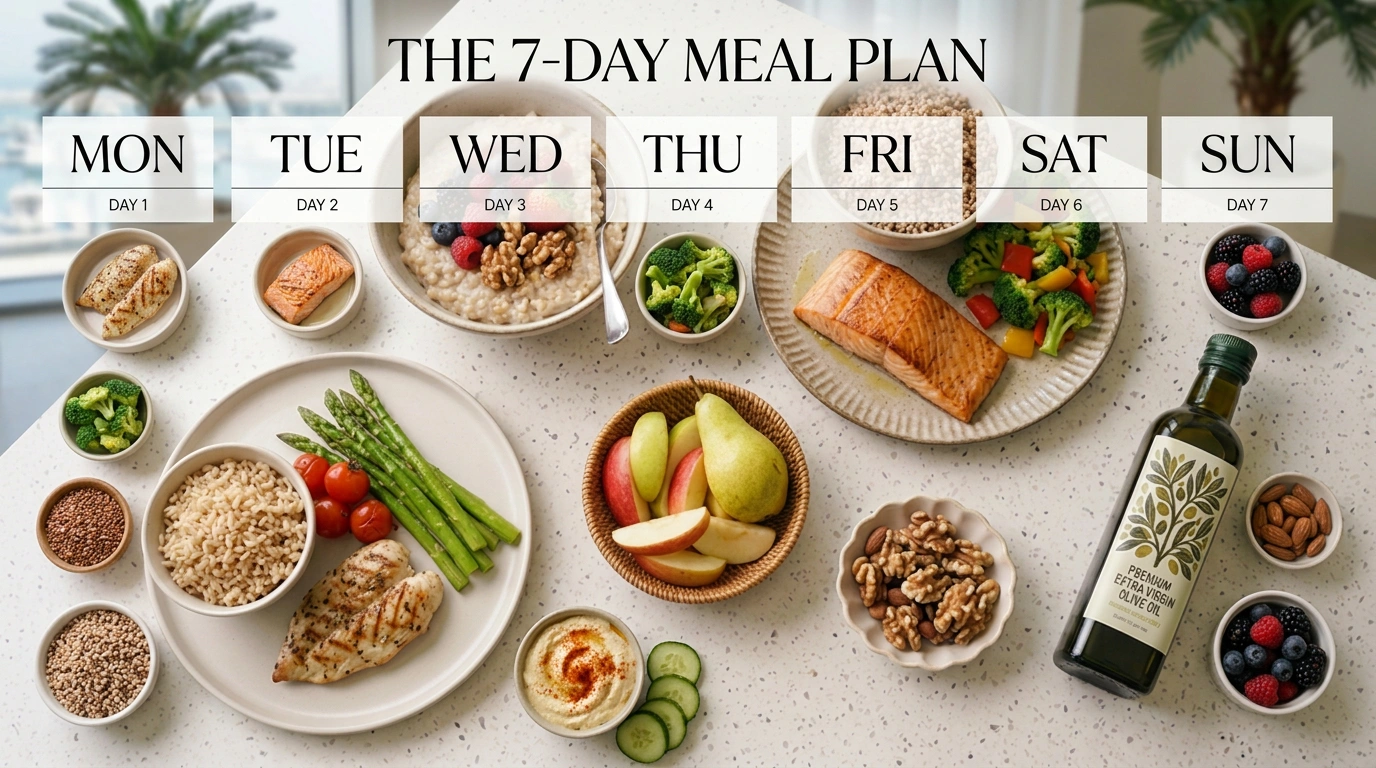
Starting a healthier diet does not mean completely changing everything you eat overnight. For beginners in the UAE, a simple 7-day healthy meal plan for beginners can make healthy eating easier to understand, organize, and maintain. Instead of following an extreme diet, you can use a weekly structure to plan breakfast, lunch, dinner, snacks, groceries, and meal preparation.
A practical weekly meal plan can also help reduce last-minute takeaway orders, unnecessary grocery purchases, and skipped meals. Whether you live alone in Dubai, share meals with a partner in Abu Dhabi, or prepare food for a family in Sharjah, the same basic principles can be adjusted to fit your lifestyle.
The goal is not rapid weight loss or perfect eating. It is to build sustainable habits around balanced meals, vegetables, fruits, whole grains, protein, healthy fats, hydration, and sensible portions.
This guide provides a complete meal plan for week, along with clean-eating ideas, Mediterranean and DASH-style options, shopping guidance, meal-prep tips, and answers to common questions beginners search for online.
A good beginner meal plan should make healthy eating simpler rather than more complicated. You do not need dozens of recipes or expensive ingredients. A few versatile foods can create several different meals throughout the week.
A beginner-friendly plan usually includes:
You can find chicken, eggs, lentils, beans, oats, rice, vegetables, fruits, yogurt, fish, nuts, and whole-grain products at most major supermarkets. Using these staples makes an easy weekly meal plan practical even when you have a busy schedule.
Instead of thinking about individual nutrients all the time, beginners can build meals around several basic food groups.
Protein: Chicken, fish, eggs, beans, lentils, Greek yogurt, tofu, and other suitable protein sources can help make meals more filling.
Vegetables: Include leafy greens, tomatoes, cucumber, carrots, broccoli, peppers, cauliflower, and other vegetables.
Fruits: Apples, bananas, oranges, berries, melons, and other seasonal fruits can provide variety.
Whole grains: Oats, brown rice, quinoa, whole-grain bread, and other minimally processed grains can provide carbohydrates and fiber.
Healthy fats: Olive oil, avocado, nuts, and seeds can be included in sensible portions.
Dairy or alternatives: Plain yogurt, milk, and suitable fortified alternatives can fit into a balanced diet.
This approach can form the foundation of a clean eating food plan, but clean eating does not need to mean avoiding every packaged food.
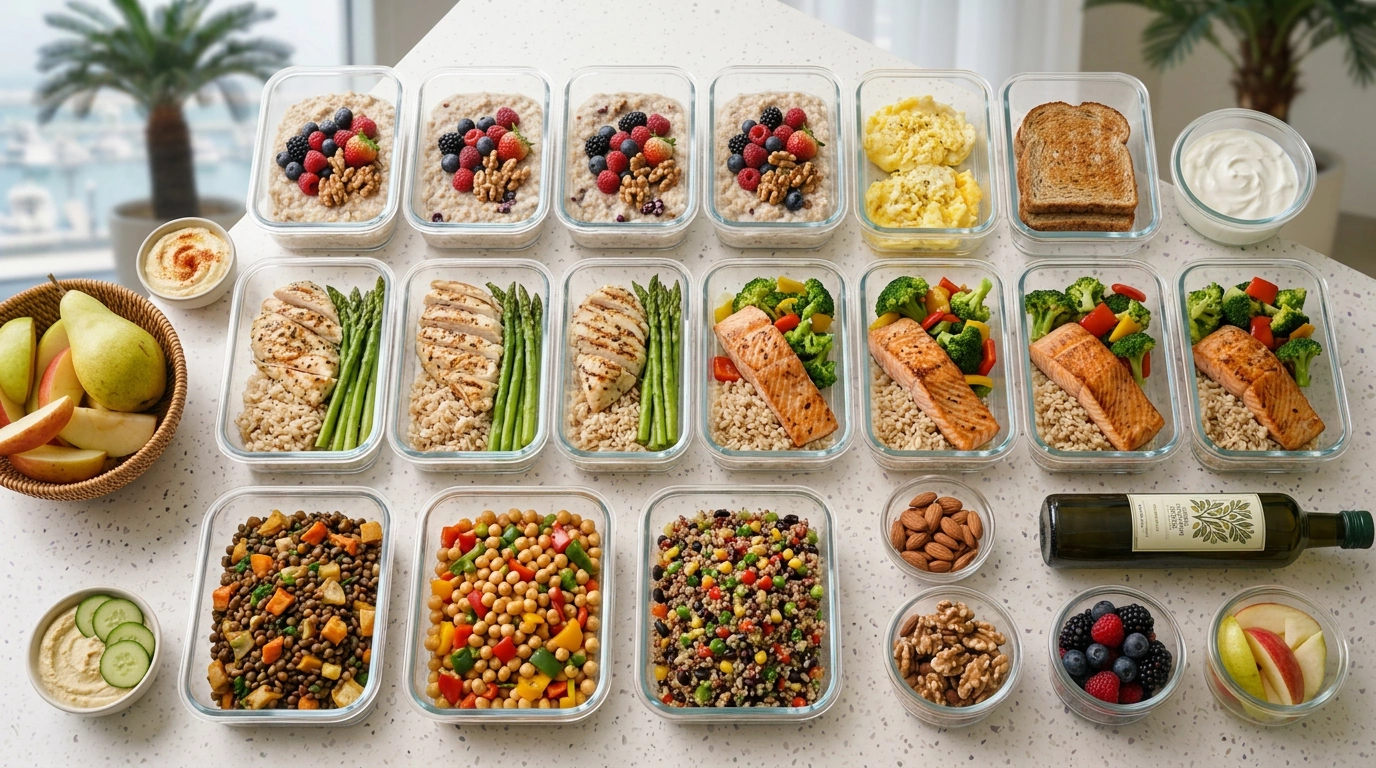
The following 7 day meal plan is designed as a flexible starting point rather than a rigid prescription. Portion sizes should be adjusted according to age, body size, activity level, appetite, goals, and individual dietary needs.
Breakfast:
Oatmeal made with milk or an appropriate alternative, topped with banana slices, berries, and a small portion of nuts.
Lunch:
Grilled chicken with a large mixed salad, cucumber, tomatoes, carrots, and a small serving of brown rice or whole-grain bread.
Snack:
Plain yogurt with fruit.
Dinner:
Baked fish with roasted vegetables and quinoa or brown rice.
Hydration:
Keep water available throughout the day. UAE temperatures can make regular fluid intake particularly important, especially when spending time outdoors.
Breakfast:
Two eggs with whole-grain toast, tomatoes, cucumber, and fruit.
Lunch:
Chicken or bean wrap using whole-grain flatbread with lettuce, cucumber, tomato, and yogurt-based dressing.
Snack:
An apple with a small handful of unsalted nuts.
Dinner:
Lentil soup with a side salad and whole-grain bread.
This day demonstrates that a healthy meal does not have to be expensive. Beans and lentils can be useful budget-friendly protein sources.
Breakfast:
Greek yogurt with oats, berries, banana, and seeds.
Lunch:
Prepared chicken and quinoa bowl with mixed vegetables.
Snack:
Carrot and cucumber sticks with hummus.
Dinner:
Quick vegetable and chicken stir-fry served with brown rice.
For busy UAE professionals, preparing the chicken, rice, and chopped vegetables in advance can turn this into a very quick weekday menu.
Breakfast:
Vegetable omelet with eggs, spinach, tomatoes, and peppers, plus whole-grain toast.
Lunch:
Chickpea salad with cucumber, tomato, leafy greens, olive oil, and lemon.
Snack:
An orange or apple with a few nuts.
Dinner:
Grilled chicken or tofu with broccoli, carrots, and a small serving of quinoa.
Increasing vegetables and legumes gradually can make it easier to increase fiber intake without making meals feel restrictive.
Breakfast:
Overnight oats with milk, cinnamon, berries, and banana.
Lunch:
Homemade chicken rice bowl with vegetables and a yogurt-based sauce.
Snack:
Plain yogurt and fruit.
Dinner:
Homemade whole-grain pasta with tomato sauce, vegetables, and lean protein.
Healthy eating does not mean giving up familiar comfort foods. Often, you can make the meal more balanced by changing the ingredients, cooking method, and portion size.
Breakfast:
Eggs, whole-grain toast, avocado, cucumber, and fruit.
Lunch:
Grilled fish or chicken with a large salad and brown rice.
Snack:
Fruit with unsalted nuts.
Dinner:
Homemade vegetable and lentil soup with whole-grain bread and salad.
Weekends can be useful for preparing ingredients for the following week. You can cook grains, wash vegetables, portion snacks, and prepare proteins ahead of time.
Breakfast:
Oatmeal or yogurt bowl with fruit and seeds.
Lunch:
Leftover chicken, fish, beans, or lentils combined with vegetables and whole grains.
Snack:
Fruit and yogurt.
Dinner:
A Mediterranean-style plate containing grilled protein, vegetables, hummus, salad, and a suitable whole-grain option.
Day 7 should not feel like a punishment. It can be your most flexible day while still following the general principles of balanced eating.
The phrase 7-day clean eating meal plan is often used online, but “clean eating” does not have one universally accepted medical definition.
For many people, clean eating means emphasizing:
Rather than creating strict rules, focus on overall dietary quality. Reading ingredient labels can help you compare products, but there is no need to become afraid of all packaged foods.
A practical eating clean meal plan should be flexible enough to work with your lifestyle.
Useful foods include:
These foods can be mixed and matched to create different meal plans for clean eating.
A simple structure could look like this:
| Day | Breakfast | Lunch | Dinner |
| 1 | Oats + fruit | Chicken salad | Fish + vegetables |
| 2 | Eggs + toast | Bean wrap | Lentil soup |
| 3 | Yogurt + oats | Chicken bowl | Vegetable stir-fry |
| 4 | Vegetable omelet | Chickpea salad | Chicken + quinoa |
| 5 | Overnight oats | Rice bowl | Whole-grain pasta |
| 6 | Eggs + avocado | Fish salad | Lentil soup |
| 7 | Yogurt bowl | Leftovers | Mediterranean plate |
This can also become a clean eating menu plan week 1 for someone who wants a straightforward starting point.
Planning food for one person can be surprisingly difficult. Buying large packages may create waste, while cooking different meals every day can become expensive and time-consuming.
Common problems include:
Buy ingredients that can work across multiple meals. For example, a bag of spinach can be used in omelets, salads, wraps, and cooked dishes.
Cook small batches and freeze suitable portions. You can also intentionally plan leftovers.
For example, grilled chicken prepared on Monday can become a salad on Tuesday and a grain bowl on Wednesday.
A simple structure could be:
Breakfasts: Oats, eggs, yogurt bowls, overnight oats, vegetable omelet, whole-grain toast with avocado, fruit and yogurt.
Lunches: Chicken salad, chickpea bowl, lentil soup, tuna or fish salad, chicken wrap, leftover grain bowl, bean salad.
Dinners: Fish with vegetables, chicken with brown rice, lentil curry, vegetable stir-fry, whole-grain pasta, grilled chicken with salad, Mediterranean-style dinner.
Snacks can include fruit, yogurt, vegetables with hummus, or a small portion of nuts.
The same principles can be adapted for multiple people.
For couples, prepare shared main dishes and adjust portions according to individual needs.
Breakfast options can include eggs and whole-grain toast, oats with fruit, or yogurt bowls.
Lunch can be leftovers, wraps, grain bowls, or salads.
Dinner can include family-style dishes such as grilled chicken with vegetables, fish with rice, lentil soup, or whole-grain pasta.
A weekly meal plan for 2 adults is often easier when several ingredients are shared across recipes.
For families, focus on meals that allow individual customization.
Breakfasts can include oats, eggs, fruit, yogurt, or whole-grain toast.
Lunches can include chicken wraps, rice bowls, sandwiches, salads, and leftovers.
Dinners can include grilled chicken, fish, lentil soup, homemade pasta, vegetable rice dishes, and Mediterranean-style meals.
Healthy snacks may include fruit, yogurt, hummus with vegetables, or unsalted nuts where appropriate.
A basic family shopping list can include:
Protein: Chicken, fish, eggs, beans, lentils, yogurt.
Vegetables: Spinach, broccoli, carrots, cucumber, tomatoes, peppers.
Fruits: Apples, bananas, oranges, berries.
Grains: Oats, brown rice, quinoa, whole-grain bread.
Pantry staples: Olive oil, herbs, spices, beans, canned fish, and other practical staples.
Meal planning is most useful when it reduces work rather than creating additional work.
Start by choosing your recipes. Then check your refrigerator, freezer, and pantry.
Create a shopping list based on what you already have. Estimate how many servings you need before buying ingredients.
This prevents buying random foods that may remain unused.
A simple planner can look like:
| Day | Breakfast | Lunch | Dinner | Snack |
| Monday | Oats | Chicken salad | Fish + rice | Fruit |
| Tuesday | Eggs | Bean wrap | Lentil soup | Yogurt |
| Wednesday | Yogurt bowl | Chicken bowl | Stir-fry | Nuts |
| Thursday | Omelet | Chickpea salad | Chicken + quinoa | Fruit |
| Friday | Overnight oats | Rice bowl | Pasta + vegetables | Yogurt |
| Saturday | Eggs + toast | Fish salad | Lentils | Fruit |
| Sunday | Yogurt + fruit | Leftovers | Mediterranean plate | Hummus + vegetables |
This is an effective seven day menu planner for beginners.
You can also assign themes:
A predictable weekly dinner schedule can make dinner meal planning much easier.
A practical grocery list is one of the most important parts of a meal plan for week.
Consider:
Choose a mixture such as:
Frozen vegetables and fruits can also be useful when fresh produce is unavailable or likely to spoil.
Keep:
Useful options include:
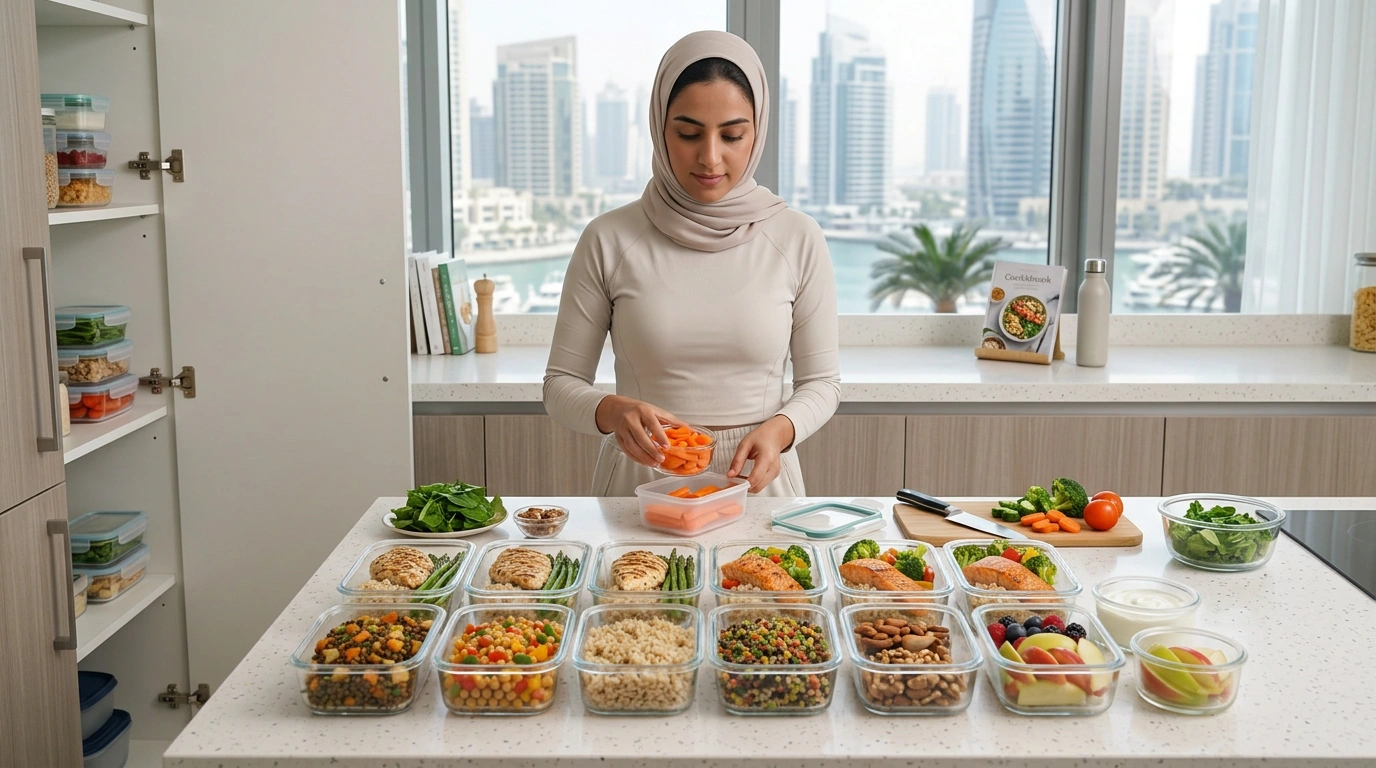
Meal preparation can turn a complicated week into a much easier routine.
At the beginning of the week:
You do not necessarily need to cook seven complete days of food in one session. Preparing ingredients can provide more flexibility.
Keep prepared food in suitable containers and refrigerate or freeze foods according to food-safety guidance.
Label containers with dates so you know what should be eaten first.
When reheating, make sure food is heated thoroughly and avoid repeatedly reheating and cooling the same food.
Meal prep can:
For UAE residents with long workdays, this can be particularly useful.
A structured meal plan can support weight management by helping you make more consistent food choices. However, seven days is a short period, and healthy weight management is usually about sustainable habits rather than dramatic changes.
Can I lose 10lbs in 7 days? A dramatic scale change may happen for some people because of changes in water and stored carbohydrates, but losing 10 pounds of body fat in one week is not a realistic or generally recommended goal.
Extreme calorie restriction can increase fatigue, hunger, nutrient deficiencies, and difficulty maintaining the diet.
A better approach is to establish sustainable eating habits, choose balanced meals, remain physically active, and allow weight change to occur gradually.
Searches for 7-day weight loss detox, 7 day cleanse for weight loss, and week cleanse diet plan are common, but detox programs can range from simple healthy eating plans to highly restrictive diets.
Your body already has natural systems for processing and eliminating waste. There is no need to rely on an extreme juice-only or fasting-style program.
A healthier seven-day reset can simply mean eating more vegetables, fruit, whole grains, lean proteins, legumes, and drinking enough fluids while reducing highly processed foods.
A drastic diet can involve very low calorie intake, major food restrictions, or unrealistic rules. These approaches may be difficult to maintain and can leave people feeling tired and overly hungry.
If you are searching for a drastic way to diet worksheet, treat that type of resource cautiously. Beginners generally benefit more from learning sustainable meal-planning skills.
What is the 3-3-3 rule for meals? The term is used online in different ways and is not a universal medical nutrition standard.
Some people use “3-3-3” as a simple planning framework involving three meals, three types of foods, or three structured choices. Because the terminology varies, beginners should not treat one version as an official nutrition requirement.
The useful idea behind these simple frameworks is consistency. Having a predictable structure for breakfast, lunch, dinner, and optional snacks can make meal planning less overwhelming.
Is one cheat meal a week OK? For many people, an occasional flexible meal can fit within an overall healthy eating pattern.
You can enjoy favorite foods while considering:
One restaurant meal or dessert does not automatically undo an otherwise balanced week.
The term “cheat meal” can sometimes create an unnecessary good-food/bad-food mindset. A more useful approach is to think of it as a flexible meal.
After an indulgent meal, simply return to your normal eating pattern rather than skipping meals or trying to compensate with extreme restriction.
A 7-day gut reset usually refers to temporarily focusing on foods and habits that support normal digestion.
A sensible approach may include:
What foods will heal my gut? There is no single food that universally heals every digestive problem.
However, a varied diet containing vegetables, fruits, whole grains, beans, lentils, yogurt or suitable fermented foods, nuts, and seeds can support overall dietary quality and digestive health.
If you have persistent digestive symptoms, speak with a healthcare professional instead of relying on a generic internet diet.
What drink heals your gut? No single beverage universally heals the digestive system.
Water is an important everyday choice. Unsweetened beverages can also fit into a healthy diet. Overall dietary fiber, food variety, hydration, physical activity, and appropriate medical care matter more than a particular “gut-healing” drink.
What destroys gut health the most? There is not one universal cause. Overall dietary pattern matters.
Factors that may work against digestive health include low fiber intake, poor dietary variety, excessive alcohol consumption, and diets heavily dominated by highly processed foods.
If you are wondering how to clean your stomach and intestines naturally, focus on normal digestive function rather than aggressive cleansing.
Useful habits include:
People often search for what are the 7 signs of an unhealthy gut? Common digestive symptoms can include:
These symptoms are not specific to one condition. Persistent, severe, or concerning symptoms should be discussed with a qualified healthcare professional.
The Mediterranean-style pattern is another practical option for beginners.
It generally emphasizes:
Chicken, eggs, yogurt, and other foods can also be included.
Day 1: Oatmeal with fruit; chickpea salad; grilled fish with vegetables.
Day 2: Eggs with whole-grain toast; lentil soup; chicken with salad and brown rice.
Day 3: Yogurt, oats, and berries; tuna or bean salad; vegetable and chickpea bowl.
Day 4: Vegetable omelet; hummus and whole-grain wrap; grilled fish with vegetables.
Day 5: Oats and fruit; Greek-style salad with beans; chicken with quinoa.
Day 6: Eggs and avocado; lentil and vegetable bowl; whole-grain pasta with vegetables.
Day 7: Yogurt bowl; leftover Mediterranean plate; grilled protein, salad, hummus, and whole grains.
This is a practical 7 day mediterranean diet meal plan rather than a restrictive diet.
Try:
Useful options include:
Consider:
Good options can include fruit, plain yogurt, vegetables with hummus, nuts, or seeds.
These can also become quick easy Mediterranean diet recipes when you keep ingredients prepared.
You do not need expensive specialty foods.
Affordable choices include:
Lentil soup, chickpea salad, bean bowls, vegetable rice, and oat-based breakfasts can all be inexpensive.
Prepare a batch of lentils or beans, cook grains, wash vegetables, and prepare proteins. Store ingredients separately so you can combine them into different meals.
This makes mediterranean meal prep more practical for busy households.
A 5 day mediterranean diet meal plan may be useful for someone who wants a shorter workweek structure.
A 7 day mediterranean diet provides a complete weekly cycle and is often easier for grocery planning.
A 30 day mediterranean diet plan offers more variety and can help people establish longer-term habits. However, extending a meal plan from seven to thirty days does not automatically make it healthier.
A Mediterranean-style eating pattern can potentially be adapted to a structured challenge, but the Mediterranean diet itself should not automatically be described as part of an official challenge unless the specific challenge rules say so.
The DASH eating pattern emphasizes foods such as:
People searching for menu for DASH diet, DASH diet meals, or DASH diet snacks should focus on the overall pattern rather than one specific recipe.
A simple low-sodium week could include:
Breakfast: Oats, fruit, yogurt, or eggs with vegetables.
Lunch: Homemade chicken salad, bean bowl, or lentil soup prepared with limited added salt.
Dinner: Fresh fish or chicken with vegetables and whole grains.
Avoiding heavily salted sauces, processed meats, and highly processed convenience foods can help reduce sodium intake.
A low sodium meal plan should be individualized when medically necessary.
Useful choices include:
Use herbs, spices, lemon, garlic, and other flavoring ingredients to make meals enjoyable without relying heavily on salt.
Commercial resources can make meal planning easier for people who have limited cooking time.
Searches such as DASH diet meal delivery, DASH diet food delivery, and DASH diet meals delivered can help you find convenient options, but always check nutrition information, sodium content, ingredients, serving size, and dietary suitability before ordering.
Printable resources can be useful if you prefer paper-based planning. Searches for DASH diet printable, DASH diet PDF, and free DASH diet meal plan PDF may produce different types of resources, so check whether the plan is nutritionally appropriate and from a trustworthy source.
Recipe databases and cookbooks can provide additional ideas. Search terms such as slow cooker DASH diet recipes and The Everyday DASH Diet Cookbook are useful starting points for recipe research.
A heart-conscious meal plan generally emphasizes vegetables, fruits, whole grains, lean proteins, healthy fats, and sensible sodium intake.
A simple breakfast lunch dinner chart healthy food can include:
Breakfast: Oats, fruit, yogurt, eggs, or whole-grain toast.
Lunch: Vegetables plus lean protein and whole grains.
Dinner: Fish, chicken, beans, or lentils with vegetables and whole grains.
Build meals around:
If you are looking for a heart-healthy diet plan PDF, use resources from reputable health organizations or qualified professionals rather than following an unverified restrictive plan.
A printable cardiac diet menu may be useful for organization, but people with diagnosed cardiovascular conditions should follow individualized advice from their healthcare team.
A 30-day heart healthy meal plan PDF can offer variety, but the quality of the plan matters more than its length.
A 7 day diet plan for high blood pressure often emphasizes vegetables, fruits, whole grains, legumes, lean protein, and lower sodium.
Anyone with hypertension or another medical condition should discuss significant dietary changes with a qualified healthcare professional.
These diets can be relevant to specific searches, but they should not distract from the main goal of building balanced eating habits.
A 1 week beginner Galveston diet meal plan may appeal to people looking for a structured program, but evaluate its restrictions and nutritional adequacy before starting.
A 2 week nutrition plan can provide additional structure after the first seven days. The same principles of balanced meals, adequate protein, vegetables, whole grains, and sustainable portions still apply.
A bland diet menu sample may be appropriate in specific situations, but people with digestive or medical issues should obtain individualized advice.
Searches for a 7 day diet plan for Hashimoto’s disease require extra caution. A generic internet meal plan cannot replace individualized medical and nutrition guidance.
Meal-planning tools can make the commercial side of healthy eating more convenient.
A useful planner should include:
An EatWell101 meal planner or similar online planning resource can be useful for finding recipes and organizing meals. Before using any third-party plan, review ingredients, portions, nutrition information, and whether the recipes fit your personal needs.
Printable plans are useful for simple organization.
Recipe databases provide more variety.
Meal-planning apps can help with scheduling and grocery lists.
Grocery-list tools can simplify shopping.
Meal-delivery services can save cooking time but may cost more.
The best option depends on your budget, cooking skills, schedule, and preference for convenience.
A good meal plan should be flexible.
You can replace:
Do not assume that the same portion is suitable for every person. Energy needs vary according to age, body size, activity level, goals, and other factors.
Use more beans, lentils, oats, eggs, seasonal vegetables, frozen vegetables, and affordable whole grains when you need to reduce grocery costs.
Beginners can start with sheet-pan meals, grain bowls, salads, soups, overnight oats, and simple egg dishes before moving to more complicated recipes.
You do not need restaurant-style recipes every day. Simple food is often easier to maintain.
A large grocery haul can create unnecessary waste. Buy according to your actual meal schedule.
Removing entire food groups without a valid reason can make a diet difficult to follow and potentially nutritionally inadequate.
Protein and fiber can make meals more satisfying and are important components of a balanced diet.
Some repetition saves time, but adding variety can make a plan easier to enjoy long term.
One week is enough to establish routines, but it is not enough to judge your long-term health or weight-management progress.
A healthy eating pattern is more useful than repeatedly cycling through restrictive detox diets.
Use this checklist before your weekly grocery trip.
Choose fresh ingredients where possible and compare nutrition labels on packaged products. Unsalted nuts, fresh vegetables, fresh proteins, and low-sodium canned foods can make a lower-sodium menu easier to build.
Spend part of one day washing vegetables, cooking grains, preparing proteins, and portioning snacks.
Keep fruit, yogurt, vegetables, hummus, or suitable nuts readily available so you have convenient alternatives when hunger appears.
Leftovers can become the foundation of another meal. Chicken from dinner can become lunch salad or a wrap the following day.
Have quick options such as eggs, oats, frozen vegetables, canned beans, or canned fish available for unexpectedly busy days.
Instead of focusing only on the scale, track habits such as:
These measures can provide a more useful picture of progress than expecting dramatic results after seven days.
The 3-3-3 rule for meals is an informal term used online in different ways rather than a universal medical nutrition standard. The useful takeaway is that a simple meal structure can make healthy eating easier to organize and follow.
Can I lose 10lbs in 7 days? A large short-term scale change may partly reflect water and stored carbohydrate changes, but losing 10 pounds of body fat in one week is not a realistic or generally recommended target. Sustainable weight management should focus on gradual changes.
A 7 day gut reset generally means spending a week emphasizing dietary quality, fiber-rich foods, hydration, variety, and other healthy habits. It should not mean extreme fasting or an unproven cleanse.
You generally do not need an aggressive cleanse. Eating adequate fiber, drinking fluids, staying active, eating a varied diet, and maintaining regular habits support normal digestive function. Persistent symptoms should be evaluated by a healthcare professional.
People commonly mention bloating, digestive discomfort, irregular bowel movements, changes in bowel habits, recurrent abdominal symptoms, food-related digestive symptoms, and persistent digestive problems. These symptoms can have many causes, so they should not automatically be interpreted as a specific “gut health” diagnosis.
There is no single drink proven to universally “heal” the gut. Water and unsweetened beverages can support hydration, while overall diet quality and adequate fiber are more important parts of a healthy eating pattern.
There is no single universal cause. Low dietary fiber, poor food variety, excessive alcohol intake, and a heavily processed dietary pattern may negatively affect overall digestive health.
No individual food universally heals the gut. A varied diet containing vegetables, fruits, whole grains, legumes, nuts, seeds, and suitable fermented foods can support overall dietary quality and digestive health.
An occasional flexible meal can fit into a healthy eating pattern. The important factors are your overall diet, portion awareness, and ability to return to your normal routine without extreme compensation.
Yes. A 7-day healthy meal plan for beginners can easily be adapted for one person by reducing quantities, choosing versatile ingredients, freezing suitable leftovers, and planning meals around overlapping ingredients.
Yes. A weekly meal plan for 2 adults can use the same recipes with portion adjustments based on each person’s needs. Couples can save time by preparing shared proteins, vegetables, and grains.
Yes, if it emphasizes balanced meals rather than extreme restrictions. A useful 7-day clean eating meal plan should contain a variety of whole and minimally processed foods and remain flexible enough for normal social and family life.