Physical Address
304 North Cardinal St.
Dorchester Center, MA 02124
Physical Address
304 North Cardinal St.
Dorchester Center, MA 02124

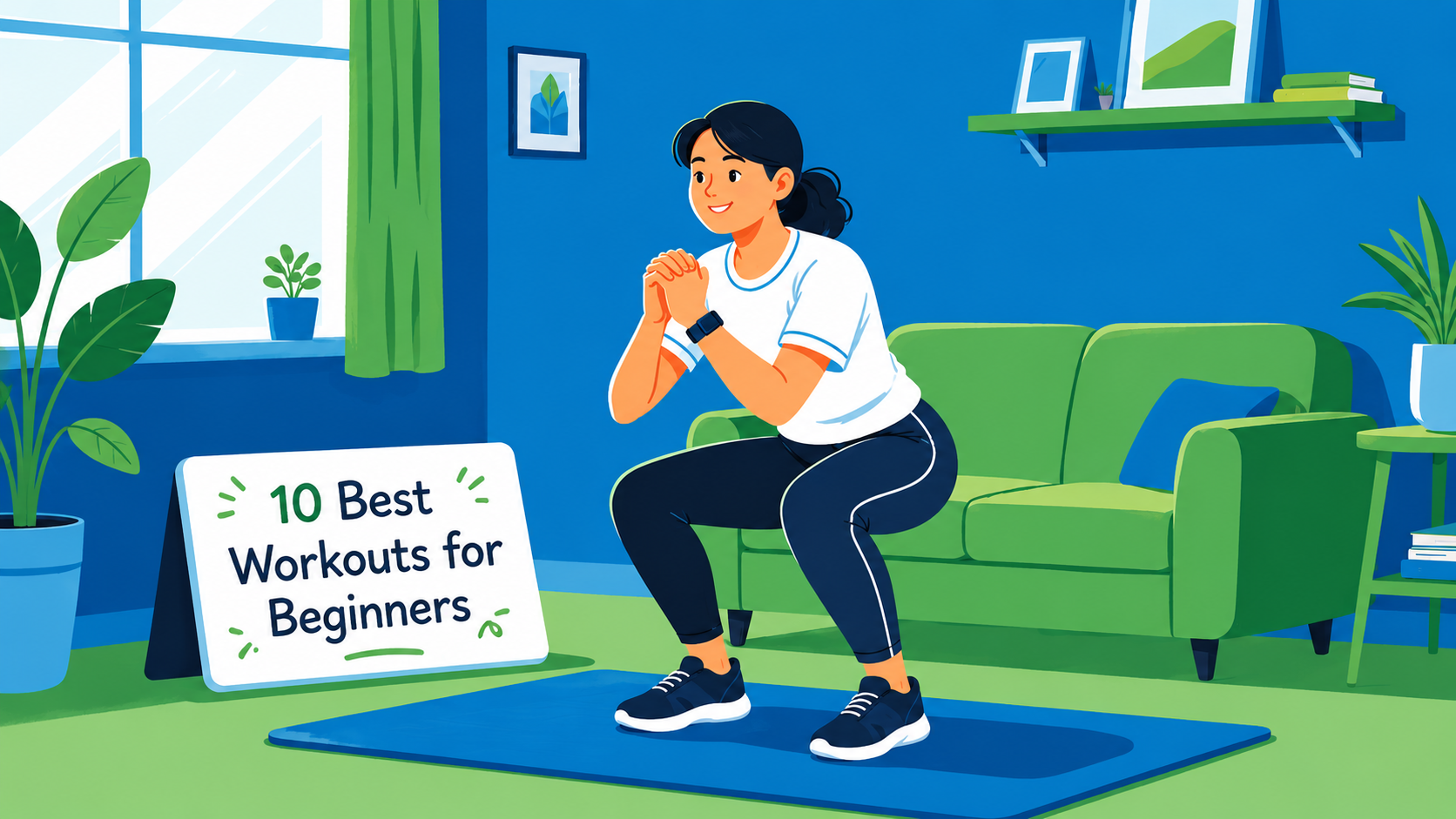
Fitness Workouts for Beginners are one of the best ways to build strength, improve endurance, and create healthy habits. By focusing on simple exercises and proper form, beginners can safely start their fitness journey and achieve long-term results.
Many people think they need intense training to see progress. However, Fitness Workouts for Beginners are most effective when performed consistently. Small improvements over time can help increase strength, boost confidence, and reduce the risk of injury.
A successful fitness routine should include strength training, cardio, and flexibility exercises. These Fitness Workouts for Beginners help improve overall health while making it easier to stay active and motivated.
If you’re new to exercise, start slowly and focus on proper technique. The right Fitness Workouts for Beginners can help you build a stronger body, improve fitness levels, and reach your goals faster without feeling overwhelmed.
Starting your fitness journey without a clear plan can make progress slow and frustrating. A structured workout plan helps beginners stay focused, track improvements, and achieve results more efficiently. Whether your goal is building muscle, losing weight, or improving overall health, following a well-designed routine provides the foundation for long-term success.
Type your paragraph here
Starting a fitness journey can feel challenging, but choosing the right routine makes all the difference. Fitness Workouts for Beginners are designed to help you build strength, improve endurance, and develop healthy habits without putting too much stress on your body. These workouts focus on simple movements, proper form, and gradual progress.
One of the biggest benefits of Fitness Workouts for Beginners is that they help create consistency. Instead of trying advanced exercises, beginners can focus on mastering the basics and building confidence. This approach reduces the risk of injury while making it easier to stay motivated.
A balanced routine should include strength training, cardio, and flexibility exercises. These Fitness Workouts for Beginners support overall health, increase energy levels, and improve physical performance. As your fitness level improves, you can gradually increase the intensity of your workouts.
Remember that fitness is a long-term journey, not a quick fix. By following Fitness Workouts for Beginners consistently, you can achieve sustainable results, improve your overall well-being, and build a strong foundation for future fitness goals.
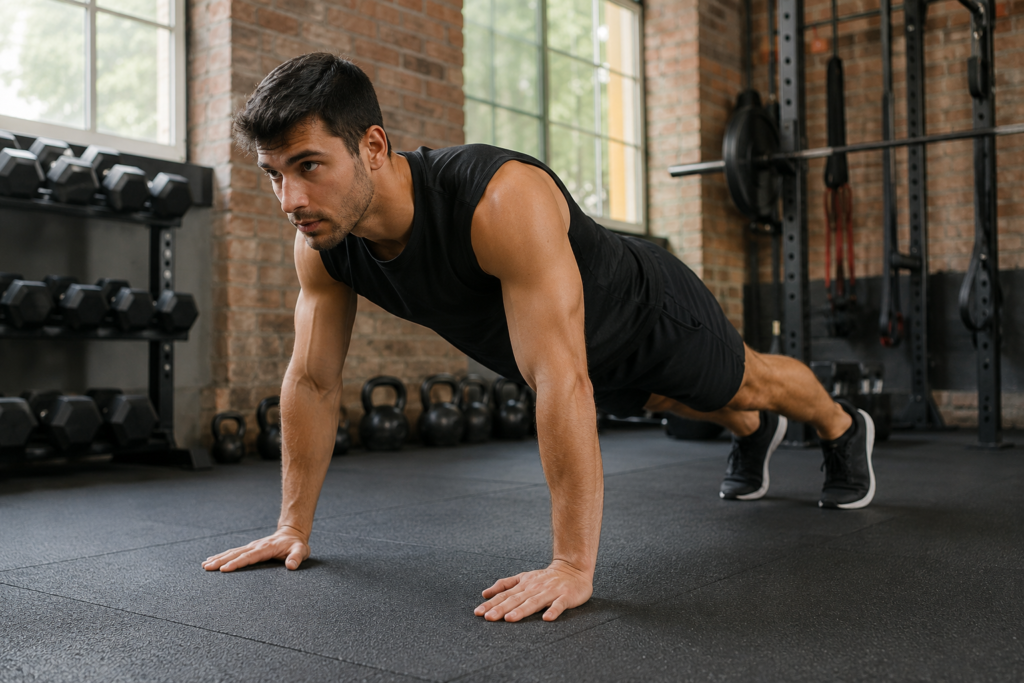
A consistent beginner fitness routine offers several important advantages. First, it helps improve strength and endurance by gradually challenging your muscles and cardiovascular system. As your body adapts, everyday activities become easier and workouts feel less demanding.
A structured routine also supports weight loss goals by increasing calorie expenditure and encouraging a more active lifestyle. In addition, following a planned schedule helps build healthy habits that can last a lifetime. Another major benefit is that a proper workout program reduces injury risk by ensuring exercises are performed with the correct progression and adequate recovery time.
One of the most exciting parts of starting fitness training is experiencing newbie gains. This term refers to the rapid muscle growth and strength improvements that beginners often experience during their first months of training.
Because the body is responding to a completely new stimulus, beginners typically see faster progress than experienced lifters. Improvements in muscle coordination, strength, and overall fitness can occur within a few weeks of consistent training.
Most newbie gains last anywhere from six months to two years, depending on factors such as training consistency, genetics, nutrition, and recovery habits.
The speed of muscle growth varies from person to person, but beginners often have a significant advantage. Several factors influence how quickly you can build muscle.
Training frequency plays a major role. Working each muscle group regularly helps stimulate growth and improve performance. Proper nutrition is equally important, as muscles need sufficient protein and calories to recover and grow. Finally, quality recovery, including adequate sleep and rest days, allows the body to repair muscle tissue and maximize results.
By combining a structured workout plan with consistent training, nutrition, and recovery, beginners can achieve impressive progress and build a strong foundation for long-term fitness success.
Starting a fitness journey can feel overwhelming, but the key is to keep things simple and consistent. For anyone learning how to start exercising for beginners, setting clear goals and following a structured plan can make the process much easier.
Before you begin, decide what you want to achieve. Having realistic goals helps you stay motivated and track your progress.
Weight loss: Focus on combining regular exercise with healthy eating habits. Aim for gradual, sustainable results rather than quick fixes
Muscle gain: Include resistance exercises and prioritize proper nutrition with enough protein to support muscle growth.
General fitness: Improve your overall health by building strength, endurance, flexibility, and energy levels through a balanced workout routine.
Setting small milestones will help you stay committed and celebrate progress along the way.
Finding a workout you enjoy increases the chances of sticking with it long-term.
Strength training: Helps build muscle, improve bone health, and increase metabolism. Beginners can start with bodyweight exercises like squats, push-ups, and lunges.
Cardio: Activities such as walking, jogging, cycling, or swimming improve heart health and burn calories.
Home workouts: Perfect for people who prefer convenience and want to exercise without equipment.
Gym workouts: Offer access to machines, free weights, and professional guidance, making it easier to follow a structured fitness program.
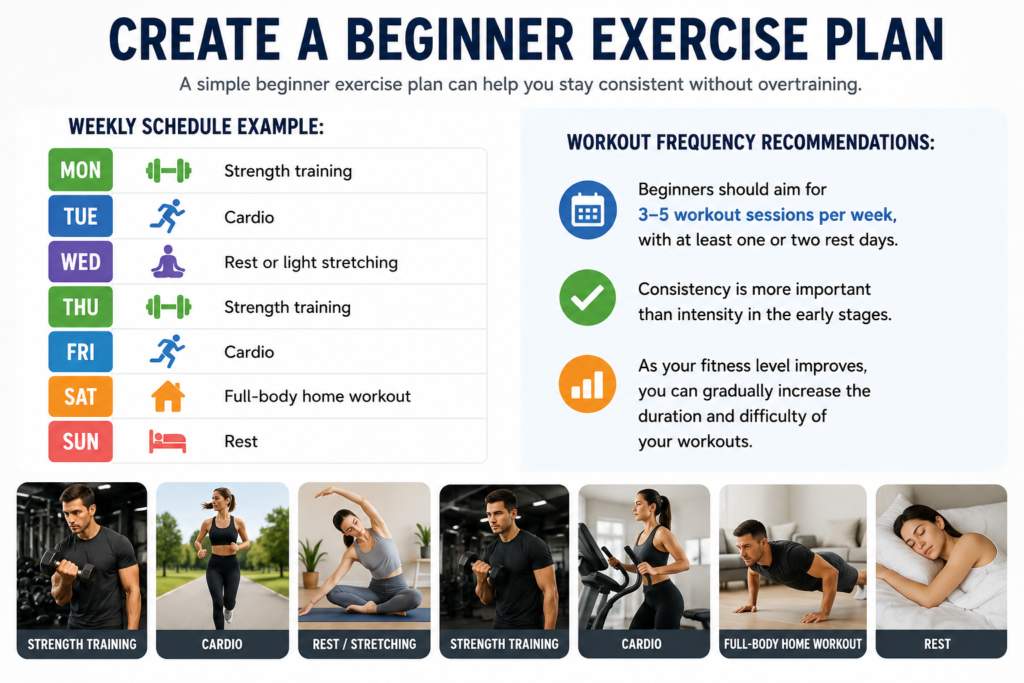
A simple beginner exercise plan can help you stay consistent without overtraining.
Weekly Schedule Example:
Monday: Strength training
Tuesday: Cardio
Wednesday: Rest or light stretching
Thursday: Strength training
Friday: Cardio
Saturday: Full-body home workout
Sunday: Rest
Workout Frequency Recommendations: Beginners should aim for 3–5 workout sessions per week, with at least one or two rest days. Consistency is more important than intensity in the early stages. As your fitness level improves, you can gradually increase the duration and difficulty of your workouts.
If you’re new to fitness, a Full Body Workout for Beginners is one of the most effective ways to build strength, improve endurance, and create a solid exercise habit. Unlike split routines that focus on only one muscle group per day, a Full Body Workout for Beginners targets all major muscle groups in a single session, making it perfect for those who want maximum results with minimal complexity.
Why It Works
A beginner’s body responds quickly to consistent training, and full-body workouts help you take advantage of these early gains. By training your legs, chest, back, core, and shoulders together, you improve overall fitness while learning proper exercise techniques. This approach also allows your muscles enough recovery time between workouts.
Perform each exercise with proper form and rest for 60–90 seconds between sets. Start with light weights and gradually increase the intensity as your strength improves.
Benefits
One of the biggest advantages of a Full Body Workout for Beginners is that it helps improve overall strength while engaging multiple muscle groups at once. This increases energy expenditure and helps burn more calories compared to isolated exercises. Additionally, regular full-body training can enhance balance, coordination, and muscle development, making it an excellent foundation for long-term fitness success.
For beginners looking to get fit fast, a Full Body Workout for Beginners is a simple, effective, and sustainable starting point.
Starting a Beginner Gym Workout routine is one of the most effective ways to build strength, improve fitness, and develop healthy exercise habits. Gyms provide access to a wide variety of equipment that targets different muscle groups, making it easier for beginners to follow a balanced training program. Another major advantage is the ability to apply progressive overload, which means gradually increasing resistance or weight over time to stimulate muscle growth and strength gains.
Sample Beginner Gym Workout
A simple and effective Beginner Gym Workout can include the following exercises:
Leg Press – Strengthens the quadriceps, hamstrings, and glutes.
Chest Press – Builds chest, shoulder, and tricep strength.
Lat Pulldown – Targets the back muscles and improves posture.
Shoulder Press – Develops shoulder strength and stability.
Seated Row – Strengthens the upper back and supports balanced muscle development.
Perform 2–3 sets of 10–12 repetitions for each exercise, using a weight that challenges you while allowing proper technique.
Tips for Success
To get the most from your Beginner Gym Workout, focus on learning proper form before increasing weight. Correct technique helps prevent injuries and ensures the targeted muscles are working effectively. Most importantly, stay consistent with your workouts. Regular training, combined with adequate rest and proper nutrition, will lead to steady improvements in strength, confidence, and overall fitness. Consistency is the key to long-term success in any fitness journey.
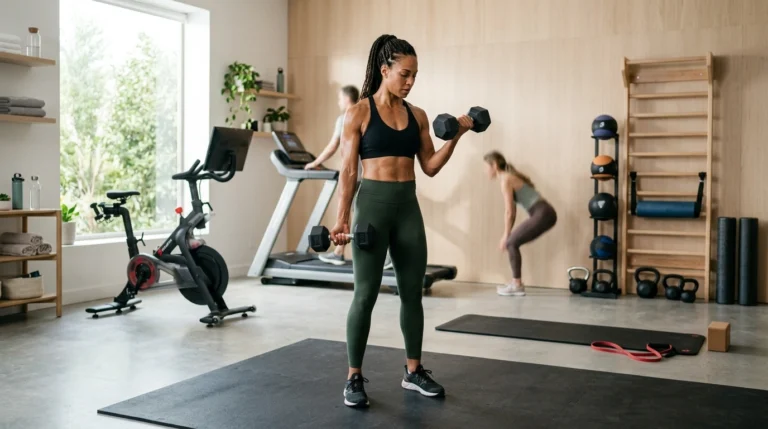
Starting a home workout for beginners is one of the easiest ways to improve your fitness without needing a gym membership. Working out at home offers several advantages, including convenience, affordability, and flexibility. You can exercise whenever it fits your schedule, save money on gym fees, and train in a comfortable environment.
A simple beginner home workout routine can help build strength, improve endurance, and boost overall health. Start with Bodyweight Squats to strengthen your legs and glutes. Add Push-Ups to develop upper-body and core strength. Glute Bridges are excellent for activating the glutes and supporting lower-back health. Finish with a Plank to improve core stability and posture.
For the best results, perform this home workout for beginners 3–4 times weekly. Focus on proper form rather than speed, and gradually increase repetitions as your fitness level improves. Consistency is the key to success. By following a regular beginner home workout routine, you can build strength, increase confidence, and create healthy exercise habits that support long-term fitness goals.
A No Equipment Workout for Beginners is one of the easiest ways to start your fitness journey. These workouts require no gym membership or expensive gear, making them accessible to almost everyone. Whether you are exercising at home, outdoors, or while traveling, a No Equipment Workout for Beginners can help you build strength, improve stamina, and stay active.
One of the biggest advantages is that it fits perfectly into busy schedules. You can complete a quick workout in just 15–20 minutes and still enjoy noticeable fitness benefits.
Simple Routine
Jumping Jacks – 30 seconds
Mountain Climbers – 30 seconds
Bodyweight Squats – 15 repetitions
High Knees – 30 seconds
Plank Hold – 30–60 seconds
Repeat the circuit 2–3 times, depending on your fitness level. Focus on maintaining proper form and gradually increasing intensity as your strength improves.
Expected Results
With consistent practice, this workout can lead to better endurance, increased energy levels, and improved mobility. Over time, you may also notice enhanced coordination, stronger muscles, and greater confidence in your overall fitness abilities.
A Beginner Weight Loss Workout is an excellent way to improve fitness while shedding excess body weight. Regular exercise supports weight loss by increasing Calorie Burning throughout the day and boosting your Increased Metabolism, which helps your body use energy more efficiently even at rest.A simple Weight Loss Routine can include activities that are easy to follow and suitable for beginners. Start with Brisk Walking for 20–30 minutes daily to burn calories and improve cardiovascular health. Add a Bodyweight Circuit with exercises like squats, lunges, and push-ups to build strength and increase calorie expenditure. Cycling is another low-impact option that helps improve endurance while supporting fat loss. For faster results, include Light HIIT sessions once or twice a week to elevate your heart rate and maximize calorie burn in a shorter period.
To achieve the best results, combine your workouts with Healthy Eating habits and focus on staying active every day. Consistency with exercise and nutrition is the key to long-term weight loss success.
A Beginner Strength Workout is one of the most effective ways to improve overall fitness, increase energy levels, and build a stronger body. Regular strength training helps develop lean muscle, which not only enhances physical appearance but also supports better posture and daily movement. Another major benefit is that it improves metabolism, allowing your body to burn more calories even while at rest.
Workout Plan
For beginners, focus on simple compound exercises that target multiple muscle groups:
Goblet Squats – Strengthen your legs, glutes, and core.
Dumbbell Bench Press – Build upper-body strength, especially in the chest and arms.
Romanian Deadlift – Improve hamstring, glute, and lower-back development.
Shoulder Press – Enhance shoulder stability and upper-body power.
Perform 2–3 sets of 8–12 repetitions for each exercise while maintaining proper form.
Progression Tips
To continue seeing results, increase weight gradually as exercises become easier. It’s also important to track workouts by recording weights, sets, and repetitions. Consistent progression and proper recovery are the keys to long-term strength gains and fitness success.
What Is Bulking?
Bulking is a fitness phase focused on gaining muscle mass by combining strength training with a controlled increase in calorie intake. The main purpose of a bulking phase is to build size, strength, and overall muscle development. There are two common approaches: lean bulking, which emphasizes gradual muscle gain with minimal fat gain, and dirty bulking, which involves eating large amounts of calories without closely monitoring food quality.
Beginner Bulking Workout
A simple bulking workout plan for beginners should focus on compound exercises that target multiple muscle groups:
Squats – Build lower-body strength and muscle.
Bench Press – Develop chest, shoulders, and triceps.
Rows – Strengthen the back and improve posture.
Deadlifts – Increase overall strength and muscle mass.
Nutrition for Bulking
Nutrition plays a key role in successful bulking. Aim for adequate protein intake to support muscle growth and maintain a moderate calorie surplus to fuel recovery and development. Equally important is recovery, as muscles grow and repair during rest. Consistent training, proper nutrition, and quality sleep are the foundation of an effective bulking workout plan for beginners.your paragraph here
A Muscle-Building Workout Plan for Beginners focuses on consistent training, proper recovery, and gradual progression. Muscle growth happens when your muscles experience small amounts of stress during workouts and then repair themselves stronger during rest.
One of the most important principles is progressive overload, which means gradually increasing the weight, repetitions, or intensity of your exercises. Along with training, recovery and nutrition play a major role in muscle development. Eating enough protein and getting quality sleep help support growth.
Workout Plan for Beginners to Gain Muscle
Day 1: Squats, Bench Press, Rows
Day 2: Deadlifts, Shoulder Press, Lat PulldownsD
ay 3: Lunges, Incline Dumbbell Press, Pull-Ups
How Long Does It Take to Build Muscle?
During the first month, beginners often notice improved strength and workout performance. By three months, visible muscle definition may begin to appear. After six months of following a Workout Plan for Beginners to Gain Muscle, many people experience significant improvements in muscle size, strength, and overall physique, especially when combined with proper nutrition and consistency.
Why Cardio Is Important
A walking and cardio workout for beginners is one of the easiest and most effective ways to improve overall fitness. Regular cardio exercise helps strengthen your heart, improve blood circulation, and reduce the risk of various health problems. It also supports fat loss by burning calories and boosting metabolism. In addition, consistent cardio training helps with stamina improvement, allowing you to stay active for longer periods without feeling exhausted.
Beginner Cardio Plan
If you’re new to fitness, start with simple activities that are easy on your joints and suitable for all fitness levels. Brisk walking is an excellent option that can be done almost anywhere. Cycling is another beginner-friendly workout that improves cardiovascular health while being low-impact. For those looking for a quick and effective workout, stair climbing helps build endurance and strengthen lower-body muscles.
Weekly Schedule Example
A simple beginner plan is to perform 20–30 minutes daily of your chosen cardio activity. Aim for at least five days per week and gradually increase the intensity as your fitness level improves. Consistency is the key to achieving long-term results.
Beginning bodybuilding is a structured approach to building strength and muscle through consistent training, proper nutrition, and recovery. The main goal is muscle growth while developing a muscular athletic build that looks balanced and strong. Beginners should focus on learning correct exercise techniques before increasing weight or training volume.
Some of the best bodybuilding exercises for beginners include Squats, Bench Press, Deadlifts, Pull-Ups, and Overhead Press. These compound movements target multiple muscle groups at once, helping you build strength and size more efficiently. Performing these exercises regularly can create a solid foundation for long-term progress.
To get the most from a beginner bodybuilding workout, prioritize proper form over heavy weights. Good technique reduces the risk of injury and ensures the target muscles are working effectively. It is also important to track progress by recording workouts, weights, and repetitions. Finally, stay patient and consistent. Muscle development takes time, but with dedication, smart training, and adequate recovery, you can steadily achieve your bodybuilding goals and build a stronger, healthier physique.
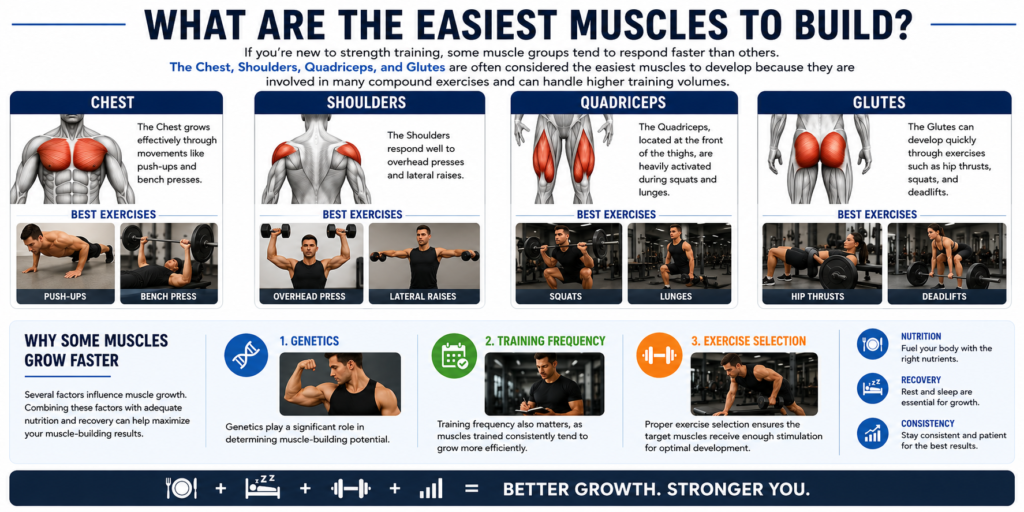
If you’re new to strength training, some muscle groups tend to respond faster than others. The Chest, Shoulders, Quadriceps, and Glutes are often considered the easiest muscles to develop because they are involved in many compound exercises and can handle higher training volumes.
The Chest grows effectively through movements like push-ups and bench presses, while the Shoulders respond well to overhead presses and lateral raises. The Quadriceps, located at the front of the thighs, are heavily activated during squats and lunges, making them one of the fastest-growing lower-body muscle groups. Similarly, the Glutes can develop quickly through exercises such as hip thrusts, squats, and deadlifts.
Why Some Muscles Grow Faster
Several factors influence muscle growth. Genetics play a significant role in determining muscle-building potential. Training frequency also matters, as muscles trained consistently tend to grow more efficiently. Finally, proper Exercise selection ensures the target muscles receive enough stimulation for optimal development. Combining these factors with adequate nutrition and recovery can help maximize your muscle-building results.
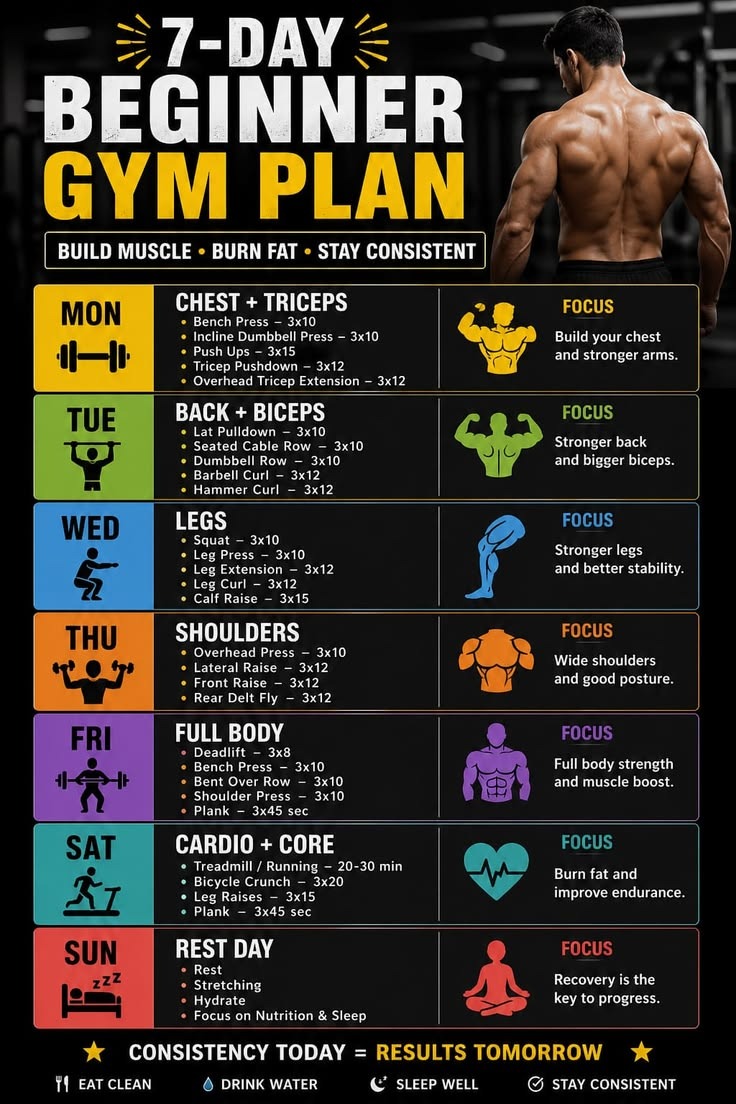
Starting a fitness journey becomes much easier when you follow a simple and consistent routine. This beginner workout schedule is designed to help improve strength, endurance, and overall fitness without overwhelming your body.
Monday – Full Body Workout
Focus on major muscle groups with exercises like squats, push-ups, lunges, and dumbbell rows. A full body workout helps build a strong foundation and improves overall fitness.
Tuesday – Walking or Light Cardio
Spend 20–30 minutes walking, cycling, or doing light cardio. This keeps you active while allowing your muscles to recover.
Wednesday – Strength Training
Perform basic strength training exercises such as dumbbell presses, bodyweight squats, and resistance band rows. Strength workouts help increase muscle mass and boost metabolism.
Thursday – Rest
Recovery is essential for muscle growth and injury prevention. Use this day to relax and stay hydrated.
Friday – Home Workout
A simple home workout can include planks, jumping jacks, bodyweight squats, and push-ups. This keeps your routine flexible and convenient.
Saturday – Cardio Session
Choose a cardio activity you enjoy, such as jogging, swimming, or cycling. Regular cardio improves heart health and burns calories.
Sunday – Recovery Day
Stretching, yoga, or light walking can help reduce muscle soreness and prepare your body for the upcoming week.
Having the right fitness tools can make your workouts more effective and enjoyable.
Adjustable Dumbbells – Perfect for progressive strength training.
Resistance Bands – Affordable, versatile, and great for all fitness levels.
Yoga Mat – Provides comfort and support during floor exercises.
Workout Bench – Useful for a variety of strength-training movements.
Pull-Up Bar – Helps build upper-body strength at home.
Buying Guide
When shopping for workout equipment, start with budget-friendly options that match your fitness goals. Focus on home gym essentials like resistance bands, adjustable dumbbells, and a quality yoga mat. As you progress, you can gradually invest in additional equipment to create a complete home workout space without overspending.
Many beginners make simple mistakes that can slow progress and increase the risk of injury. One of the biggest errors is Skipping Warm-Ups, which can leave muscles unprepared for exercise. Another common mistake is Doing Too Much Too Soon. Starting with intense workouts may lead to burnout, soreness, and frustration. Ignoring Recovery is also a problem, as muscles need time to repair and grow after training sessions. Poor eating habits can negatively affect performance, making Poor Nutrition a major obstacle to fitness success. Finally, Inconsistent Training prevents long-term progress. Following a regular workout schedule is essential for building strength, endurance, and healthy habits.
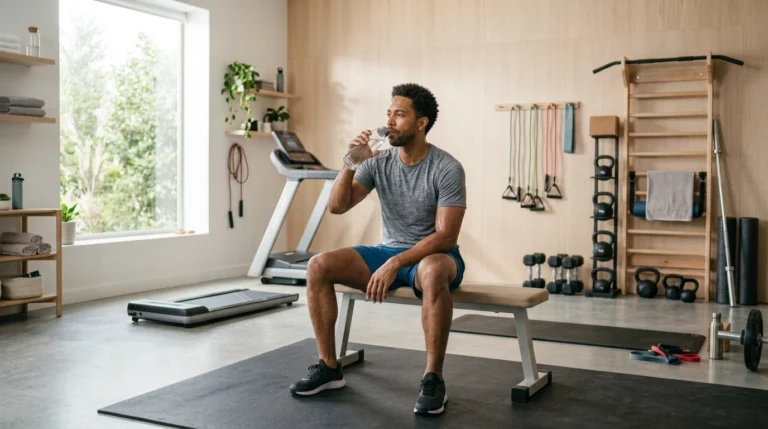
Good nutrition is just as important as exercise when starting a fitness journey. Understanding Protein Requirements is crucial because protein helps repair and build muscle tissue. Choose Healthy Carbohydrates such as oats, brown rice, fruits, and vegetables to provide lasting energy throughout the day. Including Healthy Fats from sources like nuts, seeds, avocados, and olive oil supports overall health and hormone function. Following proper Hydration Tips, such as drinking water before, during, and after workouts, helps maintain performance and recovery. A simple Sample Beginner Meal Plan might include oatmeal and eggs for breakfast, grilled chicken with rice and vegetables for lunch, yogurt and fruit as a snack, and fish with sweet potatoes for dinner. This balanced approach supports fitness goals and overall well-being.
What is the best beginner workout plan?
The best beginner workout plan focuses on simple compound exercises such as squats, push-ups, rows, and lunges. Beginners should aim for 3 full-body workouts per week to build strength, improve endurance, and develop proper exercise form.
How many days per week should beginners work out?
Most fitness experts recommend working out 3–4 days per week. This schedule allows enough time for recovery while helping beginners stay consistent with their fitness goals.
Can beginners build muscle at home?
Yes, beginners can build muscle at home using bodyweight exercises like push-ups, squats, planks, and resistance band workouts. Consistent training and proper nutrition are key to muscle growth.
How fast can you build muscle as a beginner?
Due to newbie gains, beginners often notice strength and muscle improvements within 4–8 weeks of regular training and a protein-rich diet.
How long does it take to build muscle naturally?
Most people can see noticeable muscle development within 2–3 months. Long-term progress depends on workout consistency, recovery, and nutrition.
What are the easiest muscles to build first?
The chest, shoulders, back, and quadriceps are often considered the easiest muscles to build because they respond well to beginner strength-training exercises.I
s a full body workout better for beginners?
Yes, a full body workout is ideal for beginners because it trains all major muscle groups while maximizing recovery and overall fitness progress.
Can I lose weight and gain muscle at the same time?
Yes, beginners can often lose body fat and gain muscle simultaneously by combining resistance training with a balanced, high-protein diet.
What should beginners eat after a workout?
A post-workout meal should include protein and healthy carbohydrates, such as chicken with rice, Greek yogurt with fruit, or a protein shake with a banana.
Do I need gym equipment to get fit?
No. Bodyweight exercises, resistance bands, and home workouts can help beginners improve strength, burn calories, and achieve fitness goals without expensive equipment.